

Hear From Our Clients
You stop worrying every time wind picks up. No more wondering if that crack is letting moisture seep behind your walls, rotting the sheathing you can’t see.
Proper siding repair means your home looks sharp again and your heating bills stop climbing because air isn’t leaking through gaps. You’re not patching the same spot every season or dealing with contractors who ghost you after taking a deposit.
West Hills homes face salt air year-round and nor’easters that peel panels right off the house. When your siding is actually fixed—not just covered up—you get real protection against the coastal weather that ages materials twice as fast as it should. Your home holds its value instead of looking tired and neglected from the curb.
We’ve spent ten years repairing vinyl siding, aluminum panels, wood shake, and fiber cement across Long Island. We’re licensed and insured, and we’ve seen what happens when siding repairs get delayed or done wrong.
We know West Hills homes deal with humidity that attacks from behind and salt-laden air that corrodes from the outside. That’s why we don’t just slap a patch on and leave—we address what’s happening underneath so the repair actually lasts through multiple storm seasons.
You’ll get an honest assessment about whether repair makes sense or if replacement is the smarter move. We’re not here to oversell you.
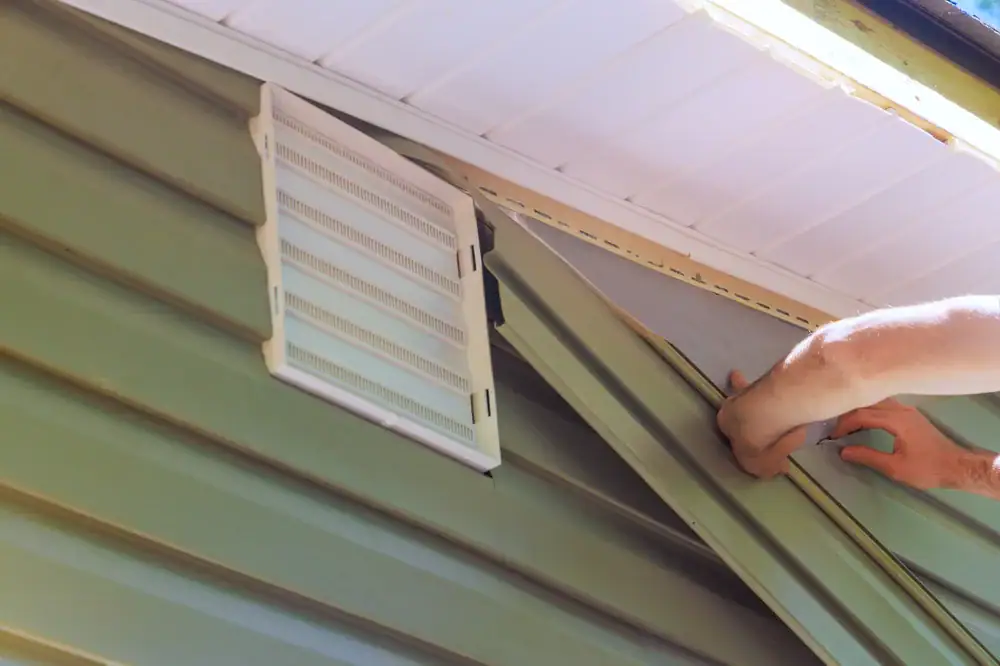
First, we come out and inspect the damage—not just the obvious stuff, but what’s happening behind the panels. We check for water infiltration, rotted sheathing, and whether the problem is isolated or part of a bigger issue.
Then we give you a clear breakdown of what needs fixing and what it’ll cost. No vague estimates or surprise charges later. If we can repair instead of replace, we’ll tell you. If the damage is too far gone, we’ll explain why.
Once you approve, we get the materials and schedule the work. Most vinyl siding repair and aluminum siding repair jobs wrap up in a day or two, depending on scope. For emergencies—like storm damage that’s actively letting water in—we offer same-day service to get temporary protection in place fast.
After the repair, we clean up completely and walk you through what we did. You’ll know exactly what we fixed and what to watch for going forward.

Ready to get started?
We handle cracked panels, wind-damaged sections, water-damaged areas, and faded or warped siding that’s compromising your home’s protection. Whether it’s vinyl siding repair, aluminum siding repair, wood siding repair, or fiber cement, we’ve installed and repaired hundreds of homes across Suffolk County.
West Hills sits in a coastal zone where humidity and salt air accelerate aging. A ten-year-old siding job here can look and perform like it’s decades old. We factor that in when we assess your repair—checking not just the visible damage but the underlying structure that coastal weather attacks silently.
Most siding repairs cost between $1,280 and $2,380, which beats full replacement by a long shot. We repair when it makes financial sense—typically when damage affects less than 30% of your siding. Beyond that threshold, replacement usually gives you better long-term value.
You also get a workmanship guarantee and access to our service team if anything comes up after the job. We’re not disappearing once the check clears.

If the damage covers less than 30% of your siding, repair almost always makes more sense financially. You’re looking at $1,280 to $2,380 for most repairs versus $22,000+ for a full vinyl siding replacement on an average Long Island home.
Check for isolated issues—a few cracked panels from hail, a section that lifted during a storm, or localized water damage. Those are repair situations. But if you’re seeing widespread warping, fading across multiple walls, or damage in several areas, replacement might be the smarter investment.
We’ll give you an honest assessment either way. There’s no point patching a failing system just to have you call us back in six months. We’d rather tell you the truth upfront so you can make the right call for your budget and timeline.
Usually, yes—but it depends on the material and manufacturer. Vinyl siding profiles and colors have changed over the years, and some older styles have been discontinued. We’ll do our best to source matching panels, but if we can’t get an exact match, we’ll show you the closest options.
For aluminum siding repair, color matching can be trickier since aluminum fades unevenly over time. Sometimes we can repaint the repaired section to blend it in. For wood siding repair, matching grain and stain is more straightforward if we’re working with cedar shake or clapboard.
The good news is that most siding repairs blend in better than you’d expect, especially after a season of weather exposure. If matching is impossible and the mismatch bothers you, we can discuss repairing a full wall section so everything looks uniform. We’ll walk through your options before starting any work.
We offer same-day service for emergencies where water is actively getting into your home. If a nor’easter just ripped panels off and rain is soaking your walls, we’ll get there fast with emergency materials to stop the infiltration.
For non-emergency repairs—like a crack you just noticed or a panel that’s been loose for a while—we typically schedule within a few days. We’re not the contractors who promise “next Tuesday” and never show. We give you a real date and we stick to it.
Suffolk County storm season means we get busy fast when weather hits. If you know damage is coming or you spot a problem before a storm, call early. Waiting until water is pouring into your walls means you’re competing with dozens of other homeowners for emergency slots. The earlier you reach out, the faster we can protect your home.
We assess the sheathing and framing behind the damaged siding to see how far the water infiltration spread. If it’s just surface moisture, we dry it out and proceed with the repair. If the sheathing is rotted or mold has started growing, we replace those sections before installing new siding.
Ignoring water damage leads to structural problems that cost exponentially more to fix. We’ve seen situations where a $400 siding repair turned into a $10,000+ remediation project because the homeowner waited months while water destroyed the wall framing.
The coastal humidity in West Hills makes this worse. Water doesn’t just sit there—it accelerates rot and mold growth. We address it proactively during every repair so you’re not dealing with hidden damage down the road. You’ll know exactly what we found and what we fixed before we close up the wall.
Yes. We repair vinyl siding, aluminum siding, wood siding (including cedar shake and clapboard), and fiber cement. Each material has different failure points and repair techniques, and we’ve worked with all of them across hundreds of Long Island homes.
Vinyl cracks and warps from impact and temperature swings. Aluminum dents and corrodes from salt air. Wood rots when moisture gets in. Fiber cement can crack under stress but holds up better long-term in coastal environments. Knowing how each material fails helps us fix it right the first time.
If you’re not sure what type of siding you have, we’ll identify it during the inspection. Some homes have multiple materials—vinyl on most walls with cedar shake accents, for example. We handle mixed-material repairs without any issue. The goal is restoring protection and appearance regardless of what’s on your house now.
It depends on your policy and what caused the damage. Most homeowner’s insurance policies cover sudden storm damage—like wind ripping panels off during a nor’easter or hail cracking your siding. They typically don’t cover gradual wear, aging, or damage from deferred maintenance.
We can document the damage and provide detailed estimates for your insurance claim. Take photos before we start work and save any damaged materials the adjuster might want to see. The more documentation you have, the smoother your claim process goes.
Some policies have wind or hurricane deductibles that are higher than standard deductibles, especially in coastal areas like Suffolk County. Read your policy or call your agent before filing a claim to understand what you’ll pay out of pocket. If the repair cost is close to your deductible, it might not be worth filing. We’ll work with you either way—insurance claim or direct payment—to get your home protected again.
Other Services we provide in West Hills