Hear From Our Clients

You’ve already spent money on repairs. The mortar’s crumbling again. Water’s still getting in. Your fireplace smells like mildew every time it rains.
At some point, throwing more money at an old chimney stops making sense. When the entire structure’s compromised—cracked flue liner, deteriorating brick, failing crown—you’re not looking at a repair anymore. You’re looking at a replacement.
A new chimney system eliminates the constant cycle of emergency calls and seasonal damage. You get proper ventilation that actually works, modern materials engineered for coastal humidity, and a structure that won’t leak into your roofline every winter. No more carbon monoxide scares. No more water stains spreading across your ceiling. Just a chimney that does its job without you worrying about it.
That’s what replacement gives you—the end of the problem, not another temporary fix.
Home Team Construction serves Flanders and the surrounding Suffolk County area with complete chimney replacement services. We’re local contractors who understand what Long Island’s coastal climate does to masonry—because we see it every day in our own neighborhood.
We don’t do runarounds or surprise charges. You get honest assessments, upfront pricing, and work that’s done right the first time. When your chimney’s beyond repair, we’ll tell you. When it just needs maintenance, we’ll tell you that too.
Our crews are licensed, insured, and experienced with the specific challenges Flanders homeowners face—from salt-air corrosion to the freeze-thaw cycles that crack mortar joints faster here than anywhere inland.
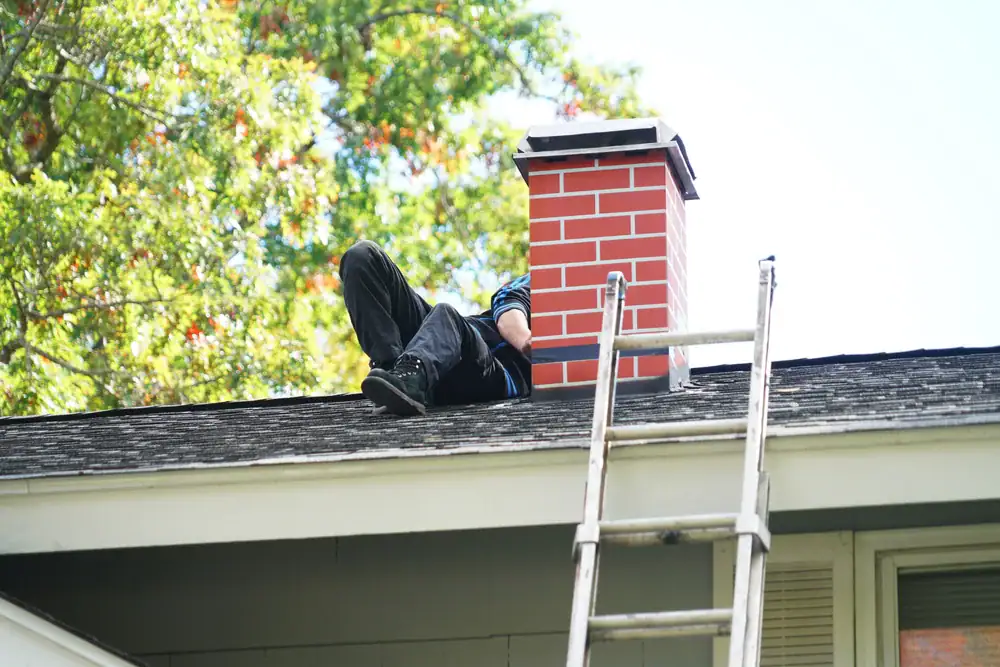
First, we come out and actually look at your chimney—inside and out. We’re checking the flue liner, the masonry condition, the crown, the flashing, and how water’s moving around the structure. You get a clear explanation of what’s failing and why replacement makes more sense than another round of repairs.
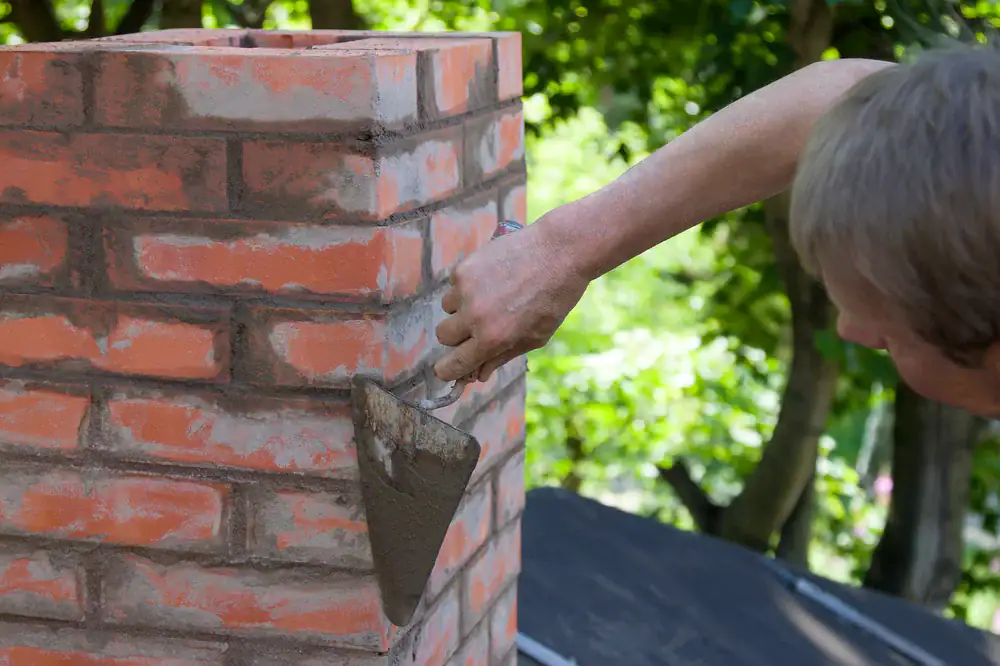
Once you decide to move forward, we handle the teardown and removal of your old chimney down to a solid foundation point. Then we rebuild from the ground up using materials rated for marine environments—because that’s what Flanders is. New flue liner, properly sized for your heating system. New masonry with marine-grade mortar. New crown with proper overhang and sealing. New flashing integrated with your roofline.
The timeline depends on your chimney’s height and your home’s roof access, but most residential chimney replacements take three to five days of active work. We protect your roof, clean up daily, and make sure everything’s weathertight before we leave each day.
You’re not waiting months. You’re not dealing with a half-finished project through storm season. We schedule it, we show up, and we finish it.
Ready to get started?
A complete chimney replacement means tearing out the compromised structure and rebuilding with modern materials that handle what Long Island throws at them. You’re getting a new flue liner—stainless steel or cast-in-place depending on your system—that properly vents combustion gases without cracks or gaps. The new masonry goes up with marine-grade mortar that resists salt-air penetration better than standard residential mortar.
We rebuild your chimney crown with the right slope and overhang to shed water away from the brick. New flashing gets integrated into your roof’s water management system, not just slapped on top. If you need a new chimney cap, that goes on too—keeping rain, animals, and debris out while letting smoke escape properly.
For Flanders homeowners, this matters more than it does inland. The coastal humidity here accelerates deterioration. Salt particles carried by wind settle into your masonry and break it down from the inside. Standard chimney construction fails faster in Suffolk County than it does twenty miles west.
That’s why chimney replacement here isn’t just about rebuilding what you had—it’s about building something that survives where you live. Proper materials, proper technique, proper understanding of what coastal exposure does to masonry over time.

If your chimney has isolated damage—a few cracked bricks, worn mortar joints in one section, a damaged crown—repairs make sense. You’re fixing the specific problem without touching the rest of the structure.
Replacement becomes the right call when damage is widespread or structural. If your flue liner’s cracked in multiple places, if the masonry’s deteriorating on multiple sides, if the chimney’s leaning or separating from your house, or if you’re dealing with repeated water intrusion that keeps coming back after repairs—that’s when you’re looking at replacement. At that point, you’re not fixing a chimney anymore. You’re trying to keep a failing structure alive, and it’s going to keep costing you money.
The math matters too. If repair estimates are climbing into the thousands and your chimney’s already 30+ years old with ongoing issues, replacement gives you a new system with a clean slate instead of gambling on whether this round of repairs will actually hold.
Most residential chimney replacements in Flanders run between $8,000 and $15,000 depending on height, complexity, and materials. A straightforward single-story chimney on an accessible roof costs less than a two-story chimney with difficult access or a complex roofline.
The price includes complete teardown, debris removal, new masonry construction, new flue liner, new crown, new flashing, and new cap. If your chimney’s unusually tall, if we’re working with a steep roof pitch, or if there’s structural work needed where the chimney meets your house, that affects cost.
Long Island pricing runs higher than national averages because of local labor costs and stricter building codes, but you’re also getting work that’s engineered for coastal exposure. We’re not using the same materials and methods you’d use in Pennsylvania. Marine-grade mortar costs more. Stainless steel flue liners rated for salt air cost more. But they last here, which is the entire point of replacing your chimney instead of repairing it again.
A properly built chimney using marine-grade materials should give you 30 to 50 years in Flanders, even with coastal exposure. That’s assuming regular maintenance—annual inspections, keeping the cap clear, addressing minor issues before they become major ones.
The lifespan depends heavily on materials and construction quality. Standard residential mortar breaks down faster here because of salt air. Cheap flue liners crack under thermal stress. Improperly installed flashing lets water into the structure, and once water gets in, deterioration accelerates.
That’s why material choice matters more on Long Island than it does inland. You’re not just building a chimney—you’re building something that has to survive humidity, salt exposure, freeze-thaw cycles, and coastal storms. Cut corners on materials or installation, and you’re looking at problems in 10 to 15 years instead of 30 to 50.
If your masonry’s still solid and the only problem is a damaged flue liner, we can replace just the liner—either with a stainless steel insert or a cast-in-place system. That’s a chimney liner replacement, not a full chimney replacement, and it costs significantly less.
But if the masonry’s deteriorating, if there’s structural movement, or if water damage has compromised the brick and mortar, replacing just the liner doesn’t solve your problem. You’d be putting a new liner inside a failing chimney, and you’ll be back to dealing with water intrusion, cracked masonry, and structural issues within a few years.
We assess the entire system before recommending a path forward. Sometimes liner replacement makes sense. Sometimes you need the whole chimney stack replaced. Sometimes it’s somewhere in between—partial rebuild of the top section and a new liner. The right answer depends on what’s actually failing in your specific chimney, not a one-size-fits-all approach.
Any chimney work involves accessing your roof, but a professional crew protects the roofing material and repairs any necessary areas as part of the job. We’re not leaving you with torn shingles or exposed decking.
The chimney replacement process requires removing old flashing and installing new flashing that integrates properly with your roof’s water management. If shingles around the chimney base need to be lifted or replaced to install flashing correctly, that’s part of the scope. We’re not cutting corners by slapping new flashing over old shingles—that’s how leaks start.
In some cases, if your roof’s already near the end of its lifespan, it makes sense to coordinate chimney replacement with a roof replacement. You’re already paying for scaffolding and roof access. Doing both projects together saves money compared to setting up twice, and it ensures your new chimney’s flashing integrates perfectly with new roofing material instead of trying to marry new flashing to old, worn shingles.
Most chimney replacements get scheduled within two to four weeks depending on season and our current project load. Summer and early fall are busier because that’s when most homeowners think about chimney work, but we work year-round.
If you’re dealing with an emergency—a chimney that’s actively leaning, major structural damage, or a situation where your heating system can’t be used safely—we prioritize those calls and work you in faster. Non-emergency replacements get scheduled in order, but we’re not making you wait months.
The actual work takes three to five days for most residential chimneys once we start. Weather can extend that timeline—we’re not laying masonry in pouring rain or when temperatures drop below freezing—but we communicate clearly about scheduling and don’t leave your project half-finished for weeks. Once we start your chimney, we finish it.
Other Services we provide in Flanders