
Hear From Our Clients
When nor’easters dump inches of rain in hours, your gutters either protect everything or become the weak link that lets water destroy it. You know the signs already—water pooling near your foundation after storms, stains running down your siding, or that section that sags lower every season.
Failed gutters don’t just create annoying drips. They turn your foundation into a sponge, your basement into a flood risk, and your landscaping into an erosion zone. The average foundation repair on Long Island runs $8,000 to $15,000. Basement waterproofing adds another $5,000 minimum. That’s not even counting the fascia boards that rot out when gutters pull away during heavy snow loads.
Seamless gutter replacement stops all of it. You get aluminum systems designed specifically for coastal conditions—no seams where leaks start, no weak joints where ice builds pressure, no constant maintenance trying to patch problems that keep coming back. When the next storm rolls through, your gutters do their job without you losing sleep over what’s happening to your house.
We’ve spent over a decade working on homes across Commack and Suffolk County. We’re licensed contractors who understand exactly how Long Island’s coastal environment affects your gutters—the salt air that corrodes cheap materials, the freeze-thaw cycles that loosen joints, the oak pollen that creates sludge in spring.
We’ve replaced gutters on century-old colonials in Huntington and new construction in Smithtown. We’ve responded to emergency calls after nor’easters and installed systems that handle everything from summer downpours to winter ice dams. You’re not getting a crew that learned about gutters from a manual—you’re getting people who’ve seen what fails and what lasts in this specific climate.
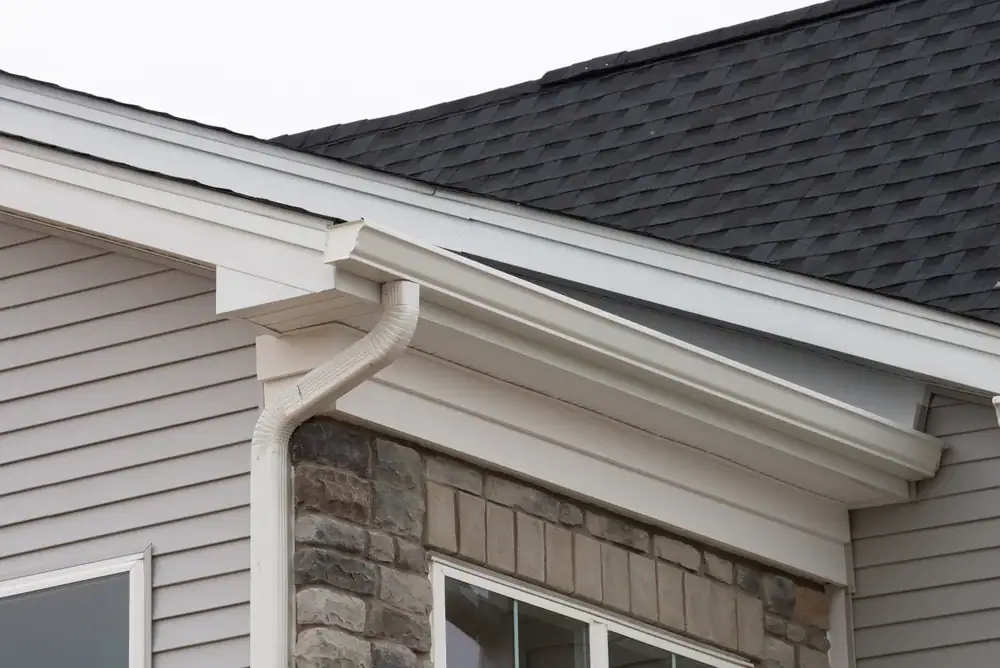
We start with an inspection of your current system and your roofline. We’re looking at pitch, fascia condition, and how water flows off your specific roof design. Different roof styles handle water differently, and your gutter system needs to match that reality.
Next, we measure for seamless aluminum gutters that we form on-site to your exact specifications. No seams means no weak points where most gutter problems start—no places for water to leak, debris to catch, or ice to form pressure points during winter freezes. We’re also checking your fascia boards because if they’re compromised, new gutters won’t solve anything.
Installation includes proper hangers spaced to handle snow loads and heavy rain, downspouts positioned to move water away from your foundation, and end caps sealed to prevent leaks. The whole process typically takes one to two days depending on your home’s size. When we’re done, you get a system that’s engineered for the exact weather conditions your house faces in Commack—not a generic setup that works fine in Arizona but fails here after the first winter.

Ready to get started?
Every gutter replacement includes seamless aluminum gutters custom-formed to your home’s measurements. Aluminum is the right material for Long Island because it resists the corrosion that destroys other materials in coastal environments. It’s lightweight enough not to stress your fascia but durable enough to handle heavy snow and ice loads.
You also get commercial-grade hangers and fasteners designed for coastal conditions. Standard hardware corrodes and fails within years when exposed to salt air. We use materials that last decades, not seasons. Downspouts are positioned based on your property’s drainage patterns—we’re moving water away from your foundation, not just dumping it at the roofline.
Most Commack homes do well with 5-inch gutters, but larger roofs or steep pitches often need 6-inch systems to handle the volume during heavy storms. We’re sizing your system based on your roof’s square footage and pitch, plus Long Island’s average rainfall of 46 inches annually. That’s not guesswork—it’s math that prevents overflow during the storms that actually test your gutters.
If your fascia boards are damaged, we handle that too. Fascia replacement is often necessary on older homes where previous gutter failures caused wood rot. Skipping that repair means your new gutters won’t have solid backing, and you’ll be dealing with the same problems within a year.

Most residential gutter replacement projects take one to two days from start to finish. Single-story ranch homes on the smaller side usually wrap up in a day. Two-story colonials or homes with complex rooflines might need two days, especially if we’re also replacing damaged fascia boards.
Weather can extend timelines during winter months when temperatures drop below freezing. Sealants and certain installation steps require specific temperature ranges to cure properly. We’d rather delay a day than install a system that won’t hold up because we rushed through cold-weather conditions.
The actual installation moves quickly because we’re forming seamless gutters on-site to your exact measurements. There’s no waiting for custom orders or dealing with sections that don’t quite fit. We measure, form, install, and test the system to make sure water flows correctly before we consider the job complete.
Gutter replacement in Commack typically runs between $1,200 and $4,000 depending on your home’s size, the gutter width you need, and whether fascia repairs are necessary. The average project costs around $2,200 for a standard single-family home with 5-inch seamless aluminum gutters.
Larger homes or those requiring 6-inch gutters to handle roof size and pitch will be on the higher end. If your fascia boards are rotted or damaged from previous gutter failures, that repair work adds to the total because we’re essentially rebuilding the structure that supports your new gutter system.
The investment makes sense when you compare it to foundation repairs ($8,000-$15,000), basement waterproofing ($5,000+), or fascia replacement done as emergency work after storm damage. Quality gutter replacement prevents all of those bigger problems. You’re looking at 20-25 years of protection from a properly installed aluminum system in coastal conditions.
Seamless gutters eliminate the joints and seams where most gutter problems start. Sectional gutters connect multiple pieces with seams that are sealed with caulk or gaskets. Those seams are where leaks develop, where debris catches and builds up, and where ice forms pressure points during freeze-thaw cycles.
Long Island’s climate is particularly hard on sectional gutters. Salt air accelerates corrosion at seam connections. Temperature swings cause expansion and contraction that gradually loosens joints. Heavy rainfall during nor’easters puts pressure on every connection point. Sectional gutters might last 10-12 years here if you’re lucky and maintain them constantly.
Seamless gutters are formed on-site as one continuous piece for each run of your roofline. No seams means no weak points. The only connections are at corners and downspouts, which are properly sealed and reinforced. You get a system that handles Long Island weather without the constant maintenance and repair cycle that sectional gutters require.
New gutters help prevent ice dams, but they’re not the complete solution by themselves. Ice dams form when heat from inside your home melts snow on your roof, then that water refreezes at the colder edges where your gutters sit. This creates a dam of ice that prevents proper drainage and forces water back under your shingles.
Properly installed gutters with adequate sizing help by moving water away quickly before it has a chance to refreeze. But ice dam prevention really requires addressing attic insulation and ventilation too. If heat is escaping through your roof, no gutter system will completely stop ice dams from forming.
What new gutters do prevent is the damage that happens when ice dams form. Seamless aluminum systems won’t crack or separate under the pressure of ice buildup the way old sectional gutters do. The water that backs up won’t leak through seams into your fascia boards. You still might get some ice formation during severe cold snaps, but your gutter system won’t fail because of it.
Gutter sizing depends on your roof’s square footage, pitch, and how much rainfall your area gets during peak storms. Most standard Commack homes do fine with 5-inch gutters. But larger roofs over 1,800 square feet, steep roof pitches that concentrate water flow, or homes with limited downspout locations often need 6-inch gutters to handle the volume.
Long Island gets hit with nor’easters that can dump 2-3 inches of rain in a few hours. Your gutters need to handle that peak flow, not just average rainfall. A roof with a steep pitch sends water down faster and in higher volume than a low-slope roof of the same size. If your current 5-inch gutters overflow during heavy storms, that’s a clear sign you need to size up.
We calculate the right size during your inspection by measuring roof area, checking pitch, and looking at how your current system performs. There’s no guessing involved. Undersized gutters overflow and defeat the whole purpose of replacement. Oversized gutters cost more than necessary and can look out of proportion on smaller homes. We’re matching the system to your specific situation.
Yes, we provide emergency gutter repair services year-round, including immediate response after major storm events. When nor’easters or severe weather damage your gutter system, waiting weeks for repairs means water damage to your foundation, fascia, and siding continues with every rainfall.
Emergency repairs focus on stopping active water damage first. That might mean temporary fixes to get you through the immediate crisis, followed by permanent repairs or full replacement once we can properly assess the damage. Sometimes a section can be repaired. Other times storm damage reveals that your entire system was already compromised and needs replacement.
We prioritize emergency calls because we know water damage compounds quickly. A gutter that pulls away from your fascia during a storm doesn’t just need reattachment—the fascia board often needs repair or replacement too. The longer water pours directly against your home’s exterior, the more expensive the total fix becomes. Getting someone out quickly prevents a $500 gutter repair from turning into a $3,000 fascia and siding restoration project.
Other Services we provide in Commack