
Hear From Our Clients
You’re not replacing gutters because they look bad. You’re doing it because the alternative is foundation cracks, basement flooding, and landscaping that washes away every time it rains.
Mount Sinai gets 40-50 inches of rain annually, plus another 35-40 inches of snow. When gutters fail here, water doesn’t just drip—it pools against your foundation, seeps into your basement, and turns freeze-thaw cycles into structural nightmares. The coastal salt air accelerates corrosion faster than inland areas, which means sectional gutters with multiple joints start leaking years earlier than they should.
Seamless gutter installation eliminates those weak points. Custom-fabricated on-site to your home’s exact measurements, seamless gutters run continuously along your roofline with minimal connections. That means fewer leaks, less maintenance, and a system that actually handles nor’easters without overflowing onto your walkways or eroding your flower beds.
You get 20-30 years of protection instead of constant repairs. Your basement stays dry. Your foundation stays intact. And you stop worrying every time the forecast calls for heavy rain.
We’ve spent more than 10 years working on Long Island homes, which means we’ve seen what happens when gutters aren’t built for this climate. We’ve repaired foundation damage caused by overflow. We’ve replaced rotted fascia boards from leaking seams. We’ve responded to emergency calls after nor’easters ripped poorly installed systems right off the roofline.
That’s why we only install seamless gutters with materials designed for coastal conditions—heavy gauge aluminum with protective coatings that resist salt air corrosion. We’re licensed, insured, and local, which means our reputation depends entirely on how well your gutters perform during the next big storm.
Mount Sinai homeowners deal with unique challenges: beach proximity, mature trees dropping debris, and weather that swings from humid summers to freezing winters. Your home gutter replacement needs to account for all of it, and we make sure it does.
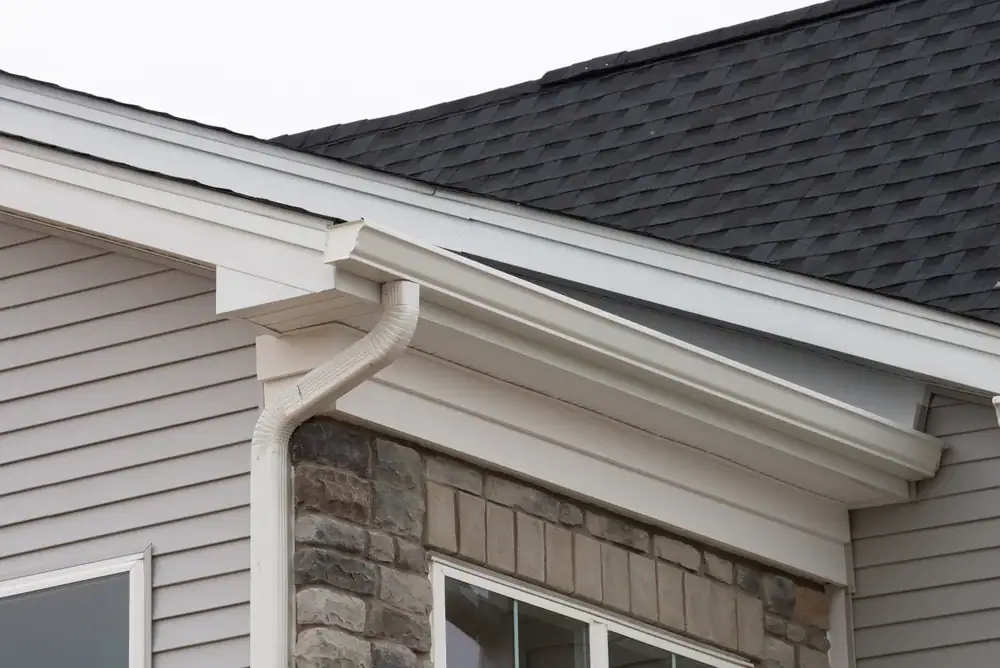
We start with an inspection of your current system. Not just the gutters themselves, but the fascia boards, downspouts, and how water’s currently draining around your foundation. If there’s existing damage, you need to know about it before new gutters go up.
Next, we take precise measurements of your roofline. Seamless gutters are fabricated on-site using a specialized machine that forms continuous channels to your home’s exact specs. No guessing, no sectional pieces that kind of fit—custom metalwork that matches your home perfectly.
Installation involves securely mounting the gutters with proper pitch and spacing. The angle matters because even a slight miscalculation means water pools instead of flows. We also make sure downspouts direct water far enough from your foundation to actually prevent the flooding you’re trying to avoid.
Finally, we test the system. We want to see water moving through the gutters and exiting where it should, not overflowing at the corners or backing up at the seams. You get a walkthrough of the completed work, plus warranty details that cover both materials and workmanship. If something goes wrong, we fix it—that’s the point of working with a local gutter replacement company that’s still going to be here next year.

Ready to get started?
Your gutter replacement includes seamless aluminum gutters with Sherwin Williams protective coating—the kind that holds up against coastal moisture and salt air exposure. We’re not using builder-grade sectional gutters that leak at every joint. You’re getting continuous channels with minimal connection points, which drastically reduces the risk of failure during heavy rainfall.
Downspouts are sized and positioned based on your roof’s square footage and Mount Sinai’s average rainfall intensity. Undersized downspouts can’t handle the volume when storms dump inches of rain in a few hours, which defeats the entire purpose of new gutters. We also extend downspouts away from your foundation—at least 6-10 feet—so water actually drains instead of pooling against your basement walls.
Fascia board inspection and repair is part of the process. If the wood behind your old gutters is rotted or damaged, new gutters won’t mount securely. We address that before installation so your system stays attached during the next nor’easter.
You also get options for gutter guards if you’re tired of cleaning debris twice a year. Mount Sinai’s mix of oaks, maples, and beeches creates constant leaf drop, and that organic matter doesn’t just sit in your gutters—it decomposes into sponge-like masses that trap water and promote ice dam formation. Guards reduce that maintenance burden significantly, though they’re not required if you’d rather handle seasonal cleaning yourself.

Most home gutter replacement projects in Mount Sinai range from $2,800 to $5,200, depending on your home’s size, roofline complexity, and material choice. A straightforward ranch with minimal corners costs less than a two-story colonial with multiple valleys and angles.
Seamless aluminum gutters are the most common choice because they balance durability and cost. Copper gutters last longer and look great, but they’re significantly more expensive upfront. If your home is in a particularly salt-heavy coastal area, investing in upgraded protective coatings adds to the cost but extends the lifespan.
The price includes removal of your old system, fabrication and installation of new seamless gutters, downspout placement, and fascia board repairs if needed. Emergency repairs after storm damage can cost $500-$1,500 depending on severity, but full replacement prevents those recurring expenses. You’re also avoiding the $5,000+ foundation repair bills that come with ignoring failing gutters, which makes replacement a lot cheaper than the alternative.
Seamless gutters typically last 20-30 years in Mount Sinai when properly installed with coastal-grade materials. That’s about 10 years longer than sectional gutters, which start leaking at the seams much earlier due to salt air corrosion and freeze-thaw cycles.
The key is using heavy gauge aluminum with protective coatings designed for coastal moisture. Standard gutters corrode faster near the beach, and once corrosion starts, it spreads quickly. Coatings like Sherwin Williams Plastilure create a barrier against salt air and humidity, which is critical for Long Island homes.
Maintenance also affects lifespan. Gutters clogged with decomposing leaves hold moisture longer, which accelerates rust and weakens mounting brackets. Cleaning your gutters twice a year—late spring and late fall—removes debris before it becomes a problem. If you have overhanging trees, you might need more frequent cleaning or gutter guards to reduce buildup. Proper installation with correct pitch and secure mounting means your gutters handle heavy snow loads and wind without pulling away from the fascia, which is what happens when contractors rush the job or use inadequate fasteners.
Sectional gutters are pre-cut pieces that snap or rivet together along your roofline. Every connection point is a potential leak, and those seams fail faster in coastal climates where salt air and temperature swings cause expansion and contraction. You’ll spend more time repairing leaks and dealing with overflow at the joints.
Seamless gutters are custom-fabricated on-site to fit your home’s exact measurements. A specialized machine forms continuous aluminum channels that run the length of each roofline section with minimal connections—usually just at the corners. Fewer seams mean fewer leaks, less maintenance, and better performance during heavy rain.
The cost difference is minimal, but the performance gap is significant. Seamless gutters handle Mount Sinai’s 40-50 inches of annual rainfall without the weak points that cause sectional systems to fail. They also look cleaner because there aren’t visible seams every 10 feet. Most professional gutter replacement contractors in Suffolk County only install seamless systems now because sectional gutters create more callbacks and warranty claims. If someone’s offering you sectional gutters, they’re either cutting corners or using outdated methods.
New gutters alone won’t prevent ice dams, but they’re part of the solution. Ice dams form when heat escapes through your roof, melts snow, and that water refreezes at the roof edge where it’s colder. If your gutters are clogged or improperly pitched, trapped water freezes into solid ice that backs up under your shingles and leaks into your home.
Properly installed seamless gutters with correct pitch allow water to flow freely instead of pooling. That means less standing water to freeze in the first place. Gutter guards also help by preventing the leaf debris that traps moisture and creates ideal conditions for ice buildup.
The real fix for ice dams involves attic insulation and ventilation, which keeps your roof cold enough that snow doesn’t melt unevenly. But if your gutters are old, sagging, or full of debris, they’re making the problem worse. Replacing them eliminates one variable. You still need to address attic heat loss if ice dams are a recurring issue, but new gutters mean water that does melt can actually drain instead of freezing into a dam that damages your roof structure and interior ceilings.
At minimum, clean your gutters twice a year—late spring after pollen and seed drop, and late fall after leaves finish falling. Mount Sinai’s tree coverage means most homes need that baseline maintenance to prevent clogs and overflow.
If you have oaks, maples, or beeches overhanging your roofline, you might need quarterly cleaning. Those trees drop debris constantly, and it doesn’t just sit there—it decomposes into a sponge-like mass that holds water and promotes rust. That organic buildup also creates perfect conditions for ice dams when temperatures drop.
Gutter guards reduce cleaning frequency significantly, though they’re not maintenance-free. You’ll still need to brush off surface debris occasionally, but you won’t be scooping out handfuls of decomposed leaves every few months. The investment makes sense if you’re tired of climbing ladders or paying for seasonal cleanings.
Signs you need to clean sooner include water overflowing during rain, sagging sections, or plants growing out of your gutters. By that point, the damage might already be happening—water’s spilling onto your foundation, fascia boards are staying wet, and you’re looking at repairs beyond just cleaning. Staying ahead of debris buildup is cheaper than fixing the problems it causes.
Yes, we respond to emergency calls year-round, including after major storms when gutters get ripped off, clogged with debris, or damaged by falling branches. Nor’easters and coastal storms hit Mount Sinai hard, and when gutters fail during heavy rain, the water damage starts immediately.
Emergency repairs focus on stopping active problems—reattaching sections that pulled away, clearing blockages that are causing overflow, or temporarily redirecting water away from your foundation until permanent fixes can happen. If the damage is extensive, we’ll assess whether repair makes sense or if full replacement is the better investment.
Storm damage often reveals underlying issues that were already compromising your gutter system. Corroded mounting brackets, rotted fascia boards, or improper pitch that’s been causing slow leaks for months. Emergency service gets your home protected quickly, but we’ll also give you a clear picture of what needs to happen long-term so you’re not dealing with the same problem after the next storm. Our goal is fixing it right, not just patching it until we come back in six months.
Other Services we provide in Mount Sinai