
Hear From Our Clients

Northport’s position on the harbor means your roof faces conditions most Long Island homes never deal with. Nor’easters tracking through the Sound drive wind-driven rain horizontally under shingles and into flashing gaps. Salt air off Northport Harbor accelerates metal corrosion faster than you’d expect flashings that look fine from the ground can have rust pitting that opens up the moment a storm hits. A real repair accounts for all of that, not just the visible damage.
The older housing stock in Northport adds another layer. Victorian-era homes and century-old properties along the harbor hills have complex rooflines dormers, steep pitches, multiple valleys that create more flashing points and more failure opportunities than a simple suburban roof. A patch job that works on a flat Ranch-style home elsewhere can fail quickly on a Northport Victorian if the underlying cause isn’t addressed.
What you actually get from a proper repair is a roof that doesn’t need to be re-examined every spring. No more watching the ceiling after every storm. No more wondering if the repair held. When the work is done right and documented with photos showing what’s under the shingles, not just what it looks like from the driveway you can move on.
We’re a family-owned exterior contractor based in Suffolk County, and we’ve been working on Long Island homes including the older, architecturally complex properties along the North Shore and throughout Northport for over a decade. Every person who sets foot on your roof is a trained, salaried member of our crew. No subcontractors. No third-party labor. The people doing the work are accountable to us, and we’re accountable to you.
We hold a valid Suffolk County Home Improvement Contractor license and unlike most New York counties, Suffolk requires a mandatory written exam to earn it. That’s publicly verifiable before you ever call us.
Alban Hoxha, our owner, is personally involved in every job. Northport homeowners are used to dealing with the person who’s actually responsible, not a sales rep who disappears after the contract is signed. That’s how we operate and it’s reflected in every review that mentions Alban by name.

It starts with a thorough inspection not a quick visual from the driveway, but an actual assessment of the deck, underlayment, flashing, and any areas where water may have already worked its way in. For Northport’s older homes, that means paying close attention to dormers, valleys, and the flashing around chimneys and skylights, where most failures originate. We document what we find before any work begins.
From there, you get a clear, complete estimate. No line items that appear after we’ve started. No discovering “additional damage” once you’ve committed. If a repair requires a permit through the Village of Northport’s building department which applies to certain structural repairs and full replacements we handle that process and make sure everything is done to code. Historically significant properties in the village may also fall under the Architectural and Historic Review Board’s jurisdiction, and we know how to navigate that without slowing your project down unnecessarily.
Once the repair is complete, we document the finished work with photos and video so you have a clear record of what was done beneath the surface. That documentation matters when you’re filing an insurance claim, selling your home, or simply want to know the repair was done the way it was supposed to be.

Ready to get started?
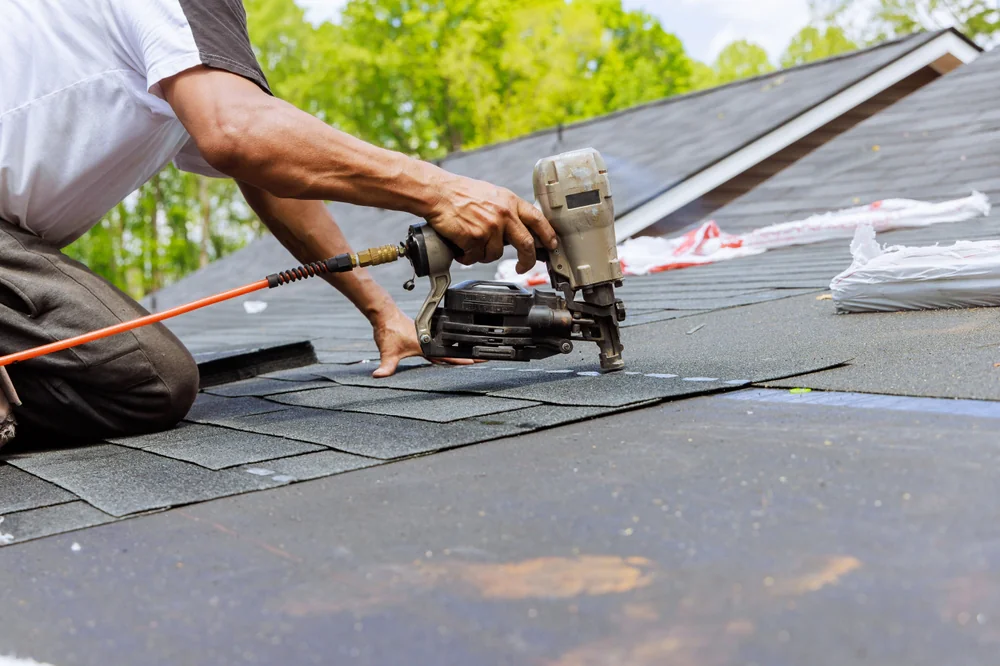
Roof repairs in Northport aren’t one-size-fits-all, and the range of what we handle reflects that. Missing or damaged shingles from wind and limb strikes common in the wooded residential areas above the harbor along Bayview Avenue are straightforward when caught early and expensive when ignored. Flashing failures around chimneys, dormers, and skylights are the most common source of active leaks in Northport’s older housing stock, and they require more than a bead of caulk to fix properly. We replace flashing when it needs replacing, not just seal over it.
We also handle flat roof repair on garages, additions, and the low-slope sections that show up frequently on Victorian and early-20th-century properties throughout Northport. Emergency roof repair is available 24/7 if a storm tears something open at night, we can typically be on-site within hours to assess the damage and weatherproof the area before more water gets in.
Every repair includes insurance documentation support if the damage is storm-related. We photograph the damage, help you understand what your policy likely covers, and communicate with your adjuster so that process doesn’t fall entirely on you. For a Northport homeowner dealing with a significant claim on a high-value property, that support is worth having from the start.

The honest answer is that it depends on the age of the roof, the extent of the damage, and what’s going on underneath the surface and you usually can’t determine that from the ground. A roof with isolated flashing failure, a few damaged shingles, or a single leak point is almost always a repair situation. A roof that’s been patched multiple times, is showing widespread granule loss, has soft spots in the decking, or is approaching 20 to 25 years old is worth evaluating for replacement.
For Northport’s older homes specifically, this question comes up often because many properties have roofs that have been layered or repaired over decades without a full assessment. A thorough inspection one that looks at the deck condition, the underlayment, and the flashing at every transition point gives you an honest picture of what you’re working with. That’s the only way to make a decision you won’t regret in two years.
Flashing failure is the most common culprit by a significant margin. The flashing around chimneys, dormers, skylights, and roof-to-wall transitions is what keeps water out at the most vulnerable points of any roof. On Northport’s older housing stock, that flashing may be original or close to it, and years of salt air exposure off Northport Harbor accelerates corrosion in ways that aren’t visible until a storm puts pressure on it.
Beyond flashing, ice dams are a recurring issue in older Northport homes that weren’t built with modern insulation standards. When heat escapes from the living space and warms the upper roof deck, snow melts and refreezes at the eave overhang and that ice forces water backward under shingles. Long Island’s freeze-thaw winter pattern makes this a predictable annual problem for homes with inadequate attic insulation or ventilation. The leak you notice in January may have been building since November.
Generally, yes if the damage was caused by a covered peril like wind, hail, or a falling tree. What insurance typically does not cover is damage resulting from age, wear, or lack of maintenance. The distinction matters, and adjusters will look for evidence of pre-existing deterioration to reduce or deny a claim.
The documentation you have at the time of the claim makes a significant difference in the outcome. An adjuster who receives clear photos of the storm damage taken before any repairs begin, showing the specific failure points is working with better information than one who’s trying to evaluate damage after the fact. We document damage thoroughly before any work starts, which gives you a stronger foundation for the claims process. If your Northport home was hit by a nor’easter or a tree strike, don’t patch anything before you have that documentation in hand.
Not long. Mold can begin forming within 24 to 48 hours of sustained moisture exposure, and structural damage from an active leak accumulates quietly often for weeks or months before it becomes visible on your ceiling. By the time you see a stain, water has typically been moving through the roof assembly for longer than you’d want.
In a Northport winter, the timeline compresses further. A leak that opens during a nor’easter and isn’t addressed before the next freeze can trap moisture in the roof assembly, where it expands during freeze-thaw cycles and accelerates deck deterioration. For a home valued at $1.2 million or more, the cost of emergency weatherproofing is trivial compared to the cost of replacing water-damaged framing, insulation, and interior finishes. If you have an active leak, the right call is to get someone out immediately not to wait for a convenient appointment window.
Start with the basics: Are they licensed in Suffolk County? Suffolk County requires a mandatory written exam for Home Improvement Contractor licensure it’s a higher bar than most New York counties, and it’s publicly verifiable in the county’s contractor database. Ask for the license number and look it up before signing anything.
From there, ask whether they use subcontractors. Most roofing companies do it’s standard in the industry but it means the people actually working on your roof may not be employees of the company you hired, and accountability gets murky when something goes wrong. Ask what documentation they provide after the repair is complete. Ask whether the estimate is final or subject to change once work begins. And if your property is in a historically significant area of Northport, ask whether they’re familiar with the Village of Northport’s permitting process and the Architectural and Historic Review Board’s requirements. These are reasonable questions. A contractor worth hiring will answer all of them without hesitation.
A few reasons and understanding them helps you evaluate what you’re actually comparing. The most obvious variable is scope. A contractor who quotes only the visible damage is giving you a lower number than one who has assessed the deck condition, the underlayment, and the flashing at every transition point. Those two estimates aren’t really comparing the same job.
Material quality is another factor. Coastal-grade underlayment, impact-resistant shingles, and properly rated flashing materials cost more than standard components and for a Northport home facing Long Island Sound exposure and salt air off the harbor, the difference in how long those materials hold up is real. A quote that looks attractive because it’s using lower-grade materials is not a deal it’s a deferred cost. Finally, some contractors quote low and find “additional damage” after work has started. An upfront, complete estimate one that covers materials, labor, disposal, and any likely underlayment or decking needs is worth more than a low opening number that grows once they’re on your roof.
Other Services we provide in Northport