
Hear From Our Clients
You’re not replacing gutters because you want to. You’re doing it because water is going where it shouldn’t—pooling near your foundation, staining your siding, or dripping into places that’ll cost real money to fix later.
Working gutters channel 46 inches of annual rainfall away from your foundation, your basement, and your landscaping. They prevent the kind of water damage that starts small and ends with five-figure repair bills. In East Hampton North, where coastal storms and salt air push systems harder than most places, that protection matters even more.
When gutters fail, water finds the path of least resistance. That’s usually your foundation, where Long Island’s sandy soil doesn’t hold up well to constant saturation. Foundation repairs here run $10,000 to $15,000. Basement waterproofing costs another few thousand. The gutter replacement you’re looking at right now? It’s the cheaper fix—and the one that actually prevents the problem.
We work across Long Island, from Montauk to the North Fork, handling the kind of coastal conditions that wear out standard systems faster than they should. We’ve seen what nor’easters do to improperly installed gutters. We’ve repaired the damage that happens when homeowners wait too long or hire the wrong crew.
We’re not the cheapest option—and that’s intentional. You’re paying for seamless gutter installation that doesn’t need constant repairs, materials that handle salt air without corroding in five years, and installation that actually accounts for Long Island’s drainage requirements. The crews who show up know what they’re doing because they’ve done it hundreds of times in conditions exactly like yours.
East Hampton North homeowners deal with heavy spring rainfall, summer thunderstorms, and winter freeze-thaw cycles that crack poorly installed systems. We install gutters that handle all of it without requiring emergency calls every season.
We start with an inspection of your current system—not just the gutters themselves, but where water is going, what damage might already exist, and whether your fascia or soffit needs attention before new gutters go up. You’ll know exactly what you’re dealing with before any work starts.
If you’re moving forward, we remove the old system completely. No shortcuts, no leaving damaged sections because they “look fine.” We check the fascia boards for rot or weakness—common in coastal areas where moisture gets trapped behind failing gutters. If there’s an issue, we fix it. You don’t want new gutters attached to rotting wood.
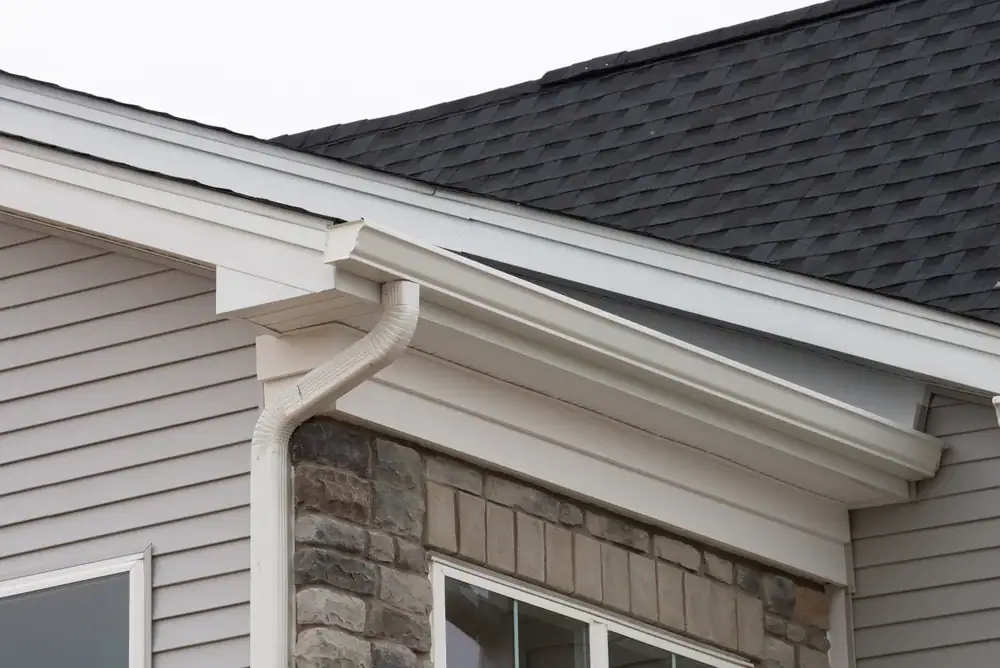
Then we install seamless gutters custom-fitted to your roofline. These are formed on-site to your exact measurements, which means fewer seams, fewer leak points, and better water flow. We set the pitch correctly so water moves toward downspouts instead of pooling in sections. Downspouts get positioned to direct water away from your foundation—at least six feet out, sometimes more depending on your property’s grading.
The whole process usually takes a day, sometimes two for larger homes. You’re left with a system that works the way it’s supposed to and doesn’t need constant babysitting.

Ready to get started?
A full gutter replacement in East Hampton North means removing your old system, inspecting and repairing fascia if needed, and installing seamless aluminum gutters designed for coastal conditions. We use materials that resist corrosion from salt air—a real concern here that accelerates wear on standard systems.
You’re also getting proper pitch and placement. Gutters that don’t slope correctly will pool water and overflow during heavy rain. Long Island gets 4-5 inches of rainfall in spring alone, and summer storms can dump serious water in short periods. Your system needs to handle that volume without backing up or spilling over.
Downspouts get extended away from your foundation—not just to the ground, but out far enough that water doesn’t immediately soak back into the soil near your basement walls. In East Hampton North’s sandy soil, foundation saturation happens fast. Proper drainage prevents that.
We also check for ice dam risk during installation. Long Island winters bring freeze-thaw cycles that create ice dams in poorly ventilated or improperly sloped gutters. Those dams force water under shingles and into your home, causing interior damage that costs thousands to repair. Correct installation prevents it.
Most systems we install last 20-30 years with basic maintenance—cleaning twice a year and checking for debris after major storms. That’s significantly longer than sectional gutters, which develop leaks at every joint and typically need replacement after 10-15 years.

Full gutter replacement for most Long Island homes runs between $1,200 and $2,500, depending on your home’s size, roofline complexity, and how much fascia repair is needed before new gutters go up. Larger homes or properties with multiple stories and complex rooflines will be on the higher end.
Seamless gutters cost more upfront than sectional systems, but you’re paying for fewer leak points and longer lifespan. Sectional gutters develop problems at every seam—usually within a few years. Seamless systems reduce those leak points by 80% and typically last a decade longer.
If your fascia boards are rotted or damaged, that repair happens before new gutters are installed. You can’t attach a new system to compromised wood and expect it to hold. Fascia repair adds to the cost, but it’s not optional if the damage exists. We’ll identify this during the initial inspection, so you’ll know upfront what you’re looking at cost-wise.
If you’re seeing multiple sections with cracks, separated seams, or visible rust, replacement makes more sense than patching individual problems. Repairs work when damage is isolated—one section got hit by a falling branch, or a single seam separated during a storm. But when issues are widespread, you’re just delaying the inevitable.
Sagging gutters that pull away from the fascia usually mean the hangers have failed or the fascia itself is damaged. Sometimes this is repairable, but often it indicates the system has reached the end of its useful life. Water damage to siding or foundation below the gutters is another sign—it means water isn’t being channeled properly, which happens when gutters are warped, improperly pitched, or too damaged to function correctly.
In East Hampton North’s coastal environment, corrosion from salt air accelerates wear. If your gutters are more than 15-20 years old and showing multiple problems, replacement is usually the better investment. Repairs might buy you a year or two, but you’ll be back to the same conversation soon—and water damage doesn’t wait.
Seamless aluminum gutters hold up best in East Hampton North’s coastal environment. Aluminum resists corrosion better than steel, doesn’t rust like cheaper materials, and handles salt air exposure without deteriorating rapidly. The seamless design eliminates most leak points, which matters when you’re dealing with 46 inches of annual rainfall plus coastal storms.
Copper gutters last even longer—often 50+ years—but the cost is significantly higher. Most homeowners don’t need that level of investment unless they’re matching existing copper elements or want the aged patina look. Aluminum gives you 20-30 years of reliable performance at a fraction of the cost.
Vinyl gutters are cheaper upfront but crack in cold weather and don’t handle Long Island’s freeze-thaw cycles well. They also become brittle from UV exposure over time. In coastal areas, the salt air and temperature swings make vinyl a poor long-term choice. You’ll replace them more often, which eliminates any initial savings. Aluminum seamless gutters are the practical choice for durability, cost, and performance in this climate.
Twice a year minimum—once in late spring after trees finish dropping seeds and debris, and again in late fall after leaves come down. If you have oak or maple trees near your roofline, you might need a third cleaning mid-season because those trees drop debris continuously.
Clogged gutters overflow during rain, which defeats the entire purpose of having them. Water spills over the sides and pools at your foundation instead of being channeled away. In Long Island’s sandy soil, that foundation saturation happens quickly and leads to basement seepage, foundation cracks, and structural issues that cost serious money to fix.
Coastal storms also dump leaves, twigs, and debris into gutters faster than normal weather. After major storms or high winds, check your gutters for blockages even if you recently cleaned them. Downspouts are especially prone to clogging at the elbow joints where debris gets stuck. If water isn’t flowing out during rain, you’ve got a blockage that needs clearing immediately. Seamless gutters with properly positioned downspouts make cleaning easier, but they still need regular maintenance to function correctly.
Yes, if they’re installed correctly and maintained properly. Gutters exist specifically to channel roof runoff away from your foundation. When they fail—through clogs, damage, or poor installation—water dumps directly at the base of your home, where it saturates soil and seeps into basements or causes foundation settling.
In East Hampton North, where soil is sandy and doesn’t absorb water slowly, foundation saturation happens fast during heavy rain. That water finds cracks in foundation walls, seeps through basement floors, and creates moisture problems that lead to mold growth and structural damage. Foundation repairs here commonly run $10,000 to $15,000. Basement waterproofing adds thousands more. Properly functioning gutters prevent that water from reaching your foundation in the first place.
The key is installation quality. Gutters need correct pitch so water flows toward downspouts instead of pooling. Downspouts must extend at least six feet from the foundation—not just dump water at ground level where it soaks back in. Seamless gutters reduce leak points that cause water to drip along the fascia instead of reaching the downspout. When all these elements work together, your basement stays dry and your foundation stays stable.
Most residential gutter replacements take one full day, sometimes two for larger homes or properties with complex rooflines. The timeline depends on how much fascia repair is needed, how many linear feet of gutter you’re replacing, and whether weather cooperates during installation.
The process starts with removing your old system completely—gutters, downspouts, and hangers. Then we inspect and repair fascia boards if there’s rot or damage from water exposure. That fascia work can add time, but it’s necessary before new gutters go up. You can’t attach a new system to compromised wood.
Once fascia is solid, we install seamless gutters that are custom-formed on-site to your exact measurements. We set the pitch, position downspouts for proper drainage, and extend them away from your foundation. The work isn’t complicated, but it requires precision. Gutters that aren’t properly pitched will pool water and fail prematurely. Most experienced crews can complete a standard home in 6-8 hours. You’ll have functioning gutters by the end of the day, ready for the next rainstorm.
Other Services we provide in East Hampton North