
Hear From Our Clients
You shouldn’t have to test every board before stepping outside. When your deck has soft spots, wobbly railings, or visible rot, it’s not just an eyesore—it’s a liability.
Professional deck repair fixes the problem at the source. We replace rotting deck boards, reinforce loose railings, and address structural issues before they turn into expensive emergencies. You get a deck that’s safe for your family and guests, without the constant worry.
Long Island’s salt air and freeze-thaw cycles destroy decks faster than most homeowners expect. What starts as a small crack or loose fastener becomes a major repair by spring. Catching these issues early means you spend less, stress less, and actually enjoy your outdoor space again.
Home Team Construction has served Suffolk County since before composite decking became the norm. We’ve seen what Long Island weather does to every type of deck material, and we know which repairs actually hold up in Fort Salonga’s coastal climate.
You’re working with licensed, insured contractors who live and work in this area. We understand the specific challenges your deck faces—salt air corroding hardware, humidity causing rot, winter storms creating structural stress. That local knowledge means we fix problems correctly the first time.
Most of our clients are homeowners in Fort Salonga and surrounding communities who need their deck repaired quickly, safely, and without the runaround. We show up when we say we will, explain what needs fixing and why, and give you a clear price before any work starts.
First, we inspect your entire deck structure—not just the obvious problem areas. Loose boards on the surface often mean issues with joists, ledger boards, or fasteners underneath. We check everything from the foundation up so you know exactly what you’re dealing with.
Next, we walk you through what needs immediate attention versus what can wait. You get a detailed breakdown of the repairs, the materials we’ll use, and why they’re the right choice for coastal conditions. No pressure, no upselling—just clear information so you can make the call.
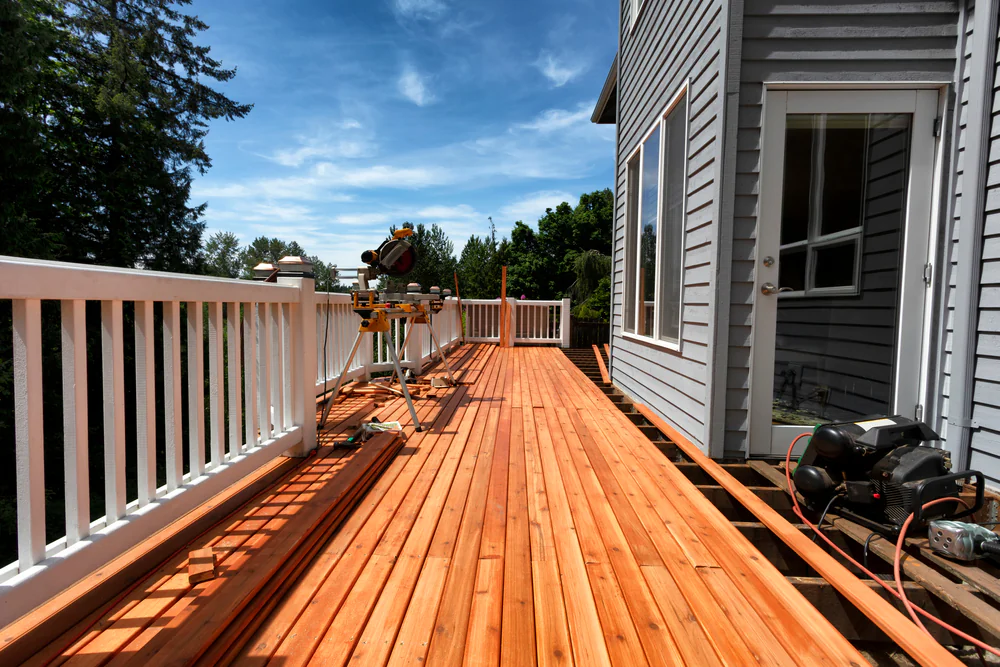
Once you approve the work, most deck repairs take one to three days depending on the scope. We remove damaged wood, replace it with pressure-treated lumber or composite materials designed for Long Island weather, and use marine-grade hardware that won’t corrode in salt air. We clean up completely when we’re done, and you get a warranty covering both labor and materials.
Ready to get started?
Structural repairs address the foundation of your deck—joists, beams, posts, and ledger boards. If your deck feels bouncy or unstable, the problem is usually below the surface. We reinforce or replace compromised structural elements so your deck is solid again.
Surface repairs handle the boards you walk on and the railings you lean against. Rotting deck boards get replaced with materials that resist moisture and won’t splinter. Loose railings get secured with proper fasteners and brackets that meet local building codes. You shouldn’t have to worry whether your deck is safe—it should just be safe.
Hardware replacement is critical in Fort Salonga because standard screws and nails fail quickly in coastal conditions. We use corrosion-resistant fasteners, joist hangers, and brackets specifically designed for salt air exposure. This isn’t an upsell—it’s the difference between a repair that lasts two years and one that lasts twenty.
Every repair includes a thorough inspection report. You’ll know what we found, what we fixed, and what to watch for down the road. Most deck problems are preventable if you catch them early, and we’ll tell you exactly what to look for.

Most deck repairs in Fort Salonga run between $562 and $5,000 depending on what needs fixing. Small jobs like replacing a few rotting boards or tightening loose railings fall on the lower end. Larger structural repairs—reinforcing joists, replacing sections of decking, or rebuilding railings—cost more but still run thousands less than full replacement.
The biggest factor is how much damage exists below the surface. A soft board might just need replacement, or it might indicate rot in the joists underneath. We give you a detailed estimate after inspecting the entire structure so there are no surprises.
Coastal properties in Fort Salonga often need marine-grade hardware and moisture-resistant materials, which cost slightly more upfront but last significantly longer. Cheap materials fail quickly in salt air, turning a one-time repair into an annual expense. We price our work transparently and explain exactly what you’re paying for.
Salt air is the main culprit. It corrodes metal fasteners from the inside out, weakening the connections that hold your deck together. Standard screws and nails fail much faster here than they would inland, which is why we use marine-grade hardware on every coastal deck repair.
Freeze-thaw cycles create another layer of damage. Water gets into cracks and nail holes, freezes during winter, expands, and splits the wood. By spring, what was a hairline crack becomes a major problem. Long Island’s humidity also creates ideal conditions for mold and rot, especially in areas where water pools or drainage is poor.
Storm damage from Nor’easters and tropical systems puts stress on deck structures that weren’t built to handle high winds and heavy rain. Loose railings, lifted boards, and separated ledger connections are common after major weather events. Regular inspections catch these issues before they become safety hazards.
Most deck repairs take one to three days from start to finish. Small jobs like replacing rotting boards or securing loose railings can be done in a single day. Larger structural repairs—reinforcing joists, replacing sections of decking, or rebuilding stairs—typically take two to three days.
Weather affects the timeline since we can’t install certain materials in rain or extreme cold. We’ll give you a realistic schedule upfront and keep you updated if conditions change. Most homeowners are surprised how quickly we work compared to other contractors—we show up on time, stay focused, and finish the job.
If you need emergency repairs because of storm damage or a sudden safety issue, we can usually provide temporary weatherproofing within 24 hours and schedule permanent repairs shortly after. You won’t be waiting weeks for someone to return your call or show up to assess the damage.
If the structural foundation is solid—posts, beams, and joists are in good shape—repair almost always makes more sense. You can replace surface boards, railings, and stairs for a fraction of what full replacement costs, and your deck will be safe and functional for years.
Replace the deck if the foundation is compromised. Rotting posts, failing beams, or widespread joist damage means the entire structure is at risk. At that point, repairing individual components is like putting a bandaid on a broken bone—it won’t solve the underlying problem.
We’ll tell you honestly which situation you’re in. Some contractors push replacement because it’s more profitable, but that’s not how we operate. If your deck can be repaired properly, we’ll show you exactly what needs fixing and what it will cost. If replacement is the smarter move, we’ll explain why and give you options.
Pressure-treated lumber works well for structural repairs if it’s properly rated for ground contact and coastal exposure. Not all pressure-treated wood is created equal—you need material that’s been treated to withstand moisture and resist rot. We use lumber specifically rated for Long Island’s climate, not whatever’s cheapest at the big box store.
Composite decking is worth considering for surface boards if you’re tired of constant maintenance. It costs more upfront but doesn’t rot, splinter, or require yearly staining. For homeowners who want a deck that looks good without the upkeep, composite makes sense for high-traffic areas and railings.
Marine-grade stainless steel hardware is non-negotiable in Fort Salonga. Regular screws, nails, and joist hangers corrode quickly in salt air, causing structural failures within a few years. Corrosion-resistant fasteners cost more but they’re the only thing that holds up long-term. We won’t cut corners on hardware because that’s where most coastal deck repairs fail.
Any structural instability needs immediate attention. If your deck feels bouncy when you walk on it, railings are loose, or you can see visible rot in support posts or beams, don’t wait. These are safety issues that can lead to collapse, especially if you have guests or furniture on the deck.
Soft or spongy boards also need quick repair. If you step on a board and it feels like it’s giving way, moisture has compromised the wood. That board could break under weight, and the rot is likely spreading to surrounding areas. Catching it now prevents a much larger repair later.
Cosmetic issues like fading, minor cracks, or loose nails can usually wait until you’re ready to schedule repairs. They’re not emergencies, but they shouldn’t be ignored indefinitely. Small problems become big problems in Long Island’s climate, so plan to address them within a season or two before they escalate.
Other Services we provide in Fort Salonga