
Hear From Our Clients

You’re not looking at a simple repair anymore. The crown is cracked, water’s getting in, and every freeze-thaw cycle makes it worse. Maybe you’ve already had a contractor tell you it’s beyond patching.
A complete chimney replacement means you’re done chasing leaks. No more water stains on the ceiling. No more wondering if the next storm will make things worse. You get a rebuilt chimney with marine-grade materials designed specifically for Riverhead’s salt air and coastal weather—not generic materials that’ll corrode in five years.
This is about safety and value. A properly rebuilt chimney protects your home from carbon monoxide risks, stops water damage before it reaches your walls and ceilings, and gives you a system that actually handles Long Island’s climate. You’re not just fixing what broke—you’re upgrading to something that won’t break the same way again.
We’ve spent over a decade working on chimneys across Suffolk County. We’ve seen what coastal weather does to chimney systems in Riverhead—the salt air corrosion, the freeze-thaw damage, the way cheap materials fail in three years instead of thirty.
We’re licensed, insured, and local. Every crew member knows Suffolk County building codes and understands why standard chimney materials don’t hold up here. We use marine-grade stainless steel liners, weatherproof mortar with coastal additives, and installation techniques that account for high winds and horizontal rain.
You’re hiring people who live and work in this area. We’re not driving in from somewhere else, guessing at what your chimney needs. We know exactly what Riverhead chimneys face because we’ve rebuilt hundreds of them.
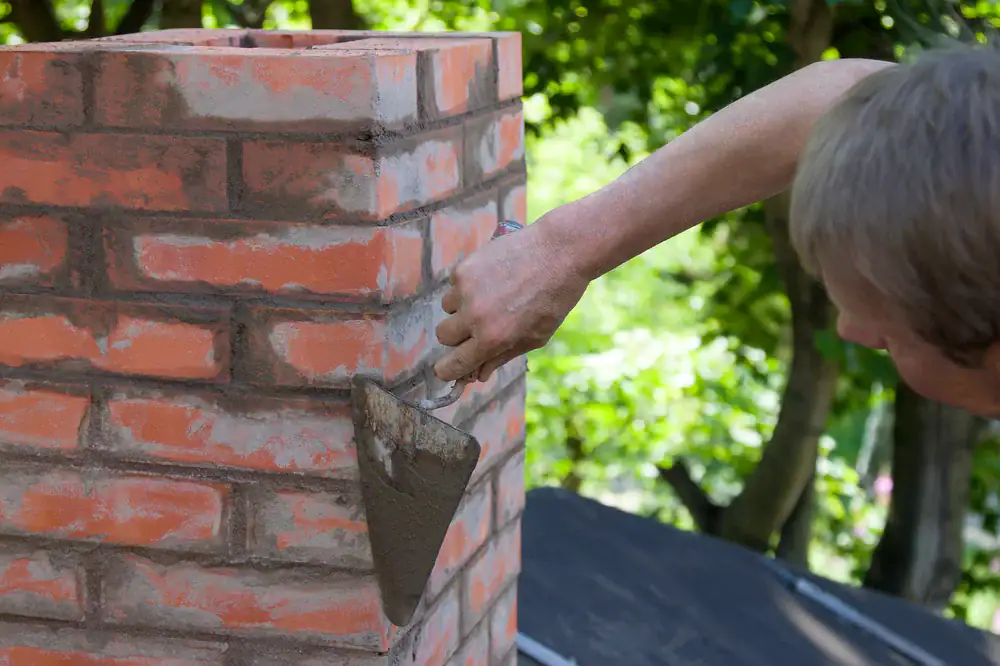
First, we inspect the entire chimney system—not just what’s visible from the roof. We’re looking at the flue liner condition, the structural integrity of the masonry, whether water damage has spread to the surrounding roofline, and if the foundation is compromised. You get a clear assessment of what needs replacing and why.
Next comes the teardown. We remove the damaged chimney stack down to the roofline or further if needed, protecting your roof and home interior throughout the process. This isn’t a patch job—we’re taking out everything that’s compromised so the new system sits on solid structure.
Then we rebuild with materials chosen for coastal environments. That means a new stainless steel flue liner rated for your heating system, masonry with marine-grade mortar that resists salt penetration, proper flashing that handles Long Island’s wind-driven rain, and a crown and cap designed to shed water completely. Every component is installed to Suffolk County code.
The timeline depends on chimney height and damage extent, but most complete replacements take three to five days in good weather. We handle permits, coordinate inspections, and clean up completely when we’re done.

Ready to get started?
A complete chimney replacement means every vulnerable component gets upgraded. You’re getting a new chimney liner—either stainless steel or cast-in-place depending on your heating system—that’s properly sized and insulated. This is critical for draft, efficiency, and preventing condensation damage that destroys chimneys from the inside.
The masonry gets rebuilt with brick or stone that matches your home, using mortar specifically formulated for coastal exposure. Standard mortar fails quickly in Riverhead because salt crystals expand inside it and cause cracking. We use additives that resist this process and extend the life of your chimney by decades.
Flashing replacement is part of every job. Old flashing is where most leaks start, and we install new step flashing and counter flashing that integrates properly with your roofing system. The crown gets poured with a proper slope and overhang to direct water away from the masonry. The cap gets upgraded to stainless steel or copper—materials that won’t rust out in salt air.
You also get a chimney that meets current building codes. Older Riverhead homes often have chimneys built to standards that don’t account for modern high-efficiency heating systems. We make sure your new chimney handles today’s equipment safely and efficiently, which matters for insurance and resale value.

Most complete chimney replacements in Riverhead run between $10,000 and $15,000 for a typical two-story home. That’s not a repair estimate—that’s tearing down and rebuilding the entire chimney stack with proper materials.
The cost depends on chimney height, how much masonry needs replacing, what type of liner your heating system requires, and whether there’s additional structural damage we find during teardown. A shorter ranch-style chimney costs less than a full two-story stack. If we discover the chase or surrounding structure is compromised, that adds to the scope.
Here’s what drives costs up: hidden water damage, structural issues that weren’t visible during inspection, difficult roof access, and choosing premium materials like copper caps or stone veneer. What keeps costs reasonable: catching the problem before it spreads, scheduling during our slower seasons, and choosing durable but standard materials that perform well in coastal environments without unnecessary upgrades.
A properly built chimney using marine-grade materials should last 30 to 50 years in Riverhead, even with salt air exposure. That’s assuming correct installation, appropriate materials for coastal environments, and basic maintenance like annual inspections and waterproofing every few years.
The lifespan depends heavily on material choices. A standard clay flue liner might last 20 years here before salt corrosion and condensation damage require replacement. A stainless steel liner rated for coastal use can go 30-plus years. Standard mortar might need repointing in 10 years. Coastal-grade mortar with proper additives can go 25 years before needing attention.
What shortens chimney life in Riverhead: skipping annual inspections, ignoring small cracks that let water in, using your fireplace or heating system without a proper liner, and choosing contractors who don’t account for Long Island’s specific climate challenges. The freeze-thaw cycle alone will destroy a chimney in 10 years if water gets into the masonry. Salt air accelerates everything. You need materials and installation techniques designed for these conditions, not generic approaches that work fine in Pennsylvania but fail here.
Sometimes partial replacement works—if the damage is isolated and the rest of the structure is sound. But often what looks like isolated damage is actually a symptom of bigger problems that a partial fix won’t solve.
Here’s the reality: if your chimney crown is cracked and the top few courses of brick are deteriorating, but the flue liner is intact and the lower masonry is solid, we can rebuild just the top section. That saves money and makes sense. But if water has been leaking for a while, the damage usually extends deeper than what’s visible. We often find deteriorated flue liners, compromised masonry halfway down the stack, or structural issues that won’t be solved by fixing the top.
A partial replacement on a chimney with hidden damage just means you’ll be calling us back in two years to finish what should have been done the first time. We’ll always give you an honest assessment during inspection. If partial replacement will actually solve your problem, we’ll tell you. If it’s just delaying the inevitable and wasting your money, we’ll tell you that too. Most chimneys that need attention in Riverhead have been deteriorating for years, and the salt air doesn’t leave much middle ground between “fine” and “needs complete replacement.”
Late spring through early fall is ideal for chimney replacement in Riverhead. You want dry weather, moderate temperatures for mortar curing, and enough time to complete the job before heating season starts in November.
September and early October are particularly good. Summer storm damage is visible by then, so you know what you’re dealing with. The weather is usually stable enough for masonry work. And you’re getting the work done before you need your heating system, which means no emergency situations or rush fees.
Winter replacements are possible but complicated. Mortar doesn’t cure properly below 40 degrees, so we need additives and sometimes heated enclosures to do the work correctly. That adds cost and time. Spring works well too, but that’s when everyone realizes their chimney has problems, so scheduling gets tight. If you’re planning a replacement, calling in late summer gives you the best combination of good weather, flexible scheduling, and completion before you need your chimney functioning. Emergency replacements happen year-round because sometimes chimneys fail catastrophically, but planned replacements should happen when conditions favor quality work.
Yes. Any structural work on a chimney in Riverhead requires a building permit from the Town of Riverhead Building Department. This isn’t optional—it’s code, and skipping it creates liability issues and problems when you sell your home.
The permit process involves submitting plans that show what’s being replaced, what materials we’re using, and how the new chimney meets current building codes. The town will schedule inspections during construction—usually one after the liner installation and another after the final build. This protects you by ensuring the work meets safety standards and is done correctly.
We handle the permit application and coordinate inspections as part of our service. You don’t need to visit the building department or figure out what paperwork is required. The permit costs a few hundred dollars depending on project scope, and it’s worth every penny. An unpermitted chimney replacement can cause serious problems during a home sale, with insurance claims, or if there’s ever a fire or carbon monoxide incident. Inspectors verify that the flue liner is properly sized for your heating system, that clearances to combustibles are correct, and that the installation meets current safety codes—things that matter for your family’s safety, not just bureaucratic compliance.
Salt air is the main culprit. Riverhead is close enough to the coast that salt particles in the air penetrate chimney masonry and accelerate deterioration at three to five times the rate you’d see inland. Salt attracts moisture, and when that moisture freezes, it expands and cracks the masonry from inside.
The freeze-thaw cycle here is particularly brutal. Water gets into small cracks, freezes overnight when temperatures drop, expands by 9%, and creates pressure that widens the cracks. This happens dozens of times each winter. Combine that with salt that’s already weakened the mortar, and you get rapid deterioration that turns minor damage into structural problems in just a few years.
Long Island’s wind patterns make it worse. Rain doesn’t just fall—it gets driven horizontally into chimney systems by coastal winds. That means water penetrates deeper into the masonry than it would in calmer climates. And the humidity here never really lets things dry out completely, so moisture stays in the system and continues causing damage. Chimneys in Riverhead need materials and construction techniques specifically designed for coastal exposure. Standard approaches that work fine in other parts of New York fail quickly here because they’re not built to handle salt air, constant moisture, and aggressive freeze-thaw cycles happening simultaneously.
Other Services we provide in Riverhead