Hear From Our Clients

You’ve probably already spent money on repairs. Maybe you’ve had the crown repointed, the flashing replaced, or the cap fixed. And six months later, you’re dealing with the same water stains on your ceiling.
That’s not your fault. Long Island chimneys face conditions that most repair materials weren’t designed to handle long-term.
Salt air doesn’t just sit on the surface. It penetrates deep into mortar joints and accelerates the freeze-thaw cycle that cracks brick from the inside out. What might last 30 years inland fails here in 10 to 15. When the structure itself is compromised, repairs become a temporary band-aid on a permanent problem.
A full chimney replacement gives you a system built specifically for coastal conditions. That means marine-grade materials, proper flashing integration, and a chimney liner replacement that actually vents correctly. You’re not just fixing what’s broken. You’re eliminating the underlying issue so you’re not calling someone back in two years.
We’ve been serving Suffolk County homeowners for over 30 years. We’re a family-owned business, which means when you call, you’re talking to people who understand what it’s like to deal with a leaking chimney during a nor’easter.
Our crews are licensed, insured, and trained specifically on the challenges Long Island homes face. We’re not a national franchise following a script. We’re local contractors who’ve seen what works and what doesn’t when salt air and freeze-thaw cycles are part of the equation.
You’ll get upfront pricing before we start, and you’ll work with people who know that our reputation in this community depends on doing the job right. That’s not marketing talk. That’s just how it works when your customers are also your neighbors.
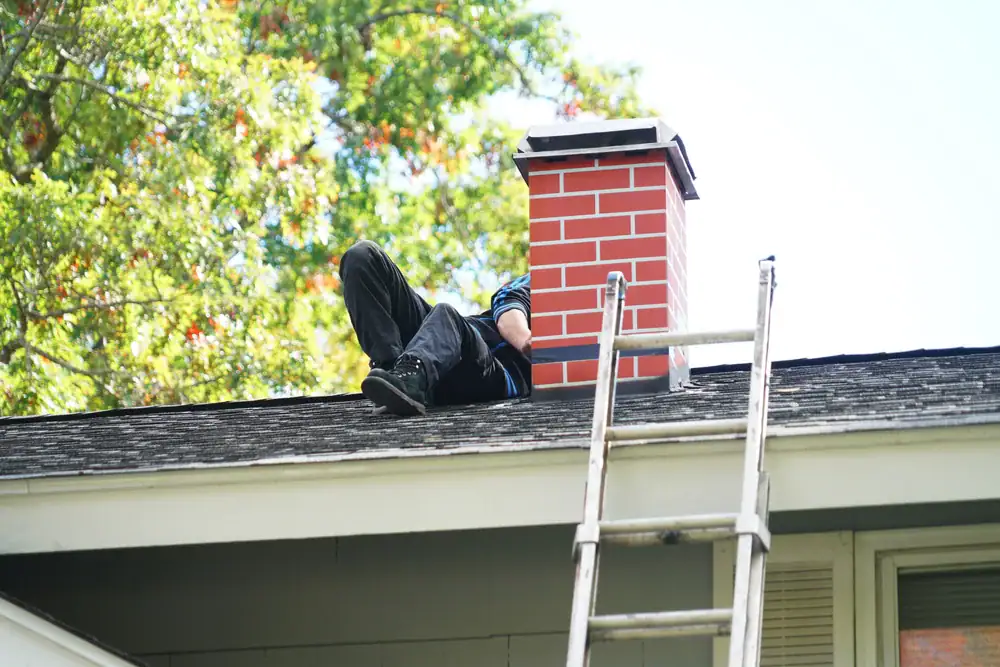
First, we come out and do a full assessment of your chimney’s condition. We’re looking at the structure, the mortar joints, the flue, the crown, and the flashing. You’ll get a clear explanation of what’s failing and why, along with an upfront estimate that covers the complete job.
Once you’re ready to move forward, we handle the teardown and debris removal. Depending on the extent of the damage, that might mean taking the chimney down to the roofline or even further if there’s structural damage below. We protect your roof and your home’s interior throughout the process.
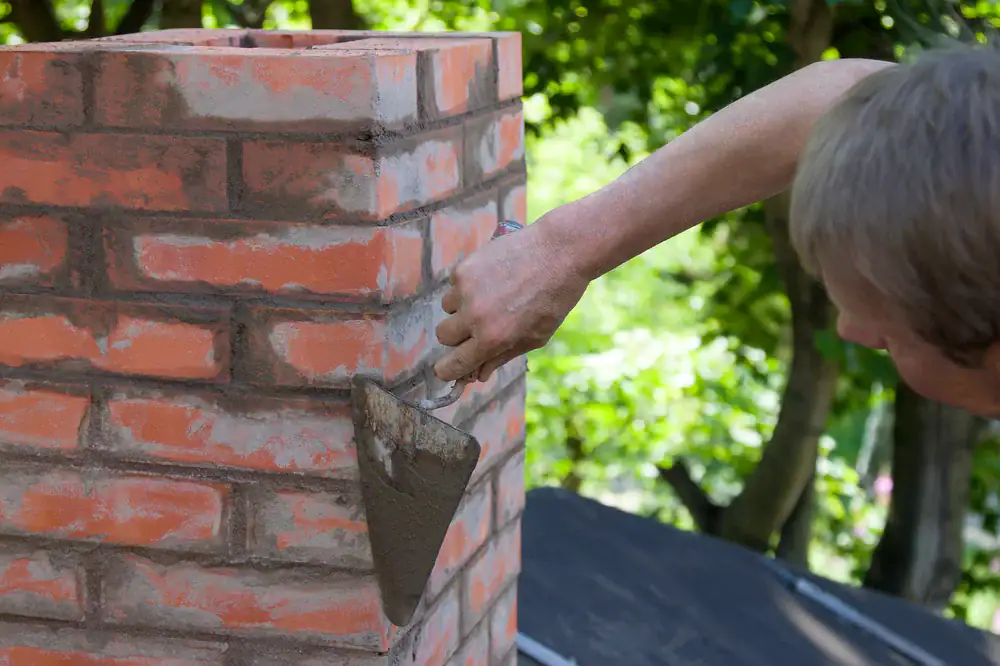
Then we rebuild using materials designed for Long Island’s environment. That includes proper chimney liner replacement, a new chimney cap replacement to keep water and animals out, and chimney flashing replacement that integrates correctly with your roof system. If your chimney stack replacement requires it, we’ll also address any masonry or structural issues at the base.
The goal is a complete system that vents properly, keeps water out, and holds up against the weather conditions that destroyed the old one. You’re not getting a quick patch. You’re getting a chimney rebuild that’s built to last.

Ready to get started?
Every chimney replacement we do in Nesconset includes marine-grade materials that can handle salt exposure and moisture. Standard mortar and brick might work fine in drier climates, but here they fail faster. We use materials that account for the reality of living a few miles from the coast.
You’ll get a complete chimney liner replacement if your flue is damaged or improperly sized. A lot of older chimneys have liners that are cracked or never met current safety codes. That’s a carbon monoxide risk and a fire hazard. We make sure your new system vents correctly and safely.
Chimney flashing replacement is part of the process, not an add-on. Flashing is where most leaks start, and it has to integrate properly with your roof. We’re not just sealing gaps. We’re installing a water management system that directs moisture away from vulnerable areas.
If your chimney cap is missing or damaged, chimney cap replacement is included. The cap keeps rain, snow, and animals out of your flue. It’s a small component, but it makes a big difference in how long your system lasts. When your chimney stack replacement is complete, you’ll have a structure that’s designed to handle what Long Island weather brings, year after year.

Most full chimney replacements in Nesconset run between $8,000 and $15,000, depending on the height of your chimney, how much structural damage exists, and what materials are needed. If you’re only replacing the chimney stack above the roofline, you’re looking at the lower end. If there’s damage below the roofline or foundation issues, the cost goes up.
Here’s what affects the price. Taller chimneys require more materials and more labor. Accessibility matters too. If your chimney is easy to reach, the job goes faster. If it’s surrounded by obstacles or requires special equipment, that adds time and cost.
The materials you choose also play a role. Marine-grade brick and mortar cost more than standard materials, but they last significantly longer in coastal environments. You can go cheaper upfront, but you’ll likely be dealing with repairs sooner. We give you an upfront estimate that breaks down exactly what you’re paying for, so there’s no confusion about where your money is going.
If you’re dealing with surface-level issues like minor mortar cracks or a damaged chimney cap, repair makes sense. But if your chimney is leaning, has large cracks running through the brick, or has been repaired multiple times in the last few years, replacement is usually the better move.
Here’s why. Chimneys fail from the inside out. By the time you see visible damage on the exterior, there’s often structural deterioration you can’t see. Repointing mortar might stop a leak temporarily, but if the bricks themselves are spalling or the flue liner is cracked, you’re not solving the root problem.
Long Island’s freeze-thaw cycles and salt exposure accelerate this process. What starts as a small crack becomes a major structural issue faster here than in other climates. If you’re spending $2,000 on repairs every couple of years, you’re better off investing in a full replacement that’s built to handle coastal conditions. We’ll assess your chimney honestly and tell you whether repair or replacement makes more sense for your situation.
Most chimney replacements take three to five days, depending on the size of the chimney and the extent of the work. If we’re only replacing the stack above the roofline, it’s usually on the shorter end. If we’re rebuilding from the foundation up or dealing with structural issues, it takes longer.
Day one is usually teardown and debris removal. We protect your roof and interior, then carefully remove the damaged chimney. Day two and three are the rebuild—laying new brick, installing the chimney liner, and integrating the flashing with your roof system. Day four is finishing work, including the chimney cap installation and final sealing.
Weather can affect the timeline. We’re not going to pour mortar in freezing temperatures or during heavy rain, because that compromises the integrity of the work. We’ll give you a realistic schedule upfront and keep you updated if anything changes. The goal is to get the job done right, not just done fast.
A leaning chimney is a structural emergency. It means the foundation has failed, the masonry has deteriorated to the point where it can’t support the weight, or both. This isn’t something you can patch. It requires a complete rebuild, and in some cases, foundation repair as well.
When a chimney leans, it’s usually because water has infiltrated the structure over time. Freeze-thaw cycles cause the bricks and mortar to expand and contract, which weakens the bond. Add in the weight of the chimney itself, and eventually, it starts to pull away. If it’s leaning more than an inch or two, it’s a safety hazard.
We’ll assess the foundation and the structure to determine what’s needed. In most cases, we’ll need to tear down the chimney completely and rebuild it with proper footings and materials designed for Long Island’s conditions. If there’s damage to your roof or siding where the chimney was pulling away, we’ll address that too. The longer you wait, the more expensive and dangerous it becomes.
Yes. If a storm has damaged your chimney to the point where it’s unsafe or actively leaking, we can come out quickly to assess the situation and start the work. Storm damage doesn’t wait, and neither should you.
After a major storm, we prioritize securing your home first. That might mean tarping your roof, removing loose bricks that could fall, or temporarily sealing openings to prevent further water damage. Once your home is safe, we’ll give you a full assessment and a plan for the replacement.
We work with most insurance companies and can help document the damage for your claim. We’ll provide photos, detailed notes, and an estimate that breaks down what’s covered and what’s not. Our goal is to make the process as straightforward as possible so you can get your home back to normal without unnecessary delays or confusion.
We use marine-grade brick and mortar designed to handle salt exposure and freeze-thaw cycles. Standard materials might work fine inland, but they fail faster in coastal environments. The salt carried by Long Island’s coastal winds penetrates mortar joints and accelerates deterioration. Marine-grade materials are formulated to resist that process.
For the chimney liner, we use stainless steel or cast-in-place liners, depending on your heating system and the condition of the existing flue. Stainless steel liners are durable, code-compliant, and handle high temperatures without cracking. Cast-in-place liners are poured directly into the flue and provide excellent insulation and structural support.
Flashing is another critical component. We use heavy-gauge metal flashing that integrates with your roof’s water management system. Cheap flashing fails quickly, especially when it’s exposed to the kind of weather we get here. The chimney cap is typically stainless steel or copper, both of which resist rust and hold up against wind and rain. Every material we use is chosen specifically because it performs well in Long Island’s climate.
Other Services we provide in Nesconset