
Hear From Our Clients
You’re not looking for the cheapest fix. You want your chimney sealed, your family safe, and the problem solved before winter hits.
That’s what you get. No water stains spreading across your ceiling. No carbon monoxide risks keeping you up at night. No emergency calls during the next storm because someone patched it instead of fixing it.
Your chimney handles what Sound Beach throws at it—salt air, coastal wind, heavy rain off the Sound. When it’s done right, you don’t think about it again. You just use your fireplace, enjoy your home, and know the structure above your roof isn’t quietly falling apart.
Most chimney problems start small. A crack in the crown. Rusted flashing. Missing mortar. Then water gets in, freezes, expands, and suddenly you’re looking at a $3,000 rebuild instead of a $400 repair. Catching it early is the difference between an invoice you shrug at and one that ruins your month.
Home Team Construction has spent over a decade working on homes across Suffolk County. We’re licensed, insured, and local—meaning when we repair your chimney in Sound Beach, we’re accountable to the same community we live in.
You’re not getting a crew that showed up yesterday and disappears tomorrow. You’re working with contractors who know how Long Island’s coastal weather beats up chimneys differently than inland properties. Salt air corrodes metal caps and flashing faster. Humidity off the Sound keeps masonry wet longer. Wind loads hit harder.
We’ve seen what happens when chimney repair companies cut corners or misdiagnose the issue. You end up paying twice—once for the bad fix, once for the real one. That’s not how we operate. You get a clear assessment, transparent pricing, and work that holds up.
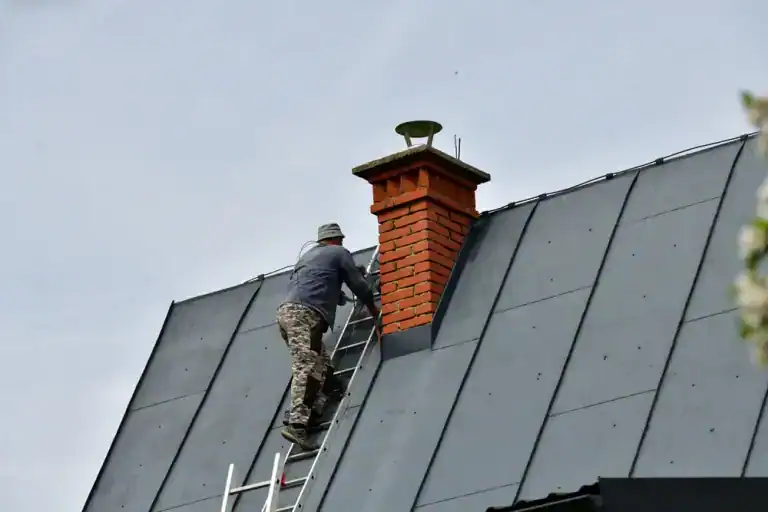
First, we inspect your chimney—inside and out. We’re looking at the crown, the flashing, the masonry, the cap, the liner. We check for cracks, rust, water damage, missing mortar, and anything else that’s letting the weather in or keeping smoke from getting out safely.
Then we explain what we found. No jargon. No upselling. If your chimney needs a full rebuild, we’ll tell you. If it just needs new flashing and some repointing, we’ll tell you that too. You get photos, a clear breakdown, and an upfront price before any work starts.
Once you approve, we schedule the repair. Most chimney leak repairs and masonry work get done in a day or two, depending on scope. We use marine-grade materials for metal components and proper mortar mix for the masonry—stuff that’s built to last in coastal conditions, not just pass inspection.
After the work’s finished, we walk you through what we did and what to keep an eye on going forward. You’re not guessing whether it’s fixed. You know it is.
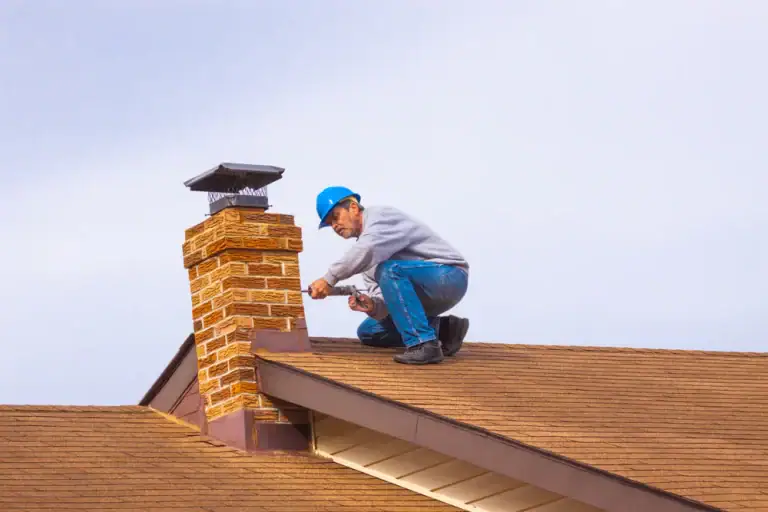
Ready to get started?
Chimney flashing repair is one of the most common fixes we handle. Flashing is the metal seal between your chimney and roof, and when it fails, water pours straight into your attic. We remove the old flashing, install new corrosion-resistant material, and seal it properly so it actually keeps water out.
Masonry repair covers cracks in the chimney structure, repointing deteriorated mortar joints, and rebuilding sections that have crumbled from freeze-thaw cycles. Sound Beach’s humidity and salt air accelerate mortar breakdown, so catching it before the brick starts shifting is critical. We match the mortar to your existing chimney and restore structural integrity.
Chimney crown repair seals the concrete top that protects your chimney from water intrusion. Cracks here let water seep into the masonry, causing expensive damage over time. We either patch small cracks or pour a new crown if the existing one is too far gone.
Chimney cap installation or replacement keeps rain, animals, and debris out of your flue. A missing or rusted cap is an open door for problems. We install stainless steel caps designed to handle coastal weather without corroding in two seasons.
If you’re dealing with a chimney leak and you’re not sure where it’s coming from, we track it down. Could be the flashing, the crown, the cap, or even the masonry itself. We find the source and fix it—not just the symptom.
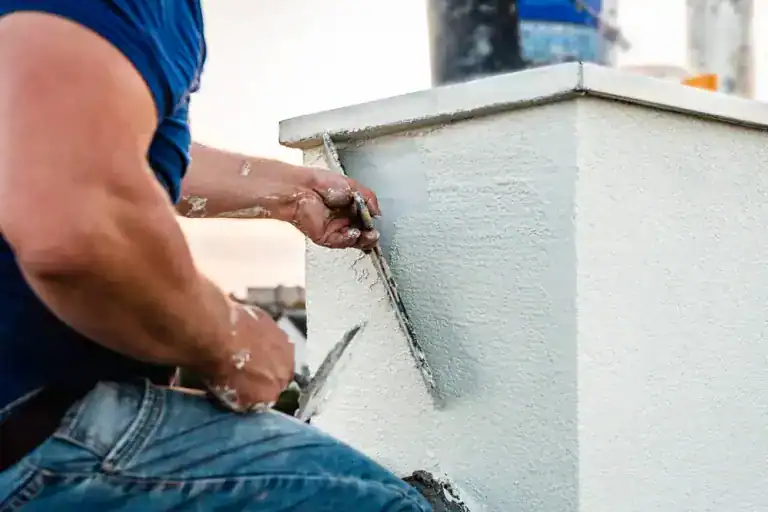
Most homeowners spend between $300 and $2,500 depending on what’s broken. Minor fixes like sealing a small crack or replacing a chimney cap run $300 to $600. Chimney flashing repair typically falls between $500 and $1,200. Masonry repair and repointing cost more—usually $1,000 to $2,500—because it’s labor-intensive and requires skilled masons.
If your chimney needs a full rebuild or structural work, costs can climb to $5,000 or more. But here’s the thing: most chimneys don’t need that if you catch problems early. A $400 repair now beats a $4,000 emergency fix later.
We give you an upfront estimate after the inspection. No surprises, no padding. You’ll know exactly what you’re paying for and why it costs what it costs.
Water stains on your ceiling or walls near the chimney are the biggest red flag. That means water is getting in, and it’s not going to stop on its own. You might also notice a musty smell, especially after it rains, or see mold starting to grow.
Check your chimney cap. If it’s missing, rusted, or damaged, rain is pouring straight down your flue. Look at the mortar between the bricks—if it’s crumbling or falling out, that’s called spalling, and it needs repointing before the structure weakens.
Rust on your damper or firebox means water’s been getting in for a while. White staining on the brick (efflorescence) is another sign of moisture problems. And if you hear dripping or find puddles inside your fireplace, your chimney is leaking and needs immediate attention.
Salt air off Long Island Sound corrodes metal components—caps, flashing, dampers—three to five times faster than inland areas. That’s why we recommend marine-grade stainless steel for replacements, not standard galvanized metal that rusts out in a few years.
The humidity near the coast keeps your chimney’s masonry saturated longer, even during dry spells. When water sits in brick and mortar, it breaks down the binder holding everything together. Add freeze-thaw cycles in winter, and you get cracks, spalling, and structural damage.
Coastal wind loads also stress chimney stacks more aggressively than sheltered inland positions. Your chimney takes a beating that homes just a few miles west don’t deal with. That’s why annual inspections make sense here—you’re catching deterioration before it becomes dangerous or expensive.
You can handle basic maintenance like cleaning out your chimney cap or brushing away debris. But actual chimney repair—flashing, masonry, crown work—requires specialized skills, tools, and safety equipment. Chimneys are tall, steep, and dangerous to work on without proper training.
More importantly, a bad DIY repair often makes the problem worse. We’ve seen homeowners use the wrong mortar mix, seal things that need to breathe, or miss the actual source of a leak while patching something cosmetic. Then they call us to fix both the original problem and the DIY attempt.
Licensed chimney contractors know building codes, proper materials for coastal conditions, and how to diagnose issues correctly. Your insurance may also require professional repairs to maintain coverage. If you’re dealing with anything structural, anything involving flashing, or any leak you can’t immediately identify, call someone who does this for a living.
Most repairs take one to two days. Chimney flashing repair, cap replacement, and minor masonry work usually get done in a single day. Larger jobs like extensive repointing, crown rebuilds, or structural repairs might take two to three days depending on weather and the scope of damage.
We don’t drag jobs out. You’re not waiting weeks for us to come back and finish. We schedule the work, show up on time, and complete it efficiently. If weather delays us—like rain during mortar work—we’ll let you know immediately and reschedule for the next clear day.
Emergency repairs, like tarping and temporarily sealing a storm-damaged chimney, can happen same-day if you need your home protected right now. Then we come back to do the permanent fix once conditions allow.
Yes, because guessing what’s wrong costs you money. A proper inspection identifies every issue—not just the obvious leak or crack you called about. We often find problems homeowners didn’t know existed, like a deteriorating liner, hidden water damage, or flashing that’s about to fail.
Chimney inspections also give you documentation for insurance claims and help you prioritize repairs if you can’t afford to fix everything at once. You’ll know what’s urgent, what can wait, and what’s just cosmetic.
Most inspections take 30 to 60 minutes and include a written report with photos. If you’re buying or selling a home in Sound Beach, an inspection protects you from inheriting someone else’s deferred maintenance. And if you use your fireplace regularly, annual inspections catch small problems before they become safety hazards or expensive emergencies.
Other Services we provide in Sound Beach