
Summary
Suffolk County chimneys take a beating from coastal storms, salt air, and freeze-thaw cycles that accelerate damage faster than inland homes experience. This guide reveals the five most critical warning signs that your chimney needs professional repair before the next nor'easter hits.
You'll learn exactly what to look for, why these signs matter for your family's safety, and when to call for help. From cracked crowns to failing flashing, understanding these warnings helps you catch $300 problems before they become $3,000 emergencies—and protects your home from water damage, carbon monoxide risks, and structural failures that only get worse with time.
That water stain near your fireplace wasn't there last month. The chimney looks fine from your driveway, but something doesn't feel right. You're wondering if it's actually a problem or if you're overreacting.
Here's what most Suffolk County homeowners don't realize: by the time chimney damage becomes obvious inside your home, you're usually looking at repairs that cost thousands instead of hundreds. Your chimney faces coastal storms, salt air, and freeze-thaw cycles that accelerate deterioration faster than chimneys just 50 miles inland. Small cracks become major structural problems when water freezes and expands inside masonry. What starts as a $300 flashing repair turns into extensive water damage, mold remediation, and structural work.
This guide walks you through the five most critical warning signs that your chimney needs professional attention before the next storm tests those weak points. You'll know exactly what to look for, why it matters, and when it's time to call someone who can actually fix it right.
Cracked or Damaged Chimney Crown
Your chimney crown takes the worst beating from Suffolk County weather. That concrete cap at the top of your chimney faces every storm, every freeze-thaw cycle, and constant exposure to salt air that accelerates deterioration.
Most homeowners don't realize their crown is cracking until water starts showing up inside. By then, you're looking at damage that spreads fast through winter weather. Small cracks become major structural problems when water freezes and expands inside the concrete—and Suffolk County's location creates perfect conditions for this kind of damage.
How freeze-thaw cycles destroy chimney crowns in coastal climates
The coastal climate brings high humidity and salt-laden air that penetrate concrete faster than inland areas experience. When winter arrives, trapped moisture freezes and expands, creating cracks that get worse with every cold snap. The freeze-thaw cycles here are particularly brutal—water seeps into tiny cracks during the day, then freezes solid at night.
This process repeats throughout Suffolk County's winter months, progressively weakening your chimney's structural integrity. Each cycle widens existing cracks and creates new ones, accelerating deterioration at an alarming rate. One winter might not cause visible damage, but after years of this cycle, the deterioration becomes impossible to ignore.
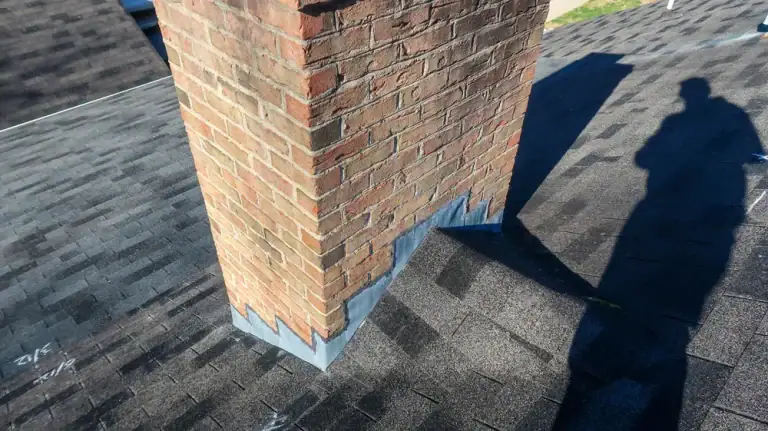
You'll see rust stains on your chimney, gaps between the flashing and your roof or chimney, or water stains appearing inside your home after every significant rain. The metal itself can corrode through completely in exposed areas. Even copper, which resists corrosion better than other metals, can fail at the seams where it's joined or where it enters the mortar.
From ground level, look for visible cracks or missing pieces of concrete on your chimney crown using binoculars if needed. Any gap larger than a hairline crack needs immediate sealing before winter weather makes it worse. Don't ignore small problems hoping they'll stay small—Suffolk County's winter weather doesn't give failing crowns a break. What looks like minor damage in October becomes major structural problems by March, often requiring complete crown replacement instead of simple chimney repair.
What damaged crowns actually cost to repair vs replace
Minor chimney crown repairs typically cost between $150 and $350 when you catch them early. That's a manageable expense that prevents bigger problems down the road. But if the chimney crown has extensive damage—like large cracks causing water damage or threatening the structural integrity of the whole chimney—you're looking at replacement costs that can reach $3,000.
The difference between repair and replacement often comes down to timing. A small crack sealed in spring stays a small repair. That same crack left through another winter of freeze-thaw cycles becomes extensive damage requiring full crown replacement. The coastal location makes this problem worse because salt air penetrates masonry materials more easily than fresh air, and proximity to water bodies creates more frequent temperature fluctuations.
Without intervention, spalling begins—where brick faces literally break away from the structure. Advanced spalling can lead to loose bricks, compromised structural stability, and eventual partial or complete chimney collapse. Professional crown repair stops this destructive cycle by creating a watertight seal that prevents initial water infiltration.
Quality concrete matched to your existing masonry provides long-term protection against Suffolk County's challenging weather conditions. A properly functioning crown prevents rain and snow from entering freely, which would accelerate interior deterioration and create conditions for freeze-thaw damage. The crown also prevents direct water entry into your chimney flue while allowing proper ventilation for safe operation.
White Staining and Spalling Bricks on Exterior Masonry
Those white, chalky deposits on your chimney bricks aren't just cosmetic issues. That staining—called efflorescence—means moisture is moving through your chimney masonry. It happens when water soaks into the bricks and then evaporates, leaving behind mineral deposits on the surface.
While it might look harmless, efflorescence is a warning sign that moisture is getting into the brick. Over time, that weakens the structure and opens pathways for more serious damage. If you're also noticing brick faces that are peeling, pitting, or shedding gritty flakes, you're seeing spalling—and that's moisture damage in action.
Why salt air makes masonry damage worse on Long Island
Suffolk County's location along the Atlantic Ocean and Long Island Sound exposes homes to high humidity, salt air, and seasonal storms. These conditions accelerate wear on masonry chimneys, eroding mortar joints and weakening chimney bricks. Salt carried by coastal winds penetrates brickwork and mortar joints, causing gradual deterioration.
Salt-air corrosion is one of the biggest reasons chimneys deteriorate faster on Long Island. Salt particles carried by coastal winds settle on masonry surfaces and penetrate bricks and mortar joints. When salt absorbs moisture, it expands through a process called chloride-salt crystallization. This expansion weakens masonry and causes cracking, flaking, and structural damage.
Spalling happens when water enters bricks, freezes, and then leads to the outer layers popping off. It's a moisture red flag often triggered by repeated wetting and winter freezes in the Suffolk County area. You might spot piles of brick chips on the roof or see faces of bricks missing along the stack, chimney shoulders, or at the roofline. Water always wins if it keeps entering the masonry—spalling spreads, weakens the stack, and opens new paths for leaks into attic framing and drywall.
Bricks and mortar weren't designed to be completely waterproof. They naturally allow some water penetration, which might not cause immediate problems in moderate climates with occasional rain. But in Long Island's environment, that water absorption accelerates deterioration and leads to leaks. The combination of salt air, freeze-thaw cycles, and severe storms creates conditions that standard repair materials simply can't handle long-term.
When to waterproof vs when to replace damaged masonry
Professional chimney waterproofing applies specially formulated sealant to your chimney's exterior surfaces. This isn't the same as painting your chimney or slapping on some generic waterproof coating. The products used for chimney waterproofing are vapor-permeable, meaning they block liquid water from entering while still allowing water vapor to escape from inside your chimney.
Your chimney needs to breathe. When you use your fireplace, moisture from combustion needs to vent through the masonry. If you seal your chimney with a non-breathable coating, you trap that moisture inside, causing damage from within. Waterproofing treatments significantly extend chimney lifespan and reduce the need for costly masonry repairs when applied correctly and at the right time.
But waterproofing only works when the underlying masonry is still structurally sound. If bricks are already spalling extensively, mortar joints have deteriorated significantly, or you're seeing structural shifts, waterproofing won't solve the problem. At that point, you need masonry repair or chimney replacement before protective treatments can be effective.
Professional chimney inspection can identify problems before they become visible to untrained eyes. Annual inspections help catch deterioration early when waterproofing and repointing remain cost-effective compared to emergency structural repairs. The key is addressing these issues while they're still manageable—a $300 waterproofing treatment today prevents $3,000 in masonry repairs next year. Chimney repointing involves removing deteriorated mortar between bricks and replacing it with fresh mortar, which typically costs $500 to $2,500 depending on the chimney's height and area needing repair.
Protect Your Suffolk County Home Before Storm Season Hits
Your chimney isn't just moving smoke out of your house. It's your first line of defense against carbon monoxide poisoning, chimney fires, and structural damage that starts small and gets expensive fast. The five warning signs covered here—cracked crowns, white staining, spalling bricks, damaged flashing, and interior moisture—all point to problems that only get worse when you're fighting Long Island weather year-round.
The difference between a $300 repair and a $3,000 disaster usually comes down to timing. Small cracks sealed before winter stay small. Flashing gaps fixed in spring don't turn into rotted roof decking. Efflorescence addressed early doesn't become structural spalling that requires brick replacement.
Suffolk County's coastal climate doesn't give your chimney a break. Every nor'easter, every freeze-thaw cycle, every blast of salt air accelerates damage that inland chimneys don't experience at the same rate. When you need straight answers and professional chimney repair that actually lasts through harsh weather conditions, we bring the local expertise and honest approach your home deserves.
Article details