Hear From Our Clients
You’re not calling a roofer contractor because everything’s fine. You’re calling because something’s wrong—or you’re worried it’s about to be.
Maybe you spotted water stains on your ceiling after the last storm. Maybe shingles are missing and you’re not sure how bad it really is. Or maybe you’ve been putting it off because you’ve heard the horror stories about contractors who promise to show up “next Tuesday” and never do.
Here’s what changes when your roof is done right. You stop checking the weather forecast with that knot in your stomach. You stop putting buckets in the attic. Your heating bill drops because your home isn’t bleeding warm air through gaps and worn spots. And when you eventually sell, you’re not scrambling to patch problems or explaining away issues to buyers—you’re adding value.
A properly installed roof in Lake Grove isn’t just about keeping rain out. It’s about handling nor’easters, salt air, summer heat, and everything else Long Island throws at it without falling apart in five years.
We’ve spent over a decade fixing roofs across Suffolk County—not just slapping on shingles, but actually solving the problems that come with living on Long Island.
We’re the roofing company Lake Grove homeowners call when they need their roof fixed right the first time. That means clear estimates before we start, so you know exactly what you’re paying for. Licensed professionals who show up when they say they will. And installations built to handle the weather conditions you actually face here—not some generic approach that works fine in Arizona but fails after one coastal winter.
We’ve seen what happens when roofs are installed wrong. We’ve torn off enough cheap work to know the difference between a roof that lasts and one that becomes your problem in three years. You’re not getting the runaround here—just honest work from people who understand what Suffolk County weather does to a roof.
First, we come out and actually look at your roof—not from the ground, but up close. We’re checking for hidden damage, measuring everything, and figuring out what you actually need versus what you don’t.
Then you get a clear estimate. Not a vague range or a “we’ll see when we get up there” number. You’ll know what materials we’re using, why we’re recommending them for Lake Grove’s climate, and what the timeline looks like.
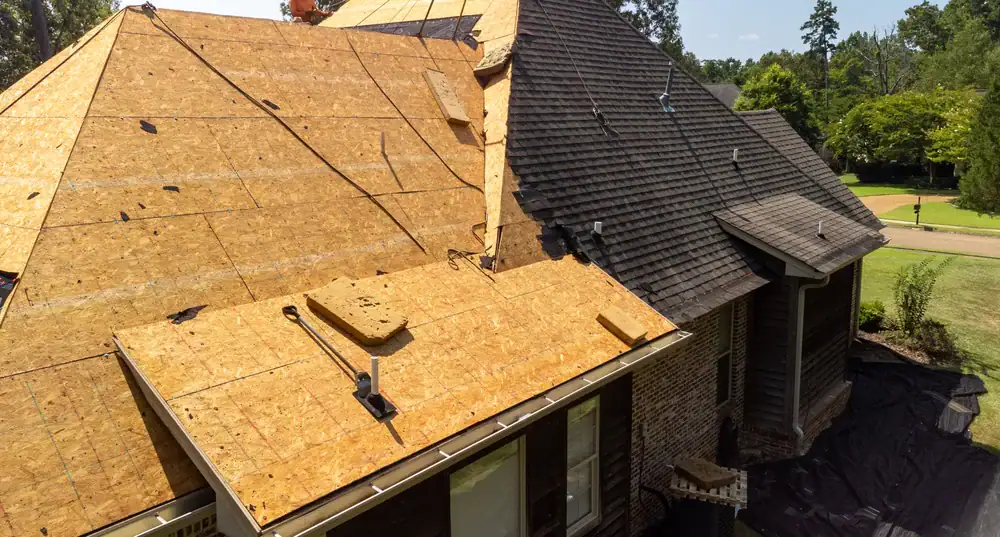
When we start the job, we protect your property first—tarps, magnetic rollers for nails, the whole setup. Then we strip off the old roof down to the decking so we can see if there’s rot or damage that needs fixing before new shingles go on. We’re not covering up problems.
The new roof goes on with proper underlayment, weather-resistant materials rated for coastal conditions, and installation techniques designed to handle high winds. We’re talking about the details that matter—flashing around chimneys and vents, proper ventilation so your attic doesn’t turn into an oven, and starter strips that actually stay put.
When we’re done, we walk the property with a magnet and clean up every nail. You get a roof that’s built to last, not just built to pass inspection.
Ready to get started?
You’re getting a full tear-off and replacement—not a patch job. That means removing old shingles, inspecting and repairing decking if needed, installing new underlayment, and putting on architectural shingles designed for Long Island weather.
In Lake Grove, where summer heat can hit hard and winter storms roll in fast, material choice matters. We use shingles rated for high winds and temperature swings. The underlayment is waterproof, not just water-resistant. And ventilation gets done right so your attic doesn’t cook your new roof from underneath.
The average roof replacement in Suffolk County runs between $8,000 and $15,000 depending on size and material. That’s not cheap, but it’s also a 50-70% return on investment when you sell, plus immediate savings on energy bills when your home isn’t leaking conditioned air. More importantly, it’s 20-30 years of not worrying about leaks.
We also handle the details most homeowners don’t think about until they become problems—flashing around skylights, proper drip edge installation, ice and water shield in valleys. These aren’t upsells. They’re the difference between a roof that works and one that leaks at the first sign of trouble.
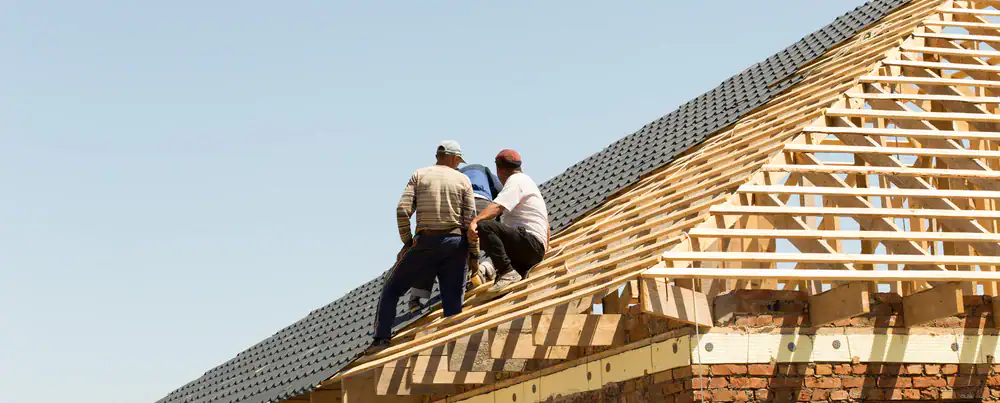
Most residential roof installations take two to four days from start to finish, depending on the size of your home and weather conditions. We’re not rushing through it, but we’re also not dragging it out for weeks.
Day one is usually tear-off and inspection. We strip everything down, check the decking, make any repairs, and get the underlayment on so your home is protected even if we have to stop for weather. Day two and three are installation—shingles, flashing, ventilation, all the detail work. Final day is cleanup, inspection, and walkthrough.
If weather hits, we pause. We’re not installing a roof in the rain just to meet a deadline, because that’s how you end up with problems later. But we also don’t disappear for two weeks between phases. You’ll know the schedule upfront, and if something changes, you’ll hear about it before you have to call us.
Architectural asphalt shingles are the most common choice in Lake Grove, and for good reason. They handle temperature swings, resist wind damage better than basic three-tab shingles, and last 25-30 years when installed correctly.
Metal roofing is gaining ground, especially for homeowners who want something that lasts 50+ years and handles coastal conditions without breaking down. It costs more upfront—sometimes double what asphalt runs—but you’re never replacing it again. Metal also sheds snow and ice better, which matters during those surprise winter storms.
Slate looks great and lasts forever, but it’s heavy and expensive. Most Lake Grove homes aren’t built to support slate without structural reinforcement, so it’s usually not practical unless you’re doing a major renovation anyway. The real question isn’t what’s “best” in general—it’s what makes sense for your home, your budget, and how long you’re planning to stay. We’ll walk through the actual pros and cons for your situation, not just push whatever has the highest margin.
If your roof is over 20 years old and you’re seeing multiple issues—curling shingles, granules washing into gutters, daylight through the attic boards—you’re probably past the point where repairs make sense. Patching a failing roof is like putting new tires on a car with a cracked engine block.
But if your roof is newer and you’ve got isolated damage from a storm or a few problem areas, repairs might be the smarter move. We’re talking about replacing a section of shingles, fixing flashing around a chimney, or addressing one valley that’s not draining right.
Here’s the test: if repairs are going to cost more than 30% of a new roof, or if you’re going to be calling us back every year for a new problem, replacement makes more financial sense. We’ll tell you honestly what we’d do if it was our house. Sometimes that means a repair. Sometimes it means ripping it off and starting over. But you’ll know why we’re recommending what we’re recommending, with photos and explanations that actually make sense.
It depends on why you need a new roof. If storm damage caused the problem—wind tore off shingles, hail cracked them, a tree branch punched through—insurance usually covers it minus your deductible. That’s what you’re paying premiums for.
If your roof is just old and worn out, insurance won’t cover it. That’s considered normal maintenance, like replacing your water heater or repainting your siding. Age-related wear isn’t an insurable event.
The tricky part is proving storm damage, especially after a nor’easter when half the neighborhood is filing claims. Insurance adjusters look for impact marks, wind damage patterns, and timestamps that match recent weather events. We’ve worked with enough insurance companies to know what documentation they need. We’ll take photos, write up the damage report, and give you an estimate formatted the way adjusters expect to see it. That doesn’t guarantee approval, but it helps your case. And if insurance denies the claim, you’ll at least know what you’re actually paying for out of pocket before any work starts.
Start with licensing and insurance. If a roofer contractor can’t show you proof they’re licensed in New York and carrying liability insurance plus workers’ comp, walk away. You’re not just protecting yourself from shoddy work—you’re protecting yourself from liability if someone gets hurt on your property.
Next, ask for references from jobs in Suffolk County, preferably recent ones. Anyone can show you a great project from five years ago. You want to know what their work looks like now, and whether past customers would hire them again.
Get everything in writing before work starts—scope, materials, timeline, payment schedule, warranty terms. If a contractor is pushing for full payment upfront or being vague about what’s included, that’s a red flag. Standard practice is a deposit to order materials, progress payments as work gets done, and final payment when you’re satisfied.
Finally, trust your gut on communication. If they’re hard to reach now, they’ll be impossible to reach when you need a callback about a problem. You want someone who answers questions directly, shows up when they say they will, and doesn’t make you feel stupid for asking how something works. That’s not about being nice—it’s about whether they’ll actually stand behind their work when it matters.
For a typical single-family home in Lake Grove, you’re looking at $8,000 to $15,000 for asphalt shingle roof replacement. Smaller homes or simpler roof lines land on the lower end. Larger homes, steep pitches, multiple valleys, or complex flashing details push you higher.
Metal roofing runs $15,000 to $25,000 for the same house, sometimes more depending on the metal type and finish. It’s a bigger upfront investment, but you’re also never replacing it again. Slate or tile can hit $30,000+ and requires structural assessment before you even get a real quote.
What drives cost in Suffolk County specifically? Labor rates are higher here than in other parts of New York because demand for skilled roofers stays strong. Material costs fluctuate with oil prices since asphalt shingles are petroleum-based. And disposal fees for old roofing material aren’t cheap when you’re hauling it off Long Island.
Timing matters too. If you’re scheduling in late winter or early spring, you might see lower bids because we’re trying to fill our calendar before the busy season hits. Summer and fall are peak times—everyone wants their roof done before winter, so prices reflect that demand. We’ll give you an honest number based on what your roof actually needs, not what we think we can get you to pay.
Other Services we provide in Lake Grove