
Hear From Our Clients
You know the drill. Storm forecast comes in, and you’re wondering if this is the one that finally does real damage. Maybe you’ve already dealt with leaks, or you’re watching shingles lift every time the wind picks up off Shinnecock Bay.
A roof replacement isn’t just about new shingles. It’s about sleeping through the next nor’easter without checking the ceiling. It’s about not losing another weekend to buckets and tarps.
When your roof is installed right with materials rated for coastal conditions, you stop playing defense with your own house. The wind-resistant shingles we use are tested to 130mph. The underlayment is designed for salt air. The flashing is sealed to keep water out, not just redirect it. You get a roof that works the way it’s supposed to, in the environment it’s actually in.
We’ve spent over 30 years working on the East End at Home Team Construction. We’re not a national chain that showed up last year. We’re local, licensed, and insured roofer contractors who’ve seen what happens when roofs aren’t built for this climate.
Hampton Bays sits between the bay and the ocean. That means salt, wind, and weather that accelerates wear on every part of your roof. We’ve replaced roofs damaged by Hurricane Sandy, patched emergency leaks after surprise storms, and helped homeowners avoid the kind of water damage that costs tens of thousands to fix inside the house.
You’re not hiring someone to learn on your property. You’re hiring a team that knows exactly what coastal roofing requires and how to do it right the first time.
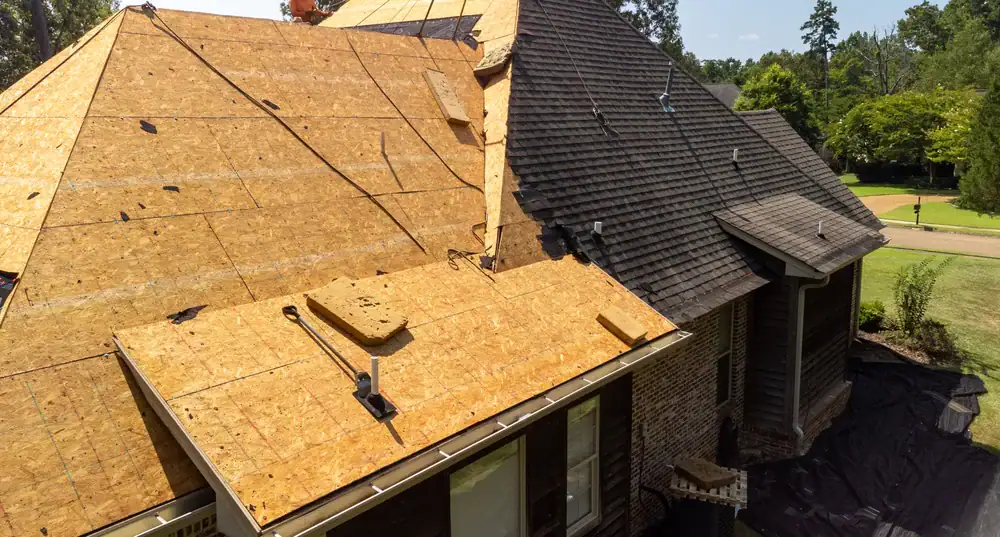
We start with an inspection of your current roof. Not a five-minute glance from the driveway. We’re looking at shingle condition, checking flashing around chimneys and skylights, examining the decking underneath for soft spots or water damage, and identifying what’s failing and why.
Once we know what you’re dealing with, we walk you through options. Asphalt shingles are the most common choice and handle coastal weather well when installed correctly. Metal roofing is growing in popularity here because it sheds water fast, resists salt corrosion, and can cut cooling costs significantly. We’ll explain what makes sense for your house, your budget, and how long you plan to stay.
Installation day, we protect your property, tear off the old roof, inspect and repair any decking issues, and install new underlayment, flashing, and shingles. Everything gets sealed properly. We clean up completely. And you get documentation with photos showing the work that was done, which matters if you ever file an insurance claim or sell the house.
Ready to get started?
A roof installation here isn’t the same as it would be inland. Coastal homes in Hampton Bays need extra attention to wind resistance and water intrusion. That means upgraded underlayment that won’t break down from moisture. It means flashing that’s sealed correctly around every penetration. It means shingles that are rated for high winds and installed with enough fasteners to actually hold.
We handle the full scope. Roof replacement, shingle roofers who know how to install for Long Island weather, metal roofers if that’s the direction you’re going, and house gutter installation to make sure water moves away from your foundation the way it should. If your chimney flashing is shot or your skylights are leaking, we take care of that too.
You also get a warranty. We use GAF materials, which come with up to 50-year coverage when installed by a certified contractor. That’s not just marketing. It’s actual protection if something goes wrong. And because we’re local and licensed in Suffolk County, we’re here if you need us down the road.
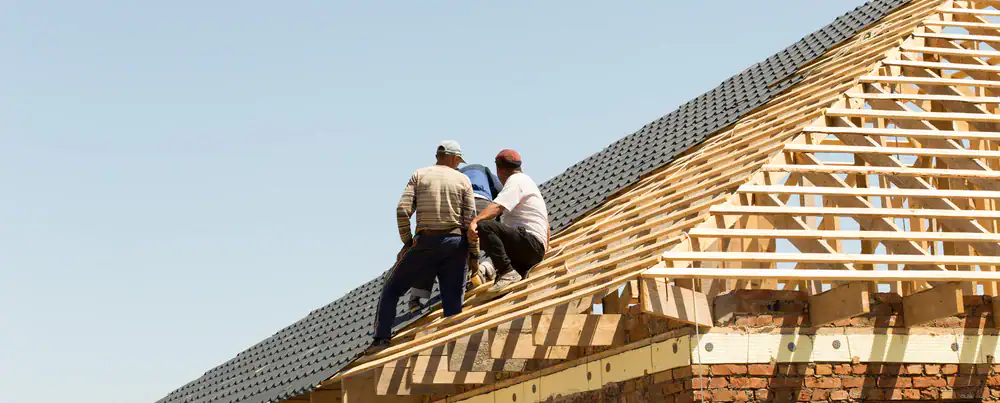
Most roof replacements in this area run between $12,000 and $28,000 depending on size, pitch, and materials. A typical single-family home with asphalt shingles usually lands around $18,000 to $22,000. If you’re going with metal roofing or have a complex roofline with multiple valleys and dormers, expect the higher end.
Coastal homes sometimes need additional prep work. If your decking has water damage or your flashing needs a full rebuild, that adds to the cost. But it’s not optional. Skipping those repairs just means you’ll be back in the same spot in a few years.
We give you a written estimate that breaks down materials, labor, and any extra work. No surprises halfway through the job. And if you’re filing an insurance claim for storm damage, we can work with your adjuster to document everything properly.
Most residential roof installations take two to four days. Day one is tear-off and inspection. Day two is underlayment, flashing, and starting the shingles. Day three and four finish the install and clean up.
Weather can stretch the timeline. We don’t install in rain or high winds because it compromises the seal and puts our crew at risk. If a storm rolls in mid-project, we’ll tarp everything and pick back up when conditions are safe.
Complex roofs take longer. If you’ve got multiple chimneys, several skylights, or a steep pitch, plan on the longer end. We’d rather take an extra day and do it right than rush and leave you with problems.
Metal roofing lasts longest in coastal conditions, typically 40 to 70 years. It doesn’t absorb water, resists salt air corrosion better than shingles, and sheds wind-driven rain fast. The upfront cost is higher, but you’re looking at one roof for the rest of the time you own the house.
Asphalt shingles are the more common choice and last 20 to 30 years here when installed correctly. Architectural shingles hold up better than three-tab. You want a product rated for high winds and impact resistance. GAF Timberline HDZ shingles, for example, are designed for exactly this kind of environment.
Slate and tile last even longer than metal, but they’re heavy, expensive, and not every house can support the weight. If your home was built for it, slate can go 75 years or more. But for most Hampton Bays homeowners, metal or quality asphalt shingles make the most sense.
Yes. The Town of Southampton, which includes Hampton Bays, requires a building permit for roof replacement. We handle the permit application as part of the job. It’s not complicated, but it does need to be done.
The permit process involves submitting plans, paying a fee, and scheduling an inspection after the work is complete. The inspector checks that everything meets code, which protects you. If you ever sell the house, the permit history shows the work was done legally.
Some contractors skip permits to save time or avoid scrutiny. That’s a red flag. If the work isn’t permitted and something goes wrong, your insurance can deny a claim. And if the town finds out, you’re the one who gets fined, not the contractor who’s already gone.
Yes. We work with homeowners on insurance claims regularly, especially after storms. Roof-related claims hit $31 billion nationally in 2024, and insurance companies are tougher than ever about what they’ll cover.
We document everything. Photos of the damage, measurements, notes on what caused the failure. If your adjuster comes out, we can walk them through what needs to be replaced versus what can be repaired. Sometimes they’ll try to approve a patch when the whole roof is compromised. We push back with evidence when that happens.
Filing a claim doesn’t guarantee approval, but having a licensed contractor who knows how to document damage correctly makes a big difference. We’ve seen claims denied because the homeowner didn’t have enough proof or waited too long to report it. If you think you have storm damage, call us and call your insurance company right away.
Roof repair makes sense when the damage is localized. A few missing shingles after a storm, a small leak around a chimney, flashing that needs resealing. If the rest of the roof is in good shape, a repair buys you time and costs a fraction of a full replacement.
Roof replacement is what you need when the system is failing. Shingles are curling or cracked across large sections. You’ve got multiple leaks. The roof is 20+ years old and showing its age. At that point, patching one area just means another area fails six months later.
Here’s the test: if your roof needs repairs that add up to more than 30% of replacement cost, just replace it. You’ll spend the money either way, but with a new roof you get a warranty, better energy efficiency, and another 20 to 30 years of protection. We’ll tell you honestly which direction makes sense after we inspect your roof.
Other Services we provide in Hampton Bays