
Hear From Our Clients
East Patchogue sits in one of the few communities on Long Island that Suffolk County’s own leadership has publicly named as a low-lying flood risk area during coastal storms. That’s a fact that matters when you’re choosing a roofer. When a nor’easter pushes water in from Patchogue Bay and the wind comes off the Great South Bay, even a small compromise in your roof becomes a serious water intrusion problem fast.
The median home in East Patchogue was built around 1970. That’s over 50 years of freeze-thaw cycles, salt air off the water, and South Shore storms working against your roof. Asphalt shingles lose their granules faster in a salt-air environment. Flashing around chimneys and skylights cracks open as sealants age. Fasteners corrode. What looked fine last spring can fail by January.
Getting this right means more than slapping new shingles on and calling it done. It means understanding what the South Shore actually does to a roof over time and building something that accounts for that. That’s the difference between a repair that lasts and one that sends you back to square one after the next storm.
We’re a family-owned roofing and exterior contractor based in Brookhaven the same town that governs East Patchogue and issues every building permit for work done here. That’s not a coincidence. It means we work with the same building department, the same local codes, and we’ve been on South Shore homes from Pine Neck to the Swan River corridor for over a decade.
Alban, our owner, is on every job. You don’t get handed off to a crew you’ve never met you get the person who quoted the work, overseeing the work. Every project is documented with photos and videos from start to finish, so you know exactly what was done to your roof even if you couldn’t be there to watch.
We handle roofing, gutters, siding, chimneys, skylights, decks, and drywall. For homeowners managing aging South Shore properties that rarely need just one thing fixed, that matters.
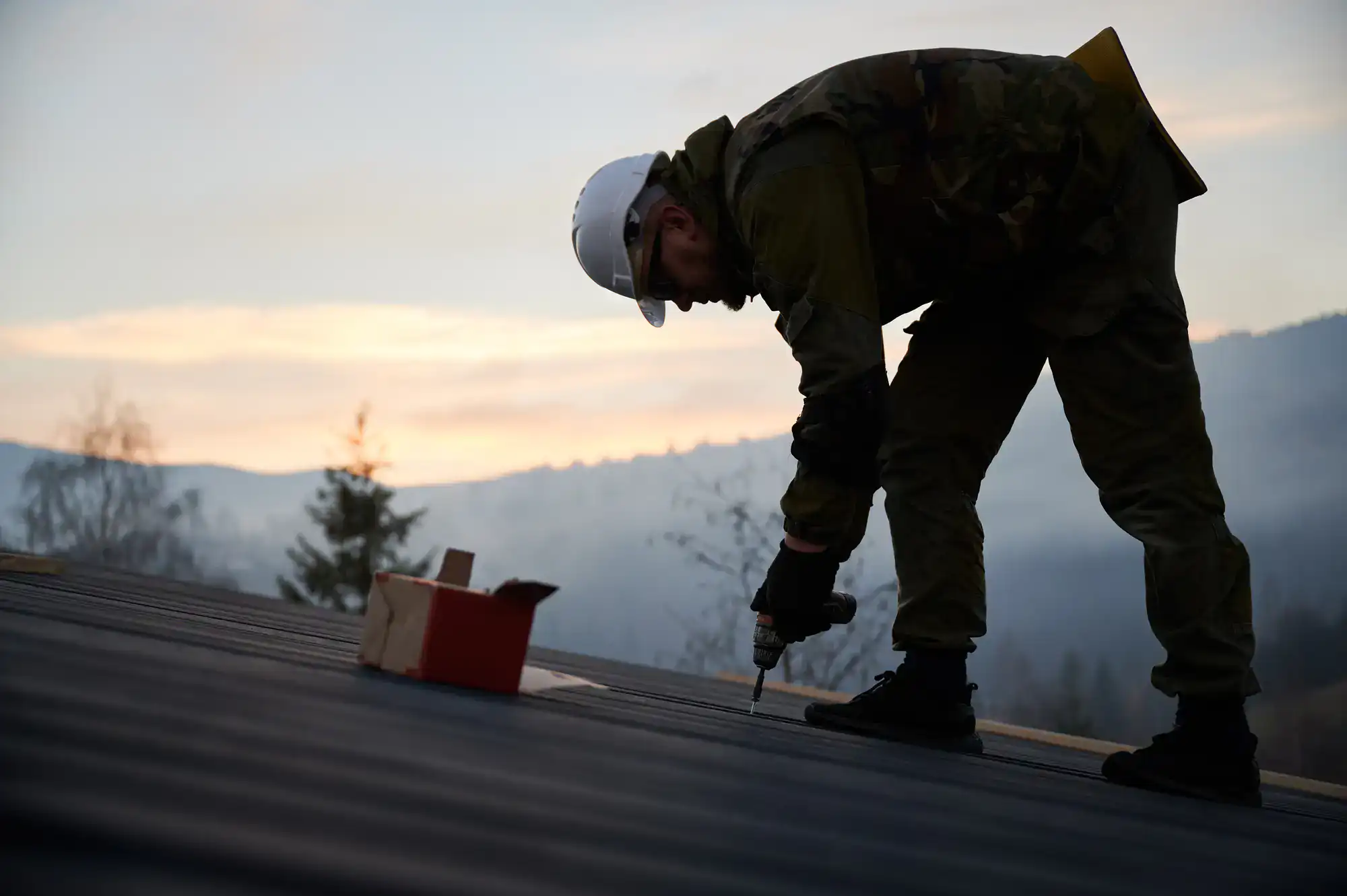
It starts with a free inspection. We come out, get on the roof, and give you an honest read on what’s actually going on not a sales pitch designed to push the most expensive option. If there’s storm damage, flashing failure, or granule loss from years of salt air exposure, you’ll hear about it plainly and see it in photos.
From there, you get an upfront quote. The number you see before work starts is the number on your invoice when the job is done. For full roof replacements in East Patchogue, that process includes pulling the required building permit from the Town of Brookhaven we handle that entirely, so you’re not navigating the Building Division on your own. Permit fees typically run $200–$400, and the timeline for approval on a standard residential re-roof is usually one to two weeks, though spring and summer backlogs can stretch that.
Once the permit is approved, our crew gets to work. Tear-off, deck inspection, underlayment, and installation are all documented as they happen. After the job is complete, a final inspection is scheduled with the Town of Brookhaven to close out the permit. You end up with a fully compliant, inspected roof and a complete photo record of every step.
Ready to get started?
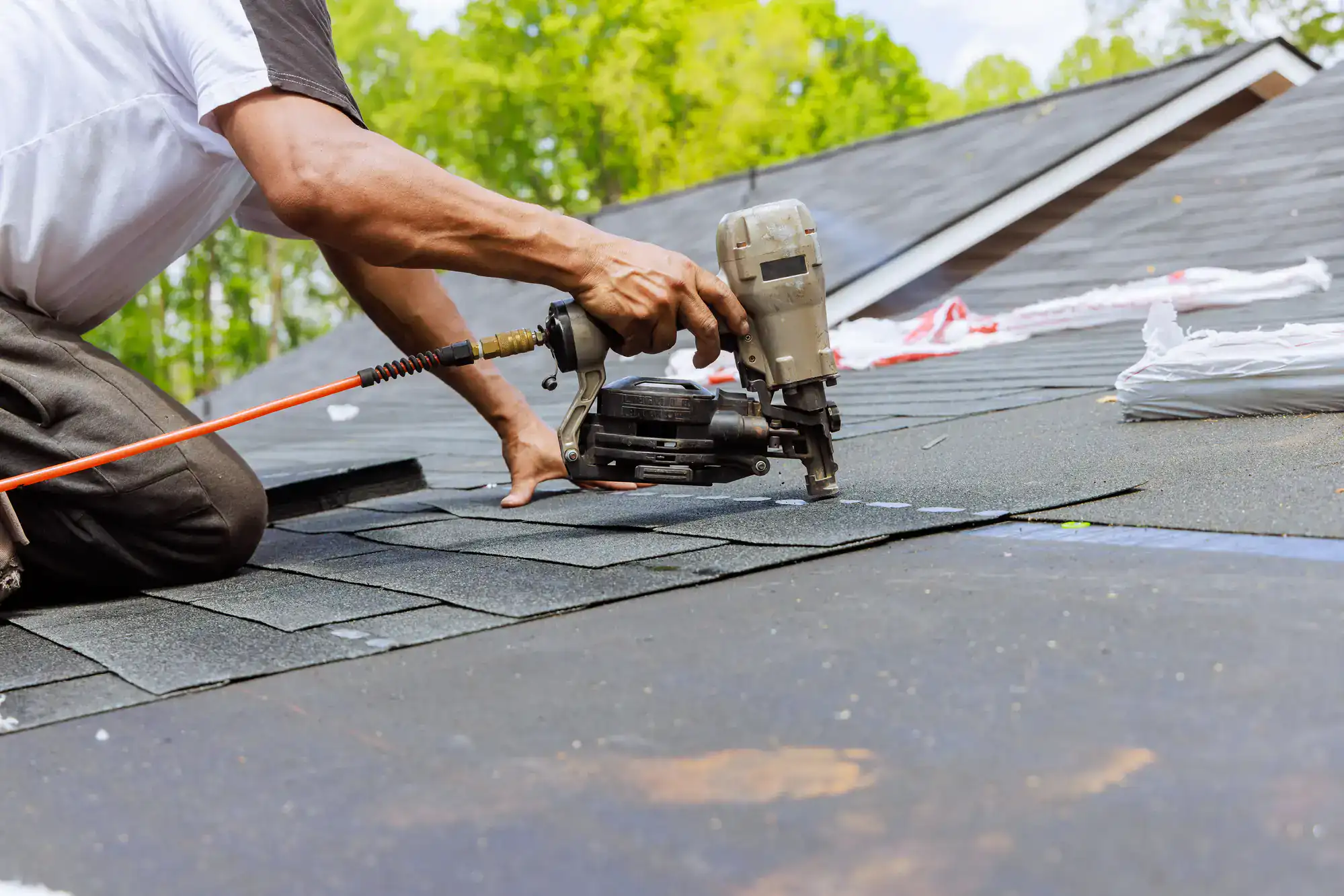
We handle the full scope of residential roofing new installations, full replacements, storm damage repairs, flashing repairs, and emergency leak response. For East Patchogue homeowners, the most common requests are full shingle replacements on homes that are 20 to 35 years past their last roof, flashing repairs around chimneys and skylights where salt-air sealant degradation has opened gaps, and post-storm assessments after nor’easters come through the South Shore.
Material options include standard asphalt shingles, architectural shingles, and metal roofing. Metal roofing is worth a conversation if you’re near the water along Pine Neck Avenue, near Mirimar Beach, or anywhere in the southern part of East Patchogue where salt air and coastal moisture are a constant. Metal holds up significantly better in those conditions, and the long-term cost math usually favors it for homeowners who plan to stay.
Every full replacement includes permit handling through the Town of Brookhaven, complete photo and video documentation, and a final walkthrough before our crew leaves. Gutters, skylights, chimney work, and siding can be folded into the same project if needed which is often the case with homes that have been working through 50-plus South Shore winters.
Yes full roof replacements in East Patchogue require a building permit from the Town of Brookhaven. East Patchogue is an unincorporated hamlet, which means it falls entirely under Brookhaven’s jurisdiction, not a separate village government. The permit application requires a contractor’s HIC license and proof of insurance, and for larger projects, Brookhaven may request a basic diagram showing roof slope, area, and material spec.
Permit fees typically run between $200 and $400, and standard approval timelines are one to two weeks for a straightforward residential re-roof though spring and summer are the busiest seasons at the Brookhaven Building Division, so it can run longer. Skipping the permit is a real problem down the road. Unpermitted roofing work can surface during a home sale inspection or complicate an insurance claim, and in some cases it requires the work to be redone. We pull the permit as part of every full replacement, so you don’t have to manage that process yourself.
In a typical inland environment, a standard asphalt shingle roof is rated for 20 to 30 years. On the South Shore in communities like East Patchogue where salt air off Patchogue Bay and the Great South Bay is a constant that lifespan is often shorter in practice. Salt air accelerates granule loss on shingles, corrodes the metal fasteners holding everything in place, and breaks down the sealants around flashing faster than manufacturers’ estimates account for.
Homes along Pine Neck Avenue, near Mirimar Beach, or anywhere in the southern part of East Patchogue closest to the water tend to show accelerated wear compared to homes a mile or two inland. If your home was built in the 1970s or 1980s and you haven’t replaced the roof in the last 15 to 20 years, it’s worth having someone get up there and take an honest look not to scare you into a replacement you don’t need, but because catching a failing roof before a nor’easter is significantly less expensive than dealing with the damage after one.
The most common issues after a nor’easter on the South Shore are missing or lifted shingles on south and east-facing roof slopes those are the faces that take the direct force of storms coming off the Atlantic. Wind gets under shingles that have already lost flexibility from age and cold, and it peels them back or removes them entirely. That’s usually visible from the ground if you know where to look.
The less obvious problems are the ones that cause the most damage over time: flashing that has been pushed or lifted around chimneys, skylights, and pipe boots, and ice dams that form along gutter lines after a storm if the temperature drops quickly. Ice dams happen when heat escaping through the roof melts snow near the peak, the water runs down to the cold overhang, and refreezes forcing water back under the shingles. East Patchogue’s temperature swings from the low 20s in winter to the low 80s in summer create exactly the conditions where this becomes a recurring problem on older roofs with inadequate insulation and ventilation.
For a standard single-family home in East Patchogue, a full asphalt shingle replacement typically runs between $10,000 and $18,000 depending on the size of the roof, the pitch, the material selected, and whether the decking underneath needs any repair or replacement. Long Island labor and material costs run higher than national averages, so estimates you find based on national data will likely understate what you’ll actually see quoted here.
A few things affect the number significantly. If the existing roof has two or more layers of old shingles, a full tear-off adds labor and disposal cost. If the plywood decking has soft spots or rot common on East Patchogue homes that have been absorbing 50-plus years of South Shore moisture that gets addressed during the replacement, which adds to the total. Metal roofing options run higher upfront but carry a longer lifespan, which often makes more financial sense for homeowners near the water who would otherwise be replacing asphalt shingles more frequently. We provide upfront quotes before any work starts the number you’re given is the number you pay.
For homes in the southern part of East Patchogue near Pine Neck, Mirimar Beach, or anywhere close to Patchogue Bay metal roofing is worth a serious conversation. The core issue is that salt air is genuinely corrosive to the materials used in standard asphalt shingle roofing: granules wear faster, fasteners corrode, and sealants degrade more quickly than they would on an inland home. Metal roofing doesn’t have granules to lose, and modern metal roofing systems are designed with coastal environments in mind.
The upfront cost is higher a metal roof on a typical East Patchogue home will run more than an asphalt shingle replacement. But the lifespan of a quality metal roof in a coastal environment is 40 to 70 years, compared to 15 to 25 years for asphalt in similar conditions. If you’re planning to stay in your home long-term, the math often works in favor of metal, especially when you factor in the reduced frequency of repairs and replacements. It’s not the right answer for every homeowner or every budget, but it’s a conversation worth having before you default to asphalt simply because it’s the more familiar option.
The honest answer depends on a few things: the age of the roof, how much of it is damaged, and what the underlying decking looks like. If your roof is under 15 years old and the damage is limited to a specific area a section of lifted shingles after a storm, a failed flashing seal around a chimney a targeted repair usually makes sense. If the roof is 20 years or older and you’re seeing widespread granule loss, multiple areas of damage, or soft spots that suggest the decking has been absorbing moisture, a full replacement is almost always the better financial decision.
In East Patchogue specifically, the age of the housing stock matters a lot here. The median home was built around 1970, and many of those roofs have been patched and re-patched over the decades. At some point, continued repairs on an aging roof become more expensive than a clean replacement and the risk of a major interior water damage event during a South Shore storm tips the scale further. A free inspection from us will give you a straight answer on where your roof actually stands, with photos to back it up, so you’re making the decision based on real information rather than a guess.
Other Services we provide in East Patchogue