
Hear From Our Clients
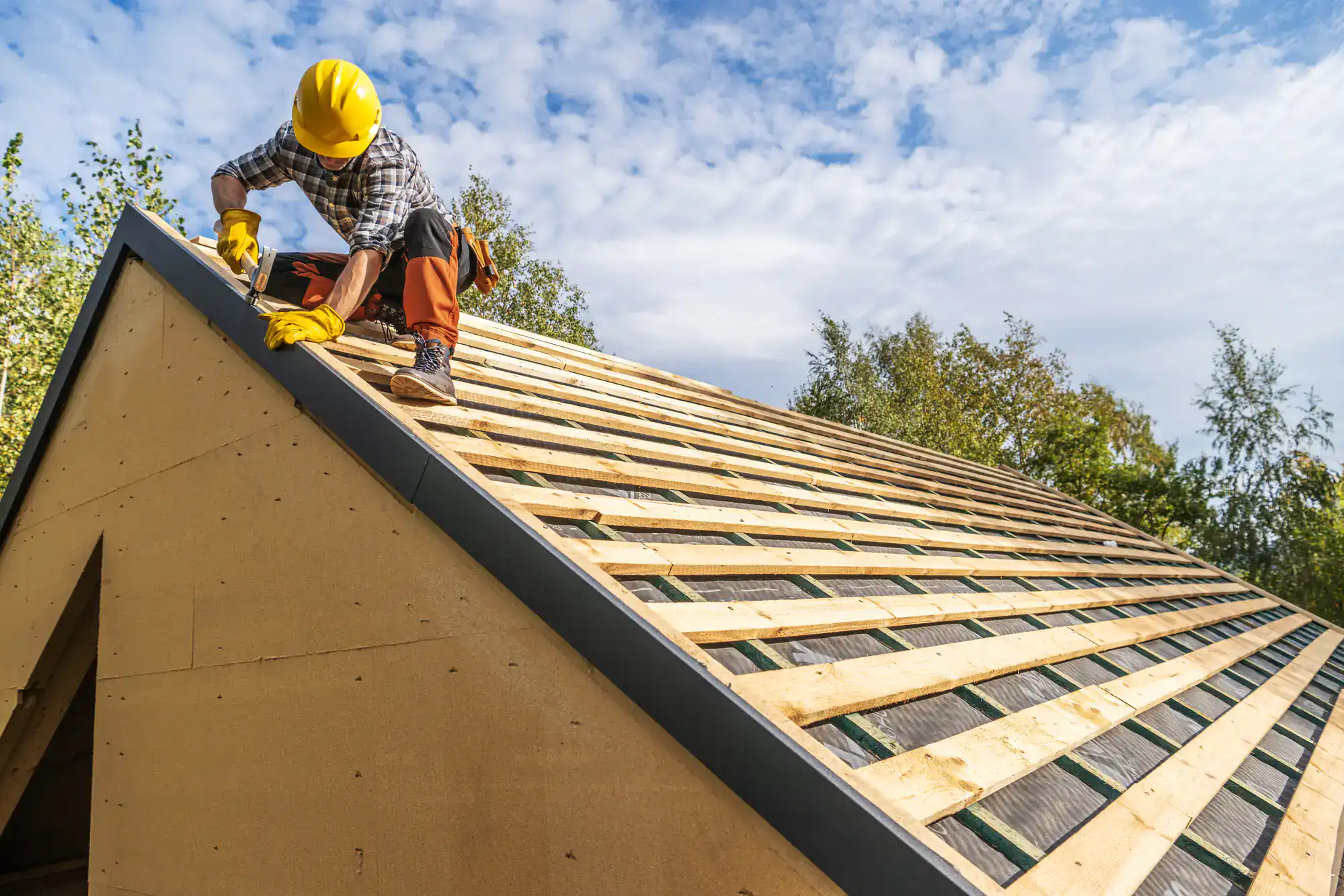
Living near the Great South Bay means your roof faces things that most inland homes never deal with. Salt air off the water breaks down shingles and corrodes the fasteners holding them in place quietly, from the outside in long before you notice anything from the ground. By the time a leak shows up inside, the damage underneath has usually been building for a while.
East Islip homes, especially those south of Montauk Highway and near Champlin Creek, take the full force of south shore storm exposure. The nor’easters that come through between October and April aren’t just wind they’re sustained pressure on every seam, every flashing point, and every gutter connection on your roof. Homes in Deer Run, Country Village, and Beecher Estates deal with a different but equally real problem: decades of freeze-thaw cycling that cracks shingles, and mature tree canopy that keeps roofs damp and accelerates moss growth.
When the work is done right, you stop thinking about your roof. No water stains on the ceiling after a heavy rain. No emergency calls after the next storm. No wondering whether the last contractor actually fixed it or just bought you another season. That’s the difference between a repair that holds and one that doesn’t and it comes down to who did it and how.
We’re a family-owned, owner-operated roofing and exterior contractor based in Brookhaven, NY a short drive east along Sunrise Highway from East Islip. We’ve spent over a decade working on homes throughout East Islip and Suffolk County’s south shore, and we understand the specific wear patterns, storm history, and coastal conditions that affect homes in this area.
When you call, you’re talking to the owner. Alban quotes the job, oversees the work, and is the person you reach if you have a question afterward. That’s not a sales pitch it’s just how we operate. East Islip is a tight-knit community, and we know that our reputation here is built one roof at a time. Many of our customers have brought us back for a second or third project, and that kind of repeat trust comes from showing up and doing the work right.
We also document every job with photos and video so even if you’re not home when the crew is there, you can see exactly what was done to your roof, down to the underlayment and flashing details.
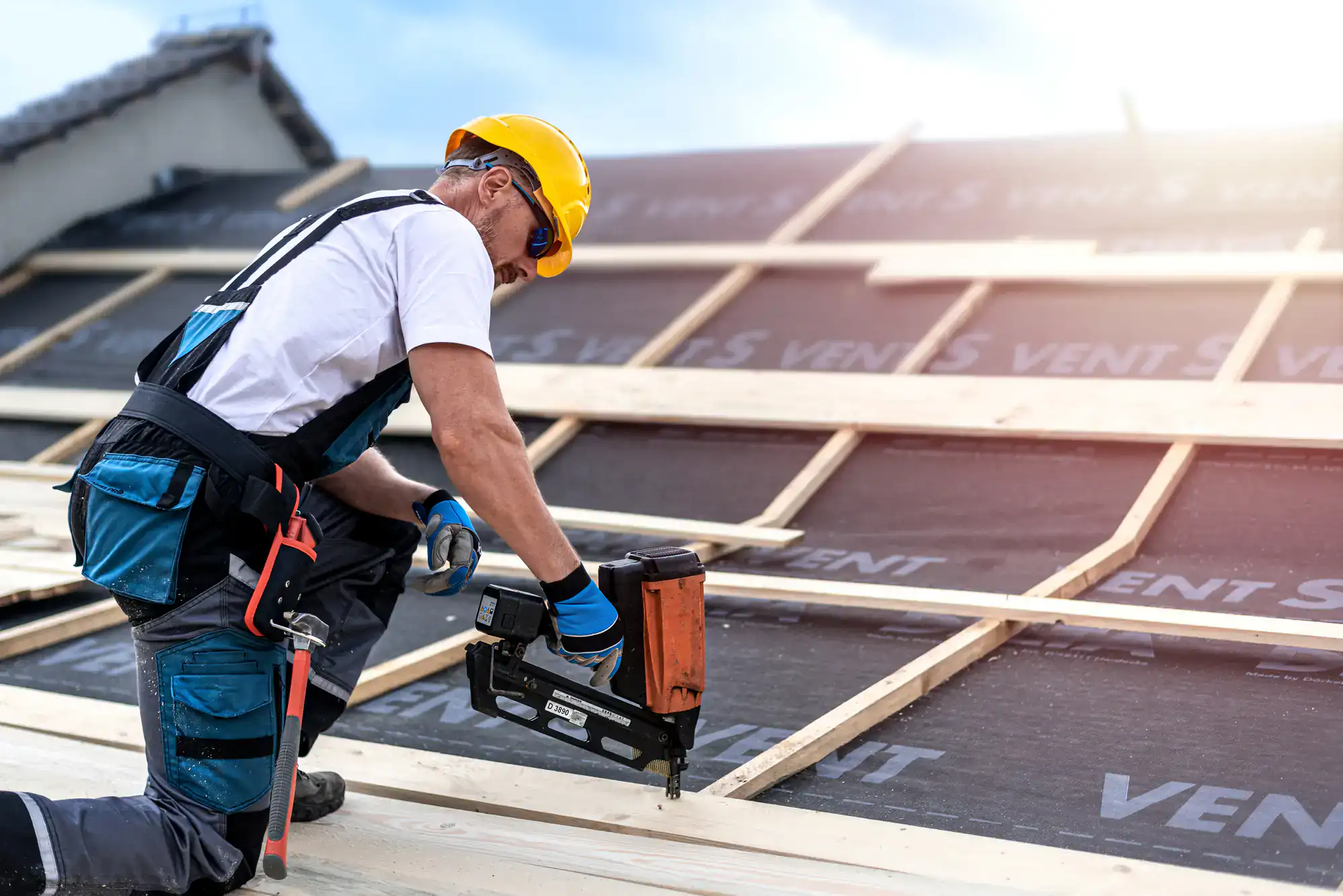
It starts with a straightforward inspection. We come out, get on the roof, and give you an honest assessment of what’s going on not a worst-case sales pitch, just what we actually find. If there’s storm damage, salt air corrosion on your fasteners, or flashing that’s been failing quietly for two seasons, we’ll show you exactly where and explain what it means for your roof’s timeline.
From there, you get an upfront quote before anything starts. The number we give you is the number you pay. If we find something unexpected mid-project which does happen on older East Islip homes we stop, explain it to you, and get your approval before we proceed. No mid-job surprises on your invoice. The Town of Islip requires permits for roof replacement work, and we handle that process as part of the job so you don’t have to navigate it yourself. This also protects your homeowner’s insurance coverage and keeps everything above board if you ever sell the home.
Once the work is underway, we document it throughout photos and video at each stage, from tear-off through final ridge cap installation. When we’re done, the site is cleaned up and you get a full record of everything that was done. That documentation matters in East Islip, where storm damage claims sometimes involve both homeowners insurance and flood insurance, and having clear before-and-after records can make a real difference in how those claims go.
Ready to get started?
For most East Islip homes, asphalt shingles are still the most practical and cost-effective choice but not all shingles are the same. On the south shore, impact-resistant shingles with higher wind ratings perform noticeably better than standard three-tab options, especially for homes with direct bay exposure. We recommend materials that are rated for the coastal conditions your home actually lives in, not just whatever’s cheapest on the truck.
Metal roofing is increasingly popular among East Islip homeowners who are done replacing their roof every 20 years. A properly installed metal roof handles salt air, wind, and freeze-thaw cycles better than asphalt over the long run, and it’s particularly well-suited for homes near Champlin Creek and the waterfront zones south of Montauk Highway where coastal exposure is highest. It costs more upfront, and we’ll be honest with you about that but for the right home and the right homeowner, the math works out clearly over time.
Beyond full replacements, we handle roof repairs, storm damage restoration, flashing repair, ridge cap work, and emergency leak response. We also do gutters, siding, skylights, chimneys, and decks which matters when a nor’easter doesn’t limit itself to just your roof. One call, one contractor, one point of accountability for whatever the storm left behind.
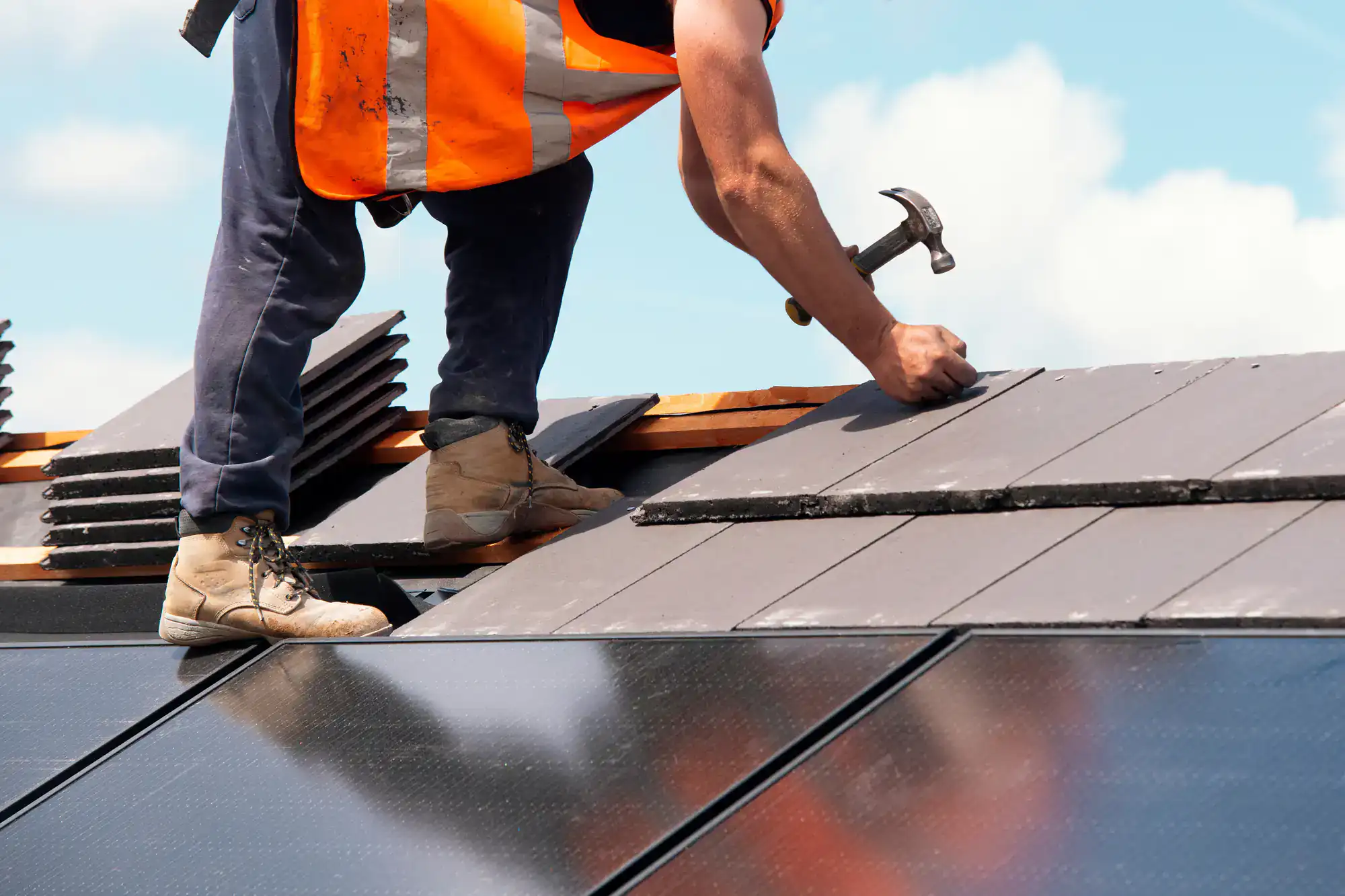
Most storm damage on Long Island south shore roofs isn’t obvious from the ground. You might not see missing shingles, but that doesn’t mean nothing happened. After a significant nor’easter or heavy rain event, the most common signs are granules washing into your gutters or downspouts, lifted or curling shingle edges, and water stains appearing on ceilings or in your attic. Flashing around chimneys and skylights is also a common failure point after high winds.
The challenge with coastal exposure in East Islip is that salt air and wind work on your roof gradually, so a storm that looks minor can be the one that finally compromises a fastener or seam that was already weakened. If you’ve had a significant storm and you’re not sure, the right move is to get someone on the roof not just look from the driveway. We’ll come out, inspect it honestly, and tell you what we find. If there’s nothing urgent, we’ll tell you that too.
The standard answer for asphalt shingles is 20 to 30 years, but that range assumes relatively mild conditions. For homes in East Islip particularly those south of Montauk Highway, near the marinas, or anywhere with direct bay exposure the realistic lifespan is closer to the lower end of that range, sometimes less. Salt air accelerates granule loss, which is the protective layer on asphalt shingles. Once that’s gone, UV degradation speeds up significantly.
Freeze-thaw cycling also takes a toll. Suffolk County temperatures swing from the low 20s in winter to the low 80s in summer, and that repeated expansion and contraction causes shingles to crack and lose flexibility over time. If your home is in Deer Run or Beecher Estates with mature tree cover, add moss and moisture retention to that list. A roof that was installed 18 to 20 years ago on a south shore home deserves a professional inspection not because something is definitely wrong, but because it’s the right time to know where you stand before the next storm season.
Yes. East Islip falls under the jurisdiction of the Town of Islip, and the Town of Islip requires a building permit for roof replacement work. This isn’t just a formality it protects you. Work done without a permit can create complications when you sell your home, and it can affect how your homeowners insurance responds to a future claim. If an unpermitted roof fails and you file a claim, the insurance company has grounds to push back.
A licensed roofing contractor should pull the permit as part of the job that’s standard practice, and it’s what we do. If a contractor quotes you a job and doesn’t mention permits, or suggests skipping them to save money, that’s a red flag worth paying attention to. The permit process through the Town of Islip is straightforward for a properly licensed contractor, and it adds a layer of inspection and accountability to the work that ultimately protects your investment in your home.
This is one of the most important questions for East Islip homeowners, and it’s one that causes a lot of frustration after major storms. Standard homeowners insurance typically covers wind-driven rain damage meaning if a storm tears off shingles and rain gets in through the opening, that’s generally a covered loss. Flood damage, meaning water that enters from the ground up or from storm surge, is covered under a separate flood insurance policy. The two are distinct, and insurers take that distinction seriously.
For homes in East Islip’s coastal zones particularly those near Bayview Avenue, Brushwood Court, and the areas south of Montauk Highway that have documented flooding history a single storm event can trigger both types of damage simultaneously. That means you may need to file two separate claims with two separate policies. Having clear photo and video documentation of your roof’s condition before and after a storm makes a meaningful difference in how those claims are evaluated. We document every job we do, and we’d encourage any homeowner in a flood-adjacent area to keep their own records as well.
For the right home, yes and East Islip is exactly the kind of environment where the case for metal roofing is strongest. Asphalt shingles perform well, but they have a finite lifespan that gets compressed by salt air, coastal wind exposure, and freeze-thaw cycling. A quality metal roof, properly installed, can last 40 to 50 years and handles all of those conditions significantly better than asphalt over the long run.
The honest tradeoff is upfront cost. Metal roofing costs more than asphalt at installation, and that’s a real number you need to factor in. But if you’re on your second or third roof replacement on a home you plan to stay in, the math often shifts. You’re also looking at better wind resistance ratings, lower maintenance requirements, and a roof that won’t need to be replaced before you’re ready to sell. For waterfront and near-waterfront homes in East Islip especially those with the highest coastal exposure it’s a conversation worth having before you default to another asphalt replacement.
After every major storm, out-of-area contractors show up on Long Island with low quotes and fast timelines. Some do decent work. Many don’t, and they’re unreachable six months later when something fails. The practical way to tell the difference is to ask for a New York State contractor license number and verify it, ask for proof of liability insurance and workers’ compensation coverage, and check whether they pull Town of Islip building permits for the work.
A contractor who has been working in East Islip and Suffolk County for years will have a verifiable local track record reviews that go back more than one storm season, customers in the area who can speak to their experience, and a business address that isn’t a P.O. box. We’ve built our reputation here by doing the work right the first time, and that’s something you can verify by talking to homeowners who’ve had us back for multiple projects. Ask around at the East Islip marina, through your kids’ school network, or in local community groups. Word-of-mouth from someone who actually had the work done on their home is still the most reliable filter in this industry.
Other Services we provide in East Islip