

Hear From Our Clients
You’re not dealing with a small crack. You’re dealing with what happens when moisture gets into your chimney during a coastal storm, freezes overnight, and expands inside the brick. That’s how chimneys fall apart on Long Island—slowly, then all at once.
When your chimney flashing separates from the roof, water doesn’t just damage the chimney. It runs down into your attic, stains your ceiling, soaks your insulation, and creates problems you won’t see until the bill arrives. Fixing it early means you avoid the emergency call in January when your fireplace won’t draft and your living room fills with smoke.
A proper chimney repair protects your home from water intrusion, keeps your heating system running efficiently, and prevents carbon monoxide from backing up into your house. It’s not about making your chimney look nice. It’s about making sure the system works safely when you actually use it.
We’ve spent years repairing chimneys across Suffolk County. We know what freeze-thaw cycles do to mortar joints. We know how salt air corrodes chimney caps and flashing. We know which materials hold up in coastal weather and which ones fail in two years.
We’re licensed and insured because that’s the baseline. What matters more is that we’ve seen what happens when chimney repairs are done wrong—when someone uses the wrong mortar mix, skips the flashing, or patches a crown without addressing the real problem underneath.
East Islip homeowners call us because we show up, assess the damage honestly, and explain what needs fixing now versus what can wait. No upselling. No scare tactics. Just straightforward answers from people who’ve done this work long enough to know the difference.
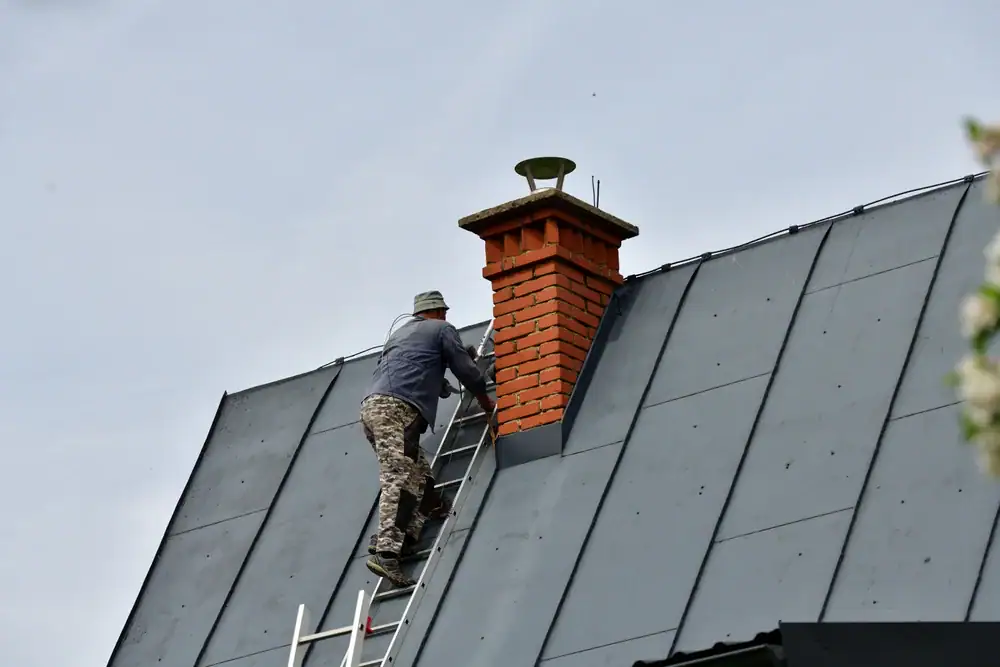
First, we inspect your chimney from the roof down. We’re looking for cracks in the crown, gaps in the flashing, deteriorated mortar joints, and any signs that water is getting inside the structure. Most chimney problems start small and spread, so we trace the damage back to the source.
Once we know what’s broken, we explain what’s causing it and what it’ll take to fix it. If your flashing failed because it wasn’t installed correctly the first time, we tell you. If your chimney crown is cracked because it was poured too thin, we tell you that too. You get a clear scope of work before anything starts.
Then we make the repair using materials designed for Long Island’s climate. Marine-grade sealants. Properly mixed mortar. Stainless steel flashing that won’t rust out in three years. We protect your roof and property during the work, complete the job, and clean up when we’re done. You’re left with a chimney that works the way it’s supposed to—without the leaks, drafts, or safety risks you had before.

Ready to get started?
Chimney flashing repair is one of the most common fixes we do in East Islip. Flashing is the metal barrier between your chimney and your roof, and when it fails, water pours straight into your house. We remove the old flashing, install new corrosion-resistant material, and seal it properly so it actually keeps water out during the next storm.
Chimney masonry repair covers everything from repointing mortar joints to rebuilding sections of brick that have deteriorated beyond repair. Long Island goes through 50 to 65 freeze-thaw cycles every winter. That’s 50 chances for water to get into your masonry, freeze, expand, and crack the structure. We use the right mortar mix for the job—not too hard, not too soft—so the repair lasts.
Chimney leak repair often means fixing the crown, which is the concrete cap at the top of your chimney. Crowns crack. Water gets in. The damage spreads down through the flue and into the chimney structure. We rebuild crowns with proper slope and overhang so water runs off instead of pooling. And if your chimney cap is rusted or missing, we replace it with one that’ll hold up in coastal conditions. These aren’t cosmetic fixes. They’re the repairs that prevent your chimney from becoming a structural liability.
It depends on what’s broken. Minor repairs like repointing a few mortar joints or replacing a chimney cap usually start around $250 to $500. Chimney crown repair typically runs $300 to $1,200 depending on the extent of the damage and how much of the crown needs to be rebuilt.
If your flashing failed and water has been leaking into your home, you’re looking at $800 to $1,500 for a complete flashing replacement. That includes removing the old flashing, installing new material, and sealing everything correctly. Major structural repairs—like rebuilding a section of chimney that’s deteriorated or repairing extensive masonry damage—can run several thousand dollars.
The real cost is what happens if you wait. A $400 crown repair now can prevent an $8,000 chimney rebuild later. Water damage doesn’t stay contained. It spreads into your roof, your attic, your walls. The longer you let a chimney leak go, the more expensive the fix becomes.
Flashing failure is the most common cause. Flashing is the metal seal between your chimney and roof, and it takes a beating from Long Island weather. When it separates, cracks, or rusts through, water flows directly into your home. You’ll see it as ceiling stains, damp walls, or water pooling in your attic near the chimney.
Cracked chimney crowns are another major source of leaks. The crown is the concrete top of your chimney, and it’s supposed to shed water away from the flue. But crowns crack from freeze-thaw cycles, and once water gets into those cracks, it seeps down into the chimney structure. From there it damages the flue liner, deteriorates the masonry, and eventually leaks into your house.
Deteriorated mortar joints let water into the brick itself. Mortar is softer than brick, so it wears away first. Once the joints fail, water penetrates the masonry, freezes, expands, and causes the kind of damage that requires rebuilding sections of the chimney. And if your chimney cap is missing or rusted out, rain pours straight down the flue. That accelerates creosote buildup, rusts out the damper, and creates a mess that’s expensive to clean up.
Most chimney repairs take one to three days depending on the scope of work. A straightforward job like replacing flashing or repointing mortar joints can often be completed in a day if the weather cooperates. Chimney crown repairs usually take one to two days because the concrete needs time to cure properly.
Larger projects like rebuilding a section of chimney or doing extensive masonry work can take three to five days. We’re not rushing through the job. We’re making sure the mortar sets correctly, the flashing is sealed properly, and the repair will hold up through Long Island winters.
Weather plays a role. We can’t pour concrete crowns in freezing temperatures, and we won’t do flashing work in the rain. If conditions aren’t right, we’ll reschedule rather than do substandard work. You want a repair that lasts, not one that fails in six months because it was done in bad weather.
You can try, but most DIY chimney repairs fail within a year or two. Chimney work requires the right materials, the right techniques, and an understanding of how water moves through masonry. Using the wrong mortar mix, applying sealant incorrectly, or installing flashing without proper overlap will create problems that cost more to fix than if you’d hired a professional from the start.
Chimney repairs also require working on your roof, often at significant heights. One slip can mean a trip to the hospital. And if you damage your roof while trying to fix your chimney, you’ve just added another repair to the list. Licensed chimney contractors carry insurance for a reason—this work has real risks.
There’s also the issue of building codes. Suffolk County has specific requirements for chimney construction and repair. If you sell your home and the buyer’s inspector finds unpermitted or substandard chimney work, you’ll be fixing it again—this time under pressure during a real estate transaction. It’s cheaper and safer to have it done right the first time by someone who knows what they’re doing.
Once a year, ideally in late summer or early fall before you start using your fireplace. An annual inspection catches small problems before they become expensive emergencies. Your chimney takes a beating from weather, temperature swings, and regular use. Things deteriorate. Flashing separates. Mortar joints crack. Creosote builds up.
If you use your fireplace or wood stove regularly, you need that annual checkup. Creosote is flammable, and it’s the leading cause of chimney fires. An inspection includes checking for creosote buildup, looking for cracks or damage in the flue liner, and making sure the chimney structure is sound. It’s not just about fire safety—it’s about catching water damage and structural issues early.
Even if you don’t use your fireplace, your chimney is still exposed to weather. Rain, snow, freeze-thaw cycles, and coastal salt air don’t stop just because you’re not burning wood. An unused chimney can still develop leaks, deteriorated masonry, and damaged flashing. The inspection gives you a clear picture of what condition your chimney is in and what, if anything, needs attention before a small crack becomes a major problem.
Repointing is the process of removing damaged mortar from the joints between bricks and replacing it with new mortar. It’s a structural repair. When mortar deteriorates from age, weather, or freeze-thaw damage, it needs to be cut out and replaced so the chimney remains stable and water doesn’t penetrate the masonry. Repointing restores the integrity of the chimney.
Tuckpointing is a specific type of repointing where you use two different colors of mortar to create the appearance of very fine joints. It’s partly aesthetic. You fill the joint with mortar that matches the brick color, then add a thin line of contrasting mortar down the center of the joint. It makes the brickwork look sharp and uniform, but it’s not always necessary for structural reasons.
Most chimney repairs in East Islip involve standard repointing, not tuckpointing. We’re focused on making sure the mortar joints are filled correctly, using a mix that’s compatible with the existing masonry, and ensuring the repair will hold up through Long Island winters. If you want the decorative tuckpointing finish, we can do that too—but the priority is always structural soundness first. A chimney that looks good but leaks is still a problem.
Other Services we provide in East Islip