
Hear From Our Clients
Most roofing problems in Commack don’t announce themselves. They build quietly a little granule loss here, a flashing gap there until a nor’easter rolls through and suddenly you’ve got water in your attic. By then, what started as a manageable repair has turned into a much bigger conversation. Getting ahead of that is the whole point.
Commack’s housing stock tells the story clearly. The majority of homes here were built in the 1950s and 1960s, which means a significant portion of them are carrying roofing systems that are well past their prime sometimes without the homeowner even knowing it. Add in Long Island’s freeze-thaw cycles, ice dam risk on older homes with inadequate attic ventilation, and the wind exposure that comes with every major storm season, and you’re dealing with a combination that aging materials simply aren’t equipped to handle indefinitely.
When the work is done correctly, you stop reacting and start having peace of mind. No more wondering if that water stain is getting worse. No more patching the same spot every spring. A properly installed roof with the right underlayment, proper ventilation, and code-compliant ice and water barrier protects a home worth $700,000 or more the way it deserves to be protected. That’s what a real fix looks like.
Home Team Construction is a family-owned exterior contractor based in Suffolk County, with over a decade of hands-on experience across Long Island’s residential market. We’ve worked on the same split-levels and hi-ranches that line the streets of Commack homes built in an era with different construction standards, different ventilation norms, and very specific failure points that take real experience to recognize and fix correctly.
Alban, our owner, is involved in every project. He’s the one walking the roof, writing the estimate, and making sure the crew does the job the way it was scoped. That’s not a sales pitch it’s just how we run. Customers come back for gutters after we’ve done their roof, then siding after that. That kind of repeat business doesn’t happen by accident.
We handle the full exterior roofing, gutters, siding, chimneys, skylights, and decks which matters in a community like Commack where homes have a lot of moving parts and homeowners don’t want to manage five different contractors. One call, one standard, one person accountable.
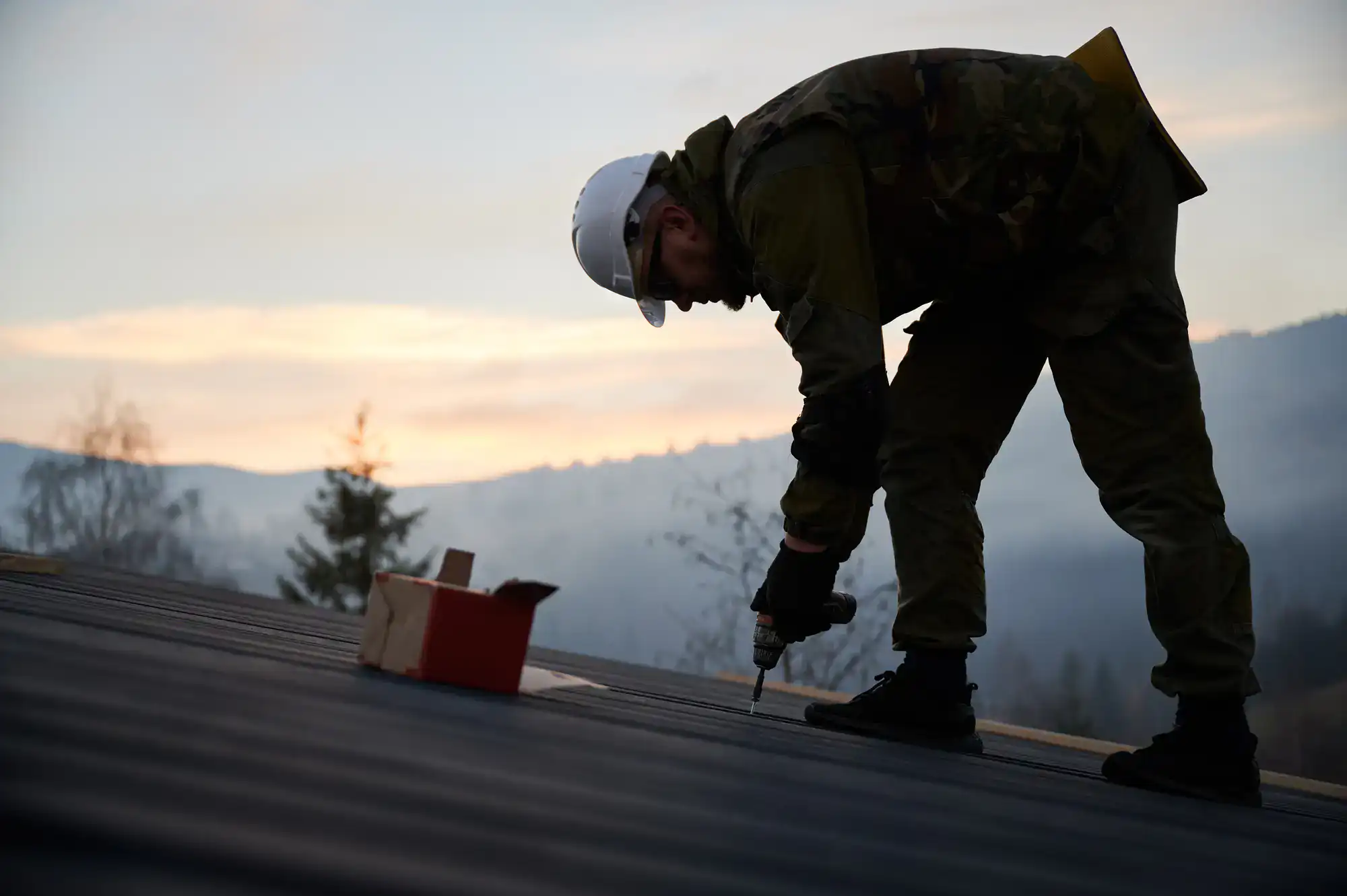
It starts with a real assessment. Not a quick glance from the driveway, but an actual inspection of the roof surface, the flashing, the decking condition, and the attic ventilation because in Commack’s older homes, ventilation problems are one of the most common reasons a new roof fails prematurely. You’ll get a clear, written estimate before anything else happens. The number we quote is the number you pay, and if we find something unexpected once the tear-off begins, we explain it to you before we proceed.
Once the scope is agreed on, we handle the permit filing. Because Commack straddles the Town of Huntington and the Town of Smithtown, your address determines which building department handles your permit and those two departments have different processes, different fees, and different inspection timelines. We know the difference and we handle it. You don’t have to figure out which jurisdiction you’re in.
The installation follows New York State building code requirements ice and water barrier at the eaves, proper underlayment, ventilation that meets current standards, and shingles rated for Long Island’s wind exposure. Every step gets photographed and documented. When the job is done, you have a permanent record of exactly what was installed, what condition the deck was in, and what was done to protect your home. Final inspection gets scheduled, signed off, and closed out properly.
Ready to get started?
Whether you need a targeted repair or a full replacement, we treat the work the same way completely, not halfway. For repairs, that means finding the actual source of the problem rather than patching the symptom. A lot of Commack homeowners have had a contractor seal something on the surface, only to find the leak reappears the next winter because the flashing underneath was never addressed. That’s not a fix. We locate the root cause and correct it.
For full replacements, we work primarily with architectural asphalt shingles, which are the right material for the vast majority of Commack’s single-family homes. They’re durable, wind-rated for Long Island conditions, and available in profiles that complement the colonial, split-level, and hi-ranch styles that dominate this area. If you’re interested in metal roofing which carries a longer lifespan and performs well through freeze-thaw cycles we install that too and can walk you through whether it makes sense for your specific home and budget.
Every roofing project also includes a review of your gutters, flashing, and soffit and fascia condition, because those systems work together. Ignoring a failing gutter on a newly replaced roof is like fixing the engine and leaving a flat tire. We flag anything that needs attention and give you the full picture upfront so there are no callbacks six months later.
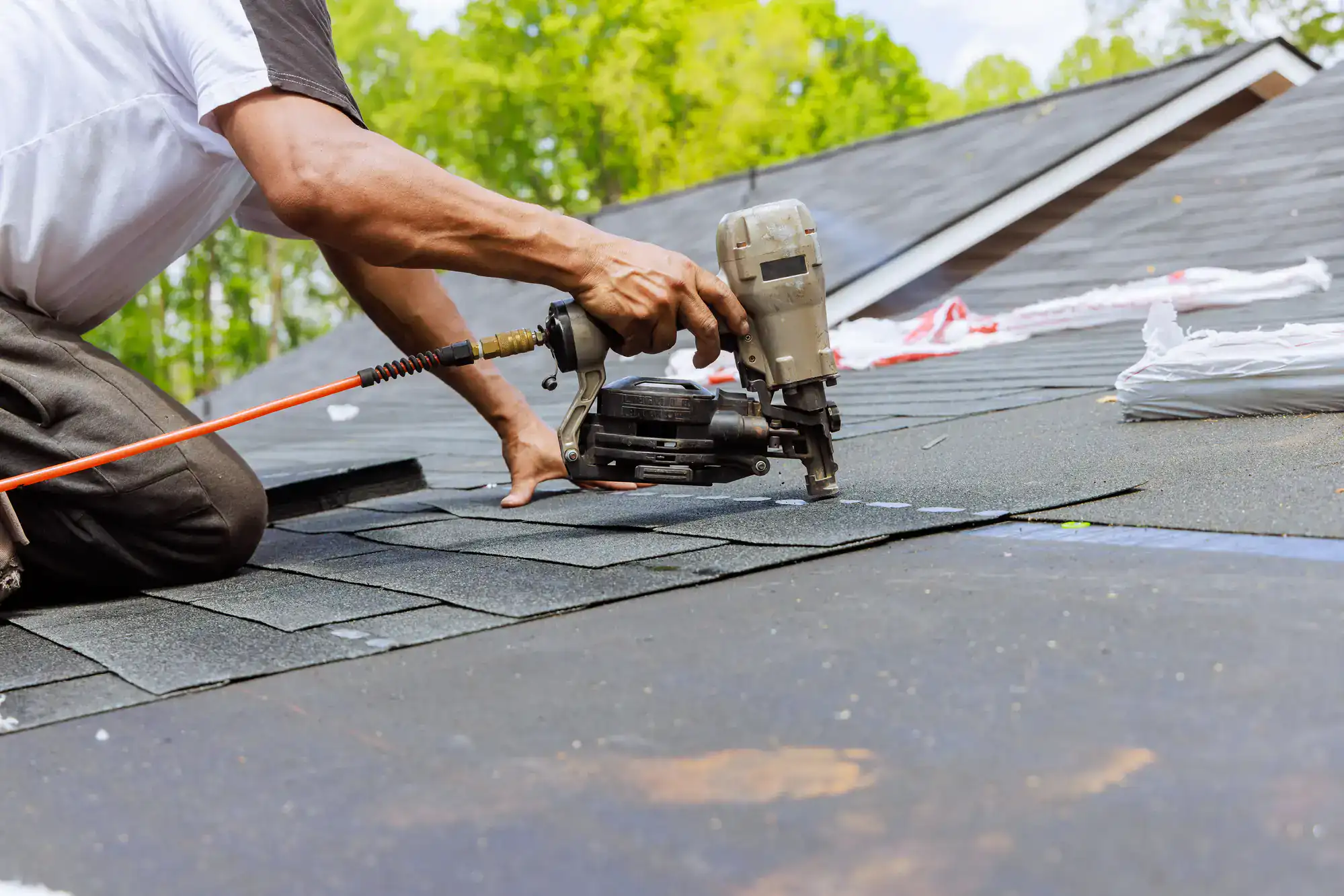
Yes a permit is required for any full roof replacement in Commack, and this is one area where it’s worth paying close attention. Because Commack spans two separate town jurisdictions, your permit needs to be filed with the correct building department based on your specific address. Homes in the northern and western portions of Commack fall under the Town of Huntington’s Building Division. Homes in the southern and eastern portions fall under the Town of Smithtown’s Building Department. They have different fee structures, different inspection timelines, and different processes and filing with the wrong one creates delays.
Beyond the logistics, skipping the permit entirely creates real problems down the road. Unpermitted roofing work can void your homeowner’s insurance coverage, complicate future storm damage claims, and surface as a title issue when you go to sell. Given what homes in Commack are worth, that’s a risk that isn’t worth taking. We handle the permit process from start to finish filing, inspections, and final sign-off so you don’t have to navigate any of it yourself.
The honest answer is that a surface inspection alone won’t always tell you. Shingles can look passable from the ground while the underlayment beneath them is saturated, the flashing around chimneys and skylights is failing, and the decking is showing early signs of rot. In Commack’s older homes the majority of which were built between 1950 and 1969 those underlying issues are common, especially on roofs that haven’t been touched in 20 or more years.
The signs that typically point toward replacement rather than repair include widespread granule loss across the shingle field, multiple areas of active or past leaking, shingles that are curling or cracking at scale, and any evidence of ice dam damage along the eaves. Attic ventilation is also a factor if the ventilation is inadequate, even a brand new roof will age faster than it should and may void the manufacturer’s warranty. A thorough inspection looks at all of these things together, not just the surface, and gives you an honest read on where your roof actually stands.
Ice dams form when heat escapes through the attic and warms the roof deck, melting snow that then refreezes at the cold eaves and creates a ridge of ice. That ice ridge traps meltwater and forces it back under the shingles, where it can work its way into the decking, the insulation, and eventually the interior of the home often without any visible sign until the damage is already significant.
Commack homes from the 1950s and 1960s are particularly vulnerable because they were built before modern ventilation standards existed. Many of them have attic spaces that don’t move enough air to keep the roof deck at a consistent temperature, which is exactly the condition that causes ice dams to form. New York State building code now requires ice and water barrier installation at the eaves on any permitted roof replacement that’s the self-adhering membrane that provides a secondary line of defense if water does back up. But the longer-term solution is making sure the ventilation is right, because a code-compliant barrier on a poorly ventilated attic is still treating the symptom rather than the cause. We assess both as part of every roofing evaluation.
For most single-family homes in Commack the capes, split-levels, hi-ranches, and colonials that make up the majority of the housing stock here a full tear-off and replacement typically takes one to two days once the work begins. Larger or more complex roofs with multiple pitches, dormers, or significant flashing work can run into a second or third day, but that’s the exception rather than the rule.
What affects the timeline more than the actual installation is the permit process. Both the Town of Huntington and the Town of Smithtown require a permit for full replacements, and each department has its own review and scheduling process. We factor that into the project timeline upfront so you know what to expect before the job starts. Weather is also a real variable on Long Island we don’t install in rain or temperatures that affect adhesion, because rushing a roofing job to hit a deadline is exactly how you end up with problems six months later. You’ll have a clear schedule and we’ll communicate any changes before they become surprises.
For the right home and the right homeowner, yes metal roofing is a genuinely strong option in this area. It handles Long Island’s freeze-thaw cycles better than asphalt because it doesn’t absorb moisture, which means it doesn’t crack or deteriorate the same way through repeated temperature swings. It’s also significantly more wind-resistant, which matters in a community that sits in the path of nor’easters and late-season tropical systems every year. A quality metal roof installed correctly can last 40 to 70 years, compared to 20 to 30 years for architectural asphalt shingles.
The trade-off is upfront cost. Metal roofing typically runs meaningfully higher than an asphalt replacement on a comparable home. For Commack homeowners who plan to stay in their homes long-term and given the community’s demographics, that’s a significant portion of the market the math often works out in metal’s favor over the life of the roof. For homeowners who are closer to a potential sale, asphalt is usually the more practical choice. We can walk you through both options honestly based on your home, your timeline, and what actually makes financial sense for your situation.
The most important thing you can do is verify before you commit. Ask for the contractor’s Suffolk County home improvement license number and confirm it’s active. Ask specifically whether they’ll pull the permit for your address and whether they know which building department handles your part of Commack, because the Huntington and Smithtown jurisdictions catch some contractors off guard. A contractor who doesn’t know about the split or who suggests skipping the permit is a contractor worth walking away from.
Beyond licensing, look at how they communicate during the estimate process. Do they put everything in writing? Do they explain what they’re recommending and why? Are they giving you a clear scope of work with itemized costs, or a vague number with no detail behind it? Research consistently shows that homeowners choose the clearer, more detailed estimate over the cheaper one and that instinct is right. A contractor who can’t explain what they’re doing clearly before the job starts won’t communicate any better once they’re on your roof. Ask for references from completed jobs in the area, look at reviews that specifically mention the owner or crew by name, and trust the contractor who answers your questions directly rather than the one who just tells you what you want to hear.
Other Services we provide in Commack