Hear From Our Clients
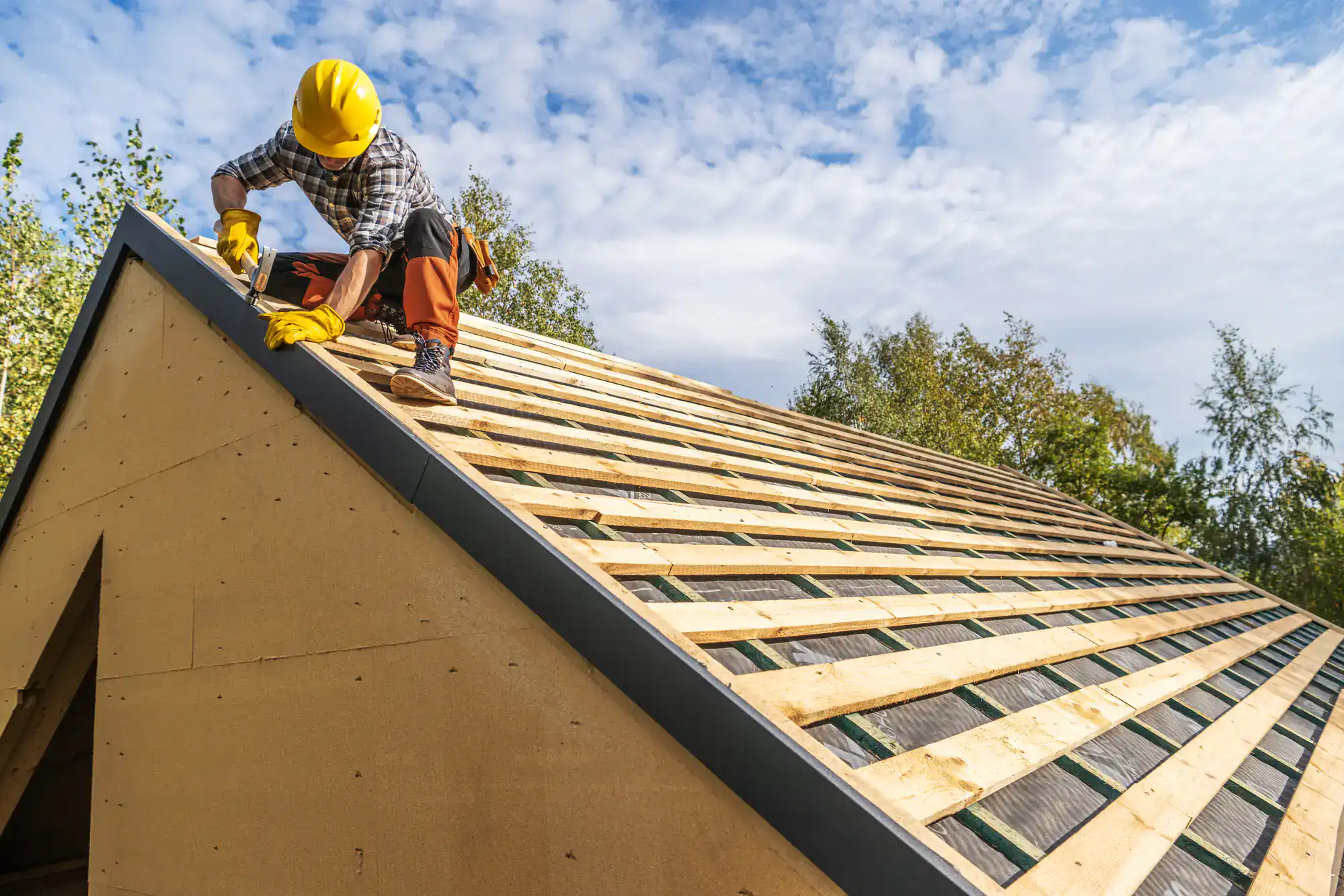
A roof that was done right doesn’t announce itself. You stop checking the ceiling after every storm. You stop wondering if that dark spot in the corner is getting bigger. That’s the outcome not a dramatic transformation, just the peace of mind that comes from knowing the most important part of your home is solid.
In North Amityville, that matters more than most places. Homes here were largely built in the 1960s and 70s, and a lot of them are sitting on original or once-replaced roofing systems that are well past their prime. Add in the proximity to Great South Bay where salt air quietly corrodes flashing, fasteners, and ridge caps long before your shingles show any visible wear and you’ve got a situation where the surface can look fine while the system underneath is failing.
The August 2024 storm that hit the South Shore wasn’t a surprise to anyone who’s lived here long. Nor’easters, freeze-thaw cycles, and hard summer rain are part of life on this stretch of Long Island. A roof built for those conditions with the right materials, properly installed, with every component addressed performs differently than one that was patched and sent off. That difference shows up the next time the weather turns.
We’ve been working across Suffolk County for over a decade. We’re a family-owned operation based in Brookhaven, and we’ve done real work in North Amityville not just listed it as a service area. When the record-breaking August 2024 storm came through, we were on roofs in this community. We know what these homes look like up close, and we know what the South Shore does to them over time.
Our owner, Alban, is involved in the work not just the quoting. That means when something comes up mid-job, you’re not waiting on a call center to relay a message. You get a straight answer from someone who’s accountable for the outcome.
Every project gets documented with photos and videos from start to finish. If you’re commuting out on Route 110 while we’re working, you’ll see exactly what was done and what condition your roof is in when we’re finished. That’s not a bonus feature it’s how we operate.
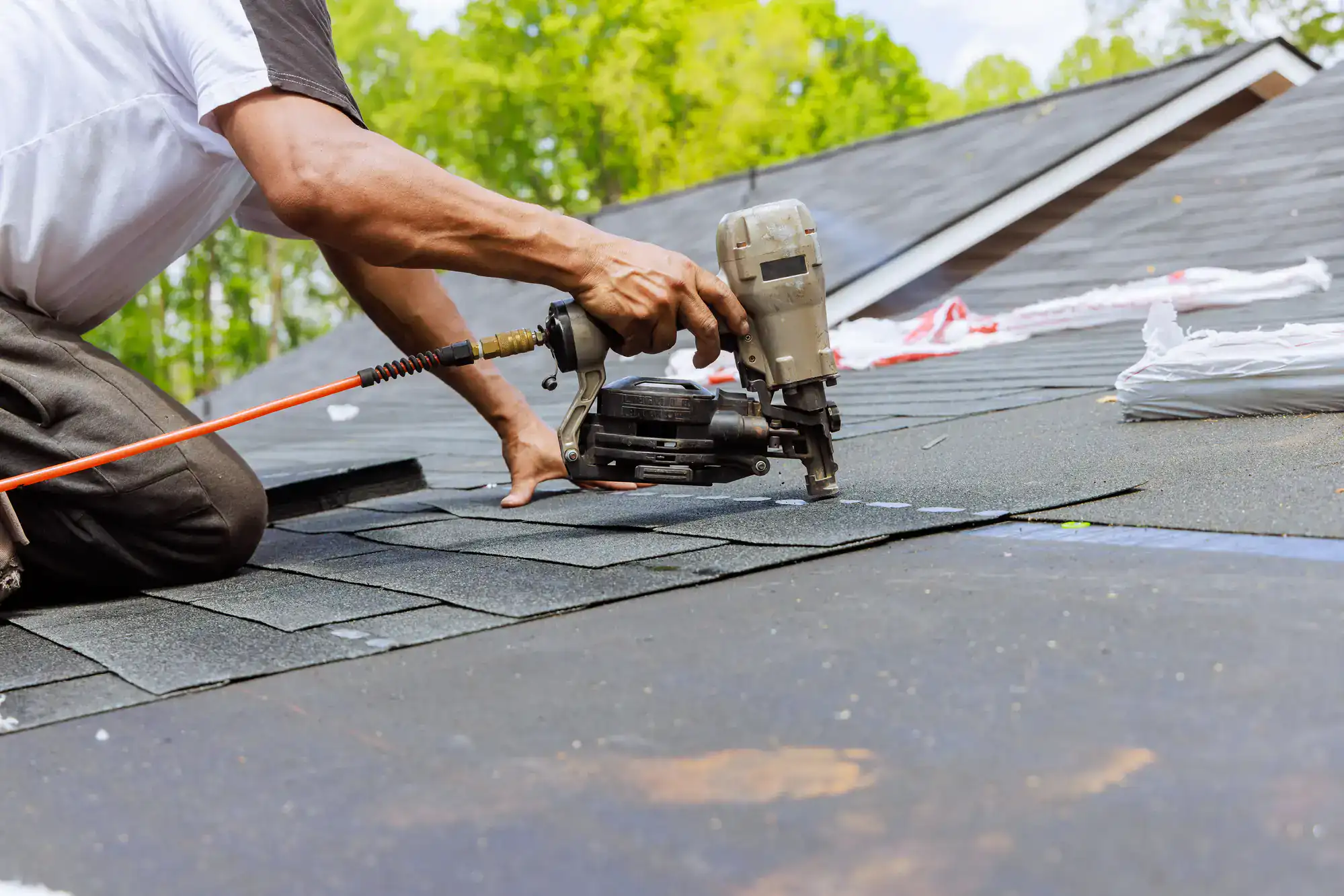
It starts with a thorough inspection not a quick walk-around, but a real look at your entire roofing system. Shingles, flashing, underlayment, decking, gutters, and any penetrations like chimneys or skylights. On South Shore homes, we pay particular attention to the metal components that salt air degrades quietly over time. What we find gets documented and explained to you clearly before any work is discussed.
From there, you get a written estimate with a real number not a range designed to leave room for surprises. If we find structural damage under the surface once work begins, we stop, show you what we found, and explain your options before moving forward. Nothing gets added to your bill without your approval first. For work that requires a permit through the Town of Babylon Building Division which governs North Amityville as an unincorporated hamlet we handle that process. You don’t need to navigate the paperwork.
Once the job is underway, you’ll have photo and video documentation at every stage. When we’re done, the site gets cleaned up completely no debris left in your yard, no nails in the driveway. The final walkthrough covers everything we did, the materials used, and what your roof looks like now. You’ll have a clear picture of where things stand, and you’ll know exactly what was done.
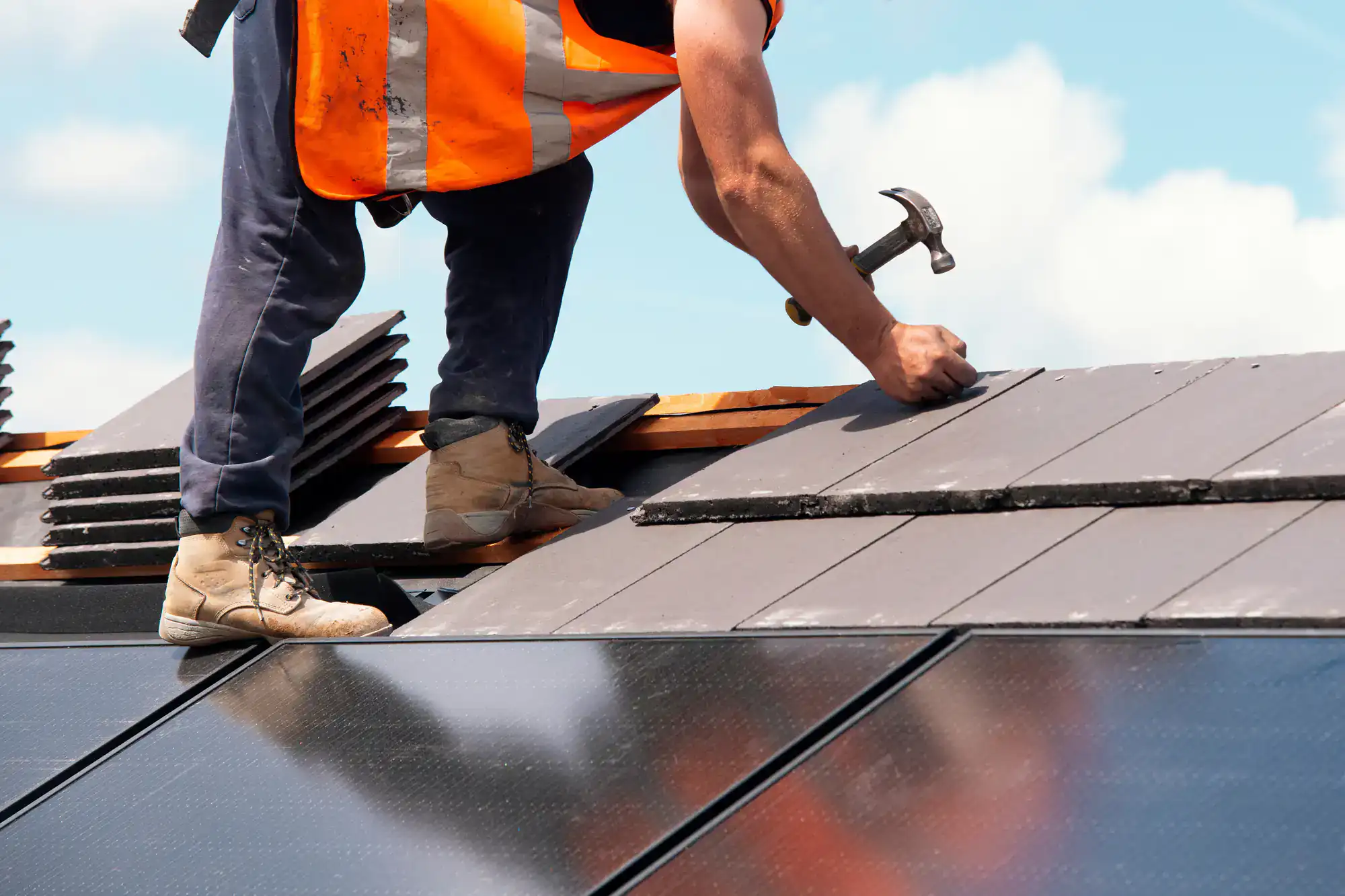
Ready to get started?
Most of the homes along Broadway, Bethpage Road, and the surrounding streets in North Amityville are single-family ranches and colonials built decades ago. What they need from a roofing contractor isn’t generic it’s specific. We handle asphalt shingle replacement as our most common job here, and we use materials rated for the wind uplift and moisture exposure that South Shore Long Island demands. Standard inland-grade shingles don’t hold up the same way two miles from Great South Bay.
Beyond shingles, we handle the full exterior: roof repairs, chimney repair and replacement, gutter installation and replacement, skylight repair and replacement, siding, and deck builds. If a nor’easter damages more than just your roof and they often do you’re not coordinating three different contractors with three different schedules. One call covers it.
We also work directly with homeowners navigating storm insurance claims. Getting the full scope of damage documented properly makes a real difference in what your insurance company covers. On a home worth close to $490,000 which is where North Amityville median values sit right now leaving money on the table in a claim isn’t a small thing. We help you build the documentation to support what you’re actually owed.
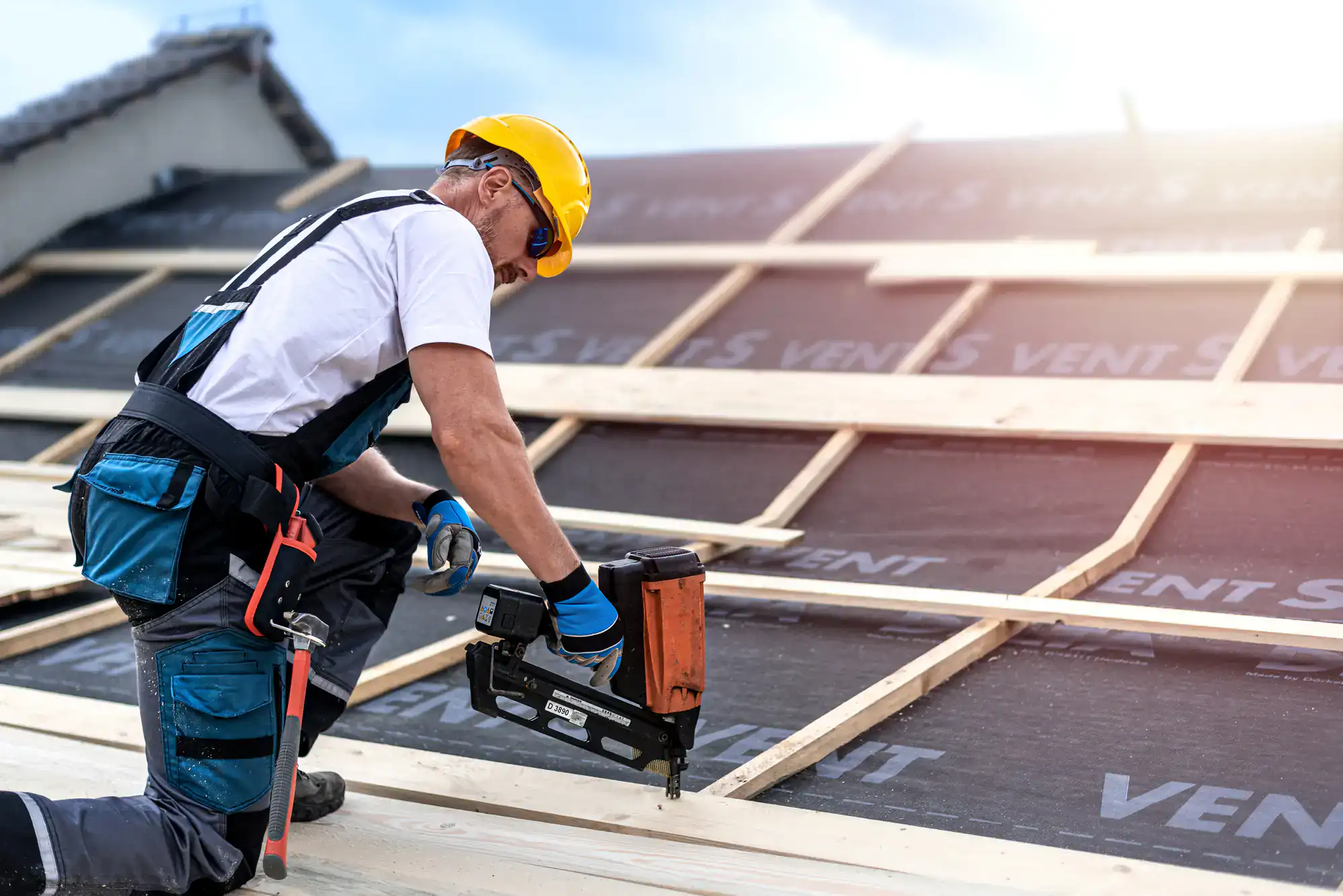
Yes, in most cases. North Amityville is an unincorporated hamlet within the Town of Babylon it’s not part of the Village of Amityville, which has its own separate building department. That distinction matters because roofing permits for homes in North Amityville go through the Town of Babylon Building Division, not the village. If you hire a contractor who doesn’t know that difference, you could end up with unpermitted work that creates problems during a home sale or insurance claim down the road.
Full roof replacements and any work that involves structural components typically require a permit under New York State’s Uniform Fire Prevention and Building Code. Simple repairs may not, depending on the scope. We assess what’s required for your specific job and handle the permit process when it applies. You shouldn’t have to figure out the Town of Babylon’s requirements on your own that’s part of what you’re hiring us to manage.
The honest answer depends on what’s on your roof and what it’s been exposed to. Standard asphalt shingles are rated for 20 to 30 years under typical conditions, but North Amityville’s position on the South Shore compresses that lifespan. Salt air from Great South Bay doesn’t just affect the shingles it quietly corrodes the metal components underneath, including flashing, fasteners, and ridge caps. A roof that looks fine from the street can have failing metal components that are actively letting water in.
The median construction year for homes in North Amityville is 1976. If your home hasn’t had a full roof replacement since the 1990s or early 2000s, you’re likely in or past the replacement window even if there’s no visible leak yet. Granule loss, brittle shingles, and compromised flashing are all signs the system is nearing the end, and they’re not always visible without getting up there. An inspection will give you a clear picture of where things actually stand.
Nor’easters hit the South Shore differently than they hit inland towns. Wind-driven rain comes in at angles that test every flashing joint, every boot seal, and every valley on your roof. The most common damage we see after a major nor’easter in North Amityville is lifted or torn shingles along the ridgeline and edges, failed flashing around chimneys and vents, and water intrusion at skylights and pipe boots. These aren’t always dramatic failures sometimes it’s a small breach that lets water in slowly, and you don’t notice it until there’s staining on a ceiling or mold starting in the attic.
Ice dams are also a real issue here in winter. When snow sits on a warm roof, it melts and refreezes at the cold eaves, forcing water back under the shingles. Older homes in North Amityville with inadequate attic insulation are particularly vulnerable to this. After a storm, we look at the full picture not just the obvious damage because what you can see from the ground is rarely the complete story.
The short answer is: you need someone to actually get up there and look. There’s no way to assess this accurately from the ground, and a contractor who quotes you a repair or a replacement without a proper inspection is guessing. What we look for is the overall condition of the roofing system not just the shingles, but the decking underneath, the flashing, the underlayment, and the ventilation. If the decking is soft or damaged, or if the flashing has failed in multiple locations, a repair is often a short-term fix on a system that’s already at the end of its life.
As a general rule, if your roof is over 20 years old and has had repeated repairs, a full replacement is usually the more cost-effective path. Patching a failing system means you’ll keep calling a roofer every time the weather turns. A replacement done with the right materials rated for Long Island’s coastal conditions is a 25-to-30-year decision. We’ll tell you honestly which situation you’re in after we’ve seen the roof.
Yes, and it’s worth doing carefully. Insurance adjusters work quickly and don’t always identify every damaged component especially the less obvious ones like compromised flashing, damaged underlayment, or corroded fasteners that a storm accelerated. If the claim gets closed without capturing the full scope of damage, you’re left paying out of pocket for work that should have been covered.
What we do is document everything thoroughly photos, measurements, and a written assessment of all affected areas before the adjuster visit when possible, or as part of a supplemental claim if the initial settlement was short. In North Amityville, where home values have climbed significantly over the past two decades and a lot of homeowners have real equity on the line, making sure your claim reflects the actual damage matters. We’ve helped homeowners in this area get settlements that covered the full scope of what the storm actually did not just what was easy to spot from a ladder.
For a standard single-family home in North Amityville the kind of ranch or colonial that makes up most of the housing stock along streets like Bethpage Road or Albany Avenue a full asphalt shingle roof replacement typically runs somewhere between $8,000 and $18,000 depending on the size of the roof, the pitch, the materials selected, and what’s found underneath once the old roofing comes off. Homes with steeper pitches, multiple penetrations like chimneys or skylights, or decking that needs repair will land toward the higher end of that range.
What we don’t do is give you a low number to win the job and adjust it later. The estimate you get from us is based on what we actually find during the inspection, and if something unexpected comes up mid-project, we explain it before we do anything. North Amityville homeowners are already carrying some of the highest property tax bills in the country close to $10,000 a year on average and a bill that changes without warning isn’t something you should have to deal with on top of that. Our pricing is upfront, in writing, and doesn’t move without your approval.
Other Services we provide in North Amityville