
Hear From Our Clients
Most Hampton Bays homeowners don’t think about their roof until something goes wrong. A stain on the ceiling after a nor’easter. A gutter pulling away from the fascia after a rough winter. By the time it’s visible inside, water has usually been working on your structure for a while. Getting ahead of it or fixing it correctly the first time is what separates a roof that holds from one that keeps costing you.
Hampton Bays is one of the most demanding environments on all of Long Island for a roof. You’re not just dealing with rain and wind. Salt air reaches your home from the Atlantic through Shinnecock Inlet, from Shinnecock Bay and Tiana Bay to the south, and from the Peconic to the north. That multi-directional salt exposure eats through shingle granules, corrodes metal fasteners, and attacks flashing faster than any manufacturer’s standard warranty is written to account for. A roof that would last 25 years in Smithtown might need serious attention in 15 here.
When the work is done right, you stop worrying about what the next storm is going to find. You know your materials were chosen for this environment, your flashing was sealed for coastal wind-driven rain, and someone actually documented the job so you can verify it. For the significant number of Hampton Bays homeowners who aren’t here year-round, that documentation isn’t a bonus it’s the whole point.
We’re a family-owned, owner-operated roofing company based in Suffolk County with over ten years of hands-on experience serving Hampton Bays and the surrounding coastal communities. We’re not a franchise. There’s no call center routing your job to whoever’s available. When you reach out, you’re talking to the person responsible for the work.
We’ve worked on homes throughout eastern Suffolk County from older mid-century ranches in the Canoe Place and Tiana neighborhoods to newer waterfront builds closer to the Shinnecock Canal. We know what coastal conditions do to roofs out here, and we know what materials and methods actually hold up. That’s not a marketing line it’s what ten years of working in this environment looks like.
Every job we take on gets photo and video documentation from start to finish. That means you can see exactly what we did, what materials we used, and what condition everything was in before and after whether you were home or not. Upfront pricing is standard. No invoice surprises, no scope creep without your sign-off.
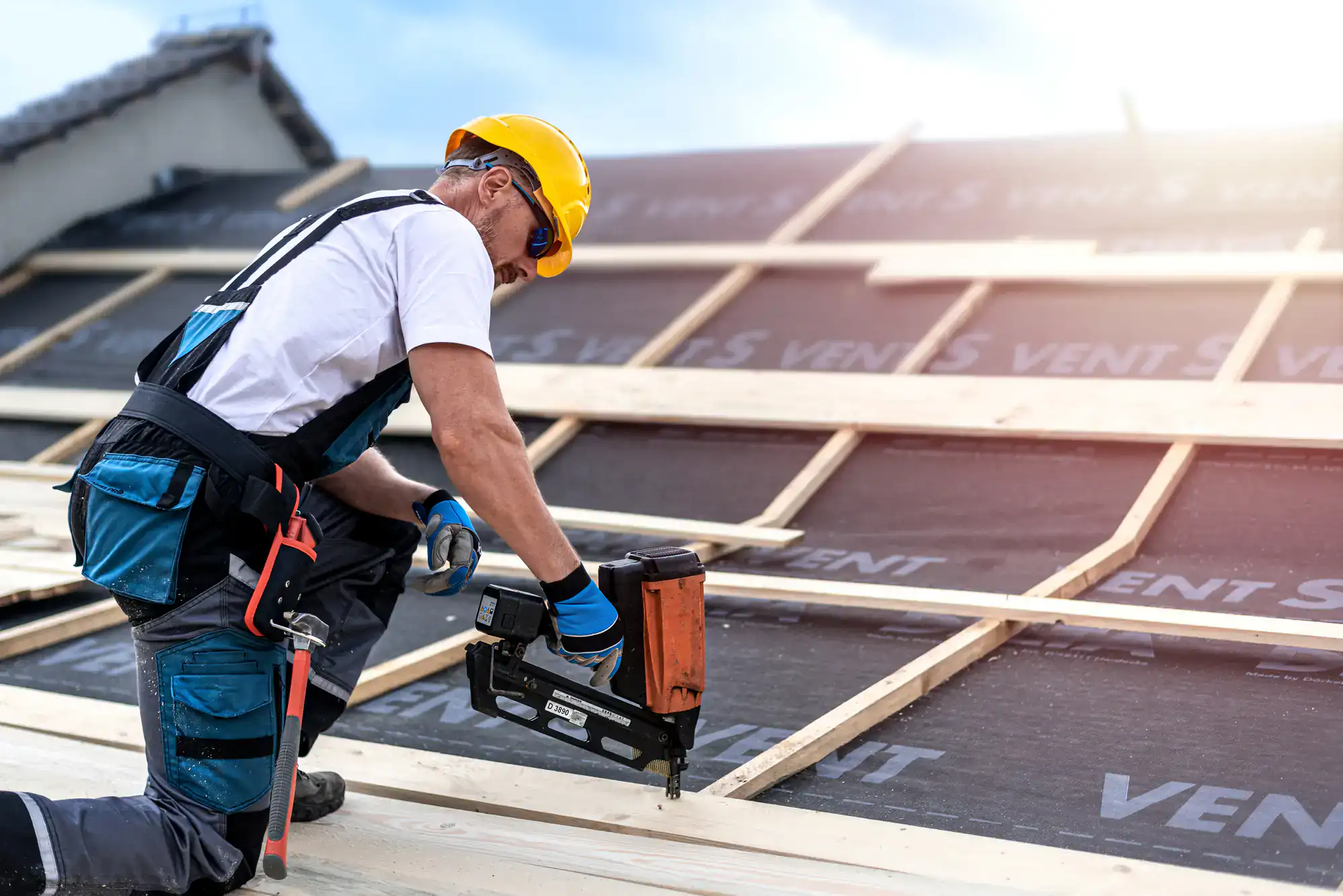
It starts with a real assessment. Not a sales visit an actual look at your roof, your flashing, your gutters, your decking condition, and anything else on the exterior that the same storm event could have affected. In Hampton Bays, that matters more than in most places, because salt-air corrosion and wind-driven moisture rarely stop at just the shingles. We look at the full picture.
From there, you get a written estimate with a clear scope and a clear number before anything starts. If you’re near the water in Ponquogue or along the Red Creek area, we’ll flag whether your project falls under any Southampton Town coastal or wetland-adjacent review requirements that’s a real consideration for a meaningful portion of Hampton Bays properties, and something a lot of contractors skip over entirely. Standard residential roof replacement in Southampton Town typically doesn’t require a permit, but waterfront-adjacent properties can be a different story, and we’d rather surface that upfront than have it slow the job down mid-project.
Once work begins, we document as we go. If we open up the decking and find something unexpected rotted sheathing, compromised underlayment, anything that changes the scope we stop, show you what we found, and get your approval before moving forward. The price you agreed to is the price you pay unless you’ve said otherwise. When the job is done, you get a full walkthrough and the complete photo and video record of everything we touched.
Ready to get started?
Roofing is the core of what we do, but Hampton Bays homes rarely need just one thing at a time. A storm that lifts shingles near the Shinnecock Canal often tears gutters, separates chimney flashing, and compromises siding seams in the same event. We handle all of it roof repair and full replacement, shingle and metal roofing systems, flashing, gutters, siding, chimneys, skylights, and decks. One contractor, one schedule, one point of accountability.
On the roofing side specifically, we install both asphalt shingle and metal roofing systems. For Hampton Bays homes with significant salt-air exposure especially anything facing the bay or within a few blocks of the inlet metal roofing is worth a serious conversation. Properly installed metal with coastal-grade fasteners and sealants outperforms asphalt in this environment by a wide margin and can last 40 to 70 years where a shingle roof might need full replacement in 15. It’s not the right fit for every budget or every home, but if you’re replacing a roof on a property you plan to hold for a long time, the math usually works.
For storm damage situations, we move quickly. Emergency leak response, temporary weatherproofing, full damage assessment we know that a compromised roof in Hampton Bays during nor’easter season isn’t something you can wait two weeks on. If you’re dealing with active damage, that’s where we start.
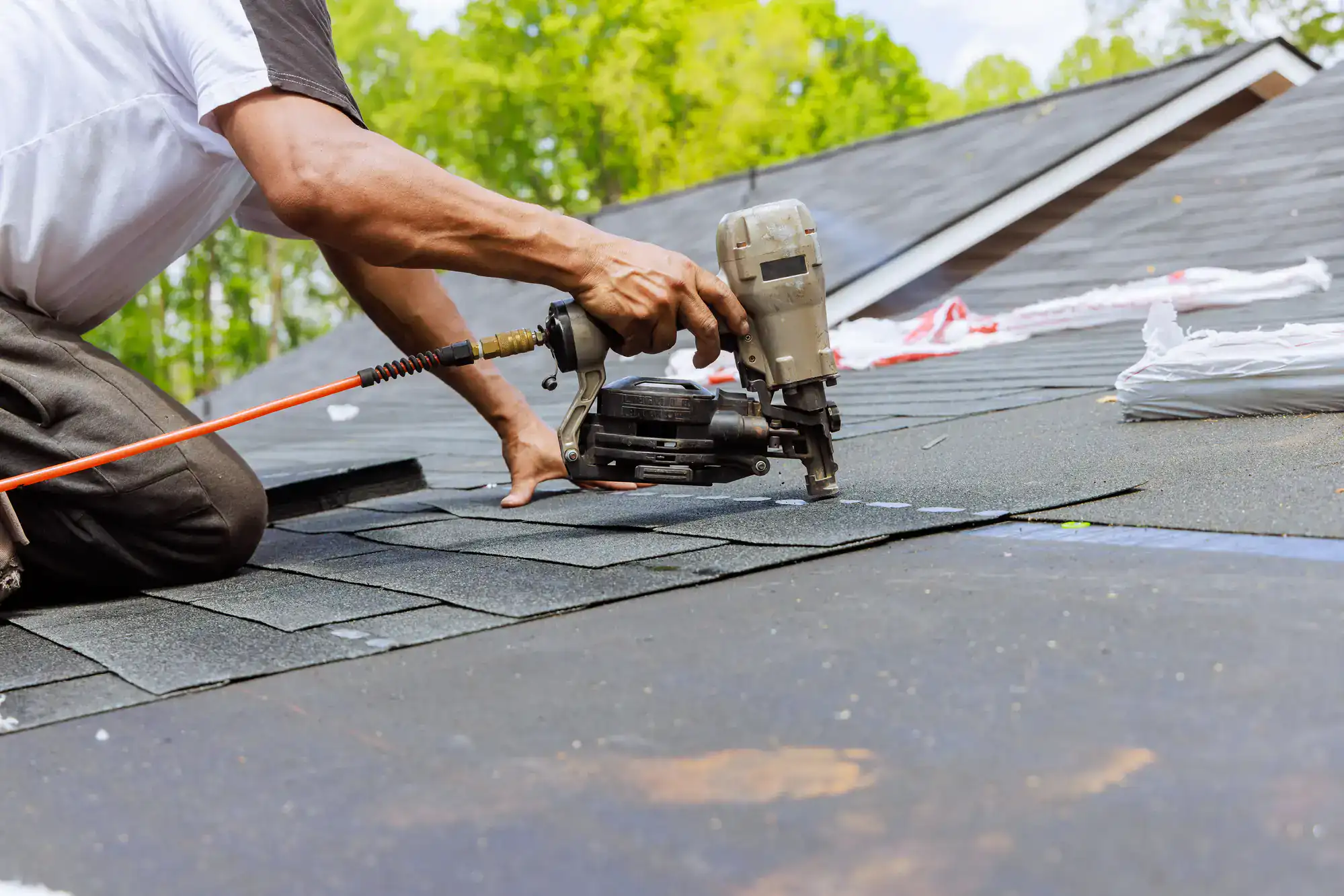
It shortens the timeline sometimes significantly. Salt air degrades asphalt shingles by accelerating granule loss, which is the protective layer embedded in the surface of the shingle. Once that’s gone, the underlying material is exposed to UV, moisture, and temperature swings, and it deteriorates quickly. On top of that, salt corrodes the metal fasteners holding your shingles in place and attacks flashing around chimneys, skylights, and roof edges. These aren’t slow, invisible processes they’re active, and they compound over time.
Hampton Bays is uniquely exposed because salt air reaches your roof from multiple directions simultaneously: the Atlantic through Shinnecock Inlet to the south, Shinnecock Bay and Tiana Bay along the southern perimeter, and the Peconic to the north. There’s no sheltered side. A shingle roof with a 25 to 30-year manufacturer rating under standard conditions may realistically need replacement in 15 to 20 years here. If a contractor quotes your roof without acknowledging that, they’re either not familiar with this area or not being straight with you.
For most standard residential roof replacements, no Southampton Town generally does not require a building permit for replacing roofing material on a typical home. That said, Hampton Bays has a meaningful number of properties near coastal wetlands and waterfront areas Ponquogue, Tiana, Red Creek, Canoe Place and those can trigger additional environmental review requirements depending on how close the structure is to protected land or water. It’s not the majority of jobs, but it’s not rare either.
When permits are required in Southampton Town, the typical fee runs in the $150 to $300 range with a processing window of roughly one to two weeks. We identify upfront whether your specific property is likely to require any additional review so there are no scheduling surprises mid-project. If you’re not sure where your property stands, that’s one of the first things we sort out during the initial assessment before any work is scoped or priced.
The honest answer is that it depends on the age of the roof, the extent of the damage, and the condition of the underlying structure. A repair makes sense when the damage is genuinely isolated a few lifted or missing shingles after a storm, a flashing separation at a chimney, a small leak around a skylight. If the rest of the roof is in solid condition and has reasonable life left in it, a targeted repair is the right call.
Where it gets more complicated is when the roof is already 15 to 20 years old and has been living in a coastal environment like Hampton Bays. At that point, a repair might fix the visible problem but leave you with a roof that’s going to develop new issues within a year or two because the underlying material is just worn out. In those cases, a repair is often the more expensive long-term choice. We’ll tell you honestly which situation you’re in after the assessment, and we’ll show you the documentation to back it up. We’re not in the business of selling replacements to people who need repairs, or selling repairs to people whose roofs are done.
For the right property, yes and Hampton Bays is one of the clearest cases on Long Island where the math supports it. The core issue is that asphalt shingles aren’t engineered for multi-directional salt-air exposure. They perform well in typical suburban environments but degrade faster in coastal conditions, which means you’re replacing them more often. Metal roofing properly installed with coastal-grade fasteners and sealants resists corrosion, handles wind-driven rain more effectively, and can realistically last 40 to 70 years in this environment.
The upfront cost is higher. A metal roofing system will run more than a standard asphalt shingle replacement. But if you’re replacing a shingle roof every 15 years on a Hampton Bays property, you’re paying for two or three roofs over the same period that a single metal system would cover. For homeowners who plan to stay in the property long-term, or who own a high-value waterfront home and want to minimize ongoing maintenance, it’s worth a real conversation. We install metal systems designed specifically for Long Island coastal conditions not the same product sold to inland homeowners in a different climate.
First, don’t go up there yourself. After a major storm, roofs can have compromised decking, lifted sections, or debris that makes them genuinely unsafe to walk. What you can do safely is document what you can see from the ground or from inside photos of any ceiling stains, visible daylight through the attic, water in the attic space, or gutters that have pulled away. That documentation matters for your insurance claim.
The next step is getting a contractor out for a proper damage assessment before you file the claim or agree to any repairs. In Hampton Bays, storm-chasing contractors come in from out of area after every significant nor’easter, offering fast repairs at attractive prices. Some of them do fine work. Many of them don’t, and when your roof leaks again six months later, they’re unreachable. A local contractor with a verifiable track record in Suffolk County is a meaningfully lower-risk choice not because local automatically means better, but because they have a reputation here to protect. We provide full photo and video documentation of storm damage assessments, which you can submit directly to your insurance carrier.
Start with licensing. Hampton Bays falls under the Town of Southampton’s jurisdiction, and contractors working here should hold licensing recognized by Southampton Town not just a general Suffolk County contractor license. Ask directly, and verify it. A contractor who can’t answer that question clearly is a red flag.
Beyond licensing, look for a few specific things: a written estimate with a clear scope and a clear number before any work starts, photo or video documentation of completed jobs, and verifiable reviews that mention the contractor by name not just the company. In a market like Hampton Bays, where seasonal demand creates a contractor availability crunch every summer and out-of-area operators flood in after storms, the contractors worth hiring are the ones who have been here consistently, who have year-round availability, and who have customers willing to put their name on a review. Ask how long they’ve been working in eastern Suffolk County specifically, not just Long Island broadly. Coastal roofing experience in communities like Hampton Bays is different from suburban roofing experience, and the difference shows up in material choices, installation methods, and how long the work actually holds.
Other Services we provide in Hampton Bays