Hear From Our Clients
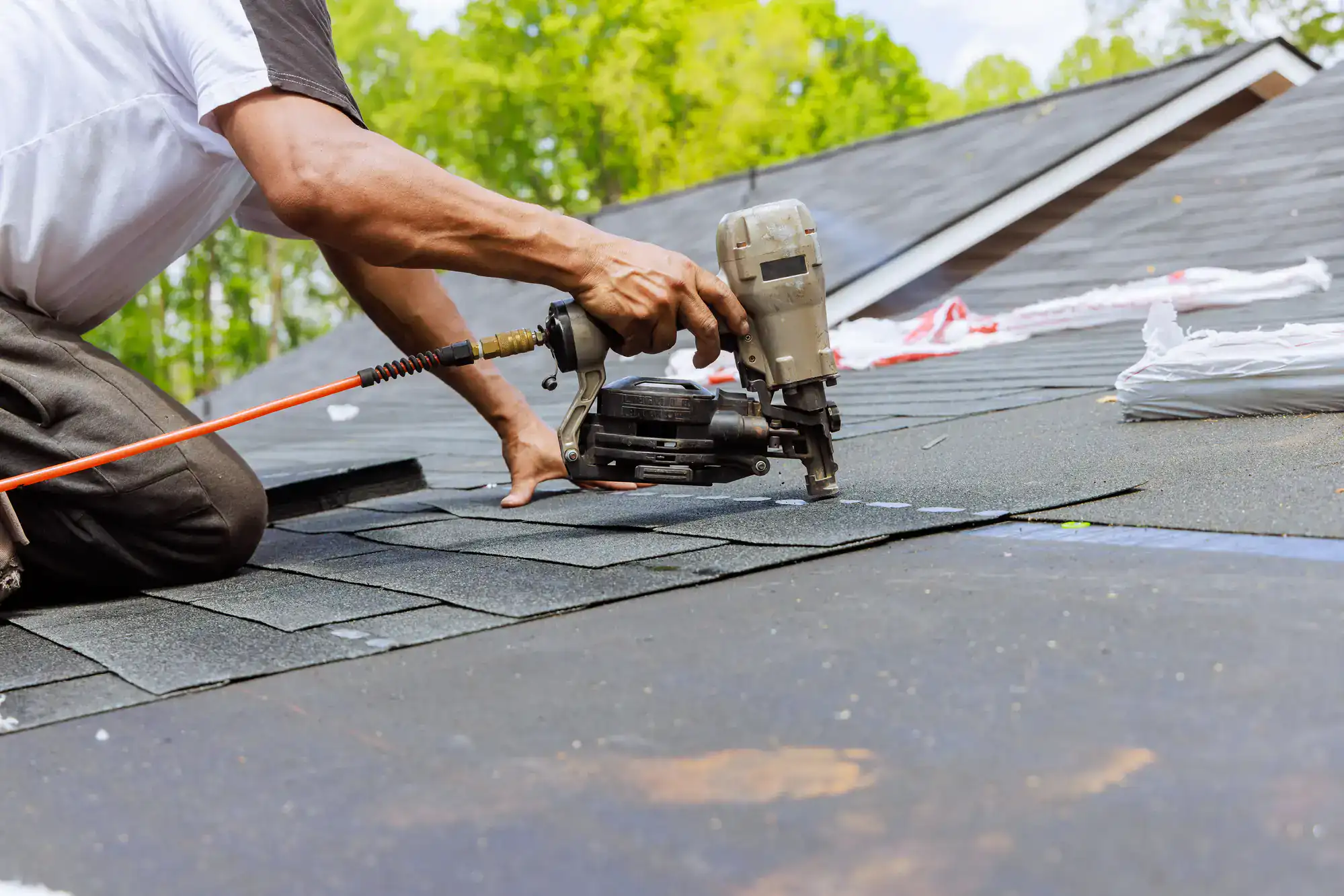
A roof that holds isn’t something you think about. That’s the point. You stop checking the ceiling after every storm. You stop wondering if that dark spot in the corner is getting bigger. You stop putting off the conversation because you’re not sure what it’s going to cost or whether the contractor will actually show up and do what they said.
For Copiague homeowners especially those in American Venice, along the canals, or anywhere south of Montauk Highway that peace of mind is harder to come by than it should be. Salt air off the Great South Bay doesn’t just weather your shingles. It works on your flashings, your fasteners, and every metal component on your roof, quietly, every single season. A roof that would last 25 years in an inland community can start failing in 15 here.
More than half of Copiague’s homes were built in the 1940s through the 1960s. If yours is one of them, it was built before modern ventilation standards, before ice-and-water barriers were standard practice, and before anyone was thinking about what decades of coastal exposure would do to the structure. Getting the roof right on a home like that means understanding what’s actually under the surface not just laying new shingles over old problems.
Home Team Construction is a family-owned, owner-operated roofing and exterior company based in Suffolk County, with over a decade of hands-on work across the South Shore. We’ve worked on the post-war Cape Cods near Deauville Gardens in Copiague, the canal-side homes in American Venice, and everything in between. We know the Town of Babylon’s permitting process, we know what Great South Bay weather does to a roof over time, and we know how to give you a straight answer about what your home actually needs.
The owner is involved in every job. When you call, you’re talking to someone with real skin in the game, not a salesperson handing your project off to a crew they’ve never met. Reviews consistently mention that by name, and it matters in Copiague, where reputation travels fast and people remember who showed up and who didn’t.
We handle roofing, gutters, siding, chimneys, skylights, and decks so when your exterior needs attention from more than one direction, you’re not juggling four different contractors.
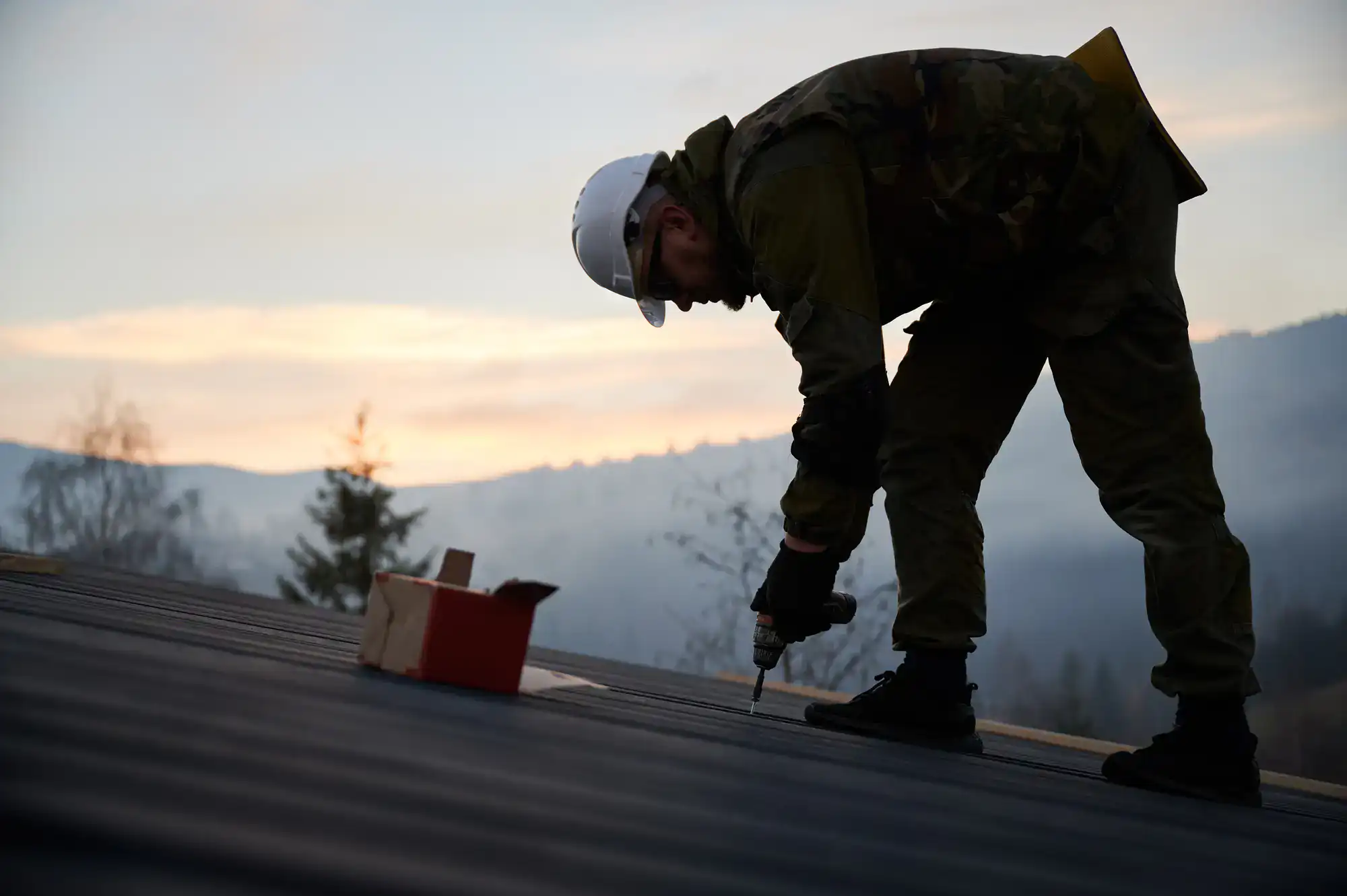
It starts with a real inspection, not a quick drive-by estimate. We get on the roof, look at the decking, check the flashings around your chimney and any skylights, and assess the ventilation situation because on a 1950s or 1960s Cape Cod in Copiague, that’s often where the real problems are hiding. If there’s damage that’s not visible from the ground, we document it with photos and show you exactly what we found before we talk numbers.
From there, you get a written estimate with a clear scope of work and a final price. Roof replacements in Copiague require a permit pulled through the Town of Babylon’s Building Division, and we handle that process. You don’t need to chase down paperwork or figure out what’s required that’s our job.
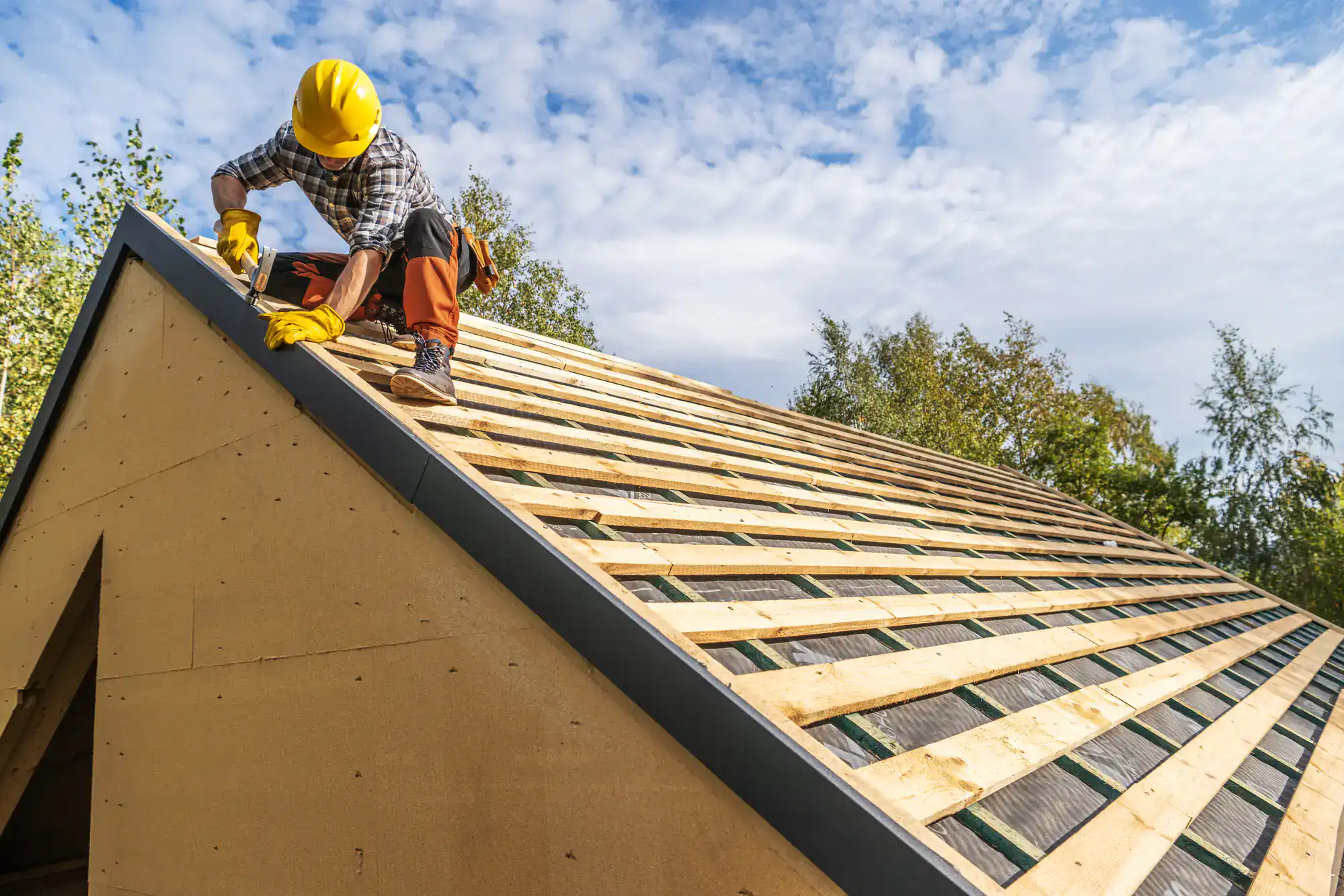
Once work begins, we do a full tear-off, inspect the deck, and make any necessary repairs before new material goes down. For homes near the bay or on the canals in Copiague, we pay close attention to flashing details and use materials suited for coastal exposure. When the job is done, we do a post-job walkthrough, document the completed work with photos and video, and make sure the property is clean before we leave. That documentation isn’t just for our records it’s yours to keep, and it matters if you ever need to file an insurance claim.
Ready to get started?
Most of what we do in Copiague falls into two categories: full roof replacements and targeted repairs. On the replacement side, that typically means a complete tear-off down to the deck, a thorough inspection of the sheathing, installation of a proper ice-and-water barrier along the eaves and valleys, and new shingles installed to manufacturer specs. For homes in flood-prone areas south of Montauk Highway the canal neighborhoods, the waterfront streets we also pay close attention to how the roof system integrates with the rest of the structure, because those homes face a different set of conditions than anything further inland.
For repairs, we focus on finding the actual source of the problem rather than patching the symptom. A leak that shows up on your ceiling after a nor’easter might be traced back to a failed boot flashing around a plumbing vent, a cracked ridge cap, or step flashing along a chimney that salt air has been corroding for years. We find it, we fix it, and we tell you what we did.
We also offer metal roofing as an option for homeowners who want a longer-lasting solution in a coastal environment. Metal holds up significantly better than asphalt under constant salt air exposure and provides superior wind resistance both relevant factors for a home on or near the Great South Bay. If you’re not sure which material makes sense for your home, that’s a conversation we’re happy to have before you make any decisions.
Yes. Roof replacements in Copiague require a building permit through the Town of Babylon’s Building Division. This applies to full tear-off and replacement jobs it’s not optional, and skipping it can create real problems when you go to sell your home or file an insurance claim. An unpermitted roof replacement can trigger a stop-work order, require you to pull an after-the-fact permit, or show up as a liability during a title search.
When you work with us at Home Team Construction, we pull the permit as part of the job. You don’t need to navigate the Town of Babylon’s process on your own. We handle the paperwork, schedule any required inspections, and make sure the work is done in full compliance. If your home is in one of the flood zone areas south of Montauk Highway, there may be additional considerations depending on the scope of structural work involved that’s something we’ll flag upfront if it applies to your property.
The honest answer is: shorter than the manufacturer’s warranty suggests, if the roof isn’t installed and maintained with coastal exposure in mind. A standard asphalt shingle roof rated for 25 to 30 years in an inland environment can realistically start showing significant wear in 15 to 18 years on a Copiague home near the bay or along the canals. Salt air accelerates granule loss on shingles, corrodes metal fasteners and flashings, and breaks down sealants faster than UV alone would.
The homes in American Venice and along the waterfront streets in Copiague take the most consistent abuse they’re dealing with salt-laden air year-round, not just during storms. If your home is in one of those neighborhoods, the inspection interval matters as much as the installation quality. Getting a professional look at your roof every few years especially after a major nor’easter or tropical event can catch small failures before they become expensive ones. We’ll tell you honestly what we find, including if the answer is that you don’t need anything done yet.
The most common signs are curling or missing shingles, granules collecting in your gutters, daylight visible in the attic, and water stains on your ceilings but on older homes, the more important thing to look for is what you can’t see from the ground. The post-war Cape Cods and ranches that make up a large portion of Copiague’s housing stock were built without the ventilation standards we use today. Poor attic ventilation traps heat and moisture, which deteriorates the roof deck from the inside out. By the time you see visible shingle damage, the decking underneath may already be compromised.
If your home was built in the 1950s or 1960s and the roof hasn’t been replaced in the last 20 years, it’s worth getting a professional inspection even if nothing looks obviously wrong from the curb. We do full-access inspections not drive-by assessments and we’ll show you exactly what we find. If the roof has years left in it, we’ll tell you. If it needs attention, we’ll explain why and give you a clear picture of what that looks like before you make any decisions.
Nor’easters hit South Shore communities like Copiague differently than most homeowners expect. The wind doesn’t just lift shingles it drives rain nearly horizontally into every weak point on the roof. Ridge caps are one of the most common casualties; after the March 2022 nor’easter, dozens of Copiague homes had ridge caps blown off entirely, leaving a gap running the full length of the roof peak. Many homeowners didn’t notice until they saw water staining on interior ceilings weeks later.
Beyond ridge caps, the failure points we see most often after nor’easters in this area are step flashing along chimneys, boot flashings around plumbing vents, and any caulked penetration that’s been drying out for years. If you’ve just come through a major storm and you’re not sure whether your roof took damage, don’t wait for a ceiling stain to confirm it. We’ll get up there, document what we find with photos, and give you a straight assessment including whether it’s something that warrants an insurance claim or something we can address with a targeted repair.
For a lot of Copiague homeowners particularly those on the water or close to it metal roofing is worth a serious look. The core advantage in a coastal environment is durability under the conditions that wear asphalt shingles down fastest: salt air, wind-driven rain, and repeated freeze-thaw cycles. A properly installed metal roof can last 40 to 50 years, holds up in high winds significantly better than asphalt, and doesn’t lose granules or develop the surface degradation that salt air accelerates on shingle roofs.
The tradeoff is upfront cost. Metal roofing typically runs higher than a comparable asphalt shingle installation, but when you factor in the lifespan difference and reduced maintenance needs especially on a waterfront or canal-side home in Copiague where you’d otherwise be replacing an asphalt roof sooner the math often works in its favor over time. It’s not the right choice for every situation, and we’re not going to push it on you if shingles make more sense for your home and budget. But if you’re replacing a roof on a property with direct bay or canal exposure, it’s a conversation worth having before you decide.
The process starts with documentation, and timing matters. If your roof sustained damage in a storm, the sooner you get a professional inspection and have the damage photographed and documented, the stronger your claim position will be. Insurance adjusters are looking for evidence that the damage was storm-related and not pre-existing and without a clear before-and-after record, that distinction gets harder to establish. This is one of the reasons we document every job with photos and video, both before we start and after we finish.
For Copiague homeowners in flood zone areas south of Montauk Highway, there’s an added layer of complexity: wind damage is typically covered under your standard homeowners policy, while flood-related damage falls under a separate flood insurance policy. When a storm causes both, you may be managing two simultaneous claims with two different adjusters. We can help you understand what we’re seeing on the roof, what appears to be wind-related versus water intrusion, and provide the written documentation your insurer will ask for. We’re not a public adjuster and we don’t handle the claim on your behalf but we give you the clear, accurate, documented assessment you need to navigate the process on solid footing.
Other Services we provide in Copiague