

Hear From Our Clients
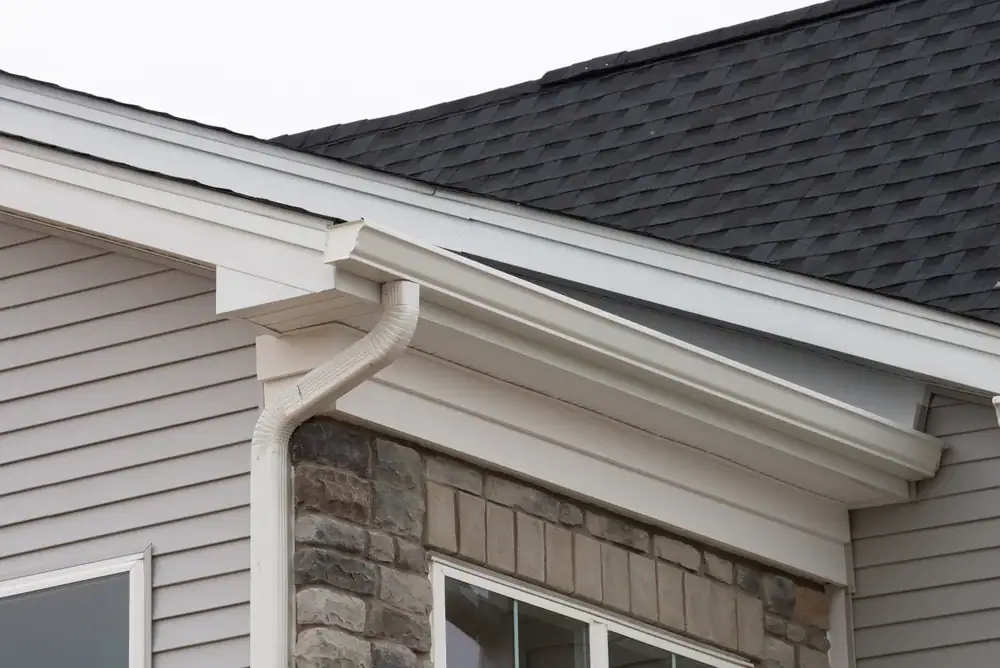
That small crack in your chimney isn’t staying small. Every freeze-thaw cycle this winter will make it worse, and every storm will push more water into your walls.
Here’s what happens when you address it now instead of later: no more water stains on your ceiling, no emergency calls during the next blizzard, and no $5,000 repair bill because you waited too long. You get a chimney that works the way it should—sealed properly with marine-grade materials that handle Copiague’s coastal weather without breaking down in three years.
Most chimney problems in Suffolk County come from salt air corrosion and freeze-thaw damage. The brick absorbs moisture, freezes, expands, and cracks. Standard repairs don’t account for that cycle, which is why they fail. We use corrosion-resistant flashing and sealants designed for Long Island’s climate, so the repair actually lasts.
Home Team Construction has spent more than 10 years repairing chimneys, roofs, and exterior systems across Suffolk County. We’re not a national franchise or a crew that shows up once and disappears—we live and work in your neighborhood.
We know what coastal weather does to chimneys in Copiague because we’ve seen it hundreds of times. The salt air eats through standard mortar. The humidity accelerates creosote buildup. The freeze-thaw cycles crack masonry that would hold up fine 20 miles inland.
That’s why we don’t use the same approach a contractor in the Midwest would use. We assess the actual damage, explain what caused it, and fix it with materials that match the environment. No runaround, no upselling—just honest work that holds up.
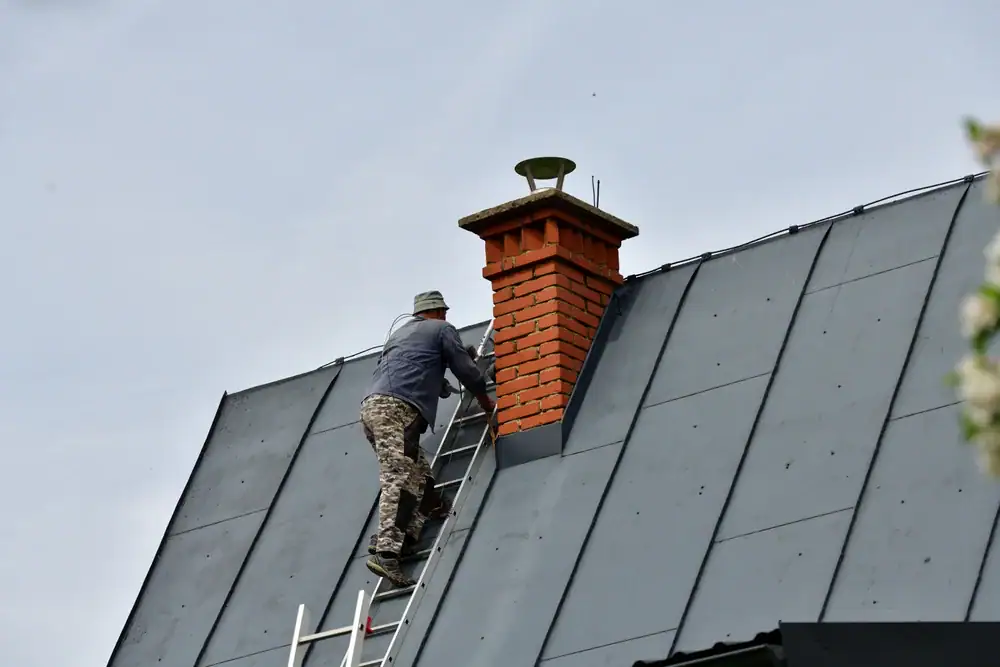
You call or message us, and we schedule an inspection at a time that works for you. We’re not going to make you wait three weeks or charge you $200 just to show up and look.
During the inspection, we check the chimney crown, flashing, mortar joints, and liner. We look for cracks, water intrusion points, and signs of salt air corrosion. Most homeowners don’t realize the damage is there until we point it out—and by then, it’s usually been getting worse for a year or two.
We’ll explain what’s wrong, what caused it, and what it takes to fix it properly. If your insurance might cover storm damage, we document everything with photos and notes that adjusters actually need. Then we give you a clear estimate with no surprises.
Once you approve the work, we get started. Our goal is to have your chimney weather-tight within 48 hours of starting the job. We use stainless steel liners that resist moisture, marine-grade flashing that won’t corrode, and mortar designed for coastal climates. When we’re done, we walk you through what we did and what to expect going forward.

Ready to get started?
Chimney repair isn’t just slapping some caulk on a crack and calling it done. If that’s all it took, you wouldn’t need a contractor.
We handle chimney crown repairs, where the concrete cap at the top of your chimney cracks and lets water seep into the masonry. We replace corroded flashing—the metal seal between your chimney and roof—that causes most chimney leaks in Copiague. We repoint mortar joints that have deteriorated from salt air and freeze-thaw cycles, and we reline chimneys with stainless steel when the old clay liner has cracked.
If your chimney is leaking, we find the source. Most leaks aren’t where you think they are. Water might be dripping into your living room, but the actual entry point could be at the crown, the flashing, or a crack you can’t see from the ground. We check all of it.
Copiague homeowners deal with unique challenges because of the coastal location. Salt particles settle into your masonry, absorb moisture, and expand. That’s why chimneys here crack faster than they do inland. We account for that in every repair, using materials that resist corrosion and stand up to humidity and storms.
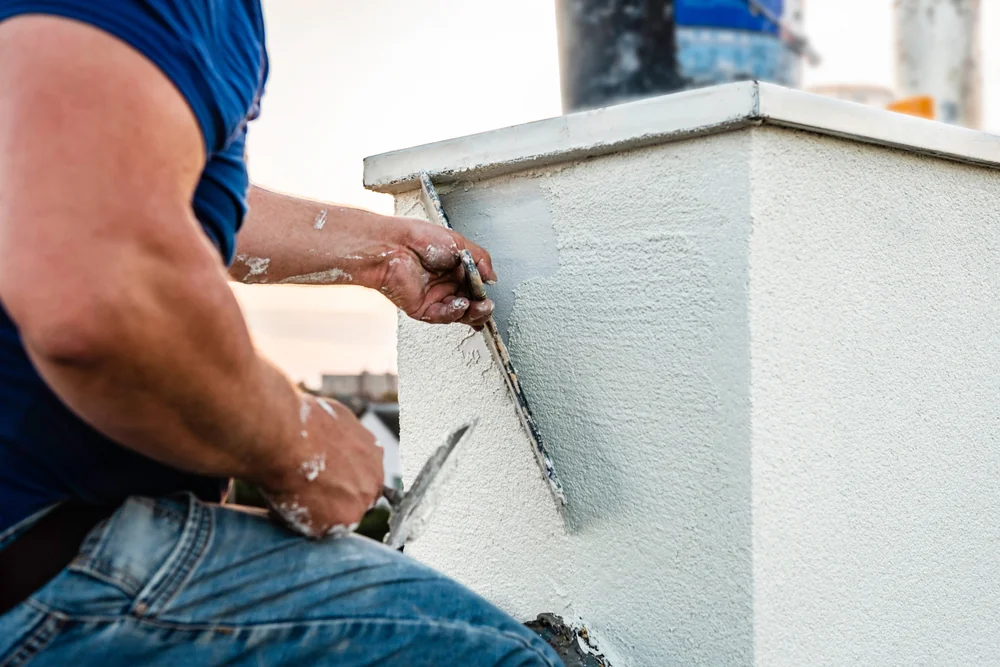
Most chimney repairs in Copiague range from $336 to $750, depending on what’s damaged and how extensive the work is. A simple flashing repair might cost $400, while a full crown rebuild and repointing job could run $1,500 or more.
The real cost isn’t just the repair itself—it’s what happens if you don’t fix it. A $500 repair now prevents a $5,000 emergency later when water damage spreads into your walls and ceiling. That’s not a scare tactic, it’s just how water works. It doesn’t stop on its own.
If your chimney was damaged in a storm, your homeowner’s insurance might cover part or all of the repair. We work directly with insurance companies and provide the documentation they need to process your claim. That includes photos, detailed estimates, and notes on what caused the damage. We’ve done this enough times to know what adjusters look for.
Copiague sits between Long Island Sound and the Atlantic Ocean, which means your chimney is constantly exposed to salt air, high humidity, and temperature swings that accelerate damage. Salt particles settle into brick and mortar, absorb moisture, and expand when they freeze. That’s what causes the cracks.
Freeze-thaw cycles are the single most destructive force for Long Island chimneys. Water gets into small cracks, freezes, expands by about 9%, and makes the crack bigger. Then it thaws, more water gets in, and the cycle repeats all winter. By spring, a hairline crack has turned into a structural problem.
Inland chimneys don’t deal with the same salt exposure or humidity levels, so they last longer with less maintenance. Copiague chimneys need materials designed for coastal conditions—corrosion-resistant flashing, marine-grade sealants, and mortar that can handle moisture without breaking down. Standard materials don’t hold up here, which is why so many “repairs” fail within a few years.
Chimney flashing is the metal seal between your chimney and your roof. When it corrodes or pulls away from the chimney, water runs down the outside of the chimney and into your attic or walls. Flashing repair means removing the old flashing, sealing the gap properly, and installing new corrosion-resistant metal that won’t fail in two years.
Masonry repair deals with the chimney structure itself—cracks in the brick, deteriorated mortar joints, or a damaged chimney crown. If your mortar is crumbling or your bricks are flaking apart, that’s a masonry issue. We repoint the joints, replace damaged bricks, and rebuild the crown if needed.
Most chimney leaks in Copiague are caused by failed flashing, not masonry damage. But the two problems often happen together, especially in older chimneys. Water gets past the flashing, soaks into the masonry, freezes, and cracks the brick. That’s why we inspect the whole chimney—not just the part that’s obviously leaking. Fixing one problem without addressing the other just means you’ll be calling someone back in six months.
A properly done chimney repair using the right materials should last 10 to 15 years in Copiague’s coastal climate. That includes flashing, crown repairs, and repointing work. If someone tells you their repair will last 25 years, they’re either using materials you don’t need or they’re overselling.
The lifespan depends on the materials and the installation. Stainless steel flashing resists salt air corrosion better than aluminum or galvanized steel. Marine-grade sealants hold up in humidity and temperature swings. Mortar designed for coastal environments doesn’t break down as fast as standard mortar.
If a repair fails in two or three years, it’s usually because the contractor used the wrong materials, didn’t address the root cause, or rushed the job. A lot of “chimney guys” treat every repair the same, whether it’s in Arizona or on the coast of Long Island. That doesn’t work here. You need someone who understands what salt air and freeze-thaw cycles do to masonry and flashing—and knows how to build a repair that accounts for it.
Summer and early fall are the best times to repair your chimney in Copiague. The weather is dry, materials cure properly, and we aren’t slammed with emergency calls from winter storms. You also have more flexibility with scheduling and pricing.
Most homeowners don’t think about their chimney until they start using their fireplace in October—and that’s when they discover the leak or the crack that’s been getting worse all year. By then, we’re booked solid, and you’re either waiting weeks for a repair or paying a premium for rush service.
If you’re seeing water stains near your chimney, smelling moisture in your fireplace, or noticing cracks in the masonry, don’t wait until heating season to deal with it. Every storm between now and winter makes the problem worse. A small repair in July stays a small repair. A small problem in December becomes an emergency in January when water is pouring into your living room during a blizzard.
You can try, but it probably won’t work—and it might make the problem worse. Most chimney cracks aren’t surface-level issues you can fix with a tube of caulk from the hardware store. The crack you see is usually a symptom of a bigger problem: failed flashing, a deteriorated crown, or water that’s been soaking into the masonry for months.
If you seal the crack without addressing what caused it, you’re trapping moisture inside the chimney. That moisture freezes, expands, and creates new cracks. Now you’ve got a bigger repair and you’re out the time and money you spent on the DIY fix.
Chimney repair also involves working on your roof, which is dangerous if you don’t have the right equipment and experience. A fall from a roof isn’t worth saving a few hundred dollars. And if you damage your roof or chimney while trying to fix it yourself, you’re looking at a much more expensive repair than if you’d just called us in the first place. We’ve seen it happen more times than we can count.
Other Services we provide in Copiague