

Hear From Our Clients

Hampton Bays isn’t a typical Long Island suburb. You’ve got Peconic Bay to the north, Shinnecock Bay and Tiana Bay to the south, and the Atlantic a few minutes away through Shinnecock Inlet. That combination means your roof takes on more than wind and rain it’s dealing with salt-laden air year-round that corrodes flashing, eats through fasteners, and breaks down shingles faster than anywhere inland.
When a roof repair is done right here, you’re not just stopping a leak. You’re closing the gap before the next nor’easter finds it. Flashing that’s properly sealed around your chimney or skylight doesn’t just look fine it stays watertight through freeze-thaw cycles in January and wind-driven rain in October. That’s the difference between a repair that holds and one that calls you back in six months.
For homeowners in Ponquogue, Tiana Beach, or anywhere near the canal, the stakes are real. Your home is worth protecting. A repair done with coastal conditions in mind the right materials, the right fastening pattern, the right attention to what’s underneath means fewer surprises and more confidence the next time a storm watch goes up.
We’re a family-owned, owner-operated exterior contractor serving Hampton Bays and Suffolk County for over a decade. Alban Hoxha our owner isn’t a name at the bottom of a contract. He’s the person customers reference by name in reviews, the one who answers the phone, and the one accountable for every job that goes out under our name.
We don’t use subcontractors. The crew that shows up to your home in Hampton Bays is our crew trained, employed, and accountable. That matters a lot on the East End, where post-storm contractor traffic is real and the difference between a licensed Suffolk County roofer and someone who drove in after the last nor’easter isn’t always obvious until something goes wrong.
We’ve worked on roofs from the canal neighborhoods near Canoe Place out to the waterfront homes along Tiana Bay. We know what this area’s weather does to a roof over time, and we know how to fix it in a way that lasts.

It starts with a real assessment not a quick glance from the driveway. We get on the roof, look at what’s actually happening, and check the areas that cause the most problems in coastal homes: flashing around chimneys and skylights, edges and ridges where wind uplift starts, and valleys where water collects. In Hampton Bays, those are the spots that fail first, and they’re the spots most contractors miss when they’re moving fast.
Once we know what’s wrong, you get a clear, written estimate before anything starts. No vague ranges, no “we’ll know more once we’re up there” surprises. If we find damaged decking or underlayment underneath the shingles, we document it with photos and video and walk you through what it means before we proceed. You see exactly what was found and exactly what was done that record is yours to keep, and it’s especially useful if an insurance claim is involved.
For standard residential repairs in the Town of Southampton, a permit typically isn’t required but if your home is in a flood zone or the repair involves structural work, we’ll flag that upfront. When the job is done, we clean up completely and leave you with documentation of the finished work. No mystery, no mess, no follow-up calls wondering what actually happened up there.

Ready to get started?
Roof repairs in Hampton Bays cover more ground than they do in most of Suffolk County. Beyond missing shingles and active leaks, the work here regularly involves flashing replacement on homes that have been hit by years of salt air corrosion, flat roof repairs on waterfront and seasonal properties that don’t drain the way pitched roofs do, and emergency repairs after nor’easters that have pushed water into places it was never supposed to reach.
For missing shingles, the fix isn’t just swapping in a new piece it’s checking what’s underneath, making sure the decking isn’t soft, and fastening replacements with the extra nail pattern that coastal wind exposure demands. For roof leaks, we trace the water to its actual source, not just the spot where it’s showing up on your ceiling. In homes near Shinnecock Bay, that source is often corroded step flashing or a deteriorated valley not the obvious missing piece.
Flat roof repairs on seasonal and waterfront properties get the same attention. We use materials rated for the moisture load and temperature swings this area sees, and we document everything so that if you’re not on-site when the work happens, you have a full visual record when you get back. If your situation involves storm damage and an insurance claim, we help with the documentation process that’s part of the job, not an add-on.
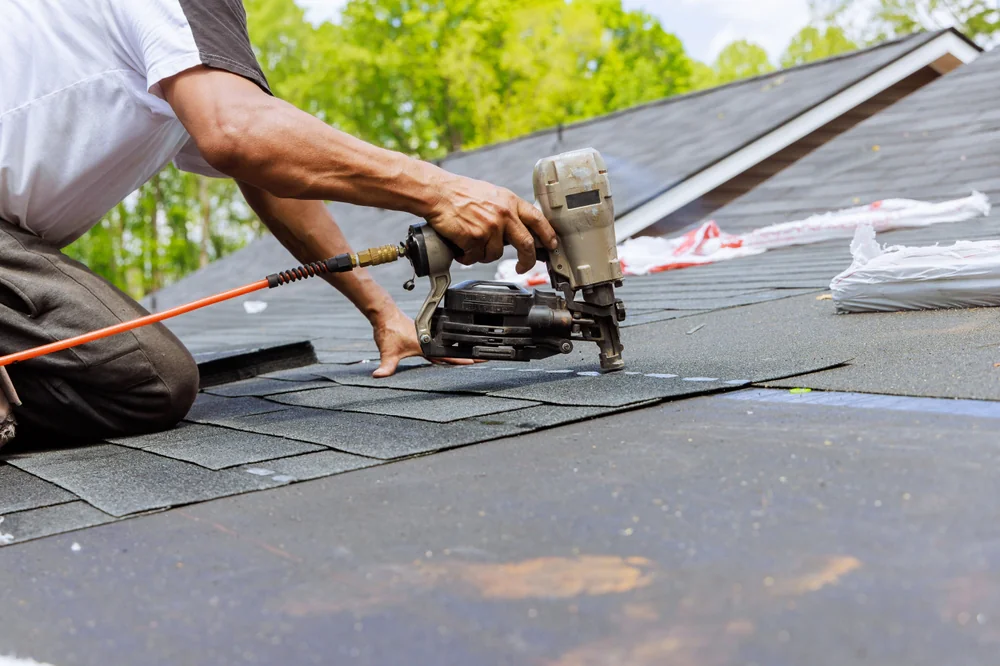
This is the most important question to get an honest answer on, because the wrong call in either direction costs you money. If your roof is under 15 years old and the damage is isolated a few missing shingles, a flashing failure, a small section of soft decking repair is almost always the right move. A targeted fix done correctly will hold for years, especially if the materials used are appropriate for coastal conditions.
Where replacement becomes the real answer is when the damage is widespread, the decking is compromised across a large area, or the roof is old enough that repairs are just buying time. In Hampton Bays, salt air accelerates aging on metal components faster than most homeowners expect so a roof that looks fine from the street may have flashing that’s been failing quietly for years. That’s why a proper inspection matters before any decision is made. We’ll tell you honestly what your roof needs, not what generates the bigger invoice.
Cost depends on what’s actually wrong, but here’s a realistic range so you’re not going in blind. A targeted shingle repair or minor flashing fix typically runs a few hundred dollars on the low end. A more involved repair replacing a section of decking, resealing multiple flashing points, addressing a flat roof section can run $1,500 to $4,000 or more depending on scope and materials.
For storm-related work in the Town of Southampton area, nor’easter roof restoration can run anywhere from $8,000 to $28,000 when shingle replacement and decking are involved. That range is wide because the scope varies widely a few blown shingles is a very different job than a roof that took a direct hit from a falling tree. What you should expect from us is a written estimate before work starts, with no surprise fees for plywood, underlayment, or debris removal. If someone can’t give you that in writing, that’s your answer.
Yes and it’s one of the more underappreciated maintenance factors for Hampton Bays homeowners. Salt air doesn’t just affect what you can see. It works on the metal components of your roof continuously: the step flashing around your chimney, the drip edge at your eaves, the flashing around skylights and pipe boots, and the fasteners holding everything together. In an inland Suffolk County community, those components might last 20 to 25 years without attention. In a home sitting near open water in Hampton Bays, you can see meaningful corrosion in 10 to 12 years.
The practical result is that flashing failures not missing shingles are the most common source of roof leaks in coastal homes. Water gets in at a corroded seam, travels down the inside of the wall, and shows up on your ceiling somewhere completely different from where the actual breach is. If you’ve had a leak that was “fixed” but came back, there’s a reasonable chance the flashing was never properly addressed. That’s the kind of thing a thorough inspection in this area needs to check specifically.
For most standard residential roof repairs in Hampton Bays, you don’t need a permit from the Town of Southampton. Replacing shingles, repairing flashing, and patching damaged sections generally fall below the permit threshold for residential work. That said, there are situations where a permit does become necessary if the repair involves structural work like replacing roof framing, or if your property is in a designated flood zone, additional requirements may apply under FEMA’s National Flood Insurance Program guidelines.
What does apply universally permit or no permit is the Suffolk County Home Improvement Contractor licensing requirement. Any contractor doing work on your home in Hampton Bays must hold a valid Suffolk County HIC license. This isn’t optional, and it’s not just a formality. Work performed by an unlicensed contractor can create real problems when you go to file an insurance claim or sell your home. You can verify any contractor’s license through Suffolk County’s public database before you sign anything.
As quickly as possible and that’s not an exaggeration for this area. A small leak that gets ignored through a wet fall or winter in Hampton Bays doesn’t stay small. Water that gets past your roofing system works its way into the sheathing, then the insulation, then the framing. By the time it shows up as a stain on your ceiling, it’s often been traveling for weeks. In a coastal environment with the moisture levels Hampton Bays sees, mold can establish itself in as little as 24 to 48 hours in wet building materials.
For seasonal homeowners people who use their Hampton Bays property primarily in summer this is especially important to think about. A shingle lost in a November nor’easter may not be noticed until May. By then, what could have been a $600 repair has potentially become a $6,000 problem involving decking, insulation, and interior damage. If you’re not on-site through the winter, having someone check the roof after major storms is worth every penny.
This is a real and recurring issue on the East End. After any significant storm, out-of-area contractors move through communities like Hampton Bays quickly door-knocking, offering fast estimates, sometimes asking homeowners to sign over their insurance claims before any work is scoped. The pressure feels urgent because your roof is damaged and you want it fixed. But a rushed decision here can leave you with unlicensed work, voided insurance coverage, or a repair that fails before the next storm season.
The simplest protection is verifying the Suffolk County HIC license before anyone gets on your roof. It’s a public record and takes two minutes to check. Beyond that, look for a contractor with a verifiable Suffolk County address, a real track record that predates the last storm, and a written estimate you can review before signing anything. A contractor who pushes you to decide on the spot, or who can’t produce a license number when asked, is telling you something important. Take the extra day to verify your roof will still be there tomorrow, and the right contractor will still be available.
Other Services we provide in Hampton Bays