

Hear From Our Clients
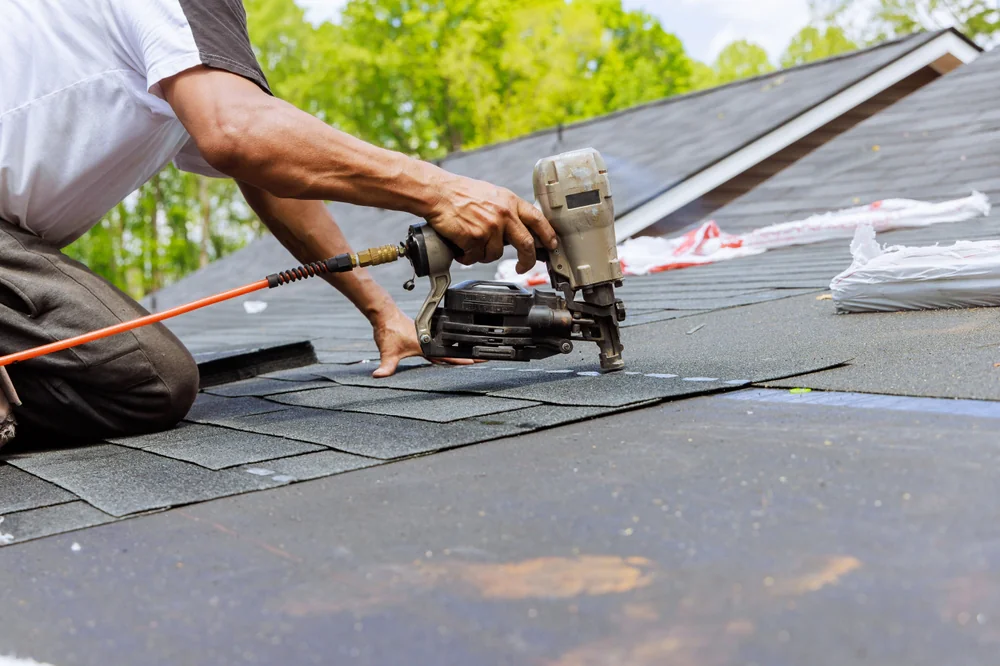
Most roof repairs fail because someone fixed what they could see and ignored what they couldn’t. In Copiague, that’s a real problem. The homes along the canals and near the Great South Bay deal with salt air year-round and salt air quietly corrodes flashing, drip edges, and fasteners long before a leak shows up inside your house. By the time water’s dripping through your ceiling, the damage underneath is usually bigger than the spot on your shingles.
The median home in Copiague was built around 1963. That’s over 60 years of weather cycles, at least one or two re-roofing jobs, and underlayment that was never designed for the coastal humidity this area gets. When we repair a roof here, we’re not just swapping shingles we’re checking what’s underneath them, because that’s where the real story is.
When the job is done right, you stop chasing leaks. You stop worrying every time a storm rolls in off the bay. You know what was done and why, because we document every repair with photos and video so you’re not left guessing about work you can’t see once the shingles are back on.
Home Team Construction is a family-owned exterior contractor serving Suffolk County homeowners, including throughout Copiague and the Town of Babylon. We handle roof repairs, roof replacement, gutters, siding, chimneys, skylights, and decks all exterior work, all done by our own trained employees. No subcontractors. Not sometimes, not on smaller jobs. Never.
That matters more than it might sound. When a storm comes through and half the roofers on Long Island suddenly have crews showing up door to door, you have no idea who’s actually climbing on your home. With us, you do. Alban, our owner, is personally involved in every project he answers the phone, he shows up, and he’s accountable for the outcome.
We’ve been working on South Shore homes long enough to know what Copiague’s coastal conditions do to a roof over time. From the waterfront blocks near Tanner Park down to the canal streets in Copiague Harbor, we’ve seen what salt air and Great South Bay weather actually look like up close not in a brochure, but on real roofs in this community.

It starts with a call. You tell us what’s going on a leak, missing shingles after a storm, something that’s been nagging you since last winter and we get eyes on it fast. For active leaks or storm damage, we offer same-day response because a roof that’s open to the elements in Copiague doesn’t wait for a two-week scheduling window.
When we get there, we do a real inspection. We’re not just looking at the surface. On a 1963 cape in Deauville Gardens or anywhere else in Copiague, the visible damage is often the last thing that happened not the first. We check the sheathing, the underlayment, the flashing condition, and the ventilation, because all of those things affect whether a repair actually holds. If we find something beyond what you called us for, we show you with photos before we do anything about it. No surprises, no pressure.
From there, you get a clear, upfront price. What we quote is what you pay no add-ons for plywood, underlayment, or disposal after the job starts. If your repair involves a permit through the Town of Babylon’s Building Department, we’ll walk you through that too. Once the work is done, you get the full photo and video documentation of everything we found and fixed. That’s not an upsell it’s just how we work.

Ready to get started?
Roof repair in Copiague covers a lot of ground depending on what your home needs. The most common calls we get are for roof leak repair after storms, missing or lifted shingles, failing flashing around chimneys and pipe boots, and flat roof sections on garages or rear additions which are common on the post-WWII capes and ranches throughout this hamlet. Each of those jobs gets handled differently, and we don’t apply a one-size-fits-all fix to any of them.
For homes near the water the canal streets, the blocks south of Sunrise Highway, anywhere with regular bay exposure we pay close attention to the metal components. Standard flashing corrodes faster in salt air than it does a few miles inland, and a flashing repair done with the wrong materials in Copiague is just a delayed callback. We choose materials that hold up in this specific environment, because we’ve seen what happens when someone doesn’t.
Every repair includes a full inspection of the affected area, honest documentation of what we found, and a clean job site when we leave. If your damage is storm-related and you’re filing an insurance claim, we help you put together the documentation your adjuster needs. Suffolk County requires a Home Improvement Contractor license for this work, and ours is current and verifiable something worth confirming with any contractor you’re considering, especially after a major weather event brings out-of-area crews into the neighborhood.

This is the most common question we get, and the honest answer is: it depends on what’s actually going on underneath the surface. A few missing shingles after a storm is usually a repair. But if the underlayment is deteriorated, the sheathing has soft spots from years of moisture cycling, or the flashing has been failing quietly for a while which is common in Copiague’s older housing stock a repair might only buy you a season or two before the same area fails again.
When we inspect a roof, we’re looking at the full picture, not just the visible damage. If we find that the underlying systems are sound and the damage is isolated, we’ll tell you a repair makes sense. If we find that the structure has been compromised in a way that makes a repair a short-term fix on a long-term problem, we’ll tell you that too with photos to back it up. The goal isn’t to sell you a replacement. The goal is to give you accurate information so you can make the right call for your home and your budget.
In most cases, it comes down to one of three things: failed flashing, deteriorated underlayment, or a compromised seal around a roof penetration like a vent pipe, chimney, or skylight. In Copiague specifically, flashing failure is especially common because salt air from the Great South Bay accelerates corrosion on standard metal components sometimes significantly faster than you’d see on an inland property a few miles away.
Older homes throughout Copiague also tend to have underlayment from the 1980s or 1990s that wasn’t designed for the humidity and temperature swings this area sees. Once that layer breaks down, water finds its way in even if the shingles on top look fine from the street. That’s why a leak after heavy rain doesn’t always point to an obvious hole it’s often a slow failure that’s been building for years. A proper inspection looks at all of these layers, not just the surface.
It depends on the scope of work. Minor repairs replacing a few shingles, resealing flashing, patching a small area generally don’t require a permit. But if the job involves structural work, replacing sheathing, or a full tear-off and re-roof, the Town of Babylon’s Building Department typically requires a permit before work begins.
This matters for a few reasons. Unpermitted work can create complications when you sell your home, and in some cases it can affect how your insurance company handles a claim. If your repair is storm-related and you’re already dealing with an insurance claim, the last thing you want is a permitting issue layered on top of it. We’ll let you know upfront whether your job requires a permit and handle the process with you it’s not something you should have to figure out on your own.
Repair costs vary depending on what’s actually wrong. A straightforward shingle replacement or minor flashing repair might run a few hundred dollars. A more involved repair one that requires addressing underlayment, replacing rotted sheathing, or fixing multiple failed areas can run into the low thousands.
What we can tell you is that the price you get from us before the job starts is the price you pay when it’s done. No add-ons for materials we “discovered” once we were already up there. We’ve heard enough stories from Copiague homeowners about contractors who quoted one number and invoiced another that’s not how we operate. If the scope changes because we found something unexpected during the inspection, we show you what we found and talk through the options before we touch anything additional.
Yes, and in many cases they have to be. Copiague’s nor’easter season runs from roughly October through March, and storms don’t wait for spring. If your roof is actively leaking or you’ve lost shingles in a winter storm, leaving it exposed for weeks while you wait for warmer weather is going to cost you more in the long run water intrusion in winter leads to ice dam damage, mold, and structural issues that are far more expensive to fix than the original repair.
That said, cold weather does affect the installation process. Asphalt shingles need to be handled carefully in low temperatures to avoid cracking, and sealants need adequate time to bond properly. We adjust our process for winter conditions it’s something we deal with every year on South Shore Long Island. Emergency repairs in winter are something we handle regularly, and for active leaks, we can weatherproof the area immediately while we plan the permanent fix.
After any significant storm on Long Island, out-of-area contractors show up quickly sometimes going door to door in neighborhoods that took visible damage. Some are legitimate. Many are not. The simplest thing you can do is verify a contractor’s Suffolk County Home Improvement Contractor license before agreeing to anything. Suffolk County is one of the few counties in New York that requires contractors to pass a written exam to get licensed so that credential actually means something here. You can check any contractor’s license status through the Suffolk County public database online.
Beyond the license, look for a contractor who has a physical presence in the area, not just a local phone number. Ask who will actually be doing the work a company that uses subcontracted crews has a much thinner chain of accountability than one where every person on the job is a direct employee. And be cautious of anyone who asks for a large deposit upfront or pressures you to sign before you’ve had time to review the estimate. A contractor who’s confident in their work doesn’t need to rush you.
Other Services we provide in Copiague