

Hear From Our Clients

A repaired roof isn’t just a dry ceiling it’s one less thing threatening a home worth close to $800,000 in one of Suffolk County’s fastest-moving markets. In Hauppauge, homes are selling in under three weeks. A roof that raises flags during inspection doesn’t just delay a sale it can kill one. Getting it fixed right, with documentation to prove it, protects your asking price and keeps the transaction clean.
Hauppauge’s housing stock is older than most people realize. More than half the homes here were built between 1940 and 1969, which means a lot of roofs are sitting on decking, underlayment, and attic ventilation systems that were never designed to handle the winters Long Island throws at them now. Ice dams form when heat escapes through an under-insulated attic and melts snow that refreezes at the eaves. That water backs up under your shingles. By February, it’s showing up on your ceiling weeks after the damage actually started.
When a repair is done right, you’re not just patching a surface. You’re addressing the actual cause, protecting the structure beneath, and walking away with photo and video documentation of everything that was done something most roofing companies in this area simply don’t provide. That record matters for insurance claims, future inspections, and your own peace of mind.
We’re a family-owned exterior contracting business based in Suffolk County, and we’ve been working on Hauppauge roofs and throughout the area for over a decade. The owner, Alban Hoxha, is personally involved in every job not as a figurehead, but as the person you can actually reach when you have a question.
We hold the Suffolk County Home Improvement Contractor license, which requires passing a mandatory exam not just filling out a form. That matters specifically in Hauppauge, where your property sits in either the Town of Islip or the Town of Smithtown depending on which side of Townline Road you’re on. We know the difference, we know which building department handles your permit, and we handle the filing for you.
Every person who shows up to work on your roof is a trained Home Team employee. No subcontractors, ever. That’s not something we landed on by accident it’s how we’ve built a client base in western Suffolk County that keeps calling us back.

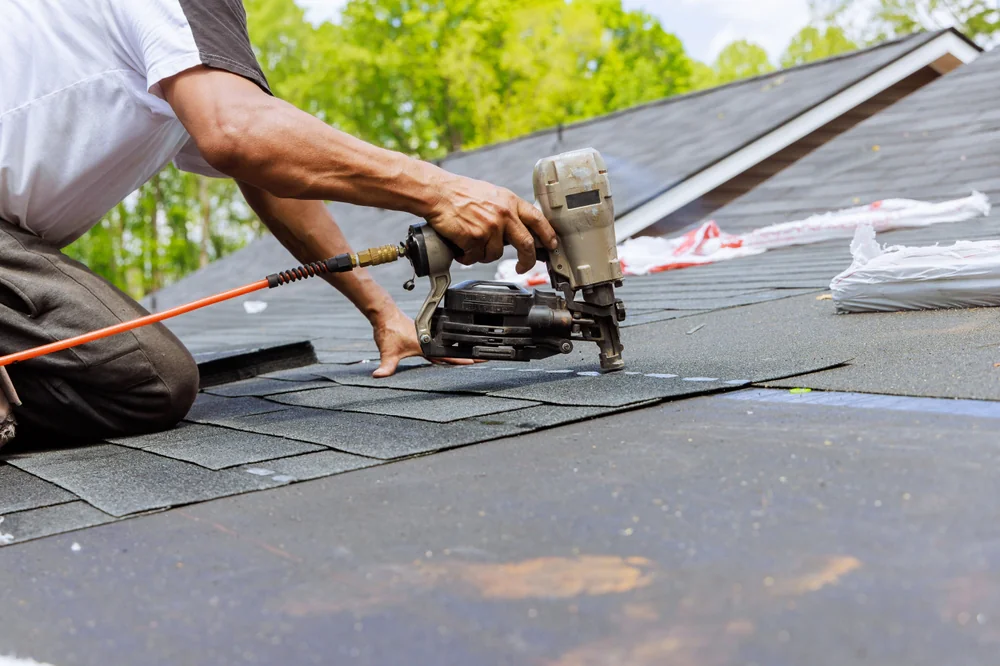
It starts with a real inspection not a quick look from the driveway. We get on the roof, check the shingles, the flashing, the underlayment, and the condition of the decking underneath. On older Hauppauge homes especially, what’s visible from the ground rarely tells the full story. We look at what’s actually happening beneath the surface before we give you any numbers.
From there, you get a written estimate with everything itemized materials, labor, disposal, and any decking or underlayment work the inspection turns up. The number we give you is the number you pay. There are no fees that appear after we’ve already started. If your home is on the Islip side of Townline Road, we pull the permit through the Town of Islip Building Division. If you’re on the Smithtown side, it goes through their building department. Either way, we handle it you don’t need to figure out which town you’re in.
The repair itself is documented with photos and video at every stage, including what we found underneath and how we addressed it. When the job is done, you have a record of the work not just our word for it. If your damage was storm-related, that documentation is also exactly what your insurance adjuster will need.

Ready to get started?
Roof repair in Hauppauge isn’t one-size-fits-all. The homes off Veterans Memorial Highway and throughout the community’s older subdivisions come with their own set of challenges aging decking, inadequate attic ventilation by today’s standards, flashing that’s been patched over instead of replaced, and low-slope sections that hold standing water after summer storms. We work on all of it: missing or damaged shingles, roof leaks, flashing failures, flat roof repairs, soffit and fascia damage, and emergency tarping when a storm doesn’t wait for business hours.
Ice dam damage is one of the most common calls we get from Hauppauge homeowners after a hard winter. The fix isn’t just replacing the shingles that lifted it’s understanding why the dam formed in the first place and whether the attic conditions underneath are contributing to it. A patch that doesn’t address the root cause will fail again before the next January. We look at the full picture, not just the symptom.
If your damage is covered by homeowners insurance, we help you document it correctly from the start. That means photos, written assessments, and communication with your adjuster in the format they actually need not a vague report that leaves the claim in limbo. Whether it’s one section of missing shingles or a more significant repair after a nor’easter, the process is the same: find the real problem, fix it completely, and document everything.
It depends on the scope of the work and which town your property falls in. Hauppauge is split between two municipalities the Town of Islip to the south and the Town of Smithtown to the north, divided by Townline Road. Both towns require permits for roofing work that goes beyond minor repairs, and both require a final inspection once the work is complete.
The Town of Islip specifically requires contractors to hold a Suffolk County Home Improvement Contractor license separate from any state-level credentials in addition to standard licensing. We hold that license. When you hire us, we determine which building department applies to your address, pull the correct permit, and schedule the inspection. Skipping the permit process on a roofing job in Hauppauge can create real problems down the line particularly when you sell, when you file an insurance claim, or when a future inspection flags unpermitted work. We make sure none of that becomes your problem.
The honest answer is that it depends on the age of the roof, the extent of the damage, and what’s happening underneath the shingles not just what’s visible from the ground. A roof with isolated damage from a single storm event, sound decking, and solid underlying structure is often a strong candidate for repair. A roof that’s 25 or 30 years old, with multiple failing areas, compromised decking, and ventilation issues, is usually past the point where repairs make long-term financial sense.
In Hauppauge, where more than half the homes were built between 1940 and 1969, we see a lot of roofs that are on their second or third system and the layers of history underneath can tell you a lot. During our inspection, we look at the full picture: the age of the current system, the condition of the decking, how the attic is ventilated, and whether there are recurring problem areas that point to a structural issue rather than surface wear. We’ll give you a straight answer on which direction makes more sense for your specific home not a recommendation designed to sell you the bigger job.
The most common starting points for roof leaks in Hauppauge are flashing failures, damaged or missing shingles, and ice dam damage and in older homes, those issues often compound each other. Flashing is the metal material that seals transitions around chimneys, skylights, vents, and roof valleys. When it lifts, corrodes, or was never installed correctly in the first place, water finds its way in at those joints even if the shingles around them look fine.
Ice dams are a specific and recurring issue here. They form when heat escaping through an under-insulated attic warms the upper roof deck, melts snow, and that water refreezes as it reaches the colder eave overhang. The ice buildup forces liquid water back up under the shingles. By the time it shows up on your ceiling in February, the damage has often been building since January. On the older Cape Cods and ranches throughout Hauppauge many of which have attic insulation levels that haven’t been updated in decades this is a predictable pattern, not a fluke. Fixing the leak means understanding why it started, not just sealing the surface where it appeared.
We offer 24/7 emergency response and typically arrive within a few hours for active leaks or storm damage situations. When a nor’easter moves through Hauppauge and they move through hard, with sustained winds that work underneath loose shingles and tear them back at ridges and edges the calls start coming in fast. We don’t put you on a waitlist until Monday morning.
When we get there, the first priority is stopping the damage from spreading. That usually means emergency tarping or temporary weatherproofing to protect the interior while we assess what a permanent repair requires. We’ll give you a clear picture of what happened, what it will take to fix it properly, and what that costs before any permanent work begins. If the damage is covered by your homeowners insurance, we document it in the format your adjuster needs so you’re not trying to piece together a claim on your own after the fact.
It depends on your policy and how the damage is documented. Most standard homeowners insurance policies in New York cover sudden and accidental damage from wind, hail, and falling objects which covers a lot of what nor’easters and summer thunderstorms do to Hauppauge roofs. What they typically don’t cover is damage attributed to age, wear, or lack of maintenance. That distinction matters, and how the damage is reported and documented often determines which category your claim falls into.
We help with that process as part of the job. We photograph the damage in detail, document the cause clearly, and communicate with your adjuster in the format they need to process the claim. A lot of Hauppauge homeowners leave money on the table after storm events simply because the documentation wasn’t thorough enough or didn’t frame the damage correctly. We’ve been through this process many times across Suffolk County, and we know what adjusters are looking for. You don’t have to figure it out yourself.
Start by verifying the Suffolk County Home Improvement Contractor license it’s searchable in the county’s public database. Suffolk County is one of the few counties in New York that requires contractors to pass a mandatory exam before the license is issued, so a valid HIC license is a real credential, not just a registration. Any contractor doing permitted work on the Islip side of Hauppauge is required to hold it.
Beyond licensing, look at the review record with an eye toward patterns, not just star ratings. Do customers mention the same contractor by name across multiple reviews? Do they come back for additional projects? Are there references to specific jobs, specific problems solved, or specific people they dealt with? That kind of detail is harder to fake than a generic five-star rating. Also ask directly whether the company uses subcontractors for the actual installation many do, and many won’t volunteer that information. After a major storm, out-of-area crews flood Long Island looking for quick work. A contractor based in Suffolk County, with a verifiable license, a named owner, and a review history that spans years not just the last storm season is a meaningfully different hire.
Other Services we provide in Hauppauge