
Hear From Our Clients
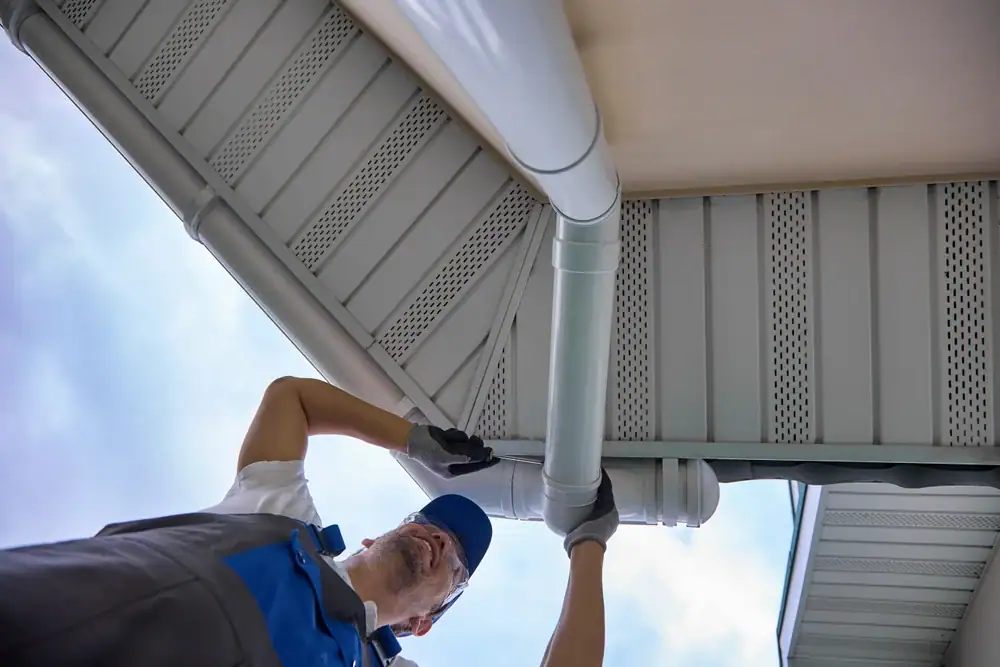
You’re not just replacing gutters. You’re eliminating the weak points where leaks start, debris piles up, and water backs up during heavy rain.
Seamless systems mean no joints where sections pull apart. No gaps where leaves get stuck. No seams that corrode from salt air and turn into expensive problems three years down the road.
When the next coastal storm hits Hauppauge, your gutters handle it. Water flows where it should, away from your foundation, your basement, your landscaping. You’re not outside in the rain trying to clear an overflow. You’re not calling for emergency repairs at midnight because water’s pouring into your basement.
That’s what proper gutter replacement does. It removes the anxiety from your weather forecast and puts a reliable system between your home and the elements Long Island throws at it year-round.
We’ve been installing gutters in Suffolk County for over 10 years. Not as a side service, but as professionals who understand what Long Island’s climate demands from a drainage system.
Our crews are licensed and insured. We fabricate seamless gutters on-site using equipment designed for precision, not speed. Every installation accounts for your roof pitch, your fascia condition, and how much rain your property handles during autumn storms and spring thaws.
We’re not the cheapest option in Hauppauge, and that’s intentional. You’re hiring people who show up when they say they will, use materials that last in coastal conditions, and clean up completely when the job’s done. We live and work in these neighborhoods. Our reputation depends on doing this right the first time.
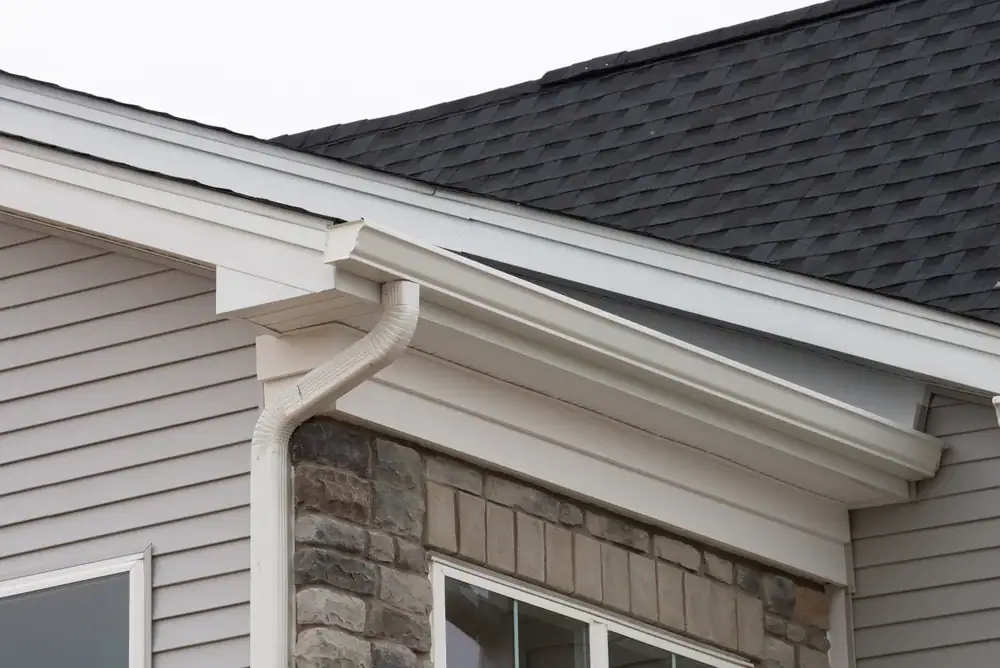
First, we inspect your current system and your fascia boards. If there’s rot or damage behind your old gutters, we identify it before installation starts. You need to know what you’re dealing with, not discover it after new gutters are up.
Next, we take precise measurements of your roofline. Our equipment fabricates seamless aluminum gutters on-site to match your home’s exact dimensions. No pre-cut sections that kind of fit. No seams every ten feet that become problems later.
Installation includes heavy-duty brackets rated for snow loads and proper pitch calculation so water flows toward downspouts without pooling. We position downspouts to direct water away from your foundation, accounting for your property’s grade and drainage patterns.
The fascia gets protected. Gutters get secured. Downspouts get extended where needed. Then we test the system with water to confirm flow and check for any issues before we leave. You see it working before we pack up.
Cleanup is part of the job. Old gutters get hauled away. Your property looks better than when we arrived.

Ready to get started?
You’re getting seamless aluminum gutters fabricated to your home’s measurements. Aluminum doesn’t rust in salt air, handles temperature swings without cracking, and lasts decades when installed correctly.
Installation includes commercial-grade hangers spaced properly for Long Island snow loads. Your fascia boards get inspected and protected. Downspouts get positioned based on your foundation and landscaping, not just convenience.
In Hauppauge, where properties deal with heavy leaf fall from mature oaks and maples, proper pitch matters. Water needs to flow toward downspouts efficiently, especially during autumn when debris loads increase. We calculate pitch based on your roof area and typical rainfall intensity for Suffolk County.
You also get a system designed for ice dam prevention. When temperatures fluctuate and meltwater refreezes, properly installed gutters with adequate flow capacity reduce backup risks. That matters during Long Island winters when freeze-thaw cycles are common.
The typical Hauppauge home needs 100-200 linear feet of gutters. Most installations run between $1,200 and $3,000 depending on your home’s size, roof complexity, and downspout requirements. That investment prevents foundation repairs that easily exceed $10,000 and basement flooding that ruins finished spaces and stored belongings.

Most residential gutter replacements in Hauppauge take one to two days depending on your home’s size and roof complexity. A straightforward ranch with 150 linear feet of gutters usually gets completed in a single day. Larger two-story homes or properties with multiple rooflines might need two days.
Weather affects the timeline. We don’t install gutters in rain or when temperatures drop below freezing because proper sealing and secure mounting require dry conditions. Long Island’s weather can be unpredictable, especially during spring and fall, so we schedule with flexibility built in.
The actual installation moves quickly once we start. Fabricating seamless gutters on-site takes time, but that’s where quality happens. We’re not rushing through measurements or forcing pre-cut sections to fit. You’re getting a custom system built for your specific home, and that precision work matters for long-term performance.
Sectional gutters come in pre-cut lengths that get joined together with connectors and sealant. Those seams are where problems start. Leaves and debris catch at joints. Sealant degrades from UV exposure and temperature changes. Sections pull apart during heavy snow loads or when ice forms.
Seamless gutters get fabricated as one continuous piece for each run of your roofline. No joints means no weak points where leaks develop. Water flows smoothly without catching on seam edges. Debris doesn’t accumulate at connection points because there aren’t any.
In Hauppauge’s coastal climate, seamless systems last significantly longer. Salt air accelerates corrosion at sectional gutter seams. Autumn leaf loads from oak and maple trees cause sectional joints to separate over time. Seamless installation eliminates these vulnerabilities entirely. You’re looking at 20-30 years of reliable performance versus 10-15 years with sectional systems that need ongoing maintenance and eventual seam repairs.
If you’re seeing rust holes, separated seams in multiple locations, or sagging sections, replacement makes more sense than repairs. Patching one problem area doesn’t fix the underlying issue that your entire system is aging out.
Look for water stains on your fascia boards or soffit. That indicates water’s getting behind your gutters, which means the system isn’t doing its job anymore. Check your foundation for soil erosion or water pooling after rain. Those are signs that gutters are overflowing or downspouts aren’t directing water away properly.
In Suffolk County, gutter systems typically last 15-20 years depending on material quality and installation. If your gutters are approaching that age and you’re dealing with multiple issues, replacement prevents the bigger problems that come from limping along with a failing system. Foundation damage, basement flooding, and fascia rot all cost significantly more than new gutters. Sometimes the smart financial move is replacing the whole system before those expensive consequences show up.
Most Hauppauge homes need either 5-inch or 6-inch gutters depending on roof area and pitch. Standard residential installations use 5-inch gutters with 2×3-inch downspouts. That handles typical rainfall for homes with roof areas up to about 1,500 square feet per gutter run.
Larger homes, steeper roof pitches, or properties with limited downspout locations benefit from 6-inch gutters with 3×4-inch downspouts. The larger capacity handles higher water volume during heavy storms, which Long Island sees regularly during nor’easters and summer thunderstorms.
Your roof’s square footage and pitch determine how much water flows into your gutters during rain. A steeper pitch means faster water velocity and higher volume hitting the gutter system. We calculate this during the estimate process so you get gutters sized appropriately for your specific home. Undersized gutters overflow during heavy rain no matter how well they’re installed. Proper sizing is part of doing the job right, not an upsell.
Yes, and for many Hauppauge properties with mature trees, gutter guards make sense. They reduce how often you need to clean gutters and prevent the heavy leaf buildup that causes overflow during autumn storms.
Not all gutter guards work equally well. Cheap screen-style guards let small debris through and can trap leaves on top, creating a different maintenance problem. Quality guards use micro-mesh or solid covers with surface tension designs that let water in while keeping debris out.
The decision depends on your property. If you have oaks, maples, or other heavy leaf-dropping trees near your roofline, guards pay for themselves in reduced maintenance. If your lot has minimal tree coverage, you might not need them. We assess your specific situation during the estimate and give you an honest recommendation. Some homeowners prefer the lower upfront cost of gutters alone and handle seasonal cleaning themselves. Others want the reduced maintenance that quality guards provide. Both approaches work, it’s about what fits your priorities and budget.
Yes. We document damage, provide detailed estimates, and work with insurance adjusters regularly. After major storms hit Suffolk County, we know exactly what insurance companies need to process claims efficiently.
Storm damage to gutters often includes bent sections from falling branches, torn-off segments from high winds, or complete failure from ice dam backup. We photograph everything, note what caused the damage, and explain what needs replacement versus what can be repaired.
Most homeowners insurance policies cover gutter damage from storms, falling trees, or ice dams. Your deductible applies, but the replacement cost typically gets covered. We provide documentation that supports your claim without inflating costs or recommending unnecessary work. Insurance adjusters appreciate working with contractors who are straightforward about what actually needs to be done. That honesty helps your claim get approved faster and keeps the process simple during what’s already a stressful situation after storm damage.
Other Services we provide in Hauppauge