

Hear From Our Clients
You’re not dealing with water dripping into your living room anymore. No more worrying whether that crack is going to turn into a $5,000 rebuild next winter. Your chimney is sealed, structurally sound, and ready to handle whatever Long Island weather throws at it.
That’s what proper chimney repair gets you. Not a quick patch job that fails in six months, but work that lasts 15 to 25 years because it’s done right the first time. You’re using your fireplace without second-guessing whether carbon monoxide is leaking into your home. Your heating bills drop because your chimney isn’t bleeding warm air through cracks and gaps.
Most importantly, you’re not scrambling for emergency repairs during a nor’easter when prices triple and availability disappears. You handled it before it became a crisis. That’s the difference between reacting and planning ahead.
We know what Long Island’s coastal climate does to chimneys. We’ve repaired everything from minor mortar cracks in newer homes to complete masonry rebuilds on historic properties dating back over a century. Brookhaven’s location between the Long Island Sound and Great South Bay means your chimney faces salt air, high humidity, and freeze-thaw cycles that destroy mortar faster than inland properties deal with.
We’re licensed and insured, and our team understands Suffolk County building codes inside and out. When Alban and his crew show up, they’re not learning on your property. They know exactly what materials hold up to coastal weather and which shortcuts fail within a year.
You’re getting warranties that back up the work—up to 10 years on labor and 30 years on materials. If something goes wrong, we come back and make it right at no extra cost. That’s not marketing talk. That’s how we’ve built our reputation in Brookhaven and across Long Island.
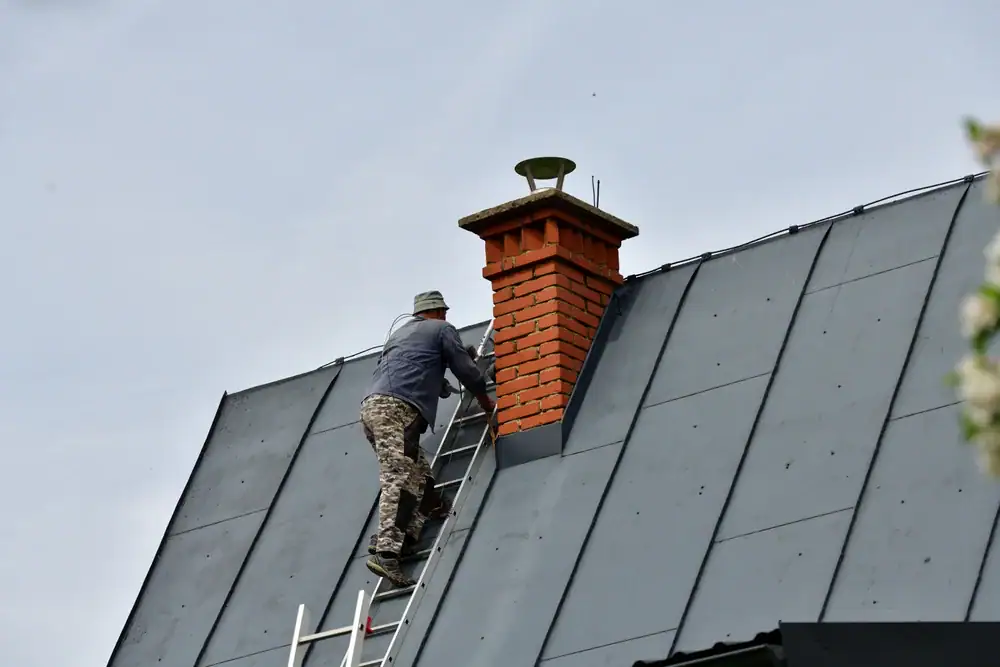
First, we inspect your entire chimney system—not just the obvious problem spot. We’re looking at the crown, flashing, mortar joints, flue liner, and structural integrity. You get photos of everything we find, along with a clear explanation of what needs fixing now versus what can wait. No upselling, no scare tactics.
Once you approve the work, we protect your property before we start. Tarps go down, surrounding areas get covered, and we treat your home like it’s ours. Then we get to the actual repair—whether that’s repointing deteriorated mortar, replacing damaged flashing, rebuilding a crumbling crown, or fixing structural cracks in the masonry.
We use materials specifically chosen for Long Island’s weather. That means mortar mixes that handle freeze-thaw cycles, flashing that resists salt-air corrosion, and waterproofing that actually keeps water out during coastal storms. When we finish, we clean up completely. You shouldn’t find a single brick chip or mortar smear when we leave. Then you’ve got a chimney that works right and a warranty that protects you if anything goes wrong.

Ready to get started?
You’re getting a full structural assessment before any work starts. We check mortar joints for deterioration, inspect the chimney crown for cracks, examine flashing for gaps where water sneaks in, and evaluate the flue liner for safety issues. If you’ve got water damage, we trace it back to the source instead of guessing.
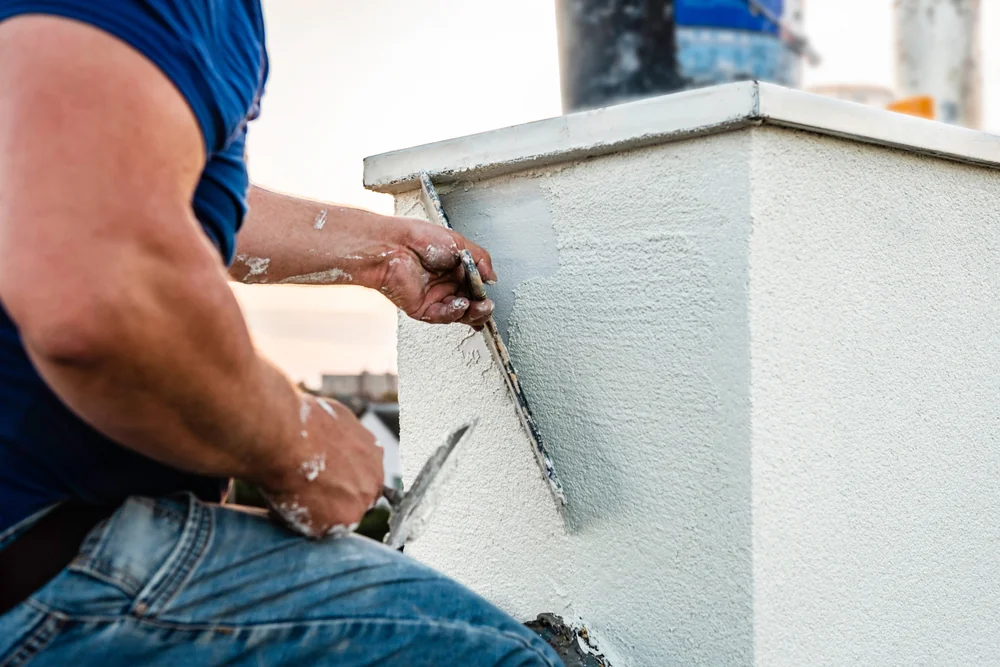
Repairs cover everything from tuckpointing—where we remove failing mortar and replace it with weather-resistant material—to complete crown rebuilds that stop water from penetrating the top of your chimney. Flashing work is critical in Brookhaven because that’s where most leaks start. We remove old, corroded flashing and install new material that’s sealed properly against both your roof and chimney.
For Brookhaven homeowners, we’re also addressing the specific challenges your location creates. Salt air from the Sound accelerates corrosion, so we use materials rated for coastal environments. Winter freeze-thaw cycles destroy standard mortar, so we use mixes designed to expand and contract without cracking. You’re not getting a generic repair—you’re getting work that’s built to last in exactly the conditions your chimney faces every day. Emergency services are available when you can’t wait, because we know chimney problems don’t follow convenient schedules.
Most chimney repairs in Brookhaven range from $250 for minor mortar work to several thousand dollars for major structural rebuilds. The actual cost depends on what’s damaged and how extensive the problem is. Simple tuckpointing on a few mortar joints might run $250 to $500. Crown repairs typically cost $500 to $1,200 depending on how much needs rebuilding. Complete flashing replacement usually falls between $800 and $1,500.
If you’re looking at significant structural damage—like a chimney that’s leaning or has major cracks running through the masonry—you could be looking at $3,000 to $8,000 or more for a partial or complete rebuild. Long Island costs run higher than national averages because of stricter building codes and higher labor costs, but that also means you’re getting work that meets tougher standards.
The key is catching problems early. A $200 mortar repair today prevents a $5,000 rebuild next year. Water infiltration doesn’t get better on its own—it gets exponentially worse every freeze-thaw cycle. If you’re seeing signs of damage, getting an inspection now saves you serious money down the road.
Water inside your home is the most obvious red flag. If you’re seeing water stains on the ceiling near your chimney, drips during rainstorms, or moisture in your fireplace, you’ve got a leak that needs immediate attention. That water is also soaking into your walls and creating mold problems you can’t see yet.
Visible cracks in the chimney crown or mortar joints mean water is getting in and freeze-thaw damage is happening. White staining on the brick exterior—called efflorescence—shows that water is moving through your masonry and bringing salts to the surface. Spalling bricks, where the face of the brick is flaking off, means water has gotten inside the brick itself and is causing it to deteriorate from within.
Rusted or damaged flashing is another urgent issue. If the metal flashing where your chimney meets your roof is pulling away, rusted through, or has gaps, water is running straight into your home during every rainstorm. Inside your home, if you smell musty odors near your fireplace or see pieces of tile or masonry falling into your firebox, your flue liner is damaged. That’s a safety issue—cracked flue liners can allow carbon monoxide into your living space. Any of these signs means you should get an inspection immediately, not next season.
Quality chimney repair work should last 15 to 25 years in Long Island’s coastal climate if it’s done correctly with the right materials. That’s a realistic timeframe when you’re dealing with salt air, freeze-thaw cycles, and the humidity that comes from being surrounded by water. Cheap repairs using standard materials might only last 3 to 5 years before you’re dealing with the same problems again.
The longevity depends heavily on using materials rated for coastal environments. Standard mortar mixes break down faster here because of salt penetration and temperature swings. We use mortar specifically formulated to handle freeze-thaw cycles and resist salt damage. Flashing needs to be copper or high-grade stainless steel—not aluminum or galvanized steel that corrodes quickly in salt air.
Proper waterproofing also extends the life of repairs significantly. After repointing or crown work, applying a breathable waterproofing sealer keeps water out while allowing moisture vapor to escape. This prevents the trapped moisture problems that cause premature failure. Your repair’s lifespan also depends on maintenance. Getting your chimney inspected every few years and addressing small issues before they become big ones means your original repair work keeps protecting your home for decades. Skip maintenance, and even the best repair work fails early.
Repair makes sense when the damage is localized and the overall structure is sound. If you’ve got deteriorated mortar joints, a cracked crown, or damaged flashing but the chimney itself is straight and structurally intact, repairing those specific problems is the right call. You’re spending hundreds to maybe a couple thousand dollars instead of $8,000 to $15,000 for a complete rebuild.
Replacement becomes necessary when the structural integrity is compromised. If your chimney is leaning, has major cracks running through multiple courses of brick, or shows signs of foundation settling, repairs won’t fix the underlying problem. You’re just putting a band-aid on something that’s going to fail anyway. Similarly, if more than 25% of the chimney needs repair work, the math often favors rebuilding because you’re already paying for significant labor and materials.
For older Brookhaven homes—especially historic properties—sometimes the chimney has reached the end of its useful life. Brick and mortar don’t last forever, particularly in coastal climates. If your chimney is 80+ years old and showing widespread deterioration, rebuilding with modern materials and techniques gives you another 50+ years of service. The decision comes down to an honest assessment of what’s damaged versus what’s salvageable. A thorough inspection tells you which direction makes sense for your specific situation and budget.
Late spring through early fall is ideal for chimney repair in Brookhaven. You want temperatures consistently above 40 degrees because mortar needs proper curing conditions. Cold weather slows curing and can cause mortar to freeze before it sets, which leads to weak joints that fail quickly. Summer and early fall also mean lower humidity on average, which helps materials cure properly.
Scheduling repairs in the off-season—meaning outside of heating season—also gets you better availability and often better pricing. Fall is when everyone suddenly remembers they have a chimney and inspection schedules fill up fast. If you wait until October or November and discover you need repairs, you’re competing with every other homeowner trying to get work done before winter. That means longer waits, higher prices for rush service, and the risk of using your fireplace with unresolved safety issues.
That said, emergency repairs happen year-round because water leaks and structural damage don’t wait for convenient timing. If you’re dealing with active leaks or safety hazards, waiting isn’t an option regardless of season. For planned maintenance and repairs, though, calling in May or June means you’re getting the work done when conditions are optimal, crews have better availability, and you’re not paying premium rates. Your chimney is ready to go when heating season arrives instead of discovering problems when you actually need your fireplace.
Yes, and here’s why—what you see from the ground is usually just part of the problem. You might notice a small crack in the crown or some deteriorated mortar, but a proper inspection often reveals additional issues you can’t see without getting up on the roof and looking inside the flue. Water damage spreads. A leak at the flashing might also be causing crown damage and mortar deterioration in areas you can’t see from below.
A thorough inspection covers the entire chimney system—exterior masonry, crown, flashing, interior flue liner, damper, and firebox. We’re checking for structural issues, water damage, safety hazards like cracked flue liners, and code compliance problems. You get documentation with photos showing exactly what’s wrong and what needs attention now versus what you can monitor. This prevents surprise costs mid-project and ensures you’re fixing everything that needs fixing, not just the obvious stuff.
Inspections also protect you legally and financially. If you’re buying or selling a home in Brookhaven, chimney inspections often reveal issues that need addressing before closing. If you’re filing an insurance claim for chimney damage, you need documentation of what’s wrong and what caused it. Even if you’re just maintaining your home, an inspection every few years catches small problems before they become expensive emergencies. The cost of an inspection—typically $100 to $300—is nothing compared to the thousands you’ll spend if minor damage turns into major structural failure because it went undetected.
Other Services we provide in Brookhaven