
Hear From Our Clients
You stop worrying about water stains spreading across your ceiling every time it rains. You’re not calling someone back six months later because the same crack reopened. Your fireplace works when you need it, and you’re not second-guessing whether carbon monoxide is leaking into your home while your family sleeps.
That’s what proper chimney repair looks like in Port Jefferson Station. Not a quick patch that buys you a season. Not mortar slapped over a crack without addressing why it cracked in the first place. Real repairs mean understanding how Long Island’s coastal climate tears apart masonry—the freeze-thaw cycles that expand cracks, the salt air that eats through mortar joints, the wind-driven rain that finds every weak point in your flashing.
When chimney masonry repair is done right, you get 15 to 25 years of protection. Your heating bills don’t spike because your flue is drafting properly. Your home insurance stays valid because you’ve got documentation of annual maintenance. And when you eventually sell, you’re not scrambling to fix deferred maintenance that a home inspector will flag in the first ten minutes.
Home Team Construction has spent years learning what works and what fails in Port Jefferson Station’s specific climate. We’ve seen every type of chimney problem this area throws at homeowners—from colonial-era masonry that’s held up remarkably well to modern gas fireplace systems with flashing that was never installed correctly in the first place.
We’re licensed and insured because that matters when someone’s working on your roof. We know Suffolk County building codes because we’ve been following them long enough to see them change. And we’re local enough that our reputation actually depends on doing the job right, not disappearing after we cash your check.
You’ll find us working throughout Port Jefferson Station, handling everything from emergency chimney leak repair after a nor’easter to planned masonry restoration that homeowners have been putting off. We’re not the cheapest option, and we’re upfront about that. You’re paying for materials that can handle coastal weather and techniques that prevent the same problem from coming back.
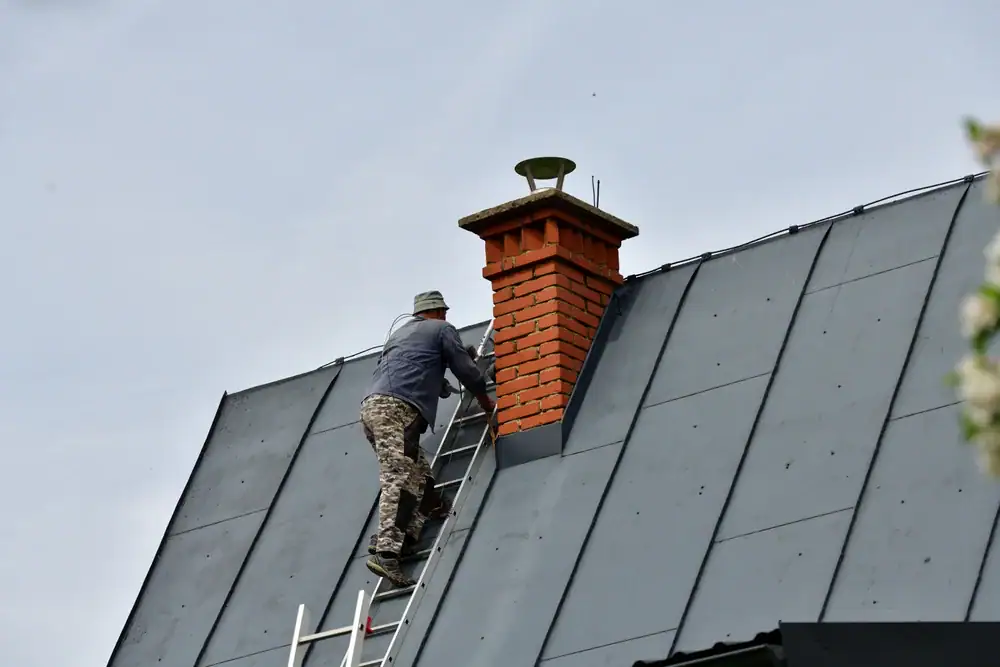
First, we actually look at your chimney. Not a five-minute glance from the ground—we’re talking about a real inspection from the roof and inside the flue. We’re checking for cracks in the crown, deteriorated mortar joints, damaged flashing, and whether your cap is doing its job or just decorative at this point. If you’ve got water stains, we’re finding where the water is getting in, not just where it’s showing up on your ceiling.
Then we tell you what’s wrong and what it’ll cost to fix it. No pressure tactics. No “limited-time offers” that expire if you don’t sign today. Just transparent pricing based on what your chimney actually needs. Sometimes that’s tuckpointing a few mortar joints. Sometimes it’s replacing flashing that’s been leaking for years. Sometimes it’s a crown rebuild because the old one is cracked beyond repair.
Once you approve the work, we schedule it during weather that makes sense—you can’t properly repair masonry in freezing temperatures or during a rainstorm, no matter how urgent it feels. We protect your property, do the work, clean up completely, and make sure everything is documented for your records. Then we back it up with a warranty that covers both labor and materials, because repairs should last longer than a few seasons.

Ready to get started?
Chimney flashing repair is usually where we find the worst problems in Port Jefferson Station. The flashing is what seals the gap between your chimney and your roof, and when it fails, water pours straight into your home. We’re not talking about caulking over old flashing and hoping for the best. We remove the failed flashing, install new step flashing that’s properly integrated with your roofing material, and use counter flashing that’s actually embedded into your chimney’s mortar joints. That’s how you stop leaks permanently.
Crown repair is another common issue here. Your chimney crown is the concrete cap at the top of your chimney, and it takes a beating from Long Island weather. When it cracks, water seeps down into your masonry and starts the freeze-thaw cycle that destroys chimneys from the inside out. We rebuild crowns with proper slope for water runoff and materials designed for coastal exposure. Not the cheapest option, but it’s the one that lasts.
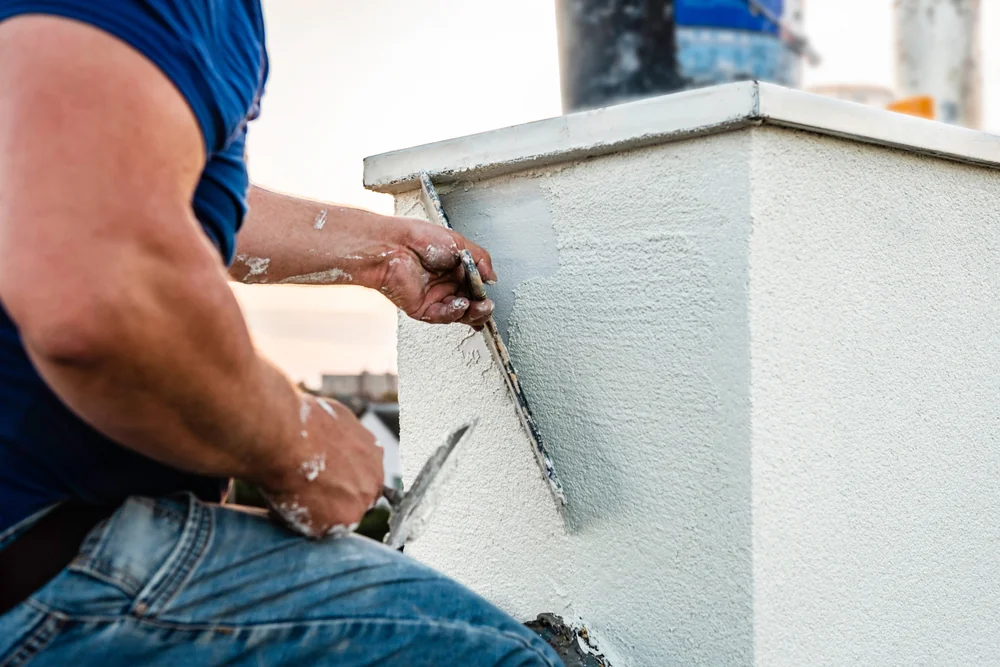
Tuckpointing is what most people call “repointing the mortar.” Over time, the mortar between your chimney bricks deteriorates—especially in Port Jefferson Station where salt air accelerates the process. We grind out the damaged mortar to the proper depth, then refill the joints with mortar that’s mixed to match your existing masonry in both color and strength. Done right, tuckpointing restores structural integrity and stops water infiltration before it becomes a major problem. We also handle chimney cap replacement, flue liner repair, and full masonry rebuilds when chimneys are damaged beyond spot repairs.
Minor repairs like replacing a chimney cap or fixing a small section of flashing typically start around $250 to $750. Tuckpointing and crown repairs usually fall in the $1,000 to $3,000 range depending on how much of the chimney needs work. Major structural repairs or partial rebuilds can run $5,000 to $15,000 or more.
Long Island costs run higher than national averages because of regional labor rates and stricter building codes. But here’s what matters more than the initial price: how long the repair lasts. A $500 patch job that fails in two years costs you more than a $2,000 proper repair that lasts 20 years. We give you upfront pricing before starting any work, so you know exactly what you’re paying and why.
The biggest cost driver is usually how long you waited. A $200 crack repair turns into a $5,000 rebuild when water gets inside your masonry and freezes all winter. If you’re seeing water stains, pieces of mortar in your fireplace, or visible cracks from the ground, get it looked at now. Waiting doesn’t make it cheaper.
Properly done chimney repairs should last 15 to 25 years in Port Jefferson Station’s climate, sometimes longer depending on exposure and maintenance. That assumes you’re using the right materials for coastal weather and techniques that address the root cause, not just the visible symptoms.
The key word is “properly.” Quick fixes fail fast here because our weather is brutal on masonry. You’ve got freeze-thaw cycles all winter that expand any crack. You’ve got salt air penetrating mortar joints year-round. You’ve got wind-driven rain that finds every weak point in your flashing. Materials and methods that work fine inland fail within a few years near the coast.
That’s why we use mortar mixes designed for coastal exposure, flashing materials that resist corrosion, and crowns with proper drainage. We also recommend annual inspections because catching small problems early extends the life of your repairs significantly. A little preventive maintenance beats emergency repairs every time, both in cost and in how long everything lasts.
Water stains on your ceiling or walls near the chimney mean you’ve got a leak, usually from damaged flashing or a cracked crown. White staining on the outside of your chimney bricks—called efflorescence—means water is getting into your masonry and pulling salts to the surface as it evaporates. Pieces of mortar or brick in your fireplace mean your chimney is deteriorating from the inside.
Visible cracks in the chimney crown or mortar joints are obvious red flags, especially if you can fit a credit card into the crack. A rusty damper or firebox means water is getting in somewhere. And if your fireplace isn’t drafting properly—smoke backing up into your house or difficulty getting fires started—that can indicate structural problems or blockages that need attention.
The dangerous signs are the ones you can’t see. Carbon monoxide leaks from cracked flue liners. Creosote buildup that creates fire hazards. Structural damage hidden inside the chimney that won’t show up until something fails catastrophically. That’s why annual inspections matter in Port Jefferson Station. Our weather accelerates chimney deterioration, and problems that develop slowly elsewhere happen fast here.
Small maintenance like cleaning your chimney cap or removing debris, sure. Actual structural repairs—tuckpointing, flashing replacement, crown rebuilds—you want licensed chimney contractors who know what they’re doing. Here’s why: improper repairs fail fast and often make the problem worse.
Tuckpointing looks simple until you’re actually doing it. Use the wrong mortar mix and it’ll crack out within a year. Don’t grind out the old mortar deep enough and the new stuff won’t bond properly. Mix it too wet or too dry and it won’t cure correctly. And that’s before we talk about working safely on a roof or understanding how different parts of your chimney system interact.
Flashing repair is even more technical. It has to integrate properly with your roofing material, seal against your chimney without trapping moisture, and flex with temperature changes without tearing. Do it wrong and you’ve just created a permanent leak that’ll cost thousands to fix once water damage spreads. Plus, most homeowner insurance requires professional documentation for chimney work. DIY repairs can void your coverage if something goes wrong.
Annually, ideally in late spring or early fall before you start using your fireplace regularly. Port Jefferson Station’s coastal weather accelerates chimney deterioration compared to inland areas, so the standard “every few years” advice doesn’t apply here. You’re dealing with salt air, freeze-thaw cycles, and moisture exposure that breaks down masonry faster.
Annual inspections catch small problems before they become expensive emergencies. A crack that’s barely visible this year can turn into a major structural issue after one winter of water getting in and freezing. Flashing that’s starting to separate can be resealed for a few hundred dollars now or replaced for thousands after water damage spreads through your roof decking.
Most homeowner insurance policies require annual chimney maintenance anyway, and professional inspections give you documentation if you ever need to file a claim. Beyond insurance requirements, it’s just smart risk management. Chimney fires and carbon monoxide leaks are serious safety hazards, and both are preventable with regular inspections. We’re not trying to sell you unnecessary services—we’re trying to keep your family safe and save you money by addressing problems while they’re still small.
Repair means fixing specific problems while keeping your existing chimney structure. Replacement means tearing down part or all of the chimney and rebuilding it from scratch. Most chimneys in Port Jefferson Station need repairs, not replacement, unless there’s severe structural damage or the masonry has deteriorated beyond the point where repairs make financial sense.
You’re looking at replacement when the chimney is leaning, when there are major cracks running through multiple courses of brick, when the interior flue liner is damaged beyond repair, or when so much of the masonry needs work that rebuilding costs less than fixing everything individually. That’s relatively rare with proper maintenance, but it happens with very old chimneys or ones that have been neglected for decades.
The decision usually comes down to cost-benefit analysis. If repairs will cost 60-70% of what replacement costs and only buy you another 5-10 years, replacement makes more sense. If repairs cost 30% of replacement and give you 15-20 years, repair is the smart move. We’ll walk you through the actual numbers for your specific situation, show you what we’re seeing, and let you make the call. No pressure either way—we handle both repairs and replacements, so we don’t have a financial incentive to push you toward one or the other.
Other Services we provide in Port Jefferson Station