
Hear From Our Clients
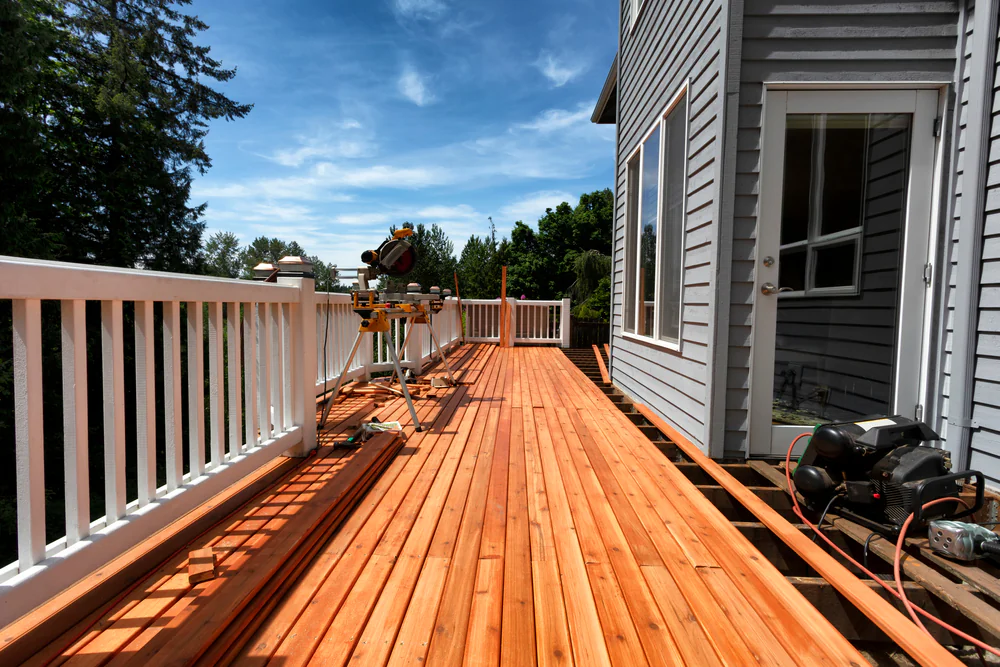
That soft spot on your deck isn’t going to fix itself. Neither is the railing that wobbles when your kids lean on it. And that small crack you’ve been ignoring? It’s letting water seep into places you can’t see, rotting out the structure from the inside.
Here’s what happens when you get ahead of it: you spend a few hundred dollars now instead of a few thousand later. Your deck stays safe for family gatherings and summer cookouts. You’re not second-guessing whether it’s okay for people to walk on it.
We’ve seen what North Bellport’s coastal climate does to decks. Salt air corrodes fasteners. Humidity gets into the wood. Freeze-thaw cycles split boards and loosen connections. The homes closer to the water get hit harder, but even a few miles inland, your deck is taking a beating every season.
Most deck problems start where you can’t see them—support posts rotting from the inside, joists weakening from moisture, flashing failing and letting water in. By the time you notice the surface damage, the real problem has been growing for months.
Home Team Construction has spent over a decade working on homes across Suffolk County. We’re licensed, insured, and we live here—this isn’t a crew that shows up, does the work, and disappears. Our reputation is built on the quality of work we leave behind.
North Bellport homeowners deal with specific challenges. The coastal humidity, the salt air, the temperature swings—these aren’t abstract concepts to us. We know which materials hold up and which ones fail in two years. We know what the building codes require and how to get permits processed without delays.
When you call us, you’re getting someone who’s going to inspect every part of your deck, explain what’s wrong in plain language, and tell you exactly what it’ll cost to fix. No upselling. No surprises. Just the repairs you actually need.
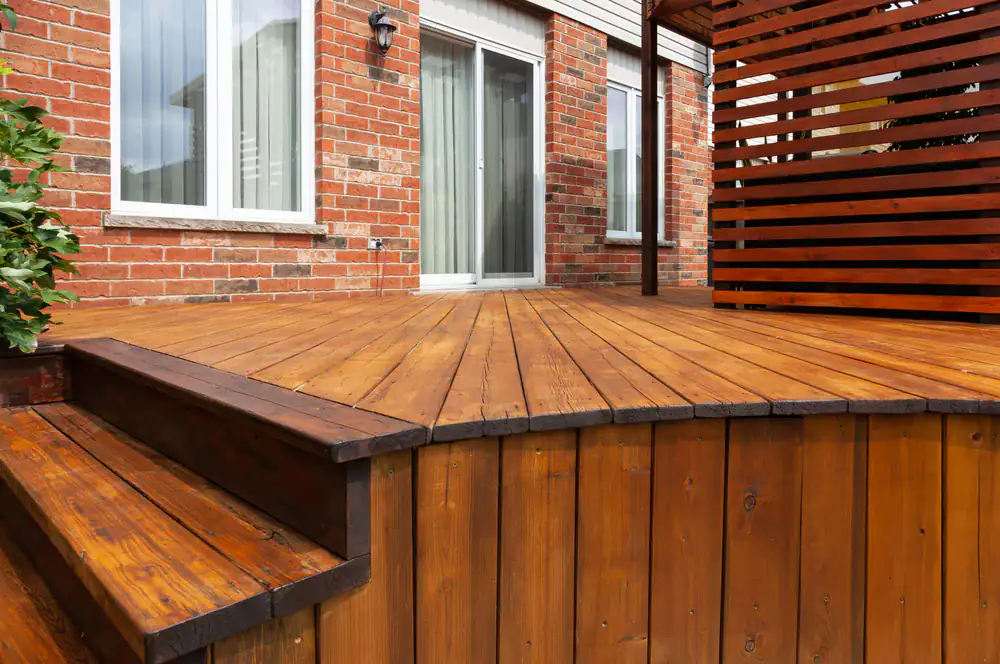
First, we come out and inspect your entire deck—not just the obvious problem areas. We’re checking the foundation, the joists, the ledger board attachment, the railings, the surface boards, and all the connections. We take photos. We document what we find.
Then we sit down with you and walk through what’s wrong. If it’s a simple board replacement, we’ll tell you that. If there’s structural damage that needs attention, we’ll show you exactly where and why it matters. You get a detailed estimate before any work starts.
Once you approve the work, we schedule it and get it done fast. Most repairs take one to three days depending on the scope. Simple fixes like replacing a few boards or tightening railings? That’s usually a day. More extensive work—replacing joists, reinforcing the frame, fixing multiple problem areas—takes two to three days.
We use materials that actually last in this climate. Pressure-treated lumber rated for ground contact. Stainless steel or hot-dipped galvanized fasteners that won’t corrode. Composite boards if that’s what you want. Everything is sealed properly against moisture.
When we’re done, you get a deck that’s safe, solid, and built to handle whatever Long Island weather throws at it.
Ready to get started?
This isn’t just about slapping a new board on and calling it done. When we repair your deck, we’re addressing the root cause of the problem—not just covering up the symptoms.
If you’ve got rotted boards, we’re pulling them up and checking what’s underneath. If the joists are compromised, we’re reinforcing or replacing them. If your ledger board attachment is failing (which is a major safety issue), we’re re-securing it properly with through-bolts and flashing to keep water out.
For North Bellport homes, we pay extra attention to moisture protection. Your deck is exposed to higher humidity and salt air than homes further inland. That means every connection point needs to be sealed. Every cut end of lumber needs to be treated. Every fastener needs to be corrosion-resistant.
We also look at the big picture. If your deck is 15 years old and showing multiple signs of failure, we’ll tell you honestly whether repair makes sense or if you’re better off with a replacement. Most of the time, though, catching problems early means you can get another 10-15 years out of your deck with the right repairs.
You’re getting licensed contractors who understand local building codes, materials that work in this climate, and repairs that actually last.

Most deck repairs in North Bellport run between $1,000 and $5,000 depending on what needs fixing. A simple repair—replacing a few rotted boards, tightening loose railings, fixing minor surface damage—usually costs $1,000 to $2,000.
More extensive repairs get into the $3,000 to $5,000 range. That’s when you’re dealing with structural issues like rotted joists, failing ledger board attachments, or significant frame damage. These repairs take longer and require more material, but they’re still a fraction of what a full deck replacement would cost.
The key is catching problems early. A $300 board replacement today prevents a $3,000 joist repair next year. Water damage accelerates fast in our climate, so that small issue you’re ignoring will get worse.
When done right with proper materials, deck repairs should last 15 to 20 years in Suffolk County. The catch is “done right with proper materials”—that’s where a lot of deck repair companies cut corners.
In North Bellport’s climate, you need fasteners that resist corrosion. Regular screws and nails rust out in a few years when exposed to salt air and humidity. We use stainless steel or hot-dipped galvanized hardware that actually lasts.
The wood matters too. Pressure-treated lumber rated for ground contact holds up better than standard grades. Composite decking resists moisture, doesn’t rot, and won’t warp or split. If you’re replacing boards, it’s worth using materials that can handle the coastal environment instead of just matching what was there before.
Rotted boards and joists are at the top of the list. Water gets through cracks in the finish, soaks into the wood, and starts breaking it down. In our humid climate, that wood stays wet longer, which accelerates rot.
Corroded fasteners are another big one. Homes closer to the water see this faster, but even a few miles inland, the salt air gets into screws and nails. They rust, lose holding power, and suddenly you’ve got loose boards and wobbly railings.
Ledger board failure is the most dangerous problem we see. That’s the board that attaches your deck to your house. If it’s not properly flashed and sealed, water gets behind it and rots both the ledger and your house’s rim joist. When that fails, the entire deck can pull away from the house. It’s not common, but when we find it, it needs immediate attention.
It depends on the scope of work. Simple repairs like replacing surface boards or fixing railings usually don’t require a permit. But if you’re doing structural work—replacing joists, reinforcing the frame, modifying the deck’s footprint—you’ll need a permit.
Suffolk County building codes are specific about deck construction and safety. The permit process ensures your repairs meet those codes, which protects you if you ever sell your home. Buyers and home inspectors look for unpermitted work, and it can become a problem during closing.
We handle the permit process if your repair needs one. We know what the county requires, how to submit the paperwork, and how to schedule inspections. It adds a little time to the project, but it’s worth doing it right.
If more than 25% of your deck’s structure is compromised, replacement usually makes more sense than repair. That’s when you’re looking at multiple rotted joists, widespread board damage, and failing support posts. At that point, you’re basically rebuilding the deck piece by piece, which costs almost as much as starting fresh.
But if the damage is localized—a few bad boards, some rotted sections, loose railings—repair is the smart move. You’re fixing the problem areas and getting years more life out of the deck for a fraction of replacement cost.
During our inspection, we’ll tell you honestly where you stand. If your deck’s structure is solid and we’re just addressing surface damage and a few weak spots, repair makes sense. If we’re finding problems everywhere we look, we’ll walk you through what replacement would involve and let you make the call.
Composite and PVC decking perform best long-term in coastal climates. They resist moisture, don’t rot, and hold up to salt air without corroding or degrading. You’ll pay more upfront, but you won’t be replacing boards every few years.
If you’re sticking with wood, use pressure-treated lumber rated for ground contact even for above-ground applications. It has higher chemical retention, which means better rot resistance. Cedar and redwood look great but don’t hold up as well in high-humidity environments unless you’re committed to regular maintenance.
For fasteners, stainless steel is the gold standard. Hot-dipped galvanized hardware is a solid second choice. Skip anything else—regular screws and nails will corrode in our climate, and you’ll be dealing with rust stains and loose boards within a few years. The fasteners are a small part of the total cost, so use the ones that actually last.
Other Services we provide in North Bellport