

Hear From Our Clients
You’re not dealing with a small crack anymore. Water’s getting in through the flashing, the mortar’s crumbling faster than it should, and you’re wondering if this winter’s going to be the one that turns a $500 fix into a $5,000 nightmare.
Here’s what happens when your chimney actually gets fixed right. The flashing seals properly so rain stops pooling where it shouldn’t. The masonry stops shedding pieces into your yard. Your heating system vents safely without carbon monoxide risks. And you stop worrying every time a nor’easter rolls through.
Most chimney problems in North Bellport trace back to two things: salt air eating through materials that weren’t meant for coastal exposure, and water freezing inside cracks that expand every winter. Both get worse fast. A small leak becomes rotted framing. Surface damage becomes structural issues. What you’re paying to fix now is cheaper than what you’ll pay if you wait.
We handle chimney repairs across Suffolk County because we’ve seen what happens when contractors use the wrong materials or skip steps to save time. We’re the ones you call when you need it done right the first time.
North Bellport sits close enough to the water that salt air affects every exterior surface on your home. Your chimney takes the worst of it—constant moisture, temperature swings, and corrosive particles that break down standard mortar in half the time it should last. We use marine-grade materials and installation techniques designed specifically for this climate.
We’ve been fixing chimneys, roofs, and exterior systems for homeowners who care about doing things right. Licensed, insured, and local enough to understand that your 1979 ranch has different needs than new construction.
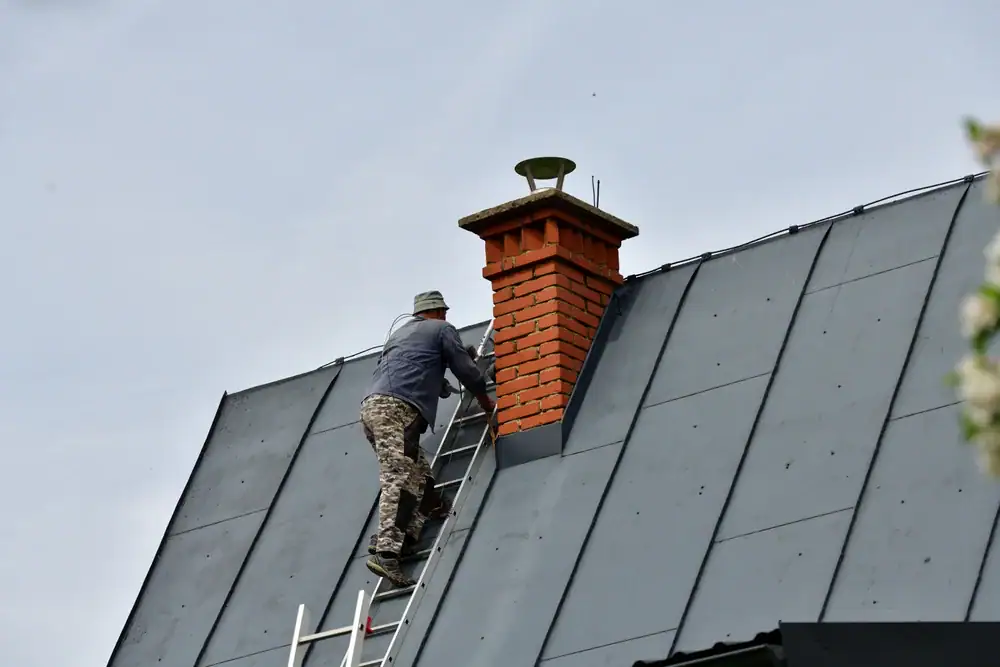
First, we inspect the entire chimney system—not just the obvious damage. We’re looking at the crown, the flashing, the mortar joints, the liner condition, and any signs of water infiltration. You get photos of what we find and a clear explanation of what needs fixing now versus what can wait.
Then we handle the repairs using materials that hold up in coastal conditions. Damaged mortar gets repointed with weather-resistant compounds. Flashing gets replaced with properly sealed, corrosion-resistant materials. Crowns get rebuilt with the right slope and overhang to shed water. If your liner’s compromised, we install stainless steel that won’t deteriorate from moisture and temperature extremes.
The work gets done right, which means proper curing time, correct material application, and attention to details that matter in Long Island weather. We don’t rush through jobs to get to the next one. Every repair comes with a warranty covering materials and workmanship because we stand behind what we do.
You get a final walkthrough showing what was fixed and what to watch for going forward. Then you’re done worrying about it.

Ready to get started?
Chimney flashing repair addresses the number one cause of chimney leaks—failed seals where your chimney meets your roof. We remove old flashing, install new corrosion-resistant materials, and seal everything properly so water can’t penetrate. This isn’t a tar patch that fails in two years. It’s a permanent fix using step flashing and counter flashing installed the way it should’ve been done originally.
Masonry repair handles the visible damage you’re seeing—crumbling bricks, deteriorating mortar joints, and spalling caused by water infiltration and freeze-thaw cycles. In North Bellport’s climate, standard mortar doesn’t last. We use Type N mortar for most repairs and Type S for areas exposed to severe weather or ground contact. The mix matters because salt air and temperature swings will destroy improper materials in a few seasons.
Crown repair and rebuilding protects the top of your chimney stack where water damage starts. Most crowns crack because they weren’t built with proper overhang or slope. We rebuild them correctly—with a drip edge that directs water away from the chimney structure and materials that flex slightly with temperature changes instead of cracking. This single repair prevents thousands in future water damage to your home’s interior.
Most chimney repairs in North Bellport run between $500 and $2,500 depending on what’s damaged and how long the problem’s been happening. Simple mortar repointing on a few joints costs less. Complete flashing replacement, crown rebuilding, and extensive masonry work costs more.
Here’s what affects your final price: the extent of water damage, whether the chimney liner needs replacement, how accessible your roof is, and what materials your chimney’s built from. Brick chimneys cost less to repair than stone. Single-story homes cost less than two-story because of equipment and safety requirements.
The longer you wait, the more expensive it gets. A $500 flashing repair becomes a $3,000 job when water rots the roof decking and interior framing. We give you a clear estimate before starting work so you know exactly what you’re paying for.
Chimney leaks almost always start at the flashing—the metal seal where your chimney penetrates your roof. Flashing fails because it wasn’t installed correctly, because it’s corroded from salt air, or because the sealant dried out and cracked. Water runs down the outside of your chimney, hits the failed flashing, and pours straight into your home.
The second most common cause is a damaged chimney crown. Cracks in the crown let water into the chimney structure where it freezes, expands, and creates bigger cracks. This cycle accelerates fast in Long Island’s freeze-thaw climate.
We fix leaks by identifying exactly where water’s entering, then addressing the root cause. That means removing and replacing flashing with properly sealed, corrosion-resistant materials. It means rebuilding crowns with correct slope and overhang. And it means repointing any mortar joints that are letting water penetrate the chimney structure. A real fix stops the leak permanently—not just for one season.
Most chimney repairs take one to three days depending on the scope of work and weather conditions. Simple flashing replacement or minor repointing can be done in a day. Extensive masonry work, crown rebuilding, or liner replacement takes longer.
Weather affects the timeline because mortar and sealants need proper conditions to cure. We won’t rush through a job just to finish faster if it means compromised quality. Cold temperatures, rain, or high humidity can extend curing time—and that’s normal for exterior masonry work done right.
We give you a realistic timeline upfront and keep you updated if anything changes. Emergency repairs get prioritized differently. If your chimney’s actively leaking and damaging your home, we focus on stopping the water intrusion immediately, then schedule the permanent repair work as soon as conditions allow proper installation.
Yes. Storm damage happens fast on Long Island—high winds, heavy rain, and fallen debris can compromise your chimney in minutes. If your chimney’s damaged and water’s getting into your home, we respond quickly to protect your property and prevent further damage.
Emergency repairs focus on immediate protection. We tarp damaged areas, seal active leaks, and stabilize anything that’s structurally compromised. This isn’t the final fix—it’s damage control until we can do the permanent repair correctly. You can’t properly install flashing or repoint masonry in a rainstorm, but we can stop water from destroying your interior.
Once conditions allow proper work, we handle the permanent repairs using the same quality materials and techniques as any planned job. Every emergency repair comes with our standard warranty because temporary protection shouldn’t mean temporary quality. We document everything for insurance purposes and work directly with your adjuster if needed.
Salt air is the main culprit. North Bellport’s proximity to the coast means salt particles constantly settle on your chimney’s exterior. Salt absorbs moisture from the air, then penetrates brick and mortar where it crystallizes and expands. This process—called salt weathering—breaks down masonry from the inside out, much faster than normal weathering.
The freeze-thaw cycle makes it worse. Water enters through tiny cracks, freezes overnight when temperatures drop, and expands by about 9%. That expansion forces cracks wider. When it thaws, more water enters the enlarged crack. This cycle repeats all winter, turning small surface damage into structural problems in just a few seasons.
Standard materials and techniques don’t hold up in this environment. That’s why we use marine-grade products designed for coastal exposure—stainless steel liners that resist corrosion, weather-resistant mortar that handles salt and moisture, and flashing materials that won’t deteriorate in harsh conditions. Your chimney needs materials matched to Long Island’s specific climate challenges.
Get your chimney inspected if you’re seeing any signs of damage—crumbling mortar, water stains on interior walls near the chimney, pieces of brick or mortar in your yard, or visible cracks in the crown. These aren’t problems that fix themselves. They get worse every season you wait.
You should also inspect after major storms, especially if you had high winds or falling debris. Even if you don’t see obvious damage, flashing can be compromised without visible exterior signs. A small leak caught early costs hundreds to fix. The same leak ignored for a season can cost thousands once water damages your roof decking and interior structure.
If you use your fireplace regularly, annual inspections make sense. Creosote buildup, liner deterioration, and draft problems create safety risks beyond just structural damage. But even if you never use your fireplace, your chimney still needs maintenance—it’s an exterior structure constantly exposed to weather, and in North Bellport’s climate, that means constant exposure to salt air and moisture that accelerate deterioration.
Other Services we provide in North Bellport