Hear From Our Clients
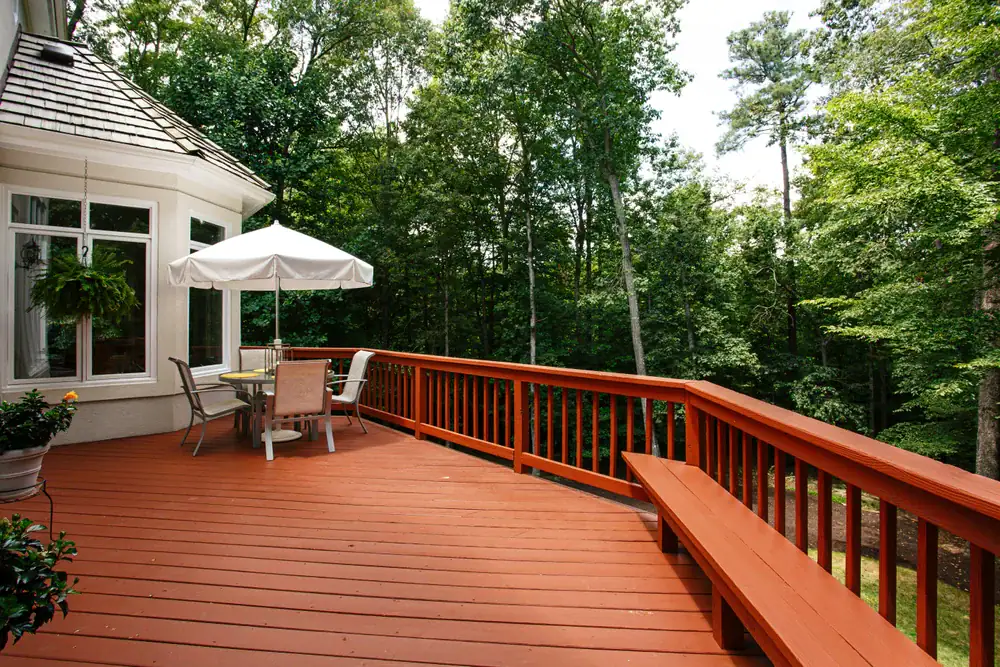
You’ve noticed the boards flexing when you walk across them. Maybe the railings feel loose, or there’s rot starting near the posts. It’s not just an eyesore—it’s a safety problem you can’t ignore.
Professional deck repair fixes what’s broken and prevents the expensive damage that happens when small problems turn into structural failures. You get a deck that’s safe for your family, looks clean again, and doesn’t need replacing anytime soon.
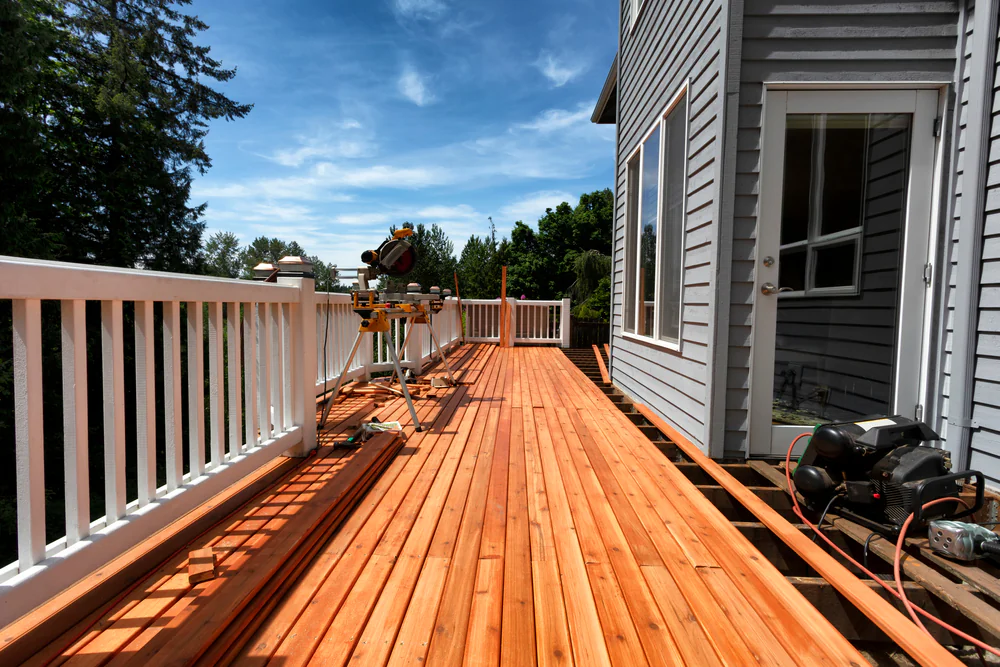
Most repairs take one to three days depending on what needs fixing. Rotting boards get replaced with pressure-treated lumber that handles humidity. Loose railings get secured properly. Structural issues get addressed before they cost you thousands more. You’re not just patching problems—you’re extending your deck’s life by 10 to 15 years.
Home Team Construction serves Suffolk County homeowners who need straight answers and solid work. We’re licensed, insured, and we’ve seen what coastal weather does to decks in North Babylon—the salt air, the freeze-thaw cycles, the moisture that sits in wood all winter.
Most homes here were built in the 1960s when soldiers came back from World War II. Those decks have been through decades of Long Island summers and winters. We know how they fail and how to fix them right.
Our crew handles the work ourselves. No subcontractors, no handoffs. When you call, you get clear pricing, realistic timelines, and repairs that meet current building codes.
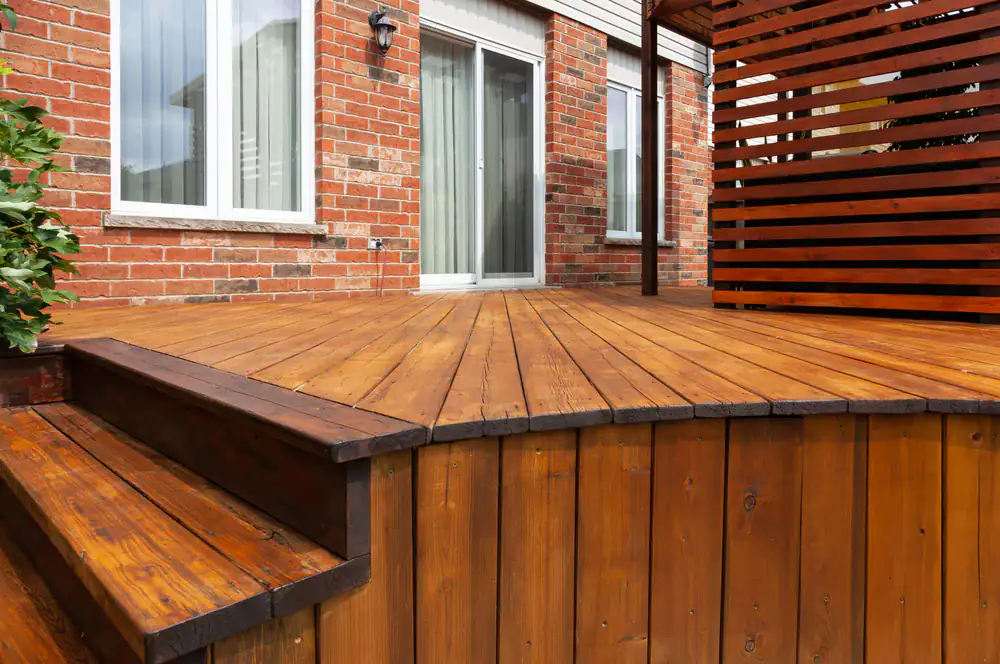
First, we come out and assess your deck. We’re looking at the boards, the railings, the support posts, the ledger board where your deck connects to your house, and the fasteners holding everything together. Most deck failures start with corroded screws and nails you can’t see.
We’ll tell you what needs fixing now, what can wait, and whether repair makes more sense than replacement. Generally, if less than 25 percent of your deck has serious issues, repair is the smarter move. But if the foundation or support structure is compromised, we’ll tell you that too.
Once you approve the work, we schedule it fast. Simple jobs like replacing boards or tightening railings take a day. Bigger structural repairs might take two or three. We use marine-grade fasteners designed for salt air, pressure-treated lumber for posts and joists, and materials that won’t warp or rot in Suffolk County’s climate.
When we’re done, your deck meets current safety codes and you know exactly what was fixed and why.
Ready to get started?
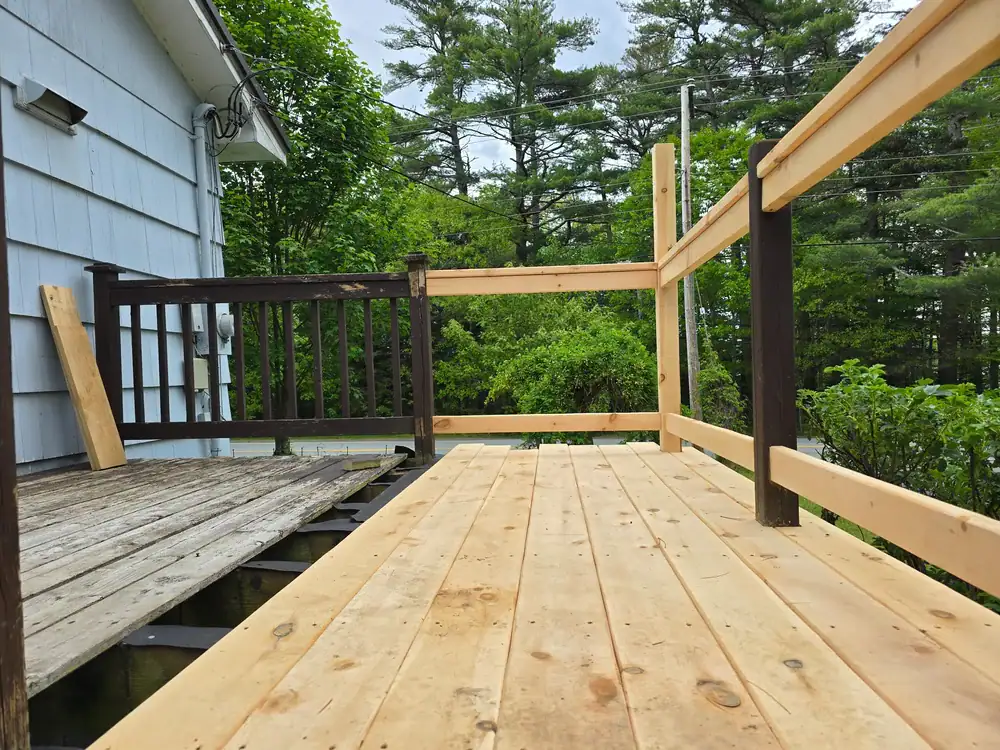
Rotting boards and support posts are the most common problems we see. Long Island’s humid summers and wet winters are brutal on wood decks, especially when moisture gets trapped between boards or around posts. We replace damaged lumber with pressure-treated material and make sure water can drain properly.
Loose or damaged railings are a safety hazard. We don’t just tighten what’s there—we check the posts they’re attached to and make sure the connections are solid. If the wood is compromised, we replace it.
Cracked or warped decking boards happen when wood expands and contracts through temperature swings. We pull the damaged boards, check the joists underneath, and install new decking that’s rated for coastal conditions. Gaps between your deck and house let water into places it shouldn’t be. We seal those connections and make sure your ledger board isn’t rotting where it attaches to your home’s structure.
North Babylon sits just miles from the South Shore. That salt air corrodes standard fasteners faster than most homeowners realize. We replace them with corrosion-resistant hardware that won’t fail in a few years.

Most deck repairs in Suffolk County run between $1,000 and $5,000 depending on what’s damaged and how much material you need. Minor work like replacing a few boards or fixing loose railings costs less. Structural repairs cost more because you’re dealing with support posts, joists, or ledger boards that hold the whole deck up.
We give you a detailed estimate after we assess your deck. You’ll know what the work costs before we start, and there won’t be surprise charges later. The key is catching problems early—what starts as a $500 board replacement can become a $5,000 structural repair if you wait too long.
If you’re wondering whether repair or replacement makes more sense, we’ll walk you through that too. Repair is almost always cheaper when the damage is limited, but if your deck’s foundation is failing, replacement might be the better investment.
If less than 25 percent of your deck has serious damage, repair usually makes more sense. You save money and add years of life to your deck without the cost and disruption of a full rebuild.
But structural integrity is what matters most. If your support posts are rotting, your joists are sagging, or your ledger board is pulling away from the house, that’s when replacement becomes the smarter option. Those aren’t cosmetic issues—they’re safety problems that affect the entire deck.
We’ll assess your deck honestly and tell you which route makes sense. Sometimes a homeowner thinks they need a whole new deck when really they just need new boards and railings. Other times, what looks like a small problem is actually a sign of bigger structural failure underneath. We’ve been doing this long enough to know the difference, and we’ll explain what we’re seeing so you can make the right call.
Rotting boards and posts top the list. North Babylon’s climate—humid summers, wet winters, proximity to coastal moisture—creates the perfect conditions for wood rot. When water sits in wood and doesn’t dry out, decay starts fast.
Loose railings are another big one. The fasteners corrode in salt air, and suddenly the railing that felt solid last year is wobbling now. That’s dangerous, especially if you have kids or elderly family members using the deck. Cracked and warped boards happen when wood goes through repeated freeze-thaw cycles. Overnight freezing followed by daytime thawing puts stress on the material, and eventually it splits or warps.
Gaps between the deck and house are easy to miss but cause expensive problems. Water gets into those gaps and rots the ledger board—the piece of lumber that connects your deck to your home’s structure. If that fails, your whole deck can pull away from the house. We see it more often than we should, usually because the deck wasn’t maintained or the original fasteners weren’t rated for coastal conditions.
Simple repairs take a day. If we’re replacing a few boards, tightening railings, or fixing surface-level damage, we’re usually done in one visit.
Structural repairs take longer—typically two to three days depending on the scope. If we’re replacing support posts, reinforcing joists, or rebuilding sections of the deck, that’s more involved work. We need to make sure everything is level, properly fastened, and up to code.
Weather can affect the timeline, especially in winter. We don’t install new lumber in freezing temperatures or when rain is forecast, because the materials need time to settle and seal properly. But most of the year, we can get your deck repaired fast without cutting corners. You’ll know the timeline upfront, and we’ll stick to it unless something unexpected comes up during the work—which we’ll explain if it happens.
Yes. Standard lumber and fasteners don’t hold up in salt air and high humidity. We use pressure-treated lumber for structural components like posts and joists because it resists rot and insect damage better than regular wood.
For fasteners, we use marine-grade or corrosion-resistant hardware. Standard screws and nails deteriorate fast near the coast—by the time you notice the deck moving, the fasteners have been corroding for months. Stainless steel or coated fasteners last years longer and keep your deck structurally sound.
If you’re replacing decking boards, we’ll talk through your options. Pressure-treated wood is the most cost-effective and holds up well if it’s maintained. Composite boards cost more upfront but don’t rot, warp, or need staining. For North Babylon’s climate, both work—it depends on your budget and how much maintenance you want to deal with long-term. We’ll explain the pros and cons so you can decide what makes sense for your situation.
Yes. We’re fully licensed and insured to work in Suffolk County. That means we carry liability insurance in case something goes wrong, and our work meets New York State building codes.
Licensing matters because deck work involves structural safety. If your deck isn’t built or repaired to code, it’s a liability—for you, your family, and anyone who uses it. When you hire a licensed contractor, you’re getting someone who understands load requirements, proper fastening techniques, and how to build something that won’t fail.
Insurance protects you if there’s an accident on your property during the job. It also means we’re a legitimate business that’s accountable for our work. You’d be surprised how many deck contractors operate without proper licensing or insurance. If something goes wrong, you’re stuck with the bill and the liability. We’ve been serving Long Island homeowners for years because we do things the right way—licensed, insured, and transparent about what we’re doing and why.
Other Services we provide in North Babylon