Hear From Our Clients

You’re not imagining it. That crack in your chimney crown is getting worse every winter. Water’s already working its way into the masonry, and every freeze-thaw cycle this year will make it exponentially worse.
Here’s what happens when you replace your chimney before it becomes an emergency. You stop wondering if carbon monoxide is leaking into your home while your family sleeps. You stop seeing water stains on your ceiling after every storm. You stop worrying about a $15,000 emergency repair when your chimney finally gives out during a nor’easter.
A new chimney system means proper venting that protects your indoor air quality. It means a crown and cap that actually keep water out instead of funneling it into your living room. It means materials designed for Long Island’s salt air and brutal winters, not the cheap stuff that fails in five years.
You get 15 to 25 years of reliable performance when it’s done right. No more patching. No more “let’s see if it makes it through another season.” Just a chimney that works the way it’s supposed to.
Home Team Construction has been serving Suffolk County homeowners for over a decade. We’re licensed, we don’t use subcontractors, and every person on our crew is trained to handle the specific challenges that come with Long Island’s coastal climate.
We’ve seen what happens to chimneys in North Babylon. The salt air eats through standard mortar faster than most contractors expect. The freeze-thaw cycles are more severe here than inland areas. Your chimney faces conditions that require marine-grade materials and proper installation techniques, not shortcuts.
You’ll get upfront pricing before we start. You’ll see documentation of what we did and why. And you’ll work with people who understand that your chimney isn’t just a stack of bricks—it’s a critical safety system that protects your family and your home.
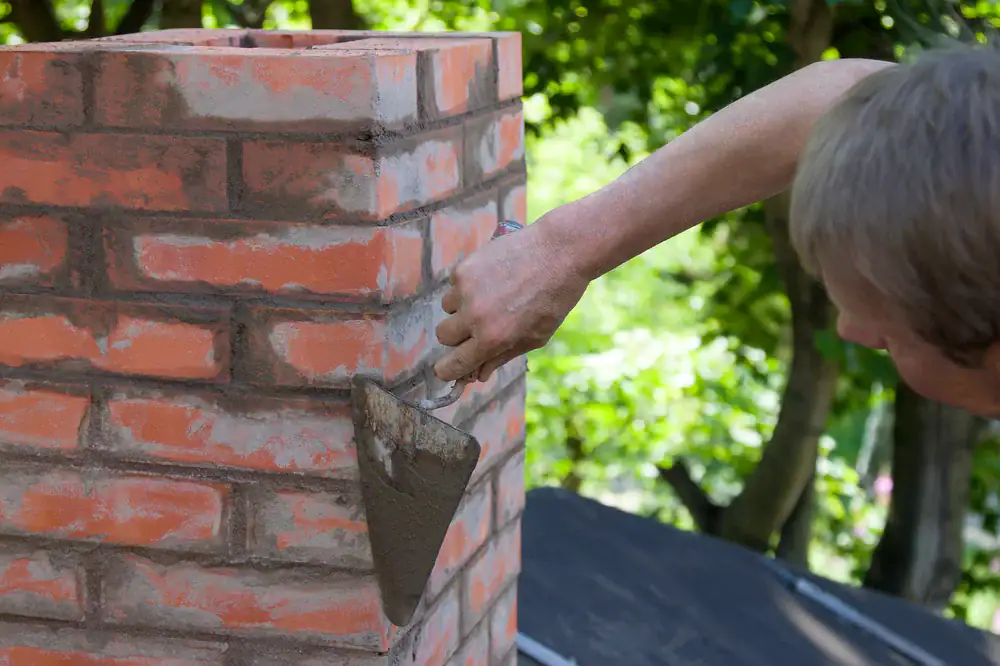
First, we inspect your entire chimney system from the firebox to the crown. We’re looking at the flue liner condition, checking for cracks in the masonry, examining the flashing, and assessing whether you need a partial rebuild or complete replacement. You get a detailed explanation of what’s wrong and why it matters for your safety.
Then we give you a clear price. No surprises, no “we’ll need to see once we get in there” nonsense. You know what you’re paying before we touch anything.
During the replacement, we protect your property with tarps and barriers. If we’re doing a complete chimney stack replacement, we carefully dismantle the old structure and rebuild from the roofline up using materials rated for coastal conditions. For chimney liner replacement, we remove the old clay tile system and install a stainless steel liner that provides better insulation and improved draft. Every chimney cap replacement and flashing installation is done to prevent water intrusion, because that’s what destroys chimneys in this area.
We document everything with photos. You see what the problem looked like, what we did to fix it, and what the finished work looks like. When we’re done, you have a chimney system that’s built to handle Long Island weather for the next two decades.

Ready to get started?
Your chimney replacement includes marine-grade materials specifically chosen for Suffolk County’s coastal environment. Standard mortar fails quickly here. We use weatherproof additives and, for older homes built before 1940, lime-based mortar that matches the original construction and allows proper moisture movement.
The chimney liner replacement uses stainless steel systems rated for your heating appliance type. These liners provide better insulation than old clay tiles, improve draft efficiency, and create a safer venting system that reduces carbon monoxide risks. For chimney flue replacement, we ensure proper sizing and installation that meets current building codes.
Every job includes new chimney flashing replacement with materials that seal properly against your roof. We install a chimney cap that keeps water, animals, and debris out while allowing proper ventilation. The crown gets rebuilt with a proper slope and overhang that directs water away from the stack instead of into it.
North Babylon homes face unique challenges. You’re close enough to the water that salt air accelerates corrosion. Your winters are harsh enough that freeze-thaw cycles happen repeatedly throughout the season. We account for these factors in every material choice and installation technique, because that’s the difference between a chimney that lasts and one that fails prematurely.

Complete chimney replacement in North Babylon typically runs between $10,000 and $15,000, though the actual cost depends on your chimney’s height, accessibility, and how much needs replacing. A full stack replacement from the roofline up costs more than just replacing the liner and crown.
Partial replacements cost less. Chimney liner replacement alone usually runs $3,000 to $7,000 depending on the liner type and chimney height. Chimney cap replacement and crown repair together might cost $1,500 to $3,000. But here’s the thing—if your masonry is deteriorating and you only fix the liner, you’re just delaying the inevitable.
The cost difference between doing it right now and waiting for an emergency is significant. Emergency repairs during winter, when your chimney is actively failing and causing damage, often cost 30% to 50% more because of the urgency and additional damage that’s occurred. You’re also looking at potential water damage repairs inside your home, which aren’t included in chimney costs.
We give you an upfront price after inspecting your chimney. You’ll know exactly what you’re paying and what’s included before we start work.
Most chimney replacements in North Babylon take three to five days, depending on the scope of work and weather conditions. A complete stack replacement takes longer than a liner and crown replacement.
Day one usually involves setup, protection of your property, and beginning the dismantling process if we’re replacing the stack. Days two and three focus on the rebuild—setting new masonry, installing the liner system, and building up the stack. Days four and five cover finishing work like the crown, cap installation, flashing, and cleanup.
Weather affects the timeline because we can’t work in heavy rain or extreme cold. Mortar needs proper curing conditions, and we won’t compromise the quality of your chimney just to finish faster. If we need to pause for weather, we’ll secure everything so your home stays protected.
Some jobs take less time. Chimney liner replacement without major masonry work might only take two days. But we’d rather give you an accurate timeline upfront than promise something unrealistic and leave you wondering when we’ll finish.
If you see large vertical cracks in the exterior masonry, that’s a structural issue that usually means replacement. Small cracks might be repairable, but when cracks run the full height of your chimney or you can see daylight through them, the structural integrity is compromised.
A leaning chimney is another clear sign. If your chimney is visibly tilting away from your house, the foundation or structure has failed and repair isn’t safe. You need a complete rebuild before it collapses.
Extensive spalling—where the brick faces are flaking off and you see exposed, crumbling brick underneath—means water has been penetrating the masonry for years. Once spalling is widespread, you can’t just repoint the mortar. The bricks themselves are damaged and need replacement.
Inside, if you see white staining (efflorescence) covering large areas, or if pieces of clay tile are falling into your firebox, your flue liner is deteriorating. Combined with exterior damage, this usually indicates the whole system needs replacement. Water stains on your ceiling near the chimney, rust on the damper, or a strong musty smell all point to water intrusion that’s been happening long enough to cause serious damage throughout the system.
Not by itself. A chimney liner replacement fixes venting and draft issues, but water leaks come from the crown, cap, and flashing—not the liner. If water is getting into your home through the chimney, you need to address where it’s entering.
Most chimney water leaks in North Babylon come from a cracked crown or missing chimney cap. The crown is the concrete top that seals the chimney, and when it cracks, water pours directly into the space between the liner and the masonry. A damaged or missing cap lets rain and snow straight down the flue.
Flashing failures cause leaks where your chimney meets the roof. If the flashing is old, improperly installed, or the sealant has deteriorated, water runs down the outside of your chimney and into your attic or walls. This is especially common after roof replacements when the flashing doesn’t get properly reinstalled.
A complete chimney replacement addresses all these water entry points. You get a new crown with proper slope and overhang, a quality cap that keeps water out, and new flashing that’s correctly integrated with your roofing system. That’s how you actually stop water leaks, not just by replacing the liner.
No, you can’t use your fireplace or any heating appliance connected to that chimney while we’re working on it. The chimney will be partially or completely dismantled, and there’s no safe way to vent combustion gases during the replacement process.
If you have a furnace or water heater venting through the chimney we’re replacing, we’ll need to coordinate the work for a time when you can go without heat, or we’ll set up temporary venting if that’s possible for your system. For most North Babylon homes, this means scheduling chimney work during milder weather when you’re not relying on your heating system daily.
Gas fireplaces and appliances can sometimes be temporarily disconnected and capped during the work. Oil and gas furnaces might have temporary venting options depending on your setup. We’ll discuss your specific situation during the inspection and plan the work to minimize disruption.
The work timeline matters here. This is another reason why we give you an accurate schedule upfront. You need to know exactly how many days you’ll be without use of that chimney so you can plan accordingly. We work efficiently to get your chimney back in service as quickly as possible without cutting corners on quality.
Yes, we offer 18-month interest-free payment plans that let you spread the cost of your chimney replacement over time. You don’t need to drain your savings or wait until you’ve saved up the full amount while your chimney continues deteriorating.
The application process is straightforward. You’ll know quickly whether you’re approved and what your monthly payment will be. There’s no prepayment penalty if you want to pay it off early.
Here’s why this matters. Waiting to replace a failing chimney because of cost concerns usually ends up costing more. That small crack becomes a major structural issue. Water damage spreads from the chimney into your walls and ceiling. What would have been a $12,000 replacement becomes a $20,000 emergency repair plus interior damage restoration.
Financing lets you address the problem now, before it gets worse and more expensive. You’re protecting your home and your family’s safety while managing the cost in a way that works for your budget. We’ll walk you through the options when we give you your estimate.
Other Services we provide in North Babylon