

Hear From Our Clients

A roof replacement in North Sea isn’t the same job as one a few towns inland. You’re dealing with salt air off Little Peconic Bay, nor’easters that push sustained winds well past 60 mph, and freeze-thaw cycles that work their way into every small crack and compromised seam. When your roof is replaced with the right materials and the right installation for this specific environment, you stop losing the battle against the weather and start staying ahead of it.
For homeowners with seasonal properties and roughly one in three homes in North Sea sits empty for part of the year that matters even more. A roof that fails in January on an unoccupied property can let water spread for months before anyone notices. The right replacement, done with architectural shingles rated for 110-plus mph winds and properly sealed flashings at every penetration point, removes that vulnerability entirely. You get to stop worrying every time a storm rolls through.
Beyond protection, there’s the financial reality. With median home values in this area well above $1 million, a failing roof is a risk to a serious asset. Water damage, mold remediation, and structural repairs on a property like that cost far more than a timely replacement. Getting it done now, with full documentation of what was found and what was installed, also gives you a clean record for insurance purposes something seasonal homeowners especially find useful when they’re managing their property from a distance.
Home Team Construction is a family-owned exterior contractor based in Mastic, Suffolk County. We’ve spent over a decade working exclusively on Long Island no national franchise model, no out-of-state crews brought in after storms. We know the North Sea coastline and the homes along it.
Owner Alban is involved in every project. That’s not a tagline it’s something customers mention by name in reviews because it actually makes a difference. When you’re getting a roof replaced on a property near Conscience Point or off Noyack Road in North Sea, you want to know there’s a real person attached to the work, not a call center routing your questions to whoever picks up.
We carry full licensing for work in Southampton Town which requires its own contractor registration beyond the standard Suffolk County HIC license along with general liability, workers’ compensation, and all required coverage. When something comes up, you reach us directly. That’s been true for over ten years, and it’s not changing.

It starts with a free inspection. We get on your roof, document what we find with photos, and give you a straight answer about whether you need a full replacement or whether a repair will actually hold. If it’s a replacement, you get an itemized estimate every line item broken out, nothing buried in a lump sum. You’ll know what you’re paying for before we touch anything.
Once you’re ready to move forward, we schedule the job and handle the full tear-off. In North Sea’s aging housing stock most of it built in the 1970s and 1980s it’s not uncommon to pull back shingles and find rotted decking underneath. When that happens, we stop and show you before we proceed. Under Southampton Town’s building code, if the work goes down to the sheathing, a building permit is required, and we handle that process. You won’t be left figuring out permits on your own.
Installation includes new underlayment, ice and water shield at all vulnerable edges, coastal-grade architectural shingles, and properly sealed flashings at every chimney, pipe, and penetration point. When the job is done, we clean up completely and walk you through the finished work with photos and video a full record of what was replaced and how. For homeowners who weren’t on-site during the project, that documentation isn’t optional. It’s the whole point.

Ready to get started?
A full roof replacement with us covers the complete scope not just shingles. That means a full tear-off of the existing material, a thorough inspection of the deck below, and replacement of any sheathing that’s been compromised by moisture or age. On homes throughout North Sea and the broader Southampton area, that deck inspection step matters. Homes built in the 1970s and 1980s have had decades of coastal weather working on them, and what’s underneath the shingles isn’t always what you’d hope.
From there, we install a full underlayment system with ice and water shield along all eaves, valleys, and around every roof penetration. This is especially important on the South Fork, where winter storms can drive water horizontally and ice damming is a real issue near the freshwater ponds and wetland areas that run through North Sea. On top of that goes your architectural shingle layer rated for 110 to 130 mph winds, which is the appropriate standard for a home with Peconic Bay exposure. Three-tab shingles simply aren’t built for this environment, and we don’t install them here.
Every job includes new metal flashings at chimneys, skylights, and pipe boots, proper ridge ventilation, and a full post-job cleanup. You also get photo and video documentation of the completed project what was found, what was fixed, and what was installed. If you need financing, we offer 18 months interest-free for qualifying projects. And if you have gutters, siding, skylights, or chimney work that needs attention at the same time, we handle all of it under one contractor so you’re not managing multiple crews on your property.
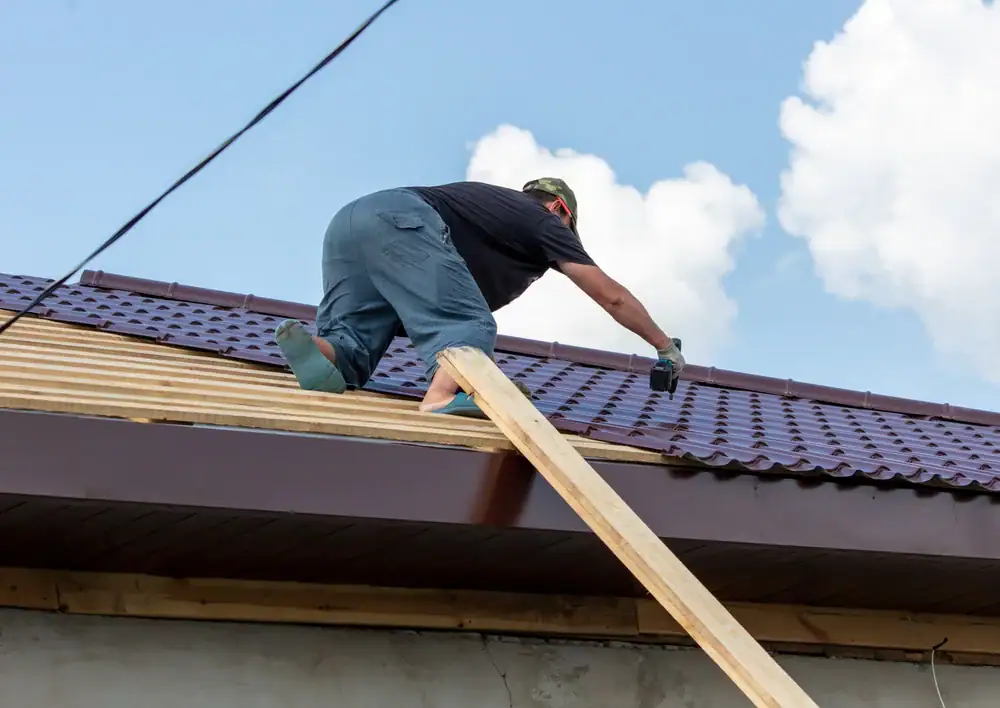
For a standard shingle-over-shingle replacement in the Town of Southampton, no building permit is required. However, if the tear-off goes down to the sheathing which is common on older homes in North Sea a building permit is required at that point. This is a Southampton Town-specific rule, and it’s worth knowing upfront so there are no surprises mid-project.
It’s also worth noting that working in Southampton Town requires more than a standard Suffolk County Home Improvement Contractor license. The Town requires its own separate contractor registration, and a Suffolk County license alone isn’t accepted. Before hiring anyone for roof work in North Sea, confirm they’re properly registered for Southampton Town specifically not just licensed for work in other parts of Long Island.
Nationally, asphalt shingle roofs average around 20 to 25 years. In coastal Suffolk County and especially in North Sea with direct Peconic Bay exposure that number is closer to 15 to 20 years. Salt air accelerates granule loss on shingles and corrodes the metal flashings around chimneys and skylights faster than it would on an inland home. Freeze-thaw cycling through the winter months works into any compromised seam or cracked flashing and widens it over time.
If your North Sea home was built in the 1970s or 1980s and has had one roof replacement since then, there’s a reasonable chance you’re at or past the end of that roof’s useful life. The best way to know for certain is an inspection that documents what’s actually happening up there granule loss, flashing condition, deck integrity rather than guessing based on age alone.
For homes in North Sea and along the Peconic Bay corridor, architectural asphalt shingles are the right baseline. They’re rated for 110 to 130 mph wind resistance, which is appropriate for a coastal South Fork property. Three-tab shingles, which are cheaper and still installed by some contractors, are only rated for 60 to 70 mph below what a serious nor’easter delivers on this stretch of Long Island. That’s not a risk worth taking on a property of this value.
Beyond the shingle itself, the flashing and underlayment system matters just as much in a salt-air environment. Metal flashings need to be properly sealed and, ideally, corrosion-resistant. Ice and water shield should run along all eaves and valleys, not just the minimum required by code. The combination of the right shingle and a properly installed underlayment system is what actually keeps water out when conditions get bad not just the shingles alone.
It changes the calculus significantly. With roughly a third of North Sea homes sitting empty for part of the year, a roof that fails in November or January can go unnoticed until spring. By the time you return for the season, water may have been working its way through saturated insulation and into the framing for months. That’s a very different problem than catching damage early.
The practical answer is to schedule an inspection before you close up for the season and again when you return in spring. If a replacement is needed, getting it done in late spring or early summer before peak summer occupancy gives you the full season with a solid roof overhead. For seasonal owners managing the project remotely, the photo and video documentation we provide at job completion is specifically useful: you get a full visual record of what was replaced and how, without needing to be on-site for the work itself.
For most mid-size homes in North Sea and the surrounding Southampton area, a full asphalt shingle roof replacement typically falls somewhere in the range of $12,000 to $22,000. The variables that move that number are roof size, pitch, the condition of the deck underneath, and the shingle grade you choose. If significant deck repair is needed after tear-off which is more common on the older housing stock in this area that adds to the total.
Roofing material costs have risen considerably over the past few years, so estimates you may have received two or three years ago are likely outdated. The best approach is a current inspection and a fully itemized estimate that breaks out every component tear-off, disposal, underlayment, shingles, flashings, ventilation, and any deck work so you can see exactly what you’re paying for. If financing is helpful, we offer 18 months interest-free for qualifying projects, which removes the pressure of handling the full cost upfront.
The honest answer is that it depends on what’s actually happening with your roof and the only way to know is a real inspection, not a guess based on age or a quick look from the driveway. Some roofs with visible missing shingles are otherwise structurally sound and can be repaired cleanly. Others that look fine from the ground have compromised decking, failed flashings, or granule loss severe enough that repairs are just buying time before a larger failure.
In North Sea specifically, the combination of salt air, coastal wind exposure, and the age of the local housing stock means that what’s underneath the shingles is often the more important question. A roof that’s been through 20-plus South Fork winters may have deck damage that isn’t visible until you pull the shingles back. That’s why the inspection matters: you get a documented picture of what’s actually there, and an honest recommendation based on that not on what generates a bigger invoice.
Other Services we provide in North Sea