
Hear From Our Clients

You stop waking up to water stains spreading across your ceiling. You stop scheduling another repair guy to patch the same cracks that opened up again after winter. Your basement stays dry during heavy rain, and you’re not wondering if this is the year the whole thing finally collapses.
A proper chimney replacement in Shirley, NY means using materials that can handle what Long Island throws at them. Salt air doesn’t just sit on the surface—it works its way into standard brick and mortar, expanding and cracking from the inside out. Freeze-thaw cycles do the rest. That’s why we use marine-grade components: stainless steel flashing and caps that resist corrosion, mortar mixes designed for coastal exposure, and waterproofing systems that actually hold up.
You’re not dealing with constant maintenance anymore. Your family’s safe from carbon monoxide risks that come with cracked flues. And you’re done with emergency calls at 2 AM because something gave out during a storm.
Home Team Construction has been working in Shirley and throughout Suffolk County for over a decade. We’re licensed, insured, and we’ve seen what happens when chimneys aren’t built to handle Long Island’s weather. We’ve repaired chimneys in every neighborhood around here, and we know the difference between a quick fix and something that’ll actually last.
We’re not the company that tries to sell you a full rebuild when you need a simple repair. We’re also not the one slapping on temporary patches when your chimney needs to be replaced. We assess what’s actually wrong, explain it in plain terms, and fix it properly the first time.
Our crews are trained, insured, and held to exact standards. We protect your landscaping before we start, we use quality materials designed for this climate, and we clean up thoroughly when we’re done. Then we walk you through the completed work so you know exactly what you’re getting.
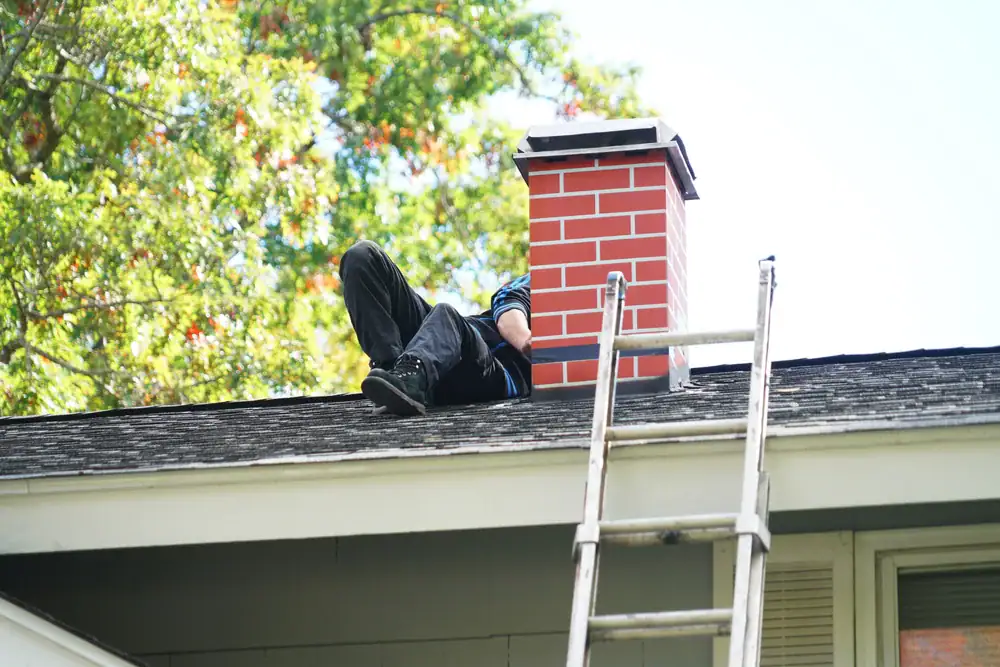
First, we come out and assess your chimney from top to bottom. We’re looking at the crown, the flue liner, the flashing, the masonry—everything. We’ll tell you what needs to be replaced and why, and we’ll give you a detailed written estimate before any work starts. No hidden fees, no surprise charges.
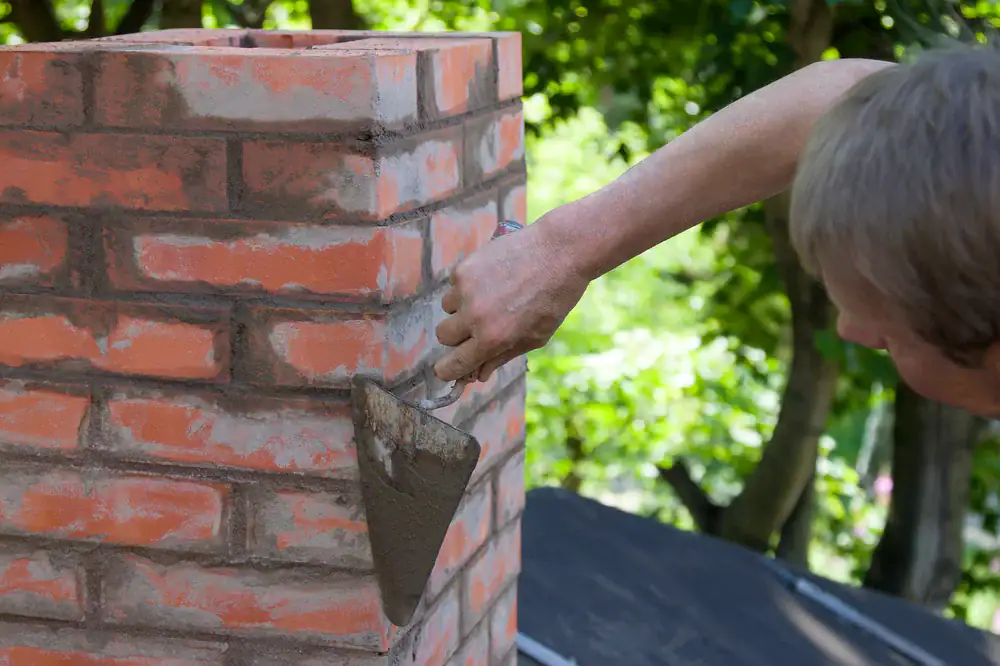
Once you approve the estimate, we pull the necessary permits and schedule the work. We start by protecting your roof and the area around your chimney. Then we carefully demolish the existing structure down to a solid foundation. This isn’t a patch job—we’re rebuilding from the ground up using materials that can handle Shirley’s coastal conditions.
We rebuild the chimney stack using marine-grade mortar and proper construction techniques. We install a new flue liner if needed—clay tile, stainless steel, or cast-in-place depending on your heating system. We install stainless steel flashing that’s sealed and integrated with your roofing system, not just slapped on top. We build a properly sloped crown with adequate overhang and seal it with waterproofing. Finally, we install a stainless steel cap that keeps water, animals, and debris out while allowing proper ventilation.
The whole process typically takes a few days depending on chimney height and complexity. We keep you updated on progress, we clean up daily, and when we’re finished, we provide you with all inspection documentation and warranty information.
Ready to get started?
A complete chimney replacement means tearing down to the foundation and rebuilding with materials designed for Long Island’s environment. You’re getting stainless steel components for your chimney cap and flashing—these resist the salt air that corrodes standard materials within a few years. The mortar we use is specifically mixed for coastal exposure, not the standard mix that breaks down when salt crystals expand inside it.
Chimney liner replacement is part of the process when needed. If you’re burning wood, we typically install clay tile liners. Gas heating systems often get stainless steel liners. Both are sized correctly for your appliance and installed to code. The flue needs to draft properly and contain combustion gases safely—that’s not something you compromise on.
Chimney flashing replacement is critical and often where water problems start. We don’t reuse old flashing. New step flashing gets woven into your shingles, counter flashing gets embedded into the chimney masonry, and everything gets sealed with high-grade sealants designed for this application. Water doesn’t get a path in.
In Shirley and throughout Suffolk County, chimneys face accelerated wear. The salt air here is constant. Winter freeze-thaw cycles are brutal. Storms are severe. A chimney built with standard materials might last 15 years before needing major work. One built with marine-grade materials and proper installation techniques can go 25-30 years or more. That’s the difference between replacing your chimney once or twice in the time you own your home.

If you’re scheduling repairs every couple of years, that’s your first sign. Repairs make sense when damage is isolated—a few cracked bricks, a damaged crown, worn flashing. Replacement makes sense when the damage is widespread or structural.
Look for these signs: large cracks running through multiple courses of brick, the chimney leaning or pulling away from your house, spalling bricks where the face is flaking off in layers, or mortar that’s deteriorated throughout the structure. If water’s getting into your home during rain and you’ve already repaired the flashing and crown, the problem is likely deeper in the masonry.
Here’s the math that matters: if repair costs are approaching 50% of replacement cost, and you’re looking at a chimney that’s already 20+ years old in a coastal environment, replacement usually makes more financial sense. You’re not just fixing the current problem—you’re eliminating the next five problems that are already developing. A proper assessment will tell you exactly where you stand.
Complete chimney replacement in Shirley typically ranges from $8,000 to $15,000 depending on height, complexity, and materials. A standard single-flue chimney on a two-story home usually falls in the $10,000-$12,000 range. Taller chimneys, multiple flues, or difficult roof access can push costs higher.
That price includes demolition, disposal, new masonry construction with coastal-grade materials, new flue liner, stainless steel flashing and cap, proper crown construction, all permits and inspections, and cleanup. It doesn’t include surprises or hidden fees—what we quote is what you pay.
Compare that to ongoing repairs. If you’re spending $1,500-$2,000 every few years on patches that fail, you’ll spend that $10,000 over time anyway—and you’ll still need a replacement eventually. We offer 18-month interest-free financing that makes the upfront cost manageable. The real question isn’t whether you can afford to replace it. It’s whether you can afford to keep repairing it.
Most chimney replacements take 3-5 days from start to finish. Day one is usually demolition and prep. Days two and three are rebuilding the stack and installing the liner. Day four is flashing, crown work, and cap installation. Day five is final inspection, cleanup, and walkthrough.
Weather affects the timeline because mortar needs proper curing conditions. We don’t pour crowns or set masonry in freezing temperatures or heavy rain. If weather delays us, we protect your home with tarps and temporary covers, and we reschedule as soon as conditions allow.
You can use your heating system during construction in most cases. We coordinate the work so your home isn’t without heat, especially during winter. If we need to disconnect your heating appliance temporarily, we’ll tell you in advance and minimize downtime. The goal is to get your chimney rebuilt properly without turning your life upside down.
Insurance typically covers chimney damage from sudden events—a tree falling on it, lightning strikes, or storm damage. Insurance usually doesn’t cover deterioration from age, weather exposure, or lack of maintenance. That’s considered normal wear and tear.
If a storm damaged your chimney, document everything with photos and call your insurance company before starting repairs. We can work with your adjuster and provide detailed estimates that break down what’s storm damage versus pre-existing deterioration. Sometimes insurance will cover partial replacement if the damage is severe enough.
Even if insurance doesn’t cover the replacement, it’s worth checking your policy. Some policies require regular chimney inspections to maintain coverage for fire-related claims. If you’ve been putting off needed repairs and then have a chimney fire, your claim could be denied. Getting your chimney replaced now might actually protect your insurance coverage down the road. We provide all documentation you need for your records and for any insurance purposes.
Marine-grade materials are engineered to resist salt corrosion and moisture penetration—exactly what your chimney faces in Shirley. Standard galvanized steel flashing corrodes within 5-7 years in coastal environments. Stainless steel flashing lasts 25-30 years or more because it doesn’t react with salt.
Standard mortar absorbs moisture and salt. When temperatures drop, that moisture freezes and expands. Salt crystals also expand through a process called chloride-salt crystallization. Both create internal pressure that cracks the mortar from inside. Marine-grade mortar mixes include additives that reduce water absorption and increase flexibility, so the mortar can handle freeze-thaw cycles without failing.
Chimney caps see the worst exposure—direct rain, snow, salt spray, and temperature extremes. Aluminum caps pit and corrode. Galvanized caps rust through. Stainless steel caps handle all of it without degrading. The upfront cost is higher, but you’re not replacing the cap every few years. Same principle applies throughout the chimney: spend more on materials that last, or spend less on materials you’ll replace repeatedly. Over the life of your chimney, marine-grade materials cost less and perform better.
Yes, partial replacement makes sense in specific situations. If the damage is isolated to the top section—say the crown is crumbling and the top few courses of brick are spalling, but everything below the roofline is solid—we can rebuild just that section. Same with chimney stack replacement above the roof while leaving the structure inside your attic and walls intact.
Chimney cap replacement and chimney flashing replacement are common standalone services that don’t require full chimney replacement. If your masonry is sound but your cap is corroded or your flashing is leaking, replacing those components solves the problem without tearing down the whole chimney.
The key is honest assessment. If the visible damage at the top is just a symptom of deterioration throughout the structure, partial replacement becomes a temporary fix. We’re not interested in doing work that fails in two years. We’ll tell you if partial replacement will actually solve your problem or if you’re better off replacing the whole thing now. The assessment is straightforward: if the foundation is solid and the damage is localized, partial replacement works. If the deterioration is widespread or structural, complete replacement is the right call.
Other Services we provide in Shirley