

Hear From Our Clients

You’re not looking for a lecture about gutter maintenance. You need someone to show up, figure out what’s wrong, and fix it right the first time.
When your gutters overflow during heavy rain, water doesn’t just disappear. It pools around your foundation, seeps into your basement, and starts problems that cost ten times what a repair does. Most Shirley homes were built between the 1950s and 1970s, and if you’re still running the original gutter system, you’re dealing with fasteners corroded by decades of salt air and sections pulling away from the roofline.
We handle residential gutter repair across Shirley and Suffolk County. That means fixing leaks at the seams, reattaching sagging sections, replacing corroded hangers, and clearing downspouts that back up during storms. You get a system that handles Long Island’s weather without turning every rainstorm into an emergency.
The difference isn’t just the repair itself. It’s knowing the job was done by someone who understands what coastal homes go through and uses materials that actually last here.
Home Team Construction is a licensed home improvement contractor serving Shirley, Mastic Beach, Moriches, and the surrounding Suffolk County area. We’ve spent over a decade working on Long Island homes, which means we’ve seen what happens when gutters fail during nor’easters and what it takes to keep them working in salt air.
We’re not a national franchise. We’re local contractors who live and work in the same weather you do. When you call, you’re talking to someone who knows Shirley’s housing stock, understands the challenges of coastal properties near Moriches Bay, and has repaired gutters on streets just like yours.
You get honest assessments. If your gutters need cleaning instead of repair, we’ll tell you. If they’re beyond fixing and need replacement, we’ll explain why. We’re here to solve the problem, not sell you services you don’t need.
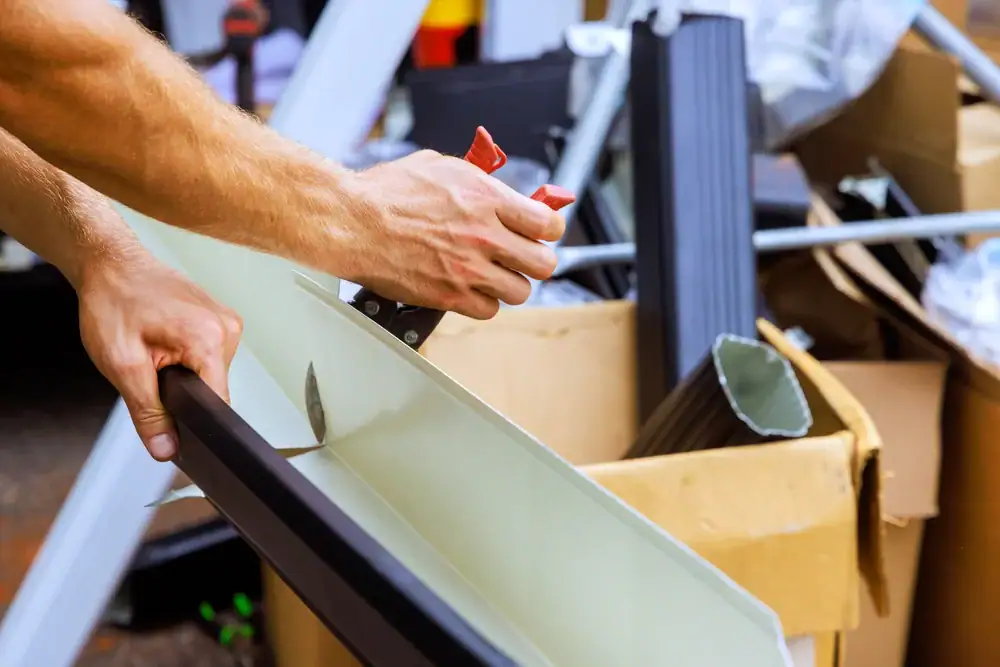
You reach out, and we schedule a time to come look at your gutters. No pressure, no sales pitch—just an evaluation of what’s actually going on.
We inspect the entire system. That means checking for leaks at the seams, looking at how the gutters are attached to your fascia, testing downspout flow, and identifying any sections that are sagging or pulling away. We’re also looking at what caused the problem in the first place, whether that’s corroded fasteners, improper pitch, or damage from a recent storm.
You get a clear explanation of what needs fixing and what it’ll cost. If it’s a simple repair like resealing a joint or replacing a few hangers, we can often handle it the same day. Larger jobs—like replacing entire sections or reworking the pitch—get scheduled based on your timeline.
Once the work’s done, we test everything to make sure water flows where it should. You’re not left guessing whether the repair will hold up the next time it rains. We clean up, walk you through what we did, and you’re back to having gutters that actually work.

Ready to get started?
Leak repairs at seams and joints where sections connect. Most leaks happen where two pieces of gutter meet, and we reseal them with materials designed for Long Island’s temperature swings and moisture.
Reattaching sagging sections by replacing corroded hangers and fasteners. Salt air eats through standard hardware faster than most homeowners realize, and we use corrosion-resistant fasteners that hold up in coastal conditions.
Downspout clearing and repair when water backs up instead of draining. Clogs usually happen at the elbows or where the downspout connects to underground drainage, and we make sure the entire path is clear.
Pitch adjustments so water flows toward downspouts instead of pooling in sections of the gutter. Even a small amount of standing water accelerates rust and creates mosquito breeding grounds.
Fascia board repair when the wood behind your gutters has rotted from long-term water exposure. You can’t attach gutters to damaged wood and expect them to stay put, so we fix the underlying structure when needed.
Emergency storm damage repairs after high winds or falling branches. Shirley gets hit hard during nor’easters, and we respond quickly when your gutters are torn off or crushed.

If you’re dealing with a few leaks, some sagging sections, or loose fasteners, repair usually makes sense. These are localized problems that don’t mean the entire system is shot.
Replacement becomes the better option when you’ve got widespread rust, multiple sections pulling away from the house, or gutters that are so thin they’re starting to crack. Most Shirley homes built in the 1950s through 1970s still have their original gutters, and after 50-plus years of salt air and storms, the metal is often too compromised to repair effectively.
We’ll give you an honest assessment. If repairs will buy you another 5-10 years, we’ll tell you that. If you’re going to be calling us back every season for new problems, replacement is the smarter investment. The goal is to give you a system that works without constant maintenance, and sometimes that means starting fresh.
The most common culprit in Shirley is corroded fasteners. Salt air accelerates rust on the spikes or hangers that attach gutters to your fascia board, and once they weaken, the weight of water during a heavy rain pulls the gutter down.
Clogged gutters make the problem worse. When leaves and debris block the flow, water sits in the gutter instead of draining. That standing water weighs a lot more than most people realize—a five-inch gutter filled with water can add several hundred pounds of stress to the fasteners.
Sometimes the fascia board itself is rotted. If the wood behind the gutter has been wet for years, screws and nails don’t have anything solid to grip. You can reattach the gutter all you want, but it’ll just pull away again unless you fix the underlying wood rot first. We check for that during every inspection because it’s a waste of your money to repair gutters attached to bad wood.
Simple repairs—like resealing a leaking joint or replacing a few loose hangers—usually take a couple of hours. We can often knock those out the same day you call, especially if it’s an emergency situation where water is actively damaging your home.
More involved repairs take longer. If we’re replacing an entire section of gutter, fixing fascia board damage, or reworking the pitch across a long run, you’re looking at a half day to a full day depending on the scope. Two-story homes take longer than ranches because of the setup time and safety requirements for working at height.
Weather plays a role too. We can’t seal joints or apply certain adhesives in the rain, and high winds make it unsafe to work on ladders. If a storm is coming through, we’ll get you on the schedule as soon as conditions allow. The good news is that most gutter repairs don’t require you to be home the entire time—we just need access to the exterior of your house.
We can handle most gutter repairs year-round, but winter does create some limitations. Sealants and adhesives need temperatures above freezing to cure properly, so if it’s below 32 degrees, we can’t do leak repairs that require those materials.
Mechanical repairs—like replacing hangers, reattaching sagging sections, or clearing ice-blocked downspouts—can happen in cold weather. If your gutter is pulling away from the house or a section got damaged in a winter storm, we’re not going to tell you to wait three months while water pours over the side.
Ice dams are a separate issue. If your gutters are full of ice because heat is escaping through your roof, the real problem is attic insulation and ventilation, not the gutters themselves. We can clear the ice and check for damage, but you’ll keep getting ice dams until the heat loss issue is fixed. We’ll walk you through what’s happening and what actually needs to be addressed so you’re not throwing money at a symptom.
We’re licensed contractors who handle roofing, siding, chimneys, and gutters. That matters because gutter problems are often connected to other issues with your home’s exterior.
If your roof is shedding shingles into the gutters, or if the fascia board is rotted, or if water is getting behind your siding because the gutters overflow, you need someone who can address all of it. We’re not a gutter-only company that has to refer you to three other contractors to fix related problems.
That also means we catch things during a gutter inspection that a specialist might miss. We’ve been on enough Long Island roofs to know when a gutter issue is actually a roof drainage problem, or when a leak is coming from flashing around a chimney rather than the gutter itself. You get a complete picture of what’s going on and a single point of contact to fix it all.
First, check if the downspouts are clogged. That’s the most common reason for overflow during a storm. If you can safely access the top of the downspout, pull out any visible debris. Sometimes a tennis ball-sized clump of leaves at the opening is backing up the entire system.
If the downspouts are clear and water is still pouring over the sides, you’ve got either a pitch problem or undersized gutters. Pitch problems mean the gutter isn’t angled toward the downspout, so water pools in the middle sections. Undersized gutters happen when your roof has a large surface area or a steep pitch that sends a lot of water into a standard five-inch gutter that can’t handle the volume.
Don’t ignore it. Every time your gutters overflow, water is hitting the ground right next to your foundation. In Shirley’s clay-heavy soil, that water doesn’t drain away quickly—it sits there and works its way into your basement or crawl space. We’ll figure out why it’s overflowing and fix it so the next storm doesn’t turn into a crisis.
Other Services we provide in Shirley