Hear From Our Clients

You’ve probably already spent money on repairs that didn’t last. Repointing that crumbled after one winter. Flashing that leaked again by spring. Crowns that cracked before you finished paying the invoice.
That happens when contractors don’t account for what Long Island weather actually does to masonry. Salt air doesn’t just sit on your chimney—it penetrates mortar joints and expands from the inside out. Freeze-thaw cycles turn small cracks into structural problems in a single season.
A proper chimney replacement in Manorville, NY means using materials rated for coastal exposure and building to handle moisture intrusion before it starts. You get a chimney that doesn’t need emergency repairs every time the temperature drops or a storm rolls through. Your heating system vents safely. Water stays outside where it belongs. And you’re not calling someone back out in six months because the work failed.
We’ve been handling chimney replacement and roofing work in Suffolk County for over a decade. We’re not a franchise or a crew that bounces between states. We’re local contractors who understand what Manorville’s climate does to chimneys because we see it every day.
Every person on our crew is licensed, insured, and trained to our standards—no subcontractors. When we replace your chimney, we’re using the same materials and methods we’d use on our own homes. That matters when you’re dealing with salt air corrosion and freeze-thaw damage that most contractors don’t account for.
You get a detailed estimate before we start, a clear timeline, and work that’s built to last in Suffolk County conditions. No surprise costs. No shortcuts. Just a chimney replacement done right.
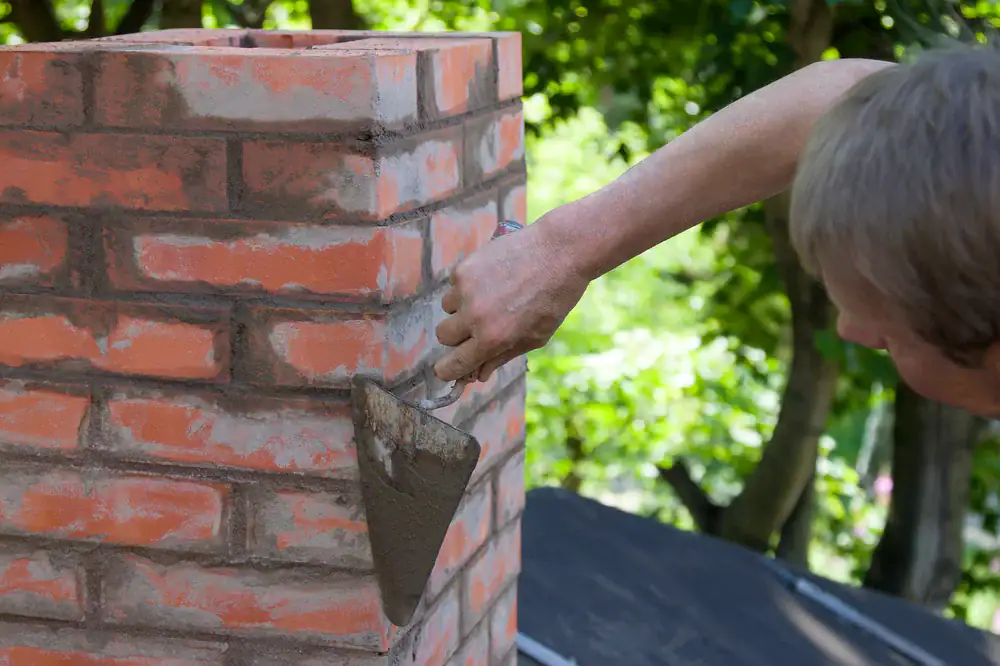
We start with an inspection of your existing chimney—structure, flashing, liner, crown, and cap. You get a clear assessment of what’s failing and why, plus a written estimate that breaks down materials and labor. No vague line items or “we’ll see when we get in there” pricing.
Once you approve the work, we schedule your chimney replacement around your timeline and handle all permits. We protect your roof and property with tarps and barriers, then carefully remove the old chimney down to a solid base. If there’s hidden water damage or structural issues, we address them before rebuilding—not after.
The new chimney gets built with coastal-grade materials: impact-resistant brick or stone, Type N mortar that handles freeze-thaw cycles, stainless steel flashing, and a properly sloped crown with overhang. We install a new chimney liner if needed and a cap that keeps water and animals out. Every joint is tooled correctly. Every flashing seam is sealed right.
When we’re done, we clean up completely and walk you through the finished work. You get warranty coverage on labor and materials, plus documentation for your records.

Ready to get started?
Your chimney replacement includes a complete teardown and rebuild using materials rated for Long Island’s coastal environment. That means brick or stone that resists salt-air corrosion, mortar mixed for freeze-thaw durability, and stainless steel flashing that won’t rust out in three years.
We rebuild the chimney stack to proper height and dimensions for your heating system’s venting requirements. The crown gets poured with the right slope and overhang to shed water away from the masonry. Flashing is installed in layers and sealed to prevent the water intrusion that causes most chimney failures in Manorville.
If your chimney needs a new liner—and most older chimneys do—we install stainless steel chimney liners that are sized correctly for your appliances and rated for the fuel type you’re burning. A new chimney cap goes on top to keep rain, snow, and animals out while allowing proper ventilation.
This isn’t about meeting minimum code requirements. It’s about building a chimney that handles what Suffolk County throws at it: nor’easters that drive rain sideways into masonry, freeze-thaw cycles that crack inferior work, and salt air that eats through cheap materials. You get a chimney replacement that protects your home and doesn’t need emergency repairs every winter.

Full chimney replacement in Manorville typically runs between $8,000 and $15,000, depending on chimney height, materials, and whether you need liner replacement or structural repairs. That’s higher than the national average because Long Island has stricter building codes and higher labor costs—but it’s also what proper coastal construction costs.
A cheaper estimate usually means someone’s cutting corners on materials or skipping steps that matter in Suffolk County’s climate. Inferior mortar fails in freeze-thaw cycles. Standard flashing rusts out from salt air. Shortcuts turn into emergency repairs within a few years.
The real cost comparison isn’t just the initial price—it’s what you spend over the next decade. A properly built chimney replacement lasts 30-plus years without major repairs. A cheap job needs repointing, flashing replacement, and crown work within five years. You end up spending more fixing the “bargain” than you would have spent doing it right the first time.
Replace your chimney when the structure is leaning, when you have extensive cracking through multiple courses of brick, or when the damage is widespread enough that repairs would cost 50% or more of replacement cost. At that point, you’re putting money into a failing system.
Leaning chimneys are dangerous—the structure is compromised and can collapse. Widespread cracking means water has been infiltrating for years and the freeze-thaw damage is throughout the masonry, not just on the surface. Repointing a few joints is one thing. Repointing the entire chimney, replacing the crown, installing new flashing, and relining it means you’re basically rebuilding it anyway.
The other situation is when you have an old chimney that’s never been lined and you’re still using it for heating. Unlined chimneys don’t meet current code and create serious safety risks—combustion gases can leak into your home, and creosote buildup in porous brick is a fire hazard. In that case, replacement with a properly lined chimney is the right move even if the exterior looks okay.
Most chimney replacements in Manorville take three to five days from teardown to completion, depending on chimney size and weather conditions. We’re not rushing the work, but we’re also not dragging it out for weeks.
Day one is usually teardown and prep—removing the old chimney, protecting your roof, and addressing any structural issues we find. Days two and three are the rebuild: laying new brick or stone, installing flashing, and constructing the crown. Day four is liner installation if needed, cap installation, and final sealing. Day five is cleanup and inspection.
Weather can extend the timeline because masonry work requires specific temperature ranges for mortar to cure properly. We don’t pour crowns or lay brick when it’s too cold or when rain is forecast—that compromises the work. If we hit a stretch of bad weather, we’ll protect the work in progress and resume when conditions are right. You’d rather have it done correctly than fast.
If you’re using your chimney for any heating appliance—furnace, boiler, wood stove, fireplace—you need a liner. It’s required by code and critical for safety. Unlined chimneys allow combustion gases to seep into your home and create carbon monoxide risks. They also let heat transfer directly to combustible materials in your walls and attic.
Older chimneys in Manorville were often built without liners or with clay tile liners that have cracked over decades of use. When we replace your chimney, we install a stainless steel chimney liner that’s properly sized for your heating system and rated for the fuel type you’re burning. Stainless steel handles temperature changes without cracking and provides a smooth interior surface that reduces creosote buildup.
The liner runs from your appliance connection all the way to the top of the chimney and gets insulated if needed for proper draft and condensation control. It’s not an upsell—it’s the difference between a safe, code-compliant chimney and one that puts your family at risk.
Salt air is the biggest culprit. Coastal winds carry salt particles that settle on your chimney’s masonry and penetrate mortar joints. When that salt crystallizes and expands, it weakens the mortar and causes the surface deterioration you see as flaking, spalling, and crumbling brick.
Freeze-thaw cycles accelerate the damage. Water gets into small cracks and mortar joints, then freezes when temperatures drop. Ice expands with serious force—enough to crack brick and push mortar out of joints. Over a Long Island winter with multiple freeze-thaw cycles, minor damage becomes structural problems.
The combination is what kills chimneys in Manorville faster than in other parts of the country. Salt air creates the initial weakness, freeze-thaw cycles exploit it, and water intrusion does hidden damage inside the chimney structure. That’s why chimney replacement here requires coastal-grade materials and construction methods that account for these specific conditions—not just standard masonry work.
No, your chimney is completely out of service during replacement. We’re tearing down the existing structure and rebuilding it, which means there’s no safe way to vent combustion gases. You’ll need to avoid using your fireplace, wood stove, or any heating appliance connected to that chimney until the work is complete.
For most homes in Manorville, that’s not a major issue if we’re doing the work in spring, summer, or early fall. If you need chimney replacement during heating season, you’ll need to rely on alternative heat sources for the few days we’re working. Space heaters, your main heating system if it vents separately, or just closing off the rooms that would normally use the fireplace.
We schedule the work to minimize disruption and work efficiently to get your chimney back in service as quickly as possible—without rushing the quality. Once the replacement is complete and everything has cured properly, you’ll have a chimney that’s safer and more reliable than what you had before.