
Hear From Our Clients
When Suffolk County storms dump inches of rain in hours, your gutters either work or they don’t. There’s no middle ground. Failed gutters turn your foundation into a sponge, your basement into a flood zone, and your landscaping into an erosion disaster.
You’re dealing with more than just rain. Salt air from the coast quietly corrodes metal components faster than you’d see just 20 miles inland. Oak and maple debris clogs systems in fall. Ice dams form in winter when freeze-thaw cycles hit clogged gutters.
Seamless gutter replacement solves this by eliminating the weak points. Fewer joints mean fewer places for leaks to start, debris to collect, and corrosion to take hold. You get continuous protection along your roofline that’s custom-fitted to handle Long Island’s weather without constant maintenance calls.
We’ve spent over four decades handling what coastal weather does to Long Island homes. We’re not new to this. We’ve seen how salt air accelerates deterioration, how nor’easters test every seam, and how homeowners in North Sea and Southampton deal with maintenance burdens that inland properties never face.
We’re licensed, insured, and we’ve earned an A+ Better Business Bureau rating by doing what we say we’ll do. No runaround. No surprise charges. Just upfront pricing and honest work from people who live and work in your neighborhood.
When you call us, you’re getting contractors who understand Suffolk County’s unique mix of coastal storms, tree debris, and the kind of rainfall that overwhelms poorly installed systems. We’ve been the company Long Island homeowners call when they need their gutters fixed right the first time.
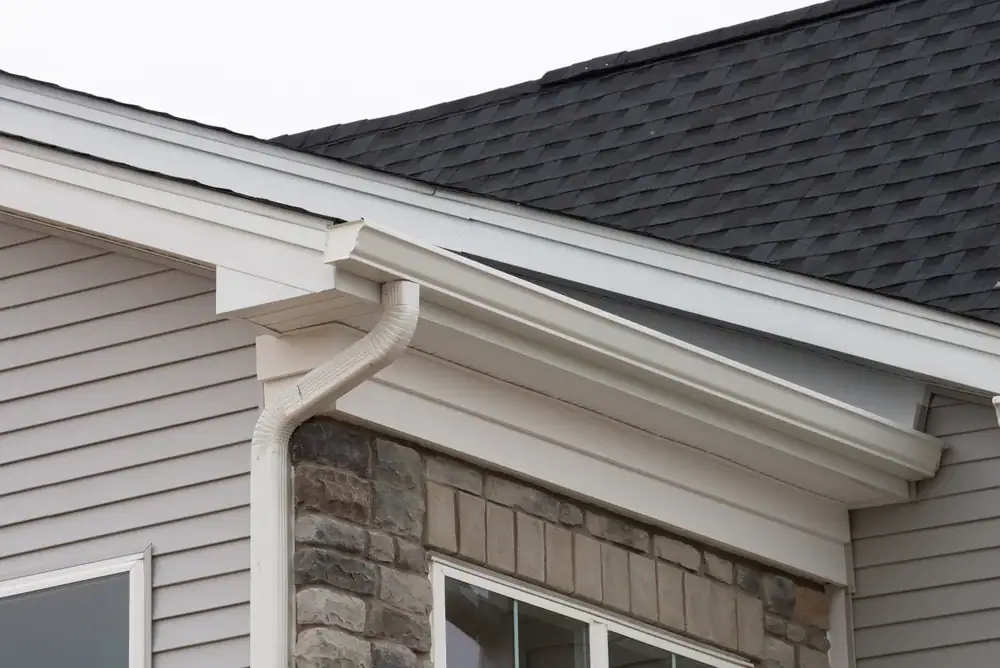
We start with an inspection of your current system. We’re looking at how water flows off your roof, where it’s pooling, what’s failing, and whether your downspouts are positioned to actually protect your foundation. This isn’t a sales pitch—it’s a diagnostic.
Once we understand what your home needs, we measure your roofline and fabricate seamless aluminum gutters on-site. Custom-made means they fit your home exactly, with minimal connection points and no gaps where leaks start. We use materials built to resist coastal corrosion and handle the kind of rainfall Long Island gets during storm season.
Installation includes removing your old gutters, checking fascia boards for rot or damage, and mounting the new system with proper pitch for drainage. We position downspouts to direct water away from your foundation—not into it. Then we test the system to make sure water flows where it should. You’re not waiting weeks for parts or dealing with sectional gutters that leak at every seam.

Ready to get started?
You’re getting seamless aluminum gutters that typically last 20 to 30 years with basic maintenance. That’s not marketing talk—that’s what properly installed coastal gutters do when they’re built to handle salt air and heavy rainfall. We’re using high-quality Alcoa aluminum that resists corrosion better than cheaper materials.
Most North Sea homes do well with 5-inch gutters, but if you’ve got a larger roof or steep pitch, we’ll recommend 6-inch gutters to handle the volume during nor’easters. We’re not upselling—we’re preventing overflow problems before they start. Your system includes properly positioned downspouts, secure mounting, and a 25-year warranty covering both materials and labor.
North Sea sits in an area where coastal storms test roofing systems harder than inland properties experience. Your gutters face salt-laden moisture year-round, heavy spring rainfall that averages 4-5 inches during peak months, and fall debris from the oaks and maples common in Suffolk County. We account for all of this when we install your system, because gutters that work in Patchogue might not cut it when you’re dealing with waterfront exposure.

Average gutter installation on Long Island runs around $2,200, but your actual cost depends on your home’s size, roofline complexity, and whether you need 5-inch or 6-inch gutters. Seamless gutters cost more upfront than sectional systems, but you’re paying for fewer leak points and longer lifespan.
If your fascia boards are rotted or damaged, that adds to the cost because we need a solid surface to mount the new gutters. Same goes for homes with multiple stories or complicated rooflines that require more labor and materials. We give you upfront pricing after we inspect your property—no surprises, no hidden fees.
The investment makes sense when you consider what foundation damage costs to repair. We’re talking $10,000+ for extensive foundation work, basement waterproofing, and structural fixes. Proper gutters prevent that by directing water away from your home before it becomes a problem.
Seamless aluminum gutters typically last 20 to 30 years in coastal environments when they’re properly installed and maintained. That’s longer than sectional gutters because you don’t have joints that corrode and leak over time. Salt air is tough on metal, but quality aluminum holds up better than steel or cheaper materials.
Your lifespan depends partly on maintenance. Long Island homes need gutter cleaning at least twice a year—spring and fall. If you’ve got a lot of overhanging trees, you’re looking at 3-4 times per year to prevent clogs that trap moisture and accelerate corrosion. Homes that skip maintenance see gutters fail faster because standing water and debris create ideal conditions for rust and rot.
We back our installations with a 25-year warranty covering materials and labor. That’s not just the gutters themselves—it’s the installation quality, the mounting, and the performance. If something fails because of how we installed it, we fix it. You’re not paying twice for the same job.
Most Long Island homes do well with 5-inch gutters, but 6-inch gutters make more sense for larger roofs, steep pitches, or homes that take the brunt of coastal storms. The difference comes down to volume—how much water your roof sheds during heavy rainfall and whether your current system can handle it without overflowing.
North Sea gets 40-50 inches of rainfall annually, and when nor’easters hit, you’re dealing with inches of rain in just a few hours. If your gutters overflow during storms, you either have clogs or undersized gutters. Six-inch gutters move more water faster, which matters when you’re dealing with the kind of downpours that test every part of your drainage system.
We measure your roof’s square footage and pitch during the inspection, then recommend the size that actually handles your home’s water load. It’s not about upselling—it’s about preventing the overflow problems that lead to foundation damage, basement flooding, and landscape erosion.
Gutter guards reduce how often you need to clean your gutters, but they don’t eliminate maintenance entirely. For North Sea homes with a lot of oak and maple trees, guards can cut your cleaning schedule from 3-4 times per year down to once or twice. That’s a real benefit if you’re tired of climbing ladders or paying for frequent cleanings.
The trade-off is upfront cost and the fact that some debris still gets through. Small particles, pine needles, and decomposing leaves can slip past guards and create clogs over time. You’re still inspecting and cleaning—just less often. Guards also need to be installed correctly or they create new problems like ice dams in winter or water overshooting the gutter during heavy rain.
We install gutter guards if you want them, but we’re honest about what they do and don’t do. They’re helpful for reducing maintenance, not eliminating it. If your home has minimal tree coverage, you might not need them at all. If you’re surrounded by trees, guards make sense as part of a system that’s already built to handle debris and coastal weather.
If your gutters are sagging, pulling away from the fascia, or leaking at multiple points, you’re usually looking at replacement rather than repair. Small leaks at one or two joints can be patched, but when you’ve got widespread problems, repairs become a band-aid that doesn’t last.
Coastal homes face accelerated wear from salt air, which corrodes metal components faster than inland properties experience. If your gutters are more than 15-20 years old and showing signs of rust, corrosion, or structural damage, replacement is the cost-effective choice. You’re not just fixing what’s broken—you’re preventing the next round of failures that happen when old systems can’t handle Long Island storms.
We’ll tell you honestly whether repair makes sense or whether you’re throwing money at a system that’s past its useful life. Sometimes a section can be replaced or a downspout repositioned. Other times, the whole system needs to go because the damage is too extensive. We’re not in the business of selling you more than you need, but we’re also not patching problems that will fail again in six months.
Failed gutters during a storm mean water goes wherever it wants—usually straight down your foundation, into window wells, or across walkways where it erodes soil and creates pooling. You’re looking at potential foundation damage, basement flooding, landscape erosion, and in winter, ice buildup that makes walkways dangerous.
The immediate problem is water intrusion. If your basement floods or water seeps through foundation cracks, you’re dealing with cleanup costs, potential mold issues, and structural concerns that compound over time. Small leaks turn into big problems because water finds every weak point in your home’s envelope.
We handle storm damage calls and work with insurance companies when weather causes gutter failure. If your system was damaged by a covered event like high winds or falling branches, your homeowner’s policy might cover replacement. We facilitate the claim process at no charge and help you understand what’s covered. The key is addressing failures quickly before water damage spreads beyond the gutters themselves.
Other Services we provide in North Sea