
Hear From Our Clients
You’re tired of watching water overflow during storms. Tired of calling for fixes that don’t last. Tired of wondering if your foundation is slowly taking damage while you wait for the next repair appointment.
Here’s what changes when you install seamless gutters designed for East Shoreham’s coastal environment. Water goes exactly where it should—away from your foundation, your basement, your landscaping. No more pooling near the house after heavy rain. No more ice dams forming because your old sectional gutters can’t handle the volume.
The system handles 40-50 inches of annual rainfall plus snowmelt without backing up. Salt air doesn’t corrode the aluminum or eat through the hardware. Oak leaves and maple debris flow through instead of creating those sponge-like clogs that trap water and freeze solid in winter.
Your foundation stays dry. Your basement stays dry. And you stop losing entire weekends to gutter maintenance or emergency calls when storms roll through.
Home Team Construction has spent over 10 years working exclusively in Nassau and Suffolk County. We’re licensed, insured, and we live in the same communities we serve.
That matters because Long Island’s coastal environment destroys gutters differently than inland areas. The salt air that reaches miles from the shore during storms. The freeze-thaw cycles that loosen joints on sectional systems. The specific tree species—oaks, maples, beeches—that create debris problems most contractors don’t account for.
We’ve replaced gutters on hundreds of East Shoreham homes. We know which materials hold up and which ones fail within five years. We know how to pitch systems correctly for homes near the water versus further inland. And we know what it costs when you get it wrong—because we’ve seen the foundation repairs, the basement flooding, the landscaping erosion that happens when water isn’t managed properly.
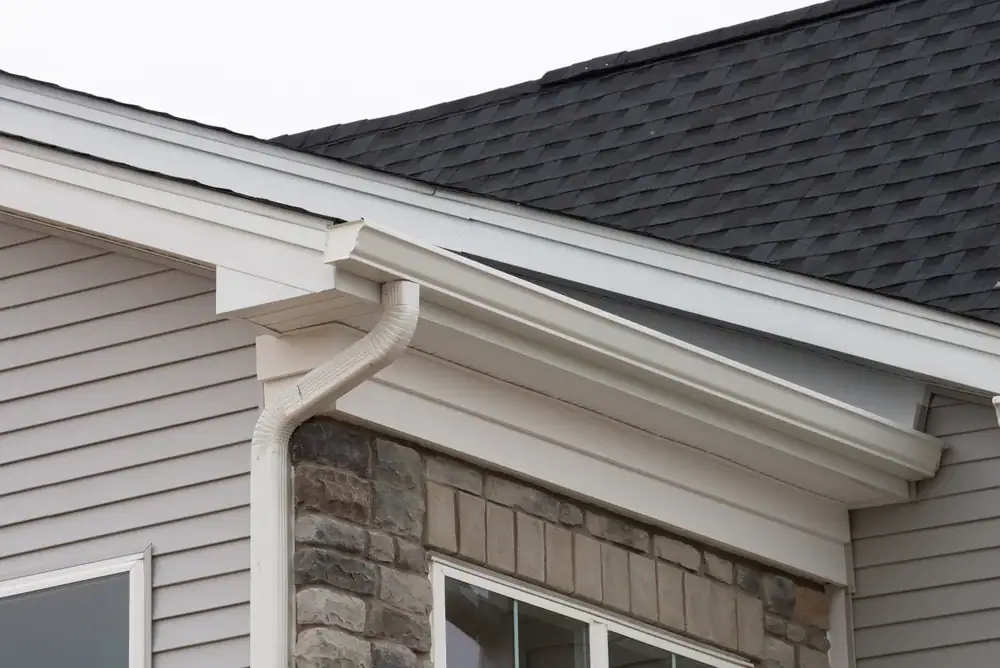
We start with a complete inspection of your current system and your home’s specific drainage needs. That means looking at roof pitch, fascia condition, downspout placement, and where water currently goes during heavy rain. We’re checking for foundation issues, soil erosion patterns, and any existing water damage that needs addressing before new gutters go up.
You get a detailed estimate that breaks down materials, labor, and timeline. We’re using seamless aluminum formed on-site to your exact measurements—no joints except at corners and downspouts. Hardware is stainless steel or corrosion-resistant coated steel. Sealants are marine-grade because this is a coastal environment.
Most installations finish in one day. We remove your old system, repair any fascia damage we find, install the new seamless gutters with proper pitch and secure mounting, and test water flow before we leave. Downspouts get positioned to move water at least six feet from your foundation—further if your lot has drainage challenges.
You’re not waiting weeks for materials to arrive or dealing with multiple service appointments. One crew handles everything from removal to cleanup, and you see exactly how the system performs during the first rain.

Ready to get started?
Seamless aluminum gutters custom-formed to your home’s measurements. No seams means no weak points where leaks develop after a few seasons. The aluminum is thick enough to handle ladder weight during cleaning but light enough that it won’t stress your fascia boards over time.
All mounting hardware is corrosion-resistant—critical in East Shoreham where salt air accelerates rust on standard steel hangers. We’re spacing hangers closer than code minimum because Long Island gets heavy, sustained rainfall that creates more weight load than typical systems handle.
Downspouts are oversized to prevent clogging from the leaf debris common in this area. We position them based on your property’s drainage patterns, not just convenience. If your lot slopes toward the house or you’ve got sandy soil that erodes easily, downspout placement becomes critical for preventing foundation issues.
You’re also getting a system pitched correctly for your specific roof configuration. Too flat and water pools. Too steep and it overshoots during heavy rain. We calculate pitch based on roof square footage and typical rainfall intensity for coastal Suffolk County—not generic standards that don’t account for nor’easters dumping two inches in an hour.
The result is a system rated for 20-25 years in coastal conditions. You’re done with constant repairs and emergency calls when storms hit.

Most residential gutter replacement projects finish in one day—usually six to eight hours depending on home size and fascia condition. We’re forming the seamless aluminum on-site, so there’s no waiting for custom pieces to arrive from a shop.
The timeline extends if we find fascia damage that needs repair before new gutters can mount securely. Rotted fascia boards won’t hold hardware properly, and mounting new gutters to compromised wood just means you’ll have sagging sections within a year. We catch that during the initial inspection so you know upfront if fascia work adds time or cost.
Weather can delay installation—we won’t mount gutters in heavy rain or when temperatures drop below freezing because sealants won’t cure properly. But we schedule around forecasts and communicate clearly if conditions push your installation date.
You’re not dealing with a crew showing up for two hours, disappearing for three days, then coming back to finish. One team handles your entire project start to finish in a single visit, and you see the complete installed system before we leave.
Repairs make sense when you’ve got isolated damage—a section pulled loose during a storm, a single downspout that needs replacing, a small leak at one corner joint. You’re looking at $200-$500 for targeted fixes that solve specific problems.
Full replacement makes financial sense when you’re repairing the same sections repeatedly, when your sectional gutters have multiple joint failures, or when the system is over 15 years old and showing widespread corrosion. At that point you’re spending $300-$800 annually on repairs for a system that’s going to keep failing.
A complete seamless gutter replacement for a typical East Shoreham home runs $2,000-$4,000 depending on home size and linear footage. That’s 20-25 years of protection versus continuing to patch a failing system that’s costing you $500+ per year in repairs plus the risk of water damage to your foundation, basement, or landscaping.
Foundation repairs start at $5,000 and go up fast if water intrusion causes structural settling. Basement waterproofing runs $3,000-$10,000. One major water damage event from failed gutters costs more than a complete replacement system—and you’re still left with gutters that need replacing anyway.
Seamless gutters require specialized equipment to form aluminum coil into continuous sections at your home. That equipment investment and the skill to operate it correctly adds cost compared to sectional gutters that snap together from pre-cut pieces.
But sectional systems have seams every 10 feet—and every seam is a potential leak point. The sealant at those joints breaks down from UV exposure, temperature swings, and the expansion-contraction cycles that happen throughout the year in East Shoreham. You’ll spend the price difference in repairs within 5-7 years, plus deal with the hassle of water damage and constant maintenance.
Seamless systems only have joints at corners and downspout connections. Fewer joints means fewer failure points. The continuous aluminum handles water flow more efficiently because there are no seams to catch debris or create turbulence that causes overflow.
You’re paying more upfront for a system that lasts 20-25 years with minimal maintenance versus a cheaper system that needs attention every few years and typically requires full replacement within 15 years. The math favors seamless when you account for repair costs, water damage risk, and the time you spend dealing with gutter problems.
Fascia damage shows up as soft spots when you press on the boards, visible rot or discoloration, peeling paint that won’t stay adhered, or sections that look warped or pulled away from the roofline. If your current gutters are sagging or pulling loose, that’s often a fascia problem rather than a gutter problem.
We check fascia condition during the initial inspection by looking for water stains, testing board firmness, and examining where current gutters mount. Water damage typically concentrates near downspouts or anywhere gutters have been overflowing regularly. East Shoreham’s humidity and salt air accelerate wood rot once water gets behind the gutter system.
Damaged fascia needs replacement before new gutters go up. Mounting hardware won’t hold in rotted wood, and you’ll end up with sagging gutters that don’t drain properly within months of installation. We handle fascia repair as part of the project so you’re not coordinating between multiple contractors or discovering the problem after new gutters are already mounted.
The cost adds to your project total, but it’s not optional if you want gutters that stay secure and functional for their full lifespan. We give you a clear assessment and price for any fascia work during the estimate so there are no surprises once the project starts.
You’re cleaning them twice a year minimum—once in late spring after oak pollen and seed pods finish dropping, once in late fall after leaves come down. East Shoreham’s tree coverage means debris accumulation is constant, and even seamless gutters need clearing to maintain proper water flow.
Cleaning means removing leaves, twigs, and the decomposed sludge that forms when organic material sits wet in your gutters. You’re also checking that downspouts aren’t clogged and water flows freely when you run a hose through the system. Most homeowners handle this themselves with a ladder and gloves, or hire it out for $150-$250 per cleaning.
Inspect the system after major storms—nor’easters and heavy wind events can shift hangers or damage sections even on new installations. You’re looking for sagging spots, pulled loose downspouts, or anywhere water didn’t drain correctly during the storm. Catching small issues early prevents them from becoming expensive repairs.
The seamless design means you’re not dealing with joint sealant that needs reapplication every few years like sectional systems require. Hardware might need tightening after several seasons, but that’s minor maintenance compared to the constant attention sectional gutters demand. You’re looking at basic cleaning and occasional inspections rather than ongoing repair projects.
Yes—we handle emergency repairs when storm damage creates active water intrusion or immediate risk to your foundation. That means gutters torn completely loose and dumping water against your house, downspouts ripped away that are causing erosion, or major leaks that are flooding your basement during ongoing rain.
Emergency service costs more than scheduled work because we’re pulling crews from other projects and often working in difficult conditions. But when water is actively damaging your home, waiting for a regular appointment isn’t an option. We prioritize calls where water intrusion is causing real-time damage versus situations that can wait for normal scheduling.
Most emergency calls happen after nor’easters or severe thunderstorms that dump heavy rain while winds tear at already-compromised gutter systems. If your gutters were already failing before the storm, that’s when they typically let go completely. We’ll stabilize the immediate problem, then schedule proper repairs or replacement once conditions allow.
The better approach is replacing failing gutters before storm season rather than waiting for emergency situations. A system showing signs of failure—sagging sections, frequent overflows, loose mounting—is telling you it won’t survive the next major weather event. Planned replacement costs less and causes less stress than emergency repairs during a storm.
Other Services we provide in East Shoreham