

Hear From Our Clients
You’re not dealing with water stains on your ceiling anymore. Your fireplace works without that smoky smell backing up into the living room. Your heating bills drop because the flue actually draws air the way it should.
The crown isn’t crumbling. The mortar joints aren’t missing chunks. Your chimney cap keeps rain and animals out instead of rusting through after two winters.
That’s what happens when chimney repair gets done right for Suffolk County’s coastal climate. You stop worrying every time it rains. You stop putting off fires because you’re not sure if it’s safe. Your home stays protected, your family stays warm, and you’re not bleeding money into emergency repairs that could’ve been prevented.
We handle chimney masonry repair, roof work, and exterior projects across Suffolk County. We’re licensed contractors who’ve spent over a decade learning what actually holds up against Long Island weather.
We don’t use subcontractors. Every crew member works directly for us, which means you get the same quality on every job. When we repair your chimney flashing or rebuild deteriorated mortar joints, we’re using materials rated for coastal exposure—not the standard stuff that fails in three years.
St. James homeowners deal with unique challenges. Salt air eats through inferior work. Freeze-thaw cycles crack mortar faster here than inland. We account for that in every repair, which is why our work lasts.
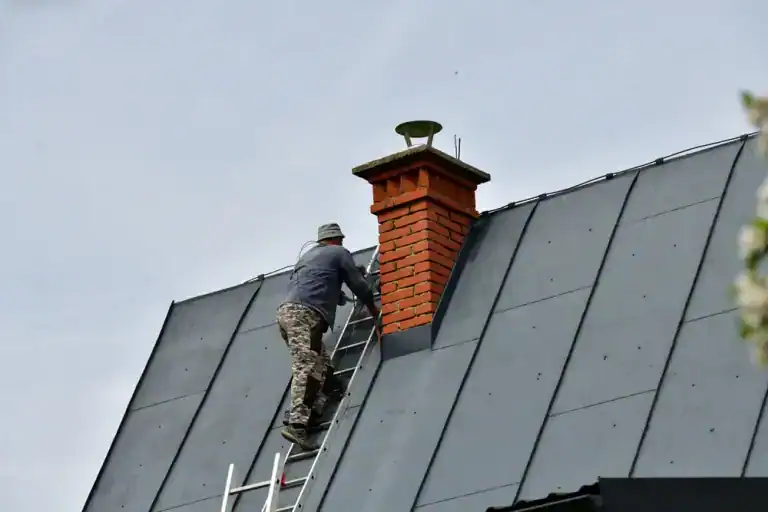
You call or contact us. We schedule an inspection where we actually climb up and look at your chimney—not just guess from the ground. We check the crown, the mortar joints, the flashing, the cap, and the flue. We look for cracks, missing mortar, rust, and water damage.
Then we tell you exactly what’s wrong and what it’ll cost to fix. No vague estimates. If your chimney needs full tuckpointing, we explain why. If it’s just a crown repair, we don’t upsell you on work you don’t need.
Once you approve the work, we schedule it fast. For emergency chimney leak repair, we can often start same-day. We remove deteriorated mortar, replace it with weather-resistant material, seal the crown, install a marine-grade cap if needed, and repair flashing so water can’t get in. When we’re done, we clean up completely. You get a chimney that works and lasts.
Ready to get started?
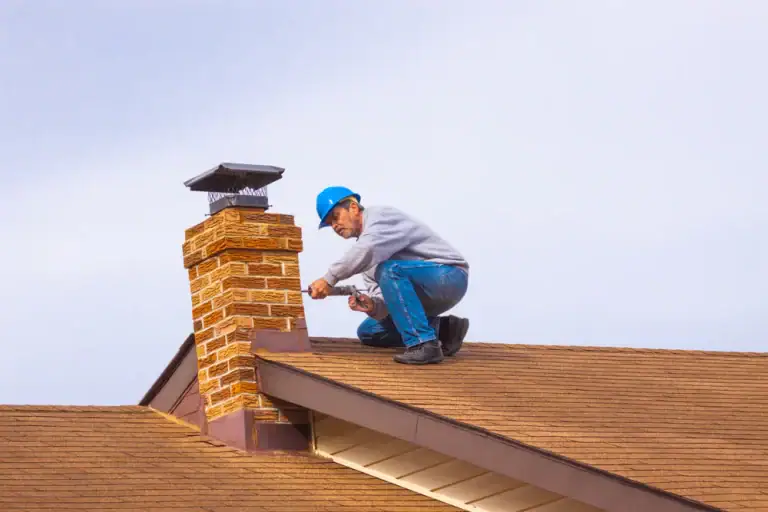
We handle chimney crown repair when the concrete cap at the top starts cracking and letting water seep into the masonry. We do full tuckpointing to remove deteriorated mortar and replace it with new material that can handle St. James winters. We fix chimney flashing repair where the metal seal between your roof and chimney fails—one of the most common leak sources on Long Island.
Your chimney cap gets replaced with a stainless steel or copper version that won’t rust out in coastal air. We repair or rebuild damaged brick and stone. We waterproof the exterior masonry to slow down moisture absorption. If your flue liner is cracked, we address that too, because a damaged flue lets carbon monoxide into your home.
Every repair accounts for Suffolk County’s climate. We don’t use materials that work fine in Arizona but fail here after one winter. The mortar mix, the sealants, the caps—everything is chosen because it holds up against salt air, humidity, and freeze-thaw cycles. That’s the difference between a repair that lasts two years and one that lasts twenty.
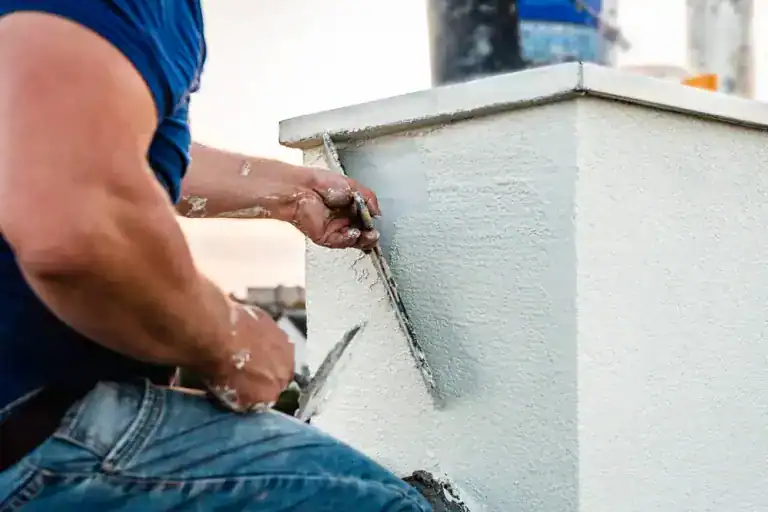
Most chimney repairs in St. James run between $500 and $3,000 depending on what’s damaged. A simple crown crack repair might cost $500 to $800. Full chimney tuckpointing usually runs $2,000 to $4,000. Complete flashing replacement costs $800 to $1,500.
Suffolk County pricing runs higher than national averages because of stricter building codes and higher labor costs. But here’s what matters more than the initial price: how long the repair lasts. Cheap repairs using standard materials fail fast in coastal conditions. You’ll pay again in two years.
We give you an exact price after inspecting your chimney. No vague ranges. No surprise charges. You’ll know what’s wrong, why it needs fixing, and what it costs before we start any work.
Salt air is the biggest factor. You’re close enough to the coast that salt particles in the air constantly hit your chimney. Salt accelerates mortar deterioration and rusts metal components like caps and flashing. Chimneys here fail faster than the same chimney would inland.
Freeze-thaw cycles make it worse. Water gets into small cracks in mortar joints, freezes overnight, expands, and makes the crack bigger. This happens dozens of times each winter. Within a few seasons, small cracks become missing chunks of mortar.
Humidity stays high year-round on Long Island. Your masonry absorbs moisture constantly, which keeps the freeze-thaw damage cycle going and promotes faster deterioration. That’s why chimney maintenance matters more here than in drier climates.
White staining on the brick means water is getting in and pulling salts out of the masonry. Missing or crumbling mortar between bricks is a clear sign. Rust on your chimney cap or a cap that’s falling apart means it’s not protecting your flue anymore.
Water stains on your ceiling near the chimney or in the attic mean the flashing failed or the crown cracked. A smoky smell when you use your fireplace could mean creosote buildup or a blocked flue. Pieces of brick or mortar in your fireplace mean your chimney is literally falling apart from the inside.
If you see any of these signs, get an inspection. The longer you wait, the more expensive the repair becomes. A $500 crown crack becomes a $3,000 water damage problem after one winter. Missing mortar that could be spot-repaired for $600 turns into $4,000 full tuckpointing after a few years.
Sealing over damaged masonry doesn’t fix the underlying problem. If your mortar joints are already deteriorated, waterproofing just traps moisture inside the masonry. That makes freeze-thaw damage worse and accelerates deterioration.
Waterproofing works as a preventive measure after repairs are complete. Once we’ve replaced damaged mortar, fixed the crown, and ensured the structure is sound, then applying a breathable waterproof sealer helps protect your investment. But it’s not a substitute for actual repairs.
Think of it like painting over rotted wood. It might look better for a month, but the rot keeps spreading underneath. Your chimney needs structural repairs first—replacing deteriorated mortar, fixing cracks, rebuilding damaged sections. Then waterproofing extends the life of those repairs.
Most chimney repairs take one to three days depending on the scope of work. A straightforward crown repair or flashing replacement usually takes one day. Full tuckpointing on a two-story chimney typically takes two to three days because we need to remove old mortar, let new mortar cure properly, and complete the work in stages.
Weather affects the timeline. We can’t apply mortar or sealants in freezing temperatures or heavy rain because they won’t cure correctly. That’s why we recommend scheduling chimney repairs in late spring through early fall when weather is predictable.
Emergency repairs happen faster. If you have an active leak during a storm, we can do temporary weatherproofing same-day to stop immediate damage, then schedule the permanent repair when conditions allow. The key is calling as soon as you notice a problem instead of waiting until it gets worse.
Yes. Storm damage doesn’t wait for business hours. If your chimney is actively leaking during a nor’easter or you have visible structural damage after high winds, we respond same-day to secure your home and stop immediate water intrusion.
Emergency service means we tarp or temporarily seal the damaged area to prevent further water damage to your home’s interior. Then we schedule the permanent repair as soon as weather permits proper materials application. You’re not left with water pouring into your home while waiting weeks for an appointment.
Call us directly when you discover chimney damage. The faster we can assess and temporarily secure the problem, the less secondary damage you’ll deal with. Water damage spreads quickly once it gets inside your walls or attic, so immediate response actually saves you money on total repairs.
Other Services we provide in St. James