Cedar Shake Roof Rebuild in East Hampton, NY
A waterfront roof rebuilt for salt air
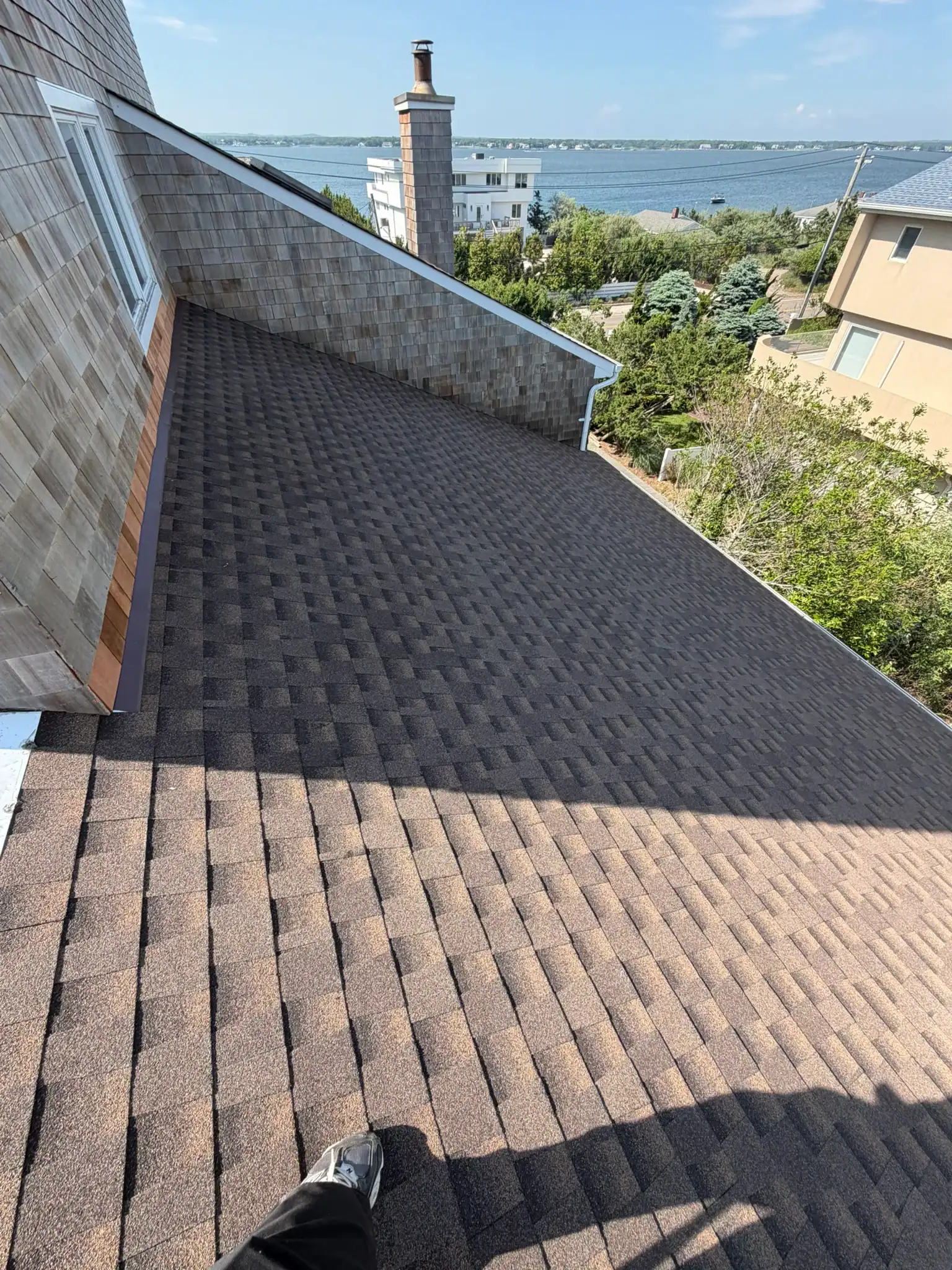
A shingle-sided house above the water, stripped back to its original board sheathing and rebuilt with new plywood, full membrane and shingle rated for coastal wind.
East Hampton, NY
Scope of workA homeowner in East Hampton reached out to Home Team Construction after noticing curled, split cedar shakes and signs of interior attic moisture following a string of humid summers and harsh coastal winter storms. The existing natural cedar roof had aged past its serviceable lifespan, losing its ability to shed driving rains rolling off the Atlantic.
The primary goals included:
- Stripping the aged shake roof down to the original board decking to assess hidden rafter conditions.
- Addressing poor attic ventilation that was trapping humidity and accelerating wood rot from beneath.
- Installing premium, weather-resilient cedar shakes tailored to coastal South Fork microclimates.
- Upgrading flashing along dormers, valleys, and wall tie-ins to deliver lasting storm defense.
Our team evaluated the roof pitch, calculated attic airflow requirements, and created a complete rebuild strategy honoring traditional Hamptons architecture while ensuring modern moisture defense.
- Property
- Cedar-shake sided, waterfront
- Deck
- Original boards, fully re-sheathed
- Exposure
- Direct coastal wind and salt air
- On site
- Six working days
What we found
Diagnosing Trapped Moisture in Cedar Shakes
Natural cedar demands proper airflow to dry out between rainfall cycles, especially in the high-humidity coastal climate of East Hampton. Upon stripping test sections, our crew found that the original shakes had been laid over inadequate underlayment on solid board decking with zero ventilation matrix. Trapped salt air and roof moisture had nowhere to escape, causing the underside of the cedar to stay permanently damp. Shakes had curled, cups had formed across sun-exposed southern slopes, and mold had begun spreading along the edges of the skip-sheathing boards beneath. Without stripping down to the framing and building in proper breathability, new wood would have decayed prematurely just like the old layer.
What the tear-off turned up
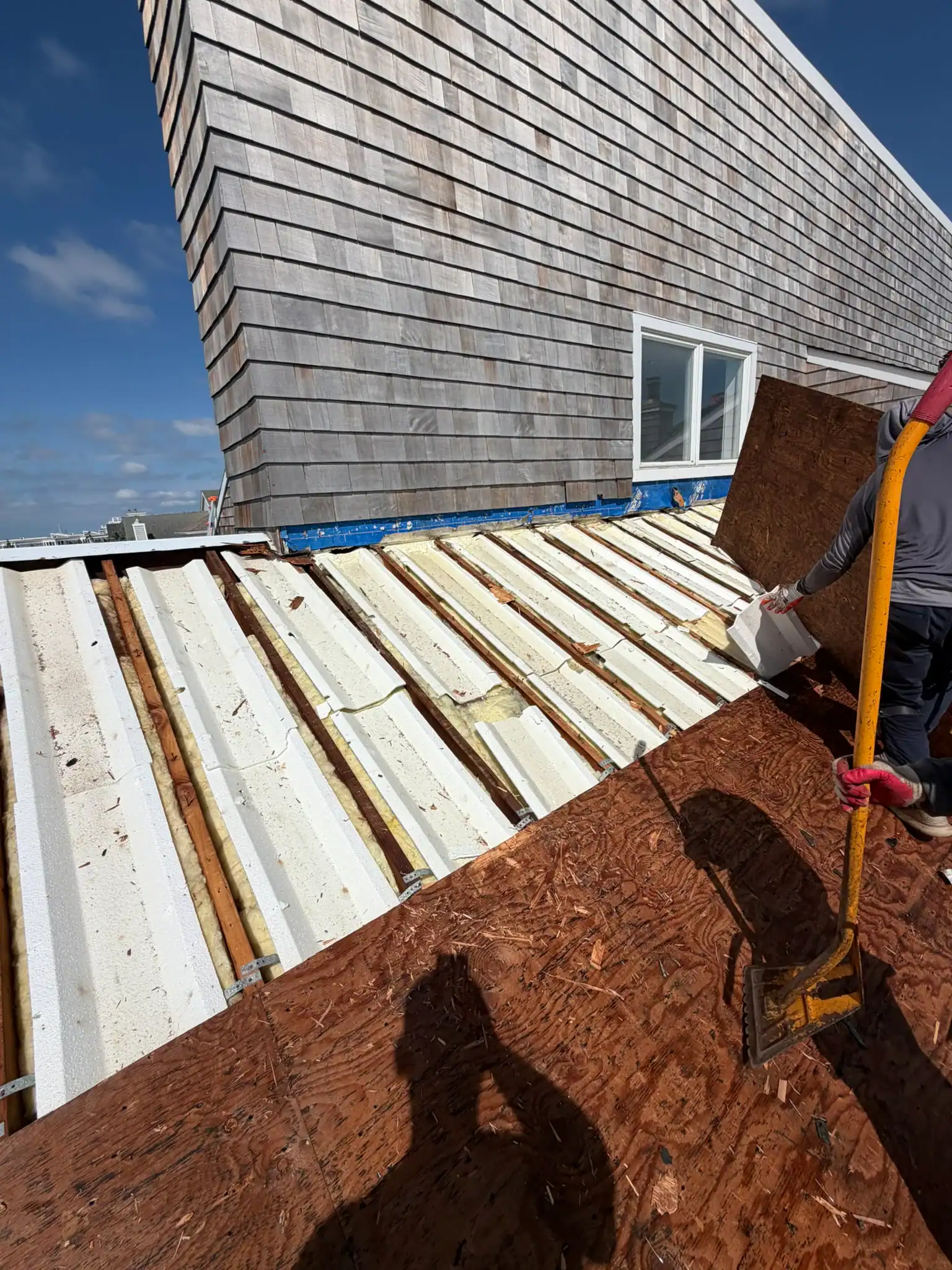
- Rotted skip-sheathing boards hidden beneath old degraded felt paper
- Rusted nail shanks snapped inside the rafter framing tails
- Black mold colonies spreading across unventilated plywood deck seams
- Corroded valley copper flashing eaten through from underneath condensation
We are the first house the wind hits coming off the water. They were the only ones who talked to us about nailing patterns instead of just colours.
How we did it
Step by step
-
Teardown and substrate repair
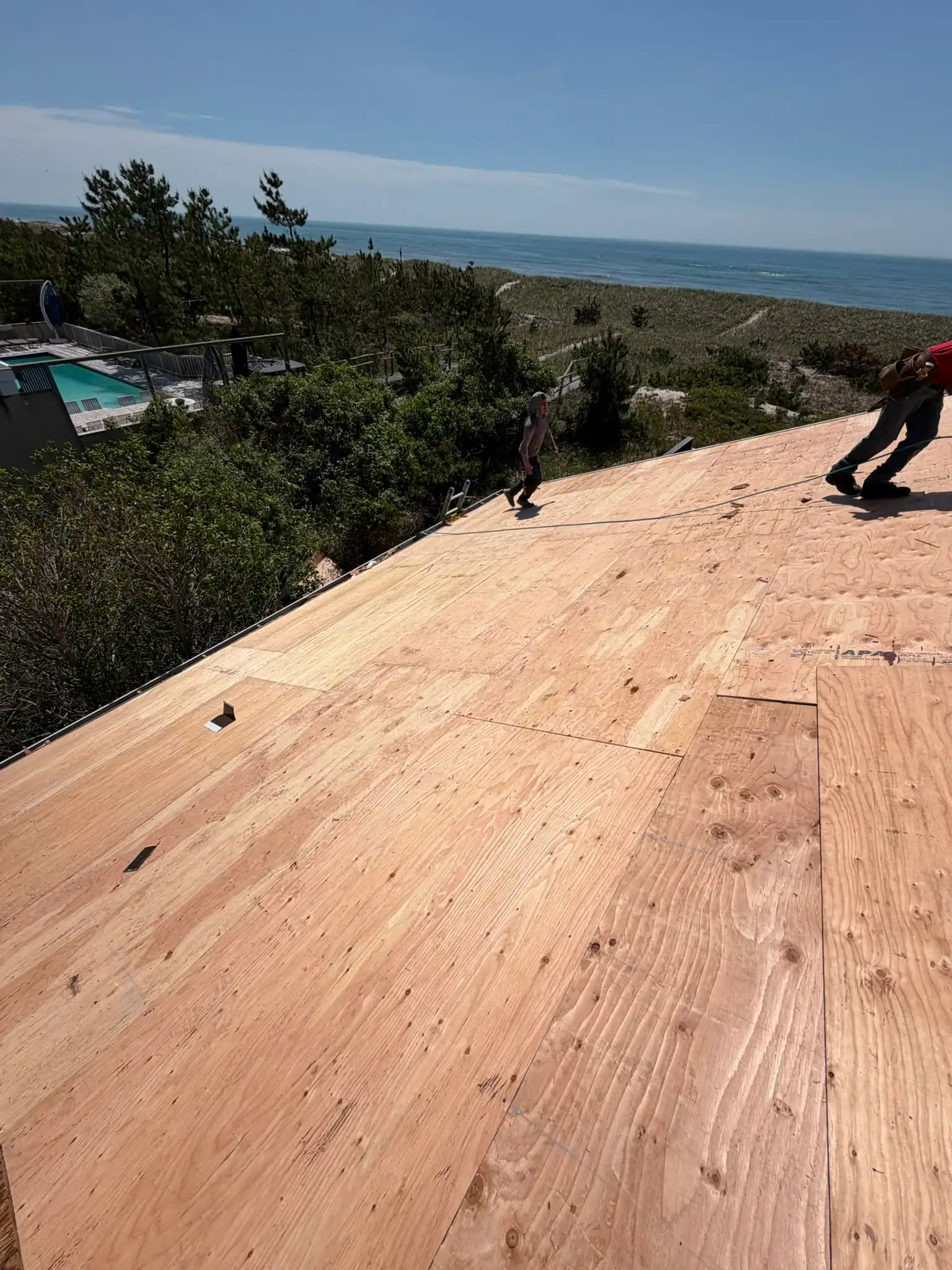
Stripped degraded shakes down to bare decking, pulled old fasteners, and reinforced soft sheathing boards with fresh CDX plywood.
-
Breathable underlayment installation
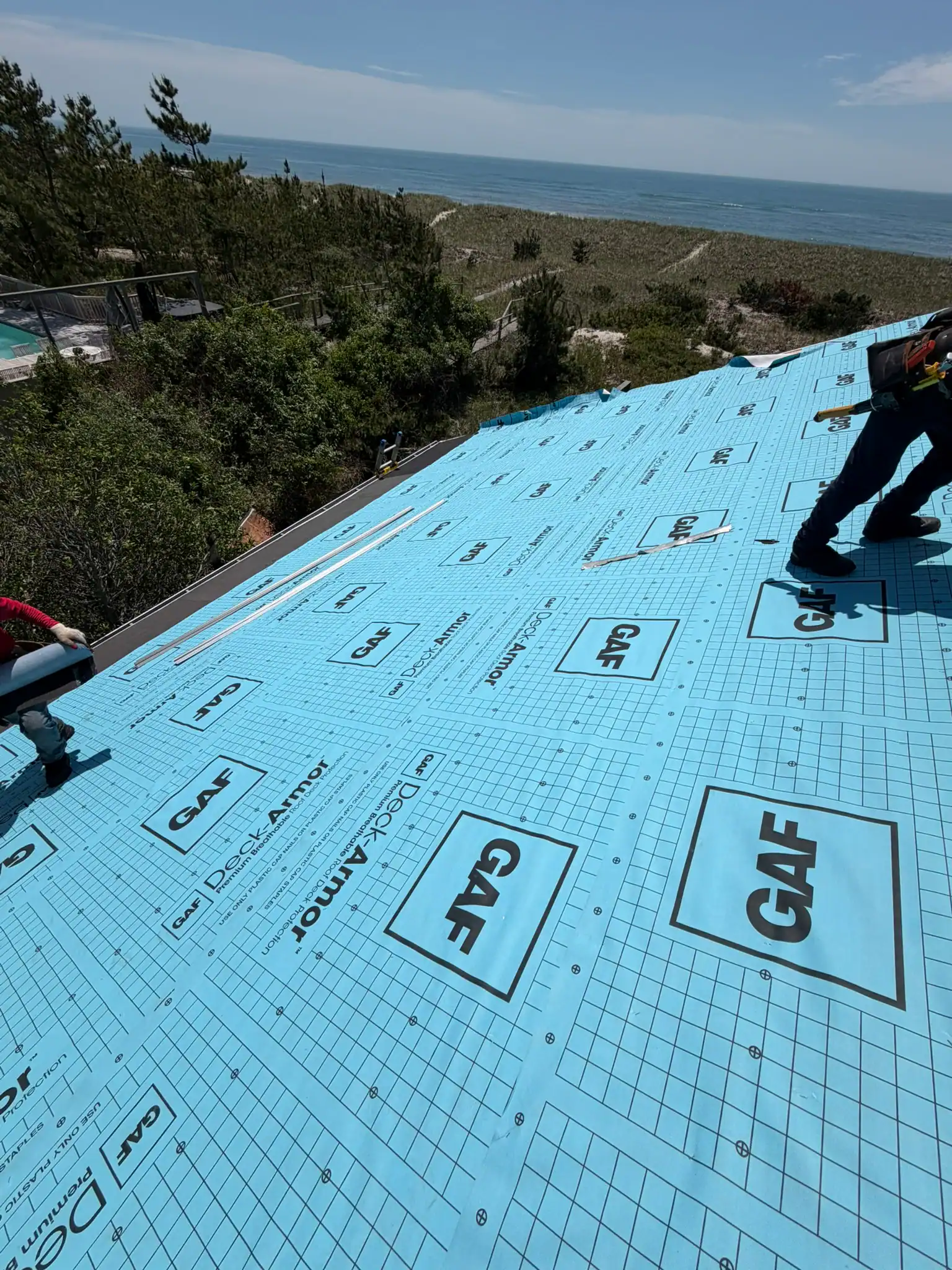
Laid self-adhering leak barriers along eaves and valleys, overlaid with a three-dimensional cedar breather matrix for continuous underside drying.
-
Shake fastening and copper tie-in
Hand-nailed Certi-label cedar shakes using stainless steel ring-shank nails, integrating custom 16-ounce copper valley and wall flashing.
The result
Built For The Exposure It Actually Has
Our team resolved the moisture failures by establishing a fully breathable roofing system paired with top-grade materials and artisan fastening techniques:
- Substrate Restoration: We removed all damaged skip-sheathing boards, secured the original roof rafters, and laid solid exterior plywood where extra structural support was needed.
- Continuous Cedar Breather Matrix: Before laying the wood, we rolled out a textured 3D ventilation mat over high-grade synthetic underlayment. This provides a continuous air gap beneath the shakes, allowing them to dry evenly from both sides and preventing future rot.
- Hand-Selected Western Red Cedar: We installed #1 Grade Certi-Split Western Red Cedar shakes with uniform grain alignment. The natural oils resist decay, while proper spacing between courses accommodates seasonal swelling and shrinking.
- Corrosion-Proof Fasteners: Every shake was secured using marine-grade 304 stainless steel ring-shank nails driven flush without crushing the wood fibers, ensuring maximum resistance to coastal wind lift and salt-air corrosion.
- Custom Copper Transitions: Our crew hand-bent heavy 16-ounce cold-rolled copper across all valleys, dormer step lines, and chimney aprons, creating lifetime waterproof junctions that patina naturally over time.
The finished installation restored the home’s historic coastal character, cured interior moisture issues, and gave the homeowner a resilient, naturally insulated roof built to weather Atlantic storms.
This rebuild is part of our roof replacement work, using the cedar shake roofing this waterfront home called for.
What went on
- Stripping brittle cedar shakes and failed paper underlayment down to bare roof rafters
- Replacing softened board decking with sturdy exterior-grade structural plywood sheets
- Rolling out a breathable ventilation mat to ensure complete airflow under the new cedar
- Hand-nailing grade-one red cedar shakes with marine stainless fasteners to resist salt air
- Fabricating thick copper valley pans and step flashing along dormer sidewalls for clean drainage
Get Your Roof Fixed Right
Let’s talk about your project. No pressure, just honest answers and a quote you can count on.