Summary
When two contractors show up with different prices for a roof inspection, most homeowners assume they're getting roughly the same thing. They're not. What's included, who's doing it, and whether they actually get on your roof makes a significant difference in what you walk away knowing.
This piece breaks down what a professional roof inspection actually covers, what the cheaper alternative typically skips, and how to verify that whoever you hire meets Suffolk County's local licensing requirements before they set foot on your property.
You got two quotes for a roof inspection. One's $50, one's $200. They both say "roof inspection" — so what exactly are you paying the extra $150 for? It's a fair question, and most contractors won't give you a straight answer. The honest truth is that these two services often have almost nothing in common. One gives you a real picture of your roof's condition. The other gives you someone's opinion from your driveway. For homeowners in Suffolk County dealing with coastal weather, aging housing stock, and real stakes on the line, knowing the difference matters more than you might think.
What a Professional Roof Inspection Actually Includes
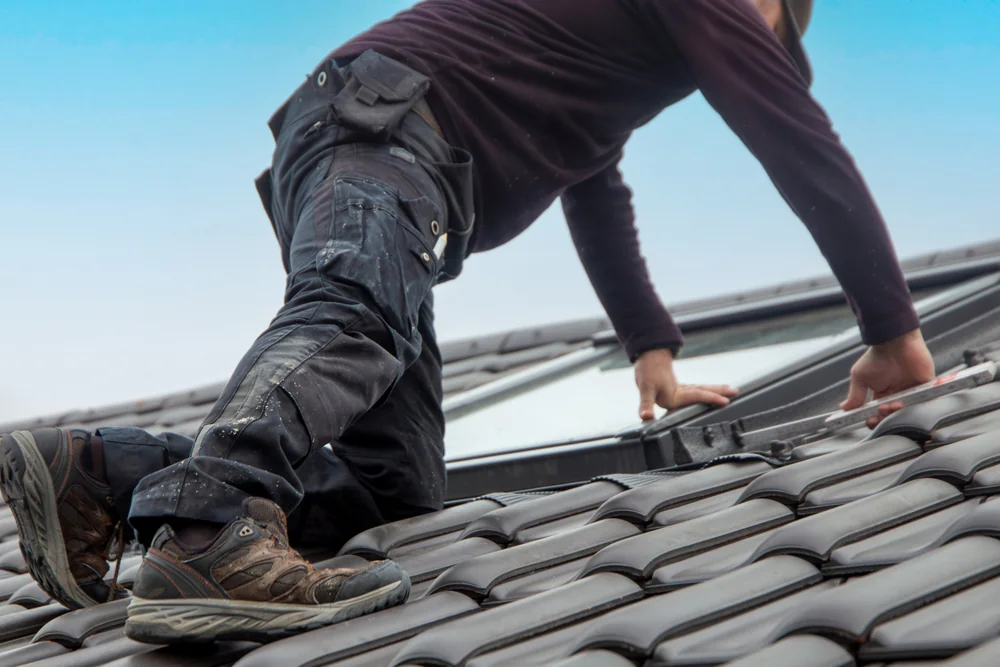
A professional roof inspection isn't just someone walking around your yard and squinting upward. A licensed roofing contractor physically accesses the roof, examines it up close, and checks the attic from the inside. What we're looking for — and what we're trained to find — is a long list of things that are completely invisible from ground level.
Flashing is a good example. The metal strips around your chimney, skylights, pipe boots, and valleys are the most common source of roof leaks. They can be separating, corroding, or improperly sealed in ways you'd never notice from below. A proper inspection catches that. A quick visual from the driveway does not.
What Does a Roof Inspector Actually Check?
A thorough roof inspection covers the full system — not just the shingles you can see from the street. That means a physical examination of shingle condition across every roof plane, checking for granule loss, curling, cracking, and blistering. It means evaluating every piece of flashing: chimney flashing, dormer flashing, valley flashing, pipe boot flashing, and skylight seals. It means checking gutters and downspouts for proper slope, attachment, and signs of water overflow damage.
It also means going into your attic. That's where moisture problems often show up first — long before you see a stain on your ceiling. We check insulation condition, look for signs of water intrusion along the decking, and evaluate whether your ventilation system is actually moving air the way it should. Inadequate attic ventilation is one of the most overlooked contributors to premature roof failure, and it's something a drive-by inspection will never catch.
At the end of it, you should receive a written report with photos documenting what was found, where, and what it means. That report protects you when dealing with insurance adjusters, gives you a baseline for future inspections, and removes any ambiguity about what the inspector actually saw. If someone is offering you an inspection without a written deliverable, you're not really getting an inspection — you're getting a verbal opinion.
A comprehensive roof inspection that includes attic access and moisture detection typically runs between $250 and $400. A $200 inspection from a licensed contractor with full roof access, attic inspection, and a photo report is squarely in line with what this service actually costs to do right.
What the $50 Inspection Usually Skips
The $50 inspection — or the "free inspection" many contractors advertise — typically involves a contractor walking around your property, maybe climbing up briefly, and giving you their read on the situation. There's no attic check. There's no written report. There's often no physical examination of flashing, ventilation, or the roof deck beneath the shingles. And if it's a free inspection offered by a contractor who also does repairs, there's a built-in incentive to find something that needs fixing.
That last point is worth sitting with. A free inspection from a roofing company is a sales call with a ladder. That doesn't mean the contractor is dishonest — it just means the inspection isn't neutral. You're getting their assessment filtered through the lens of someone who profits from finding problems. A paid inspection from a licensed professional who documents their findings in writing is a fundamentally different product.
There's also the question of what happens when something is found. A contractor who isn't licensed to pull permits in Suffolk County can tell you that you have a problem, but they can't legally fix it through the proper channels. Major roofing repairs in our area require permits, and permit fees typically run $150 to $500. Only licensed contractors can pull those permits. If you hire someone who cuts that corner, you're left with unpermitted work that can void your insurance claim, create problems when you sell the house, and leave you holding liability you didn't sign up for.
The math on this isn't complicated. A $200 inspection that catches a failing flashing detail saves you from a potential $5,000 repair chain — water intrusion into the attic, saturated insulation, mold remediation, damaged drywall. Skipping the proper inspection to save $150 is one of the more expensive decisions a Suffolk County homeowner can make.
Roof Inspection Cost Factors in Suffolk County, NY
What you pay for a roof inspection in Suffolk County depends on a few things: the size and pitch of your roof, whether the inspector uses thermal imaging technology, and whether an attic inspection is included. Standard physical inspections for a typical Long Island single-family home fall in the $150 to $300 range. Comprehensive inspections that add infrared moisture detection run higher — often $400 to $600 — and are worth considering for older homes or after significant storm damage.
Geography matters here too. Suffolk County's coastal environment creates specific problems that inspectors need to know how to look for. Salt air accelerates corrosion on metal flashing and fasteners in ways that aren't obvious until the seal fails. Nor'easters and freeze-thaw cycles cause ice dams along roof eaves that force water under shingles. These aren't generic roofing problems — they're Long Island problems, and they require someone who has actually worked on Suffolk County roofs to assess them properly.
How Suffolk County's Weather Changes What Inspectors Look For
A roof inspector working in Brookhaven or Bay Shore is dealing with a completely different set of risk factors than one working inland. The Atlantic Ocean and Long Island Sound create a coastal humidity environment that accelerates granule loss on asphalt shingles and promotes moisture intrusion in ways that standard inspection guides don't fully account for. Salt air doesn't just affect the shingles — it works on the fasteners, the flashing, and the gutters simultaneously.
Nor'easters are the biggest driver of emergency inspection demand across Suffolk County. After a storm rolls through Patchogue, Mastic, or Huntington with 60-plus mph gusts, the damage isn't always obvious from the street. Lifted shingles can re-seat themselves and look fine while the underlayment underneath is compromised. Flashing that took a hit may still be in place but no longer sealed. You won't know until water finds its way in — and by then, the damage has already spread.
Ice dams are another Suffolk County-specific concern that gets underestimated. During January and February freeze-thaw cycles, ice builds up along roof eaves and forces water backward under the shingles. The damage this causes often doesn't show up as an interior leak until spring, by which point it may have been working on your decking and insulation for weeks. An inspector who knows what to look for in late winter or early spring — specifically the telltale signs of ice dam intrusion along the eave line and in the attic — can catch this before it becomes a major repair.
Thermal imaging is particularly valuable in this environment. Infrared inspections can detect trapped moisture and wet insulation that are completely invisible to the naked eye, identifying hidden leaks before they cause visible damage. For a south shore home that's been through multiple coastal storm seasons, that level of detection is worth the additional cost.
How to Verify a Roofing Contractor's Credentials in Suffolk County Before You Hire
New York State does not issue a statewide roofing contractor license. That surprises a lot of homeowners. Licensing authority falls to local jurisdictions, which means you need to verify Suffolk County-specific credentials — not just take a contractor's word that they're "licensed and insured." Anyone can say that. Fewer can back it up with documentation.
Before you allow anyone on your roof, ask for actual insurance certificates — not a verbal confirmation, the physical documents. You want to see general liability insurance, which covers damage to your property during the work, and workers' compensation insurance, which covers injuries to crew members on your property. Without workers' comp, you can be held liable for an injury that happens on your own roof. That's a real risk that Suffolk County homeowners have faced.
Ask for their license number and verify it with the relevant local municipality. Ask whether they pull permits for structural work and whether they're authorized to do so in your specific town. In Suffolk County, the permitting authority varies by jurisdiction — what applies in Islip may differ from Smithtown or Babylon — so a contractor who's permitted in one area isn't automatically cleared to work in another.
We've been doing this work in Suffolk County for over ten years. Every person on our crew is a direct employee — not a subcontractor sourced from a network we don't control. We carry full general liability and workers' compensation insurance, and we can provide actual certificates before any work begins. We pull permits where required, we document everything with photos and video, and we give you a written report of what we found. When you call us, you're talking to the same team that will show up at your house — and the same team that will be accountable for the work afterward.
Which Roof Inspection Is Right for Your Suffolk County Home?
The difference between a $50 inspection and a $200 one isn't really about price — it's about what you actually know when it's done. One gives you a real, documented picture of your roof's condition. The other gives you a starting point for a sales conversation.
For a Suffolk County home that's been through coastal storms, salt air, and Long Island winters, a thorough professional inspection isn't an optional upgrade. It's the only version that actually tells you what you need to know. The cost of getting it right is small. The cost of getting it wrong — and finding out six months later when the ceiling stains appear — is not.
If you're ready to get a clear, honest assessment of your roof's condition from a team that knows Suffolk County's specific conditions inside and out, reach out to us. We'll tell you exactly what we find — and exactly what it means.
Article details