Home Team Construction's Guides
Your deck is showing wear, but does it need repair or full replacement? Discover how to make the right call for your Suffolk County home.
Share:
Summary:
Repair is the right call when damage is localized and your deck’s structure remains solid. If you’re dealing with a few warped boards, some loose fasteners, or surface-level issues while the frame underneath stays strong, targeted fixes can add years of safe use without the expense of starting over.
The key is catching problems early. A deck that’s 10-15 years old with isolated damage responds well to repair. The support posts feel firm, the joists aren’t sagging, and most boards are still in decent shape.
Professional deck repair in Suffolk County typically costs between $1,000 and $5,000 depending on scope. That’s a fraction of replacement costs, and it stops small problems from becoming expensive structural failures.
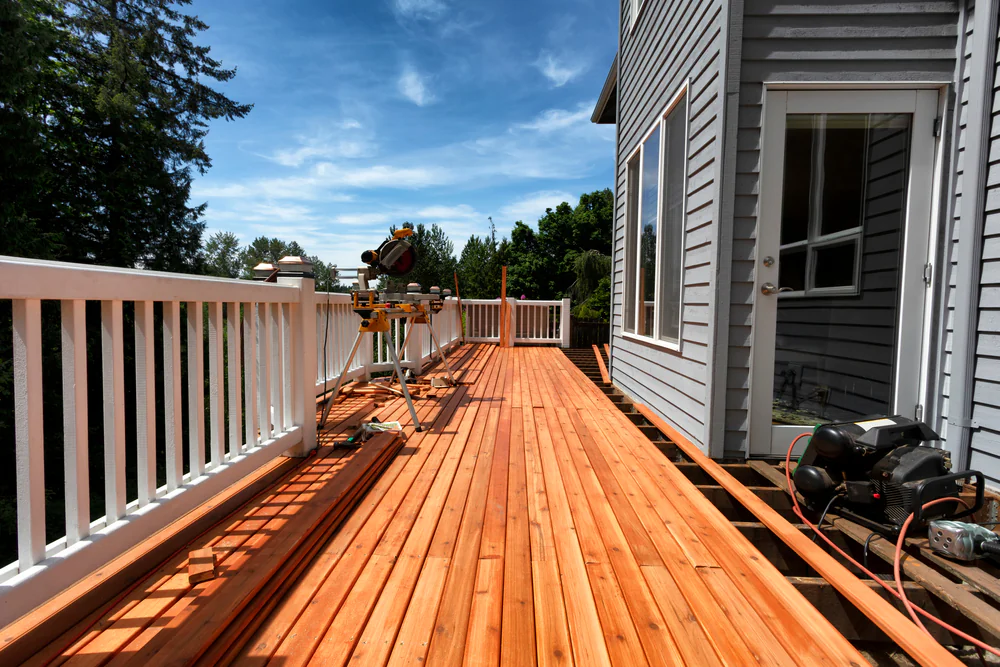
Not every damaged deck needs to be torn down and rebuilt. Sometimes the fix is simpler than you think.
Your deck is probably a good candidate for repair if the structural frame—the posts, beams, and joists that support everything—remains solid and free from rot. When you inspect underneath, the wood should feel firm, not soft or spongy. If the foundation is sound, you can often replace surface boards and restore safety without touching the structure.
Look at how much of the deck shows damage. If less than 25% of your boards need replacement and the problems are concentrated in specific areas rather than spread throughout, repair makes financial sense. Maybe water from a gutter drips onto one section and caused localized rot. Maybe foot traffic wore down boards near the stairs. These isolated issues don’t require rebuilding everything.
Age matters too. A deck that’s only 5-10 years old with minor problems hasn’t reached the end of its useful life. The damage you’re seeing might be from a specific cause—a planter that sat in one spot too long, a section that doesn’t get enough airflow, or fasteners that worked loose over time. Addressing these specific issues extends the deck’s life significantly.
Cosmetic problems like faded stain, minor surface mold, or small cracks don’t automatically mean replacement. Power washing, refinishing, and sealing can refresh appearance without major construction. If the deck still feels structurally sound when you walk on it—no sagging, no wobbling, no areas that feel unstable—surface restoration might be all you need.
Budget and timing play a role too. If you’re not ready for a major project right now, strategic repairs buy you time. You can fix the immediate safety hazards, then save for a full replacement down the road if needed. Just make sure you’re actually solving problems, not just postponing inevitable failure.
Deck repair costs in Suffolk County typically range from $1,000 to $5,000, though the final number depends on what needs fixing and how much of the deck is affected. Understanding these costs helps you make informed decisions about repair versus replacement.
Minor repairs fall on the lower end. Replacing a few damaged boards, tightening loose railings, or securing fasteners might cost $1,000-$2,000. These are straightforward fixes that don’t require extensive labor or materials. If you caught the problem early—before rot spread or structural elements weakened—you’re looking at the most affordable scenario.
Moderate repairs land in the $2,500-$4,000 range. This includes replacing multiple boards, fixing sections of railing, addressing minor joist damage, or repairing stairs. You’re still working within the existing structure, but the scope is larger. Maybe 10-15 boards need replacement, or a railing section has to be rebuilt. The work takes a few days instead of a few hours.
Structural repairs push costs toward $5,000 and beyond. When support posts need reinforcement, joists require replacement, or foundation work becomes necessary, labor and material costs increase significantly. At this point, you’re approaching the territory where replacement might make more financial sense. If structural repairs cost $8,000-$12,000, and a full replacement runs $15,000-$20,000, the extra investment in a completely new deck starts looking reasonable.
The key is catching problems early. That loose board you ignore today becomes rotted joists tomorrow. The small crack that lets water in becomes widespread decay next season. Suffolk County’s climate—humid summers, harsh winters, coastal salt air—accelerates this deterioration faster than you’d expect.
Materials affect cost too. Replacing pressure-treated lumber costs less than matching exotic hardwood or high-end composite. If your original deck used premium materials, repair costs rise accordingly. Sometimes homeowners choose to upgrade during repairs, switching damaged sections to composite decking for lower future maintenance.
Labor rates in Suffolk County reflect local market conditions and the expertise required. Professional deck contractors charge $50-$100 per hour, with most repair projects taking anywhere from one day for simple fixes to three days for more extensive work. Weather can extend timelines during Long Island’s wet seasons, so plan accordingly.
The most expensive mistake? Paying for repairs that don’t address the root cause. If water drainage is the problem and you only replace rotted boards without fixing the drainage, you’ll be replacing those same boards again in a few years. Professional inspection identifies underlying issues so repairs actually solve problems instead of temporarily masking them.
Want live answers?
Connect with a Home Team Construction expert for fast, friendly support.
Replacement becomes necessary when damage is widespread, structural integrity is compromised, or the cost of repairs approaches the price of rebuilding. This isn’t about upselling—it’s about safety and long-term value.
If your deck is 20+ years old and showing multiple problems in different areas, you’re likely looking at the end of its useful life. Wood decks don’t last forever, even with good maintenance. At some point, the accumulated wear from Long Island’s weather simply overwhelms the structure.
The decision framework professionals use is straightforward: if repairs cost more than 50% of what replacement would cost, replacement usually makes more sense. You get a completely new structure with modern safety standards, better materials, and decades of life ahead instead of patching an aging deck that will need more fixes soon.
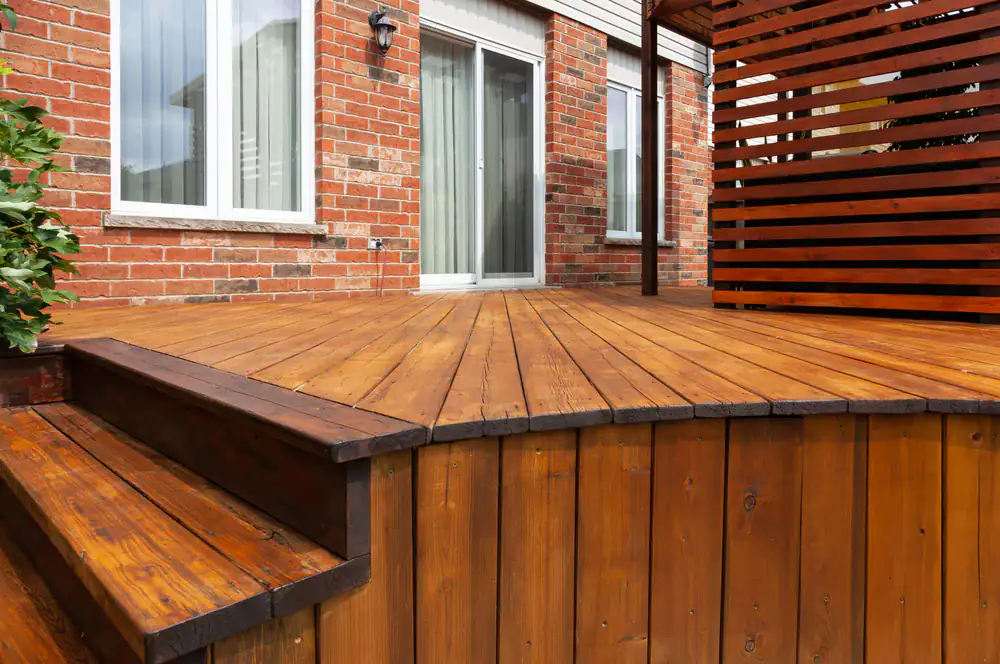
Certain types of damage signal that repair won’t be enough. Knowing these red flags helps you make the right call before safety becomes a serious concern.
Widespread rot is the clearest indicator. When you find soft, spongy wood in multiple locations—not just one isolated spot—the decay has spread through the structure. Rot in support posts is particularly serious because these elements carry the deck’s entire weight. If posts feel soft when you press a screwdriver into them, or if you can sink the tool more than 1/8 inch with little resistance, structural integrity is compromised. At that point, replacing affected boards on the surface doesn’t solve the underlying problem.
Sagging or uneven sections mean the framing has failed. A deck should sit level and feel solid underfoot. If you notice dips, areas that bounce more than they should, or sections that visibly sag, the joists or beams have weakened. This isn’t something you can fix by replacing a few boards. The structure itself needs rebuilding.
Ledger board damage requires immediate attention. The ledger board connects your deck to your house and bears significant load. If you see rot, loose fittings, or separation where the deck meets your home, the entire structure could pull away. Failed flashing around the ledger allows water infiltration, which spreads rot into both the deck and your home’s framing. This type of damage almost always requires replacement rather than repair.
More than 30% of boards needing replacement tips the cost equation toward rebuilding. If you’re replacing a third of the deck surface, you’re already investing significant money in materials and labor. At that scale, the additional cost to replace everything and get a completely new structure becomes more reasonable. You avoid the patchwork appearance of mixing old and new boards, and you eliminate concerns about hidden damage in areas you didn’t replace.
Extensive insect damage, particularly from termites, compromises structural stability in ways that aren’t always visible. Termites work from the inside out, hollowing wood while leaving the surface relatively intact. By the time you notice the damage, they’ve often affected multiple structural elements. Professional termite treatment costs $200-$600, but if the infestation has weakened posts, joists, or beams, treatment alone won’t restore strength.
Building code violations are another replacement trigger. If your deck was built before updated codes were adopted, it might not meet current safety standards for railing height, baluster spacing, or load-bearing capacity. When repairs are extensive enough to require permits, inspectors may flag code issues that force you to bring the entire structure up to current standards—at which point replacement becomes more practical than trying to retrofit an old deck.
Professional contractors use a simple framework to help homeowners make this decision objectively. It’s called the 25% rule, and it takes emotion out of the equation.
Here’s how it works: Get estimates for both repair and full replacement. If repair costs less than 25% of what replacement would cost, and your deck’s structure is sound, repair is almost always the right choice. You’re spending a fraction of replacement costs to add years of safe use. The math is straightforward.
If repair costs fall between 25% and 50% of replacement costs, evaluate more carefully. Consider the deck’s age and overall condition. A 12-year-old deck in this range might warrant repair because you’re extending the life of a structure that still has good years left. A 20-year-old deck in this range probably doesn’t—you’re investing significant money into something that will need more work soon.
If repair costs exceed 50% of replacement costs, replacement is usually the smarter financial decision. At that point, you’re spending most of what a new deck would cost anyway. For slightly more investment, you get a completely new structure with modern materials, updated safety features, and decades of life instead of a few more years from an aging deck.
This framework assumes the inspection is thorough and honest. That’s why working with contractors who provide detailed assessments matters. You need to know the true extent of damage, not just surface-level problems. Hidden rot in joists, weakened support posts, or ledger board issues change the equation significantly.
Age factors into this decision too. Even if repairs cost less than 25% of replacement, a deck approaching 25 years old might not be worth fixing. Wood decks typically last 15-20 years with proper maintenance. After that, you’re fighting accumulated wear that will keep creating new problems. Spending money on repairs might buy you a year or two, but replacement gives you 20+ years of worry-free use.
Safety concerns override cost calculations. If your deck poses genuine hazards—loose railings, rotting stairs, unstable posts—the priority is making it safe, not saving money. Sometimes that means replacement even when repair costs fall below the 25% threshold. Your family’s safety isn’t negotiable.
Suffolk County’s climate accelerates this decision timeline. Coastal salt air corrodes fasteners faster. Humid summers and wet winters promote rot more aggressively than drier climates. A deck that might last 25 years in Arizona might only last 15-18 years in Long Island. Factor that regional reality into your decision.
The final consideration is your long-term plans. If you’re selling your home within a few years, strategic repairs might make sense to improve appearance and safety without major investment. If you’re staying long-term, replacement offers better value—you’ll enjoy the new deck for years and avoid the hassle of ongoing repairs.
The repair versus replacement decision comes down to three factors: the extent of damage, your deck’s age, and the cost comparison. When damage is localized, the structure is sound, and repairs cost significantly less than replacement, fixing what’s broken makes sense. When damage is widespread, structural elements are compromised, or repair costs approach replacement costs, rebuilding is the smarter investment.
Don’t guess about your deck’s condition. Professional inspection identifies problems you can’t see—rot inside support posts, weakened joists, failed flashing, or code violations that affect safety. That assessment gives you the information you need to make a confident decision.
Suffolk County’s climate means your deck faces tougher conditions than decks in many other areas. The combination of humid summers, harsh winters, and coastal salt air accelerates wear and requires honest evaluation of whether repairs will actually solve problems or just postpone inevitable replacement. We provide thorough inspections and transparent recommendations so you know exactly what your deck needs—no upselling, no surprises, just straight answers that help you protect your family and your investment.
Article details:
Share:
Continue learning: