Failing gutters don't just overflow—they send water straight to your foundation, creating cracks, basement leaks, and damage that costs thousands to fix. Here's what you need to know.
Share:
Summary:
Water doesn’t negotiate with your foundation. It finds every weakness, exploits every gap, and creates problems that cost thousands to fix. That’s exactly what happens when your gutters fail—or when they’ve been failing for longer than you realized. You might see the sagging section above your front door, the overflow during rainstorms, or that persistent damp spot in your basement after every nor’easter. These aren’t minor issues you can put off until spring. They’re warning signs that water is already going where it shouldn’t, and every storm makes it worse. This guide shows you what’s actually happening when gutters fail, when replacement makes more sense than another patch job, and how the right system protects everything you’ve built in Suffolk County.
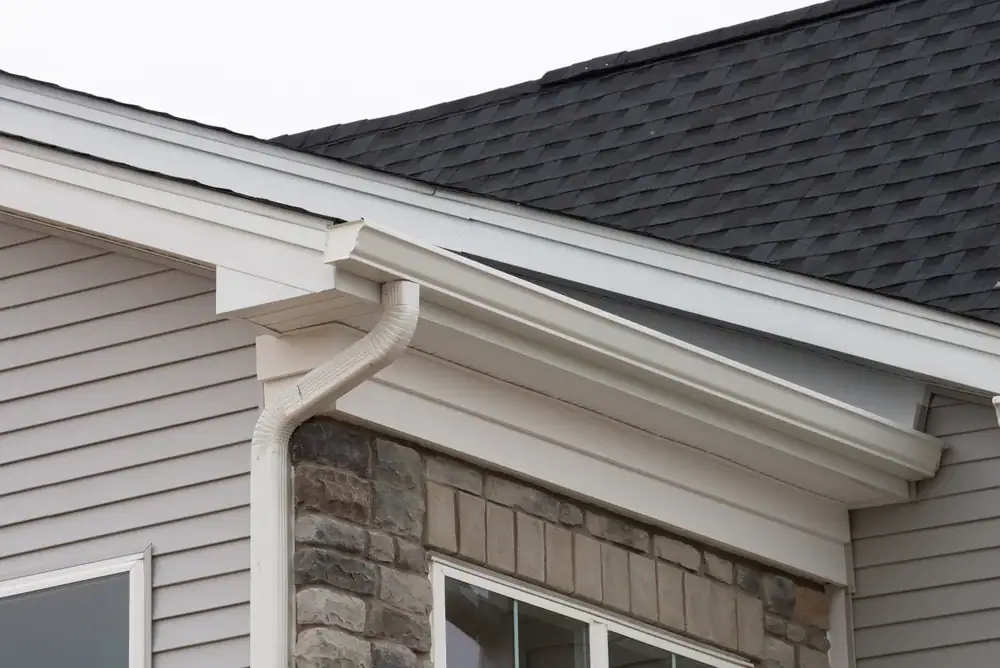
Your gutters do one job. They move water away from your home. When they do that job well, your foundation stays dry, your basement stays protected, and water goes exactly where it’s supposed to go.
When gutters fail, water pours directly down the side of your house instead of being channeled through downspouts and away from your foundation. That water saturates the soil around your home’s base, creating conditions for the kind of damage that shows up as cracks in your foundation, dampness in your basement, or that musty smell that means moisture has been building for months.
In Suffolk County, where nor’easters can dump two to three inches of rain in a few hours, your gutters don’t get a break. They handle intense coastal storms, salt air that accelerates corrosion, and freeze-thaw cycles that turn small problems into major failures. The homes that make it through storm season without water damage aren’t lucky—they have gutter systems that actually work when wind and rain test them.
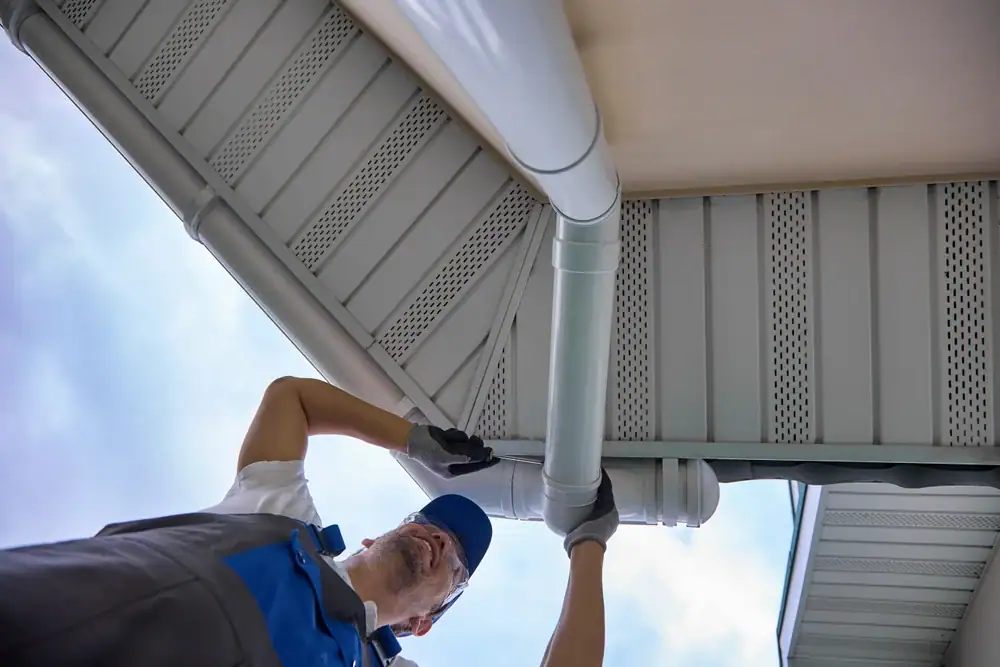
Stand outside after a heavy rain and look at the ground around your foundation. If you see pooling water, trenches in your landscaping, or soil erosion near your home’s base, your gutters aren’t doing their job.
Here’s what’s happening beneath the surface. Water sitting against your foundation creates hydrostatic pressure—the force of water pushing against concrete. Over time, that pressure finds tiny cracks and pores in your foundation walls. Water seeps in, and when temperatures drop during Long Island winters, it freezes and expands, making those cracks larger.
The soil around your foundation matters too. When it gets saturated repeatedly—which happens fast in Suffolk County’s clay-heavy soil—it loses its ability to support your home’s weight properly. This leads to settling, shifting, and the kind of structural movement that creates new cracks or makes existing ones worse. You might notice doors that stick, windows that won’t open smoothly, or cracks appearing in your drywall—all signs that your foundation is dealing with water-related stress.
Foundation repairs aren’t cheap. Homeowners in Brookhaven, Huntington, and across Suffolk County dealing with water damage to their foundation often face bills ranging from five thousand to fifteen thousand dollars or more, depending on the extent of the damage. That’s for underpinning, crack sealing, waterproofing, and fixing the secondary damage that comes with foundation problems.
The frustrating part is that most foundation water damage is completely preventable. Gutters that channel water away from your home—with downspouts directing it at least four to ten feet from your foundation—eliminate the source of the problem before it starts. But they can only do that job when they’re functioning properly. Not sagging, not leaking, and not overflowing every time it rains.
Suffolk County sits right in the path of weather that tests gutter systems in ways most other regions don’t experience. Nor’easters bring sustained wind-driven rain that finds every weak spot in your gutters. Coastal storms deliver sudden downpours—sometimes an inch of rain in twenty minutes—that overwhelm undersized or clogged systems. Salt air from the Atlantic accelerates corrosion on metal components faster than you’d see even thirty miles inland.
Then there’s winter. Ice dams form when snow on your roof melts, flows into gutters, and refreezes at the edges where temperatures are colder. If your gutters are already clogged with debris from fall, that ice has nowhere to go. It builds up, preventing proper drainage and forcing water to back up under your shingles. The result is leaks into your attic, water stains on ceilings, and damage to insulation and roof decking that you won’t discover until spring.
Long Island homeowners deal with freeze-thaw cycles throughout winter—temperatures that swing from below freezing to above freezing repeatedly. Any water sitting in damaged gutters or seeping into small cracks freezes, expands, and creates larger openings. What starts as a hairline crack in your gutter or a small gap at a seam becomes a major leak by March.
The homes that survive Long Island’s weather without constant gutter repairs have systems designed for these conditions. That means proper pitch—about a quarter inch of slope per ten feet—so water doesn’t pool. It means seamless construction that eliminates weak points where sectional gutters connect. It means materials that resist salt air corrosion and sizing appropriate for the volume of water your roof sheds during a nor’easter, not just during a light spring rain.
Most importantly, it means recognizing when your current system has reached the end of its useful life. Patching a twenty-year-old gutter with multiple failing seams might get you through one more season, but it’s not a solution. Eventually, the cost of constant repairs exceeds the cost of replacement, and you’re still dealing with a system that’s one storm away from complete failure.
Want live answers?
Connect with a Home Team Construction expert for fast, friendly support.
Not every gutter problem requires complete replacement. Sometimes a section can be repaired, a seam can be resealed, or fasteners can be replaced. But there’s a point where repairs stop making financial sense, and that’s when replacement becomes the smarter choice.
The challenge is knowing the difference. Homeowners often delay replacement because they’re hoping another repair will solve the problem. It rarely does when the underlying issue is a system that’s simply worn out. Understanding the warning signs that indicate replacement helps you make decisions before water damage forces your hand.

Walk around your home and look at the gap between your gutters and your roofline. If you see sections pulling away from the fascia board, sagging in the middle, or hanging noticeably lower than they should, your gutters are failing.
Sagging happens for a few reasons. The most common is weight—gutters filled with water and debris become too heavy for the fasteners holding them in place. Over time, those fasteners loosen, fail, or pull out of rotted fascia boards. Once gutters start sagging, they can’t maintain the proper pitch needed for drainage. Water pools in the low spots, making the problem worse.
Sometimes the issue is with the fascia board itself. If water has been leaking behind your gutters for months or years, the wood behind them might be rotted. When fascia boards are compromised, there’s nothing solid for gutter fasteners to grip. You can reattach the gutters, but they’ll just pull away again because the underlying structure is damaged.
If your gutters are sagging in multiple locations, if they’ve been reattached before and failed again, or if the fascia shows signs of rot or water staining, replacement is the right call. Trying to repair a system that’s fundamentally compromised just delays the inevitable and gives water more time to cause damage to your siding, soffit, and foundation.
This is especially true in Suffolk County, where winter ice and snow add significant weight to gutter systems. A gutter that sags slightly in summer can collapse completely when loaded with ice in January. By the time you notice the problem during a February thaw, you’re dealing with emergency repairs in the middle of winter instead of planned replacement during better weather.
Small cracks might not seem like major problems during light rain, but they become significant issues during heavy storms. Water seeping through cracks drips onto your fascia boards, siding, and foundation instead of flowing through the system to downspouts. Over time, even minor leaks cause rot, staining, and moisture damage that spreads.
Check your gutters for visible cracks, especially at corners and seams where sectional gutters connect. These are the weakest points in traditional gutter systems, and they’re where failures typically start. If you see gaps opening at seams, water stains below connection points, or cracks running along gutter sections, those are signs the system is wearing out.
Rust is another clear indicator, particularly on older steel or aluminum gutters. Surface rust might be cosmetic initially, but once rust takes hold, it spreads and weakens the material. You’ll see orange or brown staining, flaking metal, or actual holes developing where rust has eaten through. Once rust is extensive across multiple sections—not just one isolated spot—the gutter system is at the end of its lifespan.
Sectional gutters—the type with joints every ten feet—are particularly prone to seam separation. The sealant at these joints breaks down over time, especially when exposed to freeze-thaw cycles and UV radiation. When seams separate, water leaks out instead of flowing to downspouts. You might see it dripping during rain, or you might notice water stains on the ground below the gutters after storms pass.
Here’s the reality about repairs. You can patch a crack or reseal a seam, but if your gutters have multiple problem areas, you’re playing whack-a-mole. Fix one leak, and another develops somewhere else within months. The underlying issue is that the entire system is aging, and piecemeal repairs don’t address that.
Seamless gutter systems eliminate most of these problems. Because they’re fabricated on-site to your home’s exact dimensions, there are no seams except at corners and downspout outlets. That eliminates ninety percent of potential leak points right from the start. If your current sectional gutters are showing widespread seam failure, replacing them with seamless gutters solves the problem permanently instead of temporarily patching it season after season.
Your gutters protect everything you’ve invested in your home. When they work properly, water goes where it’s supposed to, your foundation stays dry, and you sleep through nor’easters without wondering if damage is happening.
When they fail, you’re looking at foundation cracks, basement flooding, fascia rot, and repair bills that far exceed the cost of gutter replacement. The difference between a manageable repair and a financial disaster often comes down to timing—catching problems before the next coastal storm finds those weak spots.
If you’re seeing sagging gutters, water pooling near your foundation, or overflow during rainstorms, those are signs your system needs attention now, not next season. We’ve spent over ten years helping Suffolk County homeowners protect their homes from Long Island’s coastal weather, and we understand what it takes to install gutter systems that handle nor’easters, salt air, and everything else this region throws at them.
Article details:
Share:
Continue learning: