
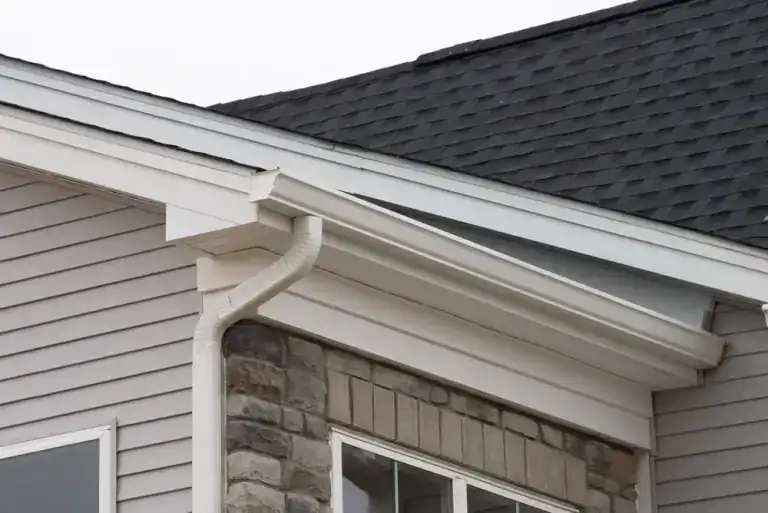
Summary
Most gutter problems don't announce themselves — they quietly get worse through every rainstorm and freeze-thaw cycle until the damage spreads somewhere far more expensive to fix. This post walks through five specific warning signs that mean your gutters need professional attention before nor'easter season closes the window on an easy repair.
If you're a Suffolk County homeowner, this isn't generic maintenance advice. It's a practical look at what Long Island's coastal weather does to gutter systems, and why catching these signs early is the difference between a minor repair and a major bill.
Most homeowners don't think about their gutters until something goes visibly wrong — and by then, the damage has usually already spread somewhere harder to reach and more expensive to fix. In Suffolk County, that window between "minor issue" and "major repair" closes faster than most people expect. Nor'easters start arriving in October, and once the freeze-thaw cycle kicks in, small failures compound quickly. If you've been putting off a gutter inspection, these five signs are your signal to stop waiting. Each one is worth understanding on its own — and together, they tell a clear story about what's at stake.
How Coastal Weather Damages Gutters on Long Island
The tricky part about gutter damage is that most of it isn't visible from the ground. You might notice water staining on your siding, or a soft spot developing along the fascia board, without immediately connecting it back to the gutters. That's how these problems grow — quietly, over multiple seasons, until one heavy storm makes the damage impossible to ignore.
Long Island's weather is particularly hard on exterior systems. Salt air from the Atlantic and Long Island Sound accelerates corrosion on aluminum gutters, hangers, and fasteners faster than inland areas. Add in the freeze-thaw cycles that run through our winters — water expanding in gutter seams, loosening brackets, stressing joints — and you have a recipe for failure that builds up gradually and then seems to happen all at once.
Signs 1 and 2: Gutters Pulling Away From the House and Visible Sagging
When gutters start to pull away from the fascia board or sag visibly along a run, most homeowners assume it's just an age issue — the hangers got loose, the gutter needs to be reattached, end of story. The reality is more complicated, and more important to address before storm season.
If your gutters are sagging, there's roughly a 70% chance that the fascia board behind them has already been compromised. That's what happens when water pools in a low spot, sits against the wood, and slowly works its way in over months or years. The gutter sags because the fascia it's anchored to has softened. Reattaching the gutter without addressing the fascia just means the repair fails again in the next storm.
The pulling-away problem tells a similar story. Modern gutters use hidden hangers that hold the system tight to the fascia. Older spike-and-ferrule mounting — common on homes built in the 1970s through 1990s, which make up a large share of Suffolk County's housing stock — loosens over time, especially when freeze-thaw cycles are working on it every winter. Once those spikes back out, the gutter can't drain properly, water starts pooling at the low points, and the fascia deterioration accelerates.
Catching this early matters because the cost difference is significant. A loose hanger or minor seam repair addressed now is a fraction of what fascia board replacement costs once the rot sets in. If the fascia has been compromised long enough, the damage can extend into the soffit and the roof edge — which is a much larger project than anyone wants to deal with in November.
Signs 3 and 4: Overflowing Gutters During Rain and Water Pooling Near Your Foundation
Here's one that surprises a lot of homeowners: gutters that overflow during heavy rain even after a recent cleaning. If you had your gutters cleaned this past spring and they're still overflowing during storms, the issue isn't debris — it's the gutter system itself. The most common culprits are improper slope, undersized downspouts, or hanger failure that's caused the gutter to shift out of its correct pitch.
Gutters need to slope at a precise angle — about a quarter inch for every ten linear feet — to drain properly toward the downspout. When that slope is off, even a clean gutter holds standing water. That standing water is a problem year-round: in summer it breeds mosquitoes and accelerates corrosion; in winter it freezes, expands, and puts direct pressure on every seam and joint in the system. On Long Island, where we can go above and below freezing multiple times in a single week, that cycle repeats relentlessly through the cold months.
Foundation pooling is the other sign that tends to get dismissed until it becomes undeniable. When gutters overflow or downspouts discharge too close to the house, that water has to go somewhere — and it tends to follow the grade right toward your foundation. In Suffolk County, foundation water damage repairs run $5,000 to $15,000 or more depending on the extent of the problem. That's what homeowners in Brookhaven, Huntington, and Islip are actually dealing with when water intrusion reaches the foundation. A gutter system that's directing water away from your home properly is a direct line of defense against that bill.
It's also worth knowing that insurance companies are paying closer attention to maintenance history when water damage claims come in. If an adjuster determines that neglected gutters contributed to the damage, a claim can be denied. Keeping your gutter system in documented, working order isn't just good home maintenance — it protects your ability to file a claim when you actually need it.
Gutter Repair vs. Replacement: What We Recommend for Suffolk County Homes
This is the question most Suffolk County homeowners are really asking when they call us. Nobody wants to replace a gutter system that could be repaired, but nobody wants to pay for a repair that's just delaying an inevitable replacement either. The honest answer is that it depends on what the inspection actually turns up — and a good inspection looks at more than just the gutters themselves.
What we evaluate is the full picture: the gutter condition, the fascia behind it, the mounting hardware, the slope, the downspout connections, and any signs that water has already found its way somewhere it shouldn't be. Most of the time, homeowners are surprised by how much can be addressed with targeted repairs rather than a full replacement.
Sign 5: Rust Stains, Water Marks, and Peeling Paint on Your Siding or Fascia
The fifth sign is one people often attribute to something else entirely. Rust-colored streaks running down your siding, water marks along the fascia, or paint that's peeling in a line below the gutter — these are the gutter system telling you it's been leaking for a while. Not dramatically, not in a way you'd notice during a storm, but steadily enough to stain and saturate the surfaces below.
This kind of slow leak usually comes from a failed seam, a cracked section of gutter, or a joint that's separated just enough to let water escape during heavy rain. On Long Island homes, the combination of salt air corrosion and repeated freeze-thaw cycles makes these joint failures common, especially on systems that are ten or more years old. The gutter looks fine from a distance, but up close — or from the evidence it leaves on your siding — the failure is obvious.
What makes this sign important is that it's telling you the damage has already started spreading. The staining on your siding is cosmetic, but the moisture that caused it has also been sitting against the fascia board, the soffit, and potentially the roof edge. Addressing the gutter leak stops the source, but a thorough inspection should also check what's been affected downstream.
When we come out for a gutter repair assessment, we look at the full exterior picture. A gutter problem that's been leaking at a seam for two seasons may have also stained the siding and softened the fascia — and knowing that upfront means we can address everything in one visit rather than having you call three separate contractors. For Suffolk County homeowners dealing with aging homes and a demanding coastal climate, that kind of complete assessment is worth more than the repair itself.
What Happens to Gutters During a Long Island Nor'easter
Suffolk County's nor'easter season runs from October through April, and it doesn't ease you in gently. The storms that come through this part of Long Island bring sustained wind-driven rain, heavy snow loads, and the kind of rapid temperature swings that are particularly punishing on exterior systems. In March 2018, a single nor'easter dropped six to twelve and a half inches of snow across Suffolk County. In August 2024, a storm dropped 9.4 inches of rain in 24 hours at Stony Brook — a one-in-a-thousand-year rainfall event — and that was before the traditional storm season even started.
A gutter system that has any of the five signs above going into that kind of weather is not going to hold. The question is only how much damage accumulates before you're able to address it. Ice dams are a direct consequence of gutters that can't drain: when water backs up and freezes at the roof edge, it forces moisture under shingles and into the fascia. The water expands by roughly nine percent when it freezes, which puts direct mechanical pressure on every seam, joint, and hanger in the system. After a winter of that, a gutter that was borderline in September is often a full replacement conversation in March.
The pre-season window — late summer through early October — is when repairs are easiest to schedule, least expensive to complete, and most effective at preventing the cascade. Post-storm repair is always more expensive, harder to get on the calendar when every contractor in Suffolk County is backed up, and happens after the damage has already been done. Getting ahead of it now, before the first nor'easter rolls in off the Atlantic, is simply the better path.
Get Your Gutters Inspected Before Nor'easter Season Hits
Gutter problems don't stay gutter problems for long. Left unaddressed through a Suffolk County winter, a loose hanger or a leaking seam turns into fascia rot, water intrusion, foundation pooling, and repair bills that dwarf what an early fix would have cost. The five signs covered here — sagging, pulling away, overflowing, foundation pooling, and staining — are your early warning system. They're telling you something now, while there's still time to act on it affordably.
The goal of a professional gutter inspection isn't to sell you a replacement you don't need. It's to give you an honest picture of where your system stands before the weather forces the issue. If repair is the right call, that's what we'll tell you. If something more is needed, you'll know exactly why.
Home Team Construction serves homeowners across Suffolk County — from Huntington and Smithtown to Brookhaven, Islip, and Babylon. If your gutters are showing any of these signs, reach out to us before the season closes that window.
Article details