
Summary
Replacing your roof in Suffolk County means understanding more than just material costs. This guide breaks down 2026 pricing for asphalt shingles, metal roofing, and every cost variable that affects your final bill.
You'll learn what drives roof replacement costs in Suffolk County, how to spot hidden expenses before they blow your budget, and what transparent pricing actually looks like. No sales pitch—just honest numbers and practical guidance from contractors who've worked through hundreds of Long Island projects.
You're staring at water stains spreading across your ceiling. Again. Or maybe you just watched your neighbor's shingles fly off during the last nor'easter and realized yours aren't far behind. Either way, you need to know what a roof replacement actually costs in Suffolk County before you start calling contractors. Not the vague "it depends" answer or the suspiciously low bid that triples halfway through the job. Real numbers. Transparent breakdowns. The kind of pricing information that lets you budget accurately and spot the contractors trying to take advantage of you. That's exactly what you're about to get.
What Does Roof Replacement Cost in Suffolk County NY
Roof Replacement in Suffolk County runs between $5,000 and $31,000 for most residential projects in 2026. That's a wide range, and it's wide for a reason—your roof isn't the same as your neighbor's.
A standard 1,500 square foot home with asphalt shingles typically costs $8,000 to $13,500 for complete replacement. Go with metal roofing on that same house and you're looking at $15,000 to $24,000. The difference isn't just material cost. It's labor complexity, disposal fees, permits, and whether your roof is a simple ranch or a multi-level design with valleys and dormers that slow everything down.
Most contractors price by the square—that's 100 square feet of roofing area. Asphalt shingles run $5 to $9 per square foot installed in Suffolk County. Metal roofing costs $10 to $16 per square foot. Those numbers include materials, labor, tear-off, and basic installation, but they don't account for what gets discovered once the old roof comes off.
How Roof Size and Complexity Affect Your Total Cost
Your roof's size determines how much material you need and how many labor hours go into the job. Contractors measure in squares, and a typical Suffolk County home ranges from 15 to 30 squares depending on the footprint and pitch.
Pitch matters more than most homeowners realize. A steep roof means slower work, more safety equipment, and higher labor costs because crews can't move as quickly. That colonial in Brookhaven with a 12/12 pitch takes significantly longer than the ranch in Smithtown with a 4/12 pitch, even if the square footage is identical.
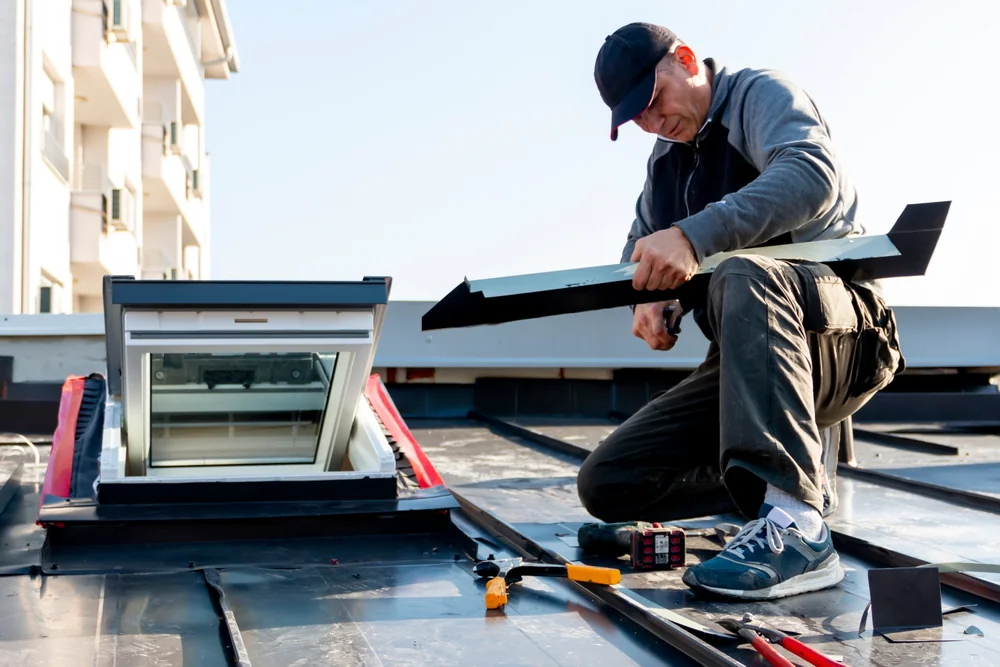
Complexity drives costs up fast. Every valley, hip, dormer, and story adds time and difficulty. A simple ranch with a straightforward gable design costs less to roof than a two-story home with multiple roof planes, even if they're similar square footage. Chimneys, skylights, and vent pipes all require custom flashing work that adds to both material and labor costs.
Accessibility plays a role too. If your roof is easy to access with clear staging areas for materials and dumpsters, labor costs stay reasonable. Tight lots common in places like Patchogue or East Hampton, landscaping that needs protection, or difficult access points mean extra time moving materials and setting up safety equipment. That time gets billed.
The takeaway here is straightforward. Two 2,000 square foot homes can have wildly different roof replacement costs based on pitch, complexity, and access. That's why vague estimates without an actual inspection are useless. Any contractor giving you a firm number without seeing your specific roof is either guessing or planning to hit you with change orders once work starts.
Metal Roof Cost vs Asphalt Shingles in Coastal Conditions
Metal roofing costs more upfront—$10 to $16 per square foot installed in Suffolk County—but the math changes when you factor in lifespan and coastal durability. That 1,500 square foot home runs $15,000 to $24,000 for metal, nearly double the asphalt cost. The difference is that metal roofs last 40 to 70 years in coastal conditions while asphalt needs replacement in 15 to 25 years.
Suffolk County's coastal location is brutal on roofing materials. Salt air from the Atlantic and Long Island Sound, nor'easters with sustained 40 to 60 mph winds, freeze-thaw cycles, and summer heat all accelerate wear. Asphalt shingles that might last 30 years in central New York often fail at 20 years here because the environment is harsher. Metal roofing handles coastal exposure better—it doesn't absorb moisture, resists wind damage, and sheds snow and ice more effectively than asphalt.
Energy efficiency is another factor. Metal roofs reflect solar radiation instead of absorbing it, which can cut cooling costs by 10 to 40 percent during July and August when your AC runs constantly. Asphalt shingles absorb heat, transferring it into your attic and forcing your HVAC system to work harder. Over a 25-year period, those energy savings add up to thousands of dollars.
The decision comes down to budget and timeline. If you're planning to stay in your home long-term, metal roofing delivers better value despite the higher upfront cost. You're paying once instead of twice, and you're getting better storm protection and lower energy bills. If you're working with a tight budget or planning to sell within 10 years, asphalt shingles make more financial sense because you won't be around long enough to see the metal roof's longevity pay off.
Suffolk County has seen 45 hurricanes since 1930, including Sandy in 2012 and Irene in 2011. That constant barrage of severe weather is why we often recommend metal for homes in exposed coastal areas while asphalt works fine for more protected inland locations.
Roof Shingles: Understanding Material Choices and Pricing
Asphalt shingles dominate Suffolk County roofing because they balance cost, performance, and availability better than any other material. Standard architectural shingles run $5 to $9 per square foot installed, putting a complete roof replacement for a 1,500 square foot home between $8,000 and $13,500.
You've got options within the asphalt category. Three-tab shingles are the most basic and cheapest option, but they're also the least durable and offer minimal wind resistance—not ideal for coastal exposure. Architectural shingles cost slightly more but provide better wind ratings, longer warranties, and more attractive dimensional appearance. Designer shingles sit at the top end, offering premium aesthetics and performance but pushing costs closer to $11 per square foot installed.
The shingle quality you choose directly impacts how long your roof lasts in Suffolk County's climate. Cheap three-tab shingles might save you $2,000 upfront, but they'll fail 5 to 7 years sooner than architectural shingles rated for high wind zones. That's not a good trade when you're dealing with nor'easters every winter.
What's Actually Included in Your Roof Shingles Cost
When contractors quote roof shingles cost, you need to know what's included and what isn't. A legitimate estimate breaks down shingles, underlayment, starter strips, ridge cap shingles, nails, and labor as separate line items. Vague lump-sum quotes hide where your money goes and make it impossible to compare bids accurately.
The shingles themselves are only part of the system. Underlayment—the waterproof barrier between your decking and shingles—matters just as much. Synthetic underlayment costs more than traditional felt paper but performs better in Suffolk County's humid, coastal climate. It doesn't tear as easily during installation, provides better water resistance, and lasts longer if your roof gets damaged and sits exposed for a few days.
Ice and water shield is required in valleys and along eaves in New York to prevent ice dam damage. This self-adhering membrane costs more than standard underlayment but it's not optional—it's code. Contractors familiar with Suffolk County factor this into estimates automatically. Contractors from out of the area sometimes miss it, leading to surprise costs when permits get pulled.
Ventilation components like ridge vents and soffit vents are critical for roof longevity but they add to material costs. Proper ventilation prevents moisture buildup in your attic that rots decking and shortens shingle life. Skipping or skimping on ventilation to save $500 upfront will cost you thousands in premature roof failure.
Labor for shingle installation varies based on roof complexity and contractor experience. Suffolk County labor rates run higher than upstate New York because cost of living is higher and demand for skilled roofers is strong. You're looking at $60 to $90 per hour for experienced crews, and most residential roof replacements take 2 to 4 days depending on size and weather.
The bottom line is this. A roof shingles cost estimate should itemize every component and explain what's included. If your contractor can't or won't provide that level of detail, you're dealing with someone who either doesn't understand the work or is deliberately keeping things vague to win the bid with a low number.
New Roof Cost Factors Beyond Just Materials
New roof cost extends well beyond shingles and labor. Tear-off and disposal fees typically add $1,000 to $3,000 to your project. That's the cost of ripping off your old roof, loading it into dumpsters, and hauling it to disposal facilities. If you've got multiple layers of old roofing—common on homes built before modern building codes restricted layering—disposal costs climb because there's simply more material to remove.
Permits in Suffolk County municipalities run $150 to $500 depending on your town and project scope. Brookhaven, Islip, Smithtown, Southampton, and other towns all have slightly different fee structures and requirements. Your contractor should handle permit applications and inspections, but the cost gets passed to you. Any contractor who suggests skipping permits to save money is offering you a disaster waiting to happen—unpermitted work can void your insurance and create problems when you sell.
Flashing around chimneys, skylights, vent pipes, and wall intersections requires custom fabrication and installation. This isn't included in base shingle pricing because every roof has different penetrations. A home with one chimney and a few vent pipes might add $500 to $800 for flashing. A home with multiple chimneys, several skylights, and complex roof-to-wall intersections can add $1,500 to $2,500.
Drip edge, starter strips, and ridge cap shingles are finishing components that complete your roof system. Drip edge prevents water from wicking back under shingles along the eaves. Starter strips provide the first course of shingles with proper adhesion. Ridge cap shingles seal the peak of your roof. These components add $500 to $1,200 to material costs but they're not optional if you want a roof that performs correctly.
The new roof cost you see in an estimate should account for all of these factors. If the number seems too good to be true compared to other bids, start asking what's not included. Contractors win bids by leaving out disposal fees, flashing work, or proper underlayment, then hitting you with change orders once work begins. That's not transparent. That's not honest. And it's exactly what you're trying to avoid.
Getting Transparent Roof Replacement Pricing in Suffolk County
Roof replacement costs in Suffolk County range from $5,000 to $31,000 depending on size, materials, and complexity. Asphalt shingles run $5 to $9 per square foot installed while metal roofing costs $10 to $16 per square foot. Those are the baseline numbers, but your actual cost depends on pitch, accessibility, hidden damage, permits, disposal fees, and code requirements.
The contractors worth working with provide itemized estimates that break down materials, labor, permits, disposal, and potential additional costs before any work begins. We explain what might be discovered once the old roof comes off and give you ballpark numbers for common issues like decking replacement or structural repairs. We don't hide behind vague lump-sum estimates or surprise you with change orders halfway through the project.
You deserve transparent pricing and honest communication about what your roof replacement will actually cost. Home Team Construction, Inc. has spent over 10 years helping Suffolk County homeowners navigate roof replacement decisions with upfront estimates and no-surprise pricing. If you're ready for an honest assessment of what your specific roof needs and what it will cost, that's exactly what we provide.
Article details