Winter weather leaves hidden damage on Suffolk County homes. This spring maintenance checklist covers 11 essential tasks that catch problems before they become expensive disasters.
Share:
Summary:
You made it through another Long Island winter. The nor’easters have passed, the snow has melted, and you’re probably thinking your home weathered it all just fine. But here’s what most Suffolk County homeowners don’t realize until it’s too late—winter damage doesn’t always announce itself with obvious leaks or visible cracks. Ice dams leave hidden pathways for water. Freeze-thaw cycles create microscopic fractures that widen with every spring rain. Salt air quietly corrodes metal components you can’t see from the ground. By the time these problems become obvious, you’re often looking at repairs that cost thousands more than they should have. This spring maintenance checklist gives you a clear roadmap for catching those issues now, before the next coastal storm turns small problems into expensive disasters.
Long Island’s location creates a perfect storm of deterioration factors that most generic home maintenance advice doesn’t account for. Your home sits in the direct path of southern storms traveling up the Atlantic coast. You deal with coastal humidity, salt air that accelerates corrosion, and freeze-thaw cycles that crack everything from shingles to concrete.
The numbers tell the story. During the winter of 2009 and spring of 2010, two Long Island storms caused over $50 million in public property damage and $7 million in homeowner losses—and neither were hurricanes. More recently, Hurricane Irene and Super Storm Sandy proved that Suffolk County homes face year-round weather threats that demand proactive maintenance.
Spring gives you a narrow window to assess what winter left behind and prepare for what’s coming. Miss this window, and you’re gambling that your roof, gutters, and drainage systems can handle spring rains and summer storms without the repairs they actually need.

Most homeowners do a quick visual check and assume everything’s fine. The roof looks intact. The gutters are still attached. The deck doesn’t have any obvious holes. But winter damage in Suffolk County rarely works that way.
Ice dams form when attic heat melts snow on your roof. That meltwater runs down until it hits the cold eave overhang, where it refreezes. When spring arrives and everything thaws, water that’s been trapped under your shingles for months finally finds its way into your decking and insulation. You won’t see interior signs of this damage until weeks later, when a rain event pushes water through the pathway ice created.
Freeze-thaw cycles do similar hidden damage to your chimney masonry, deck boards, and foundation. Water seeps into tiny cracks, freezes, expands, and widens those fractures. By spring, what started as hairline cracks have become structural issues. Your flashing around chimneys and skylights may have separated just enough to let water in without being visible from a ladder.
Salt air works even more quietly. It corrodes metal gutters, downspouts, and flashing from the inside out. By the time you see rust on the surface, the damage has already compromised the component’s integrity. This is why professional assessment matters—trained eyes catch what homeowners miss, and catching problems early is always cheaper than emergency repairs.
The key is understanding that spring maintenance isn’t about cleaning up visible debris. It’s about finding hidden damage before the next storm exploits every weak spot winter created. Suffolk County’s weather doesn’t give you the luxury of waiting until problems become obvious.
Deferred maintenance doesn’t save money. It just delays the bill and makes it bigger. The math is straightforward—deferred maintenance costs compound at roughly 7% per year. That $500 repair you’re putting off becomes $535 next year, $572 the year after, and keeps growing.
But the real financial hit comes from how small issues escalate. A minor roof leak ignored for three years can require full roof replacement plus interior water damage repairs. What started as a $1,000 fix becomes a $15,000 problem. Clogged gutters that you keep meaning to clean eventually cause fascia rot, foundation damage, and basement flooding that can exceed $10,000 in repairs.
The impact on your property value is immediate and measurable. Homes with obvious maintenance issues sell for 5% to 15% below market value in Suffolk County. Properties needing major system replacements face discounts of 15% to 25%. On a $650,000 home—the median value in Suffolk County—that’s a potential $97,500 loss simply from deferred maintenance.
Insurance companies know this too. When you file a claim for storm damage, adjusters look for evidence of proper maintenance. If they determine that neglected gutters contributed to water damage, or that you ignored obvious roof deterioration, they can reduce or deny your claim. Professional maintenance documentation becomes your proof that you took reasonable steps to protect your property.
Spring maintenance isn’t an expense. It’s insurance against the much larger costs of emergency repairs, reduced property value, and denied insurance claims. The homeowners who spend a few hundred dollars on spring assessments and proactive repairs consistently avoid the five-figure disasters that hit homeowners who skip this critical maintenance window.
Want live answers?
Connect with a Home Team Construction expert for fast, friendly support.
Not all spring maintenance tasks carry equal weight. Some are critical for preventing disasters. Others are important for long-term home health but won’t cause immediate problems if you delay them. This prioritized list focuses on the tasks that matter most for Suffolk County homes coming out of winter.
These aren’t generic recommendations pulled from national home maintenance guides. Every task on this list addresses specific damage patterns we see year after year in Long Island homes—damage caused by coastal storms, freeze-thaw cycles, salt air, and the unique combination of weather stresses your home faces.
Work through these systematically, and you’ll catch the problems that turn into expensive emergencies when spring rains arrive.

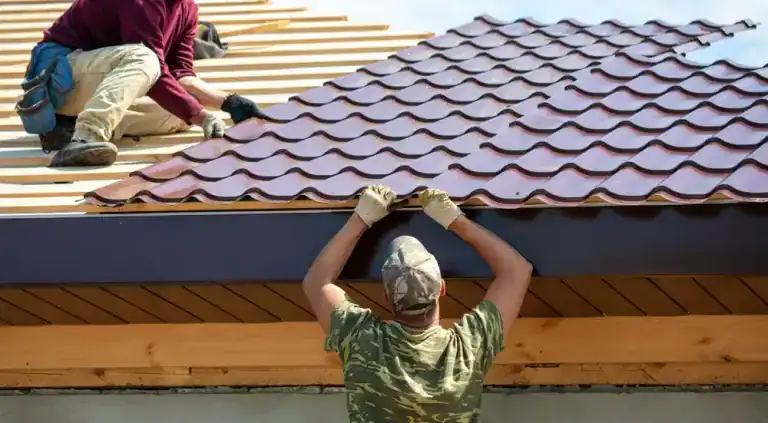
Your roof took the brunt of winter’s assault. Heavy snow loads, ice dams, wind-driven rain, and freeze-thaw cycles all stress roofing materials in ways that aren’t immediately visible. Spring is when you find out what actually survived.
Start with a ground-level inspection using binoculars. Look for missing or damaged shingles—anything that’s curled, cracked, buckled, or missing granules. Check your gutters for granule buildup, which signals advanced shingle wear. Scan your roofline for any sagging areas that might indicate structural damage or trapped water.
Pay special attention to flashing around chimneys, vents, and skylights. These transition points are where most leaks develop. Look for gaps between flashing and masonry, lifted sections, or visible separation. Valley flashing should lie flat with no gaps or lifted edges along the entire run.
Ridge cap shingles are among the first to suffer wind damage. Check for missing, cracked, or displaced caps along the full ridge line. These protect one of your roof’s most vulnerable areas, and damaged ridge caps let water straight into your decking.
Don’t skip the attic inspection. Head up there with a flashlight on a clear day with the lights off. Look for any pinpoints of daylight through the deck or around penetrations. Check the underside of roof deck sheathing for dark staining, soft spots, or evidence of moisture intrusion. Pay particular attention to areas around chimneys, vents, skylights, and valleys where ice dams typically form.
If you spot damage across more than 25-30% of your visible roof surface, you’re likely past the point where repairs make financial sense. When deterioration becomes systemic rather than isolated, replacement often costs less long-term than repeated repairs that never fully solve the problem. Professional assessment helps you make that call before you invest in repairs that won’t last.
The difference between a $500 repair and a $5,000 disaster usually comes down to timing. Catching roof problems before spring rains arrive means you’re fixing damage on your schedule, not during an emergency when water is actively pouring into your home.
Gutters are one of the most overlooked and most consequential items on any spring maintenance checklist. After a full winter of leaf accumulation, ice, and debris, clogged gutters can no longer do their job—directing water away from your home’s foundation and structure.
Start by pulling out large debris, twigs, and clumped leaves. What remains below is where it gets messy, but this is also where you’ll find the damage. Flush gutters with a garden hose and make sure water runs freely through downspouts. Check that downspouts direct water at least four to six feet away from your foundation. Any closer, and you’re inviting basement flooding and foundation damage.
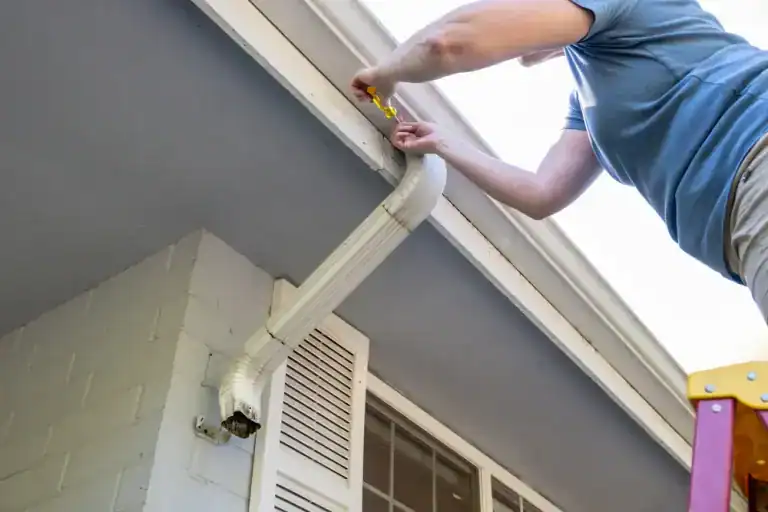
Look for sagging sections or loose hangers and reattach or replace as needed. Inspect joints and end caps for leaks and apply gutter sealant where necessary. Gutters that pulled away from the fascia over winter will fail to direct water properly during spring rains and snowmelt.
Suffolk County’s coastal climate is particularly hard on gutter systems. Salt air corrodes metal from the inside out. Ice formation can bend hangers and separate seams. Spring is when you catch this damage before the next rainstorm overwhelms your compromised system.
Clogged gutters cause water to back up under your shingles and along your fascia, leading to rot and mold. The fascia board becomes saturated, wood rot sets in, and suddenly you’re not just replacing gutters—you’re repairing structural damage to your roofline. This escalation happens fast once water finds a pathway, and spring rains provide plenty of water to exploit every weak point.
Professional gutter cleaning does more than remove debris. Trained technicians inspect the entire system for damage you might miss, check that gutters have proper slope for drainage, and identify problems with flashing and drip edges where your roof meets your gutter system. These transition zones are the number one spot for hidden rot in coastal areas.
If your gutters are more than 15 years old and showing multiple areas of damage, replacement might make more sense than ongoing repairs. Modern seamless gutter systems handle Long Island’s storms and salt air better than older sectional gutters, and they eliminate the seam failures that cause most leaks.
Spring is the ideal time for chimney maintenance because winter often leaves behind hidden damage that won’t become obvious until you try to use your fireplace next fall. Cracked mortar joints, water leaks, flashing issues, and creosote buildup all develop over winter and need to be addressed before they worsen.
Homes in Suffolk County and other coastal parts of New York require more frequent chimney maintenance than inland properties. The coastal climate brings higher humidity, stronger storms, and salt air that accelerates masonry wear. Winter’s freeze-thaw cycles are particularly brutal on brick and mortar—water seeps into small gaps, freezes, expands, and creates larger openings with each cycle.
Common post-winter chimney problems include cracked bricks, damaged mortar joints, chimney crown deterioration, loose or failed flashing, water leaks, and creosote buildup inside the flue. An unused chimney can trap moisture over winter, causing water seepage, rust, and serious interior damage that you won’t see until it’s advanced.
Professional chimney inspection in spring typically includes a thorough visual assessment, creosote removal, chimney cap inspection, flashing evaluation, masonry repair recommendations, and waterproofing or crown repair if needed. This isn’t just about preventing chimney fires—it’s about catching structural damage before it compromises your roof or allows water into your home’s interior.
If soot, debris, or creosote restricts airflow, smoke and harmful gases may not vent properly through the chimney system. This increases the risk of carbon monoxide entering your home, which is why regular inspections and cleanings are critical for safety, not just maintenance.
Most homes should have a professional chimney inspection at least once per year. Annual inspections help identify masonry damage, venting problems, chimney cap issues, and creosote deposits before they become safety hazards. Spring scheduling also means you’re not competing with fall’s rush when everyone suddenly remembers they need chimney service before heating season.
Chimney repairs are almost always cheaper when caught early. A few cracked mortar joints can be repointed for a few hundred dollars. Wait until water intrusion causes structural damage to your chimney or roof, and you’re looking at thousands in repairs. Spring maintenance catches problems while they’re still manageable.
Article details:
Share:
Continue learning: