Your gutters and siding take a beating from Long Island weather. Small issues turn into expensive disasters fast, but smart fixes protect your investment and transform how your home looks.
Share:
Summary:
That sagging gutter section isn’t just an eyesore. Every time it rains, water pools exactly where it shouldn’t—near your foundation, behind your siding, in places that turn small problems into structural nightmares.
You’ve probably noticed the staining. Maybe some cracks in the vinyl. And you’re wondering if this is something you can handle yourself or if it’s time to call someone who actually knows Suffolk County weather.
Here’s what matters: coastal conditions don’t give you much time to think it over. Salt air, nor’easters, and temperature swings make materials expand and contract in ways that duct tape and hope can’t fix. But understanding what’s actually happening—and which fixes deliver real protection—can save you thousands while making your home look maintained again. Let’s start with what’s probably staring you in the face every time you pull into the driveway.
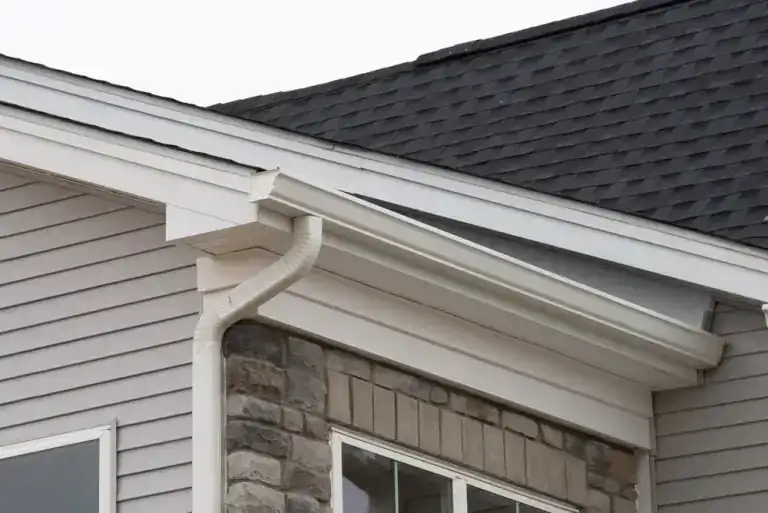
Your gutters do one job: move water away from your house. When they fail, that water finds every weak spot in your foundation, basement, and landscaping.
Walk around any neighborhood in Brookhaven or Huntington after a storm. You’ll see the same issues—sagging sections, leaks at joints, downspouts backing up with leaves and debris. These aren’t cosmetic problems.
Water pooling near your foundation saturates the soil. It creates conditions for settling and cracking that affect your entire home’s structural integrity. That small gutter leak dripping near your front steps works 24/7 to undermine your foundation. Most homeowners don’t realize the damage until they’re dealing with basement water stains or foundation cracks that cost $5,000 to $10,000 to repair.
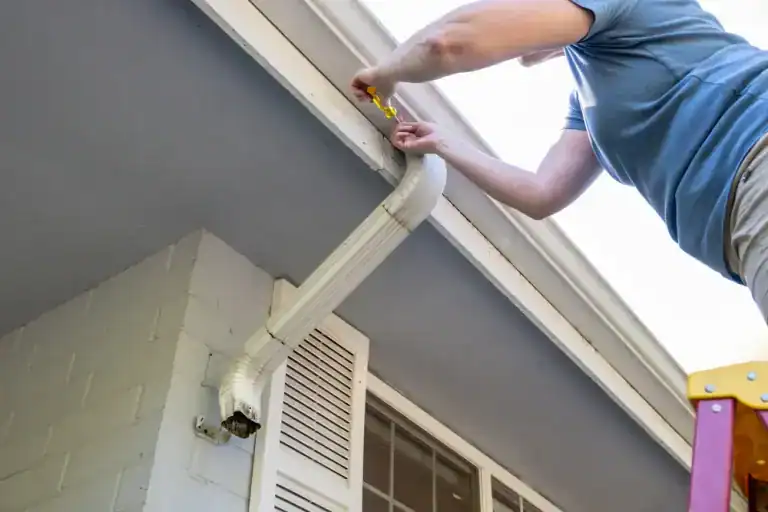
Start by watching what happens during a rainstorm. Water should flow smoothly through your gutters and out the downspouts, landing at least four feet from your foundation.
If you see water spilling over the edges, that’s either a clog or improper pitch. If water drips from seams or pools under the gutters, you’ve got leaks that need gutter leak sealing now, not later.
Check for sagging gutters by standing back and looking along your roofline. Gutters should appear straight, with a slight slope toward the downspouts. Any visible dipping or pulling away from the fascia board means the hangers have failed. Sometimes the fascia board itself is rotting behind the gutter.
Don’t ignore this. When gutters pull away, water flows behind the system instead of through it. That leads to wood rot, mold growth, and structural damage that spreads fast in Suffolk County’s humid coastal climate.
Look at the ground around your home’s perimeter. Puddles forming near the foundation after rain signal gutter problems. Erosion patterns in your landscaping tell the same story. Water stains on basement walls all point back to failed gutters that aren’t doing their job anymore.
The technical measurement for proper gutter pitch is straightforward: you need at least a quarter inch of drop per ten feet toward the downspout. Some contractors go up to half an inch per ten feet, especially in areas with heavy rainfall. Suffolk County gets over 40 inches of annual rainfall, so erring on the side of more slope makes sense.
Ice creates particular problems for Long Island homes. When water sits in gutters and freezes during winter, it expands. That expansion pushes against the gutter walls and pulls on the hangers. Over a few freeze-thaw cycles common in Suffolk County, you end up with loose connections and sagging sections. This isn’t something caulk fixes—the entire support system needs reinforcement with heavy-duty hangers spaced every two feet or less.
Minor leaks at seams can sometimes be addressed with professional-grade sealant designed specifically for gutters. Clean the area thoroughly, let it dry completely, and apply the sealant according to directions. This works for small cracks and separated seams.
But it’s not a permanent solution if the underlying pitch or hanger issues aren’t addressed. You’re buying time, not fixing the root cause.
Clogged downspouts are something most homeowners can handle safely. Use a plumber’s snake or high-pressure hose to clear the blockage, working from the top down. If water backs up despite clear gutters, the problem might be undersized downspouts for your roof’s square footage. Adding downspout extensions that direct water at least four feet from your foundation prevents the pooling that causes foundation damage.
Tightening loose gutter hangers seems simple until you realize the fascia board behind the gutter is rotting. Tightening the hanger just pulls through soft wood. Check the fascia condition first by pressing on it. If it feels spongy or your finger sinks in, you’re looking at fascia board repair that needs to happen before any gutter work makes sense.
For sagging gutters, the fix depends on why they’re sagging in the first place. Failed hangers can be replaced with heavy-duty alternatives spaced closer together. But if the sag comes from improper pitch or fascia damage, you need to address those root causes first. Adding more hangers to a poorly pitched gutter just creates more points of failure.
Here’s what DIY approaches miss: Suffolk County’s coastal conditions create challenges that generic repair methods don’t account for. Salt air corrosion affects gutters within 3,000 feet of saltwater—not just oceanfront properties. Specific drainage requirements and local building codes all affect what actually works long-term.
Simple maintenance like clearing debris can be handled by homeowners with proper safety equipment and stable ladders. But gutter leak sealing, realignment work, and anything involving downspout modifications usually require professional expertise. The injury risk for inexperienced homeowners working on ladders is substantial, especially on multi-story homes.
The real issue with DIY gutter repair is addressing symptoms rather than underlying causes. You might temporarily seal a leak. But if the gutter’s pitch is wrong or there are structural issues with the mounting system, that leak returns within months—usually worse than before. Professional gutter repair becomes cost-effective when you factor in preventing water damage that can exceed $10,000 in foundation and basement repairs.
Want live answers?
Connect with a Home Team Construction expert for fast, friendly support.
Siding works as your home’s first defense against Long Island’s unpredictable weather. When it starts failing, the signs are obvious once you know what to look for.
Cracks in vinyl. Loose panels rattling in the wind. Warped boards. Water stains appearing inside your walls. These all demand immediate attention because damaged siding lets water infiltrate your walls within hours of the next rainstorm.
Storm damage tops the list of problems in Suffolk County, NY. High winds rip panels loose, hail creates cracks in vinyl, and driving rain finds every weak installation point. But coastal conditions create unique challenges—salt air accelerates aging, causing premature cracking and fading that makes ten-year-old siding look and perform like it’s decades old. Temperature swings make vinyl expand and contract, eventually creating gaps where moisture sneaks in.
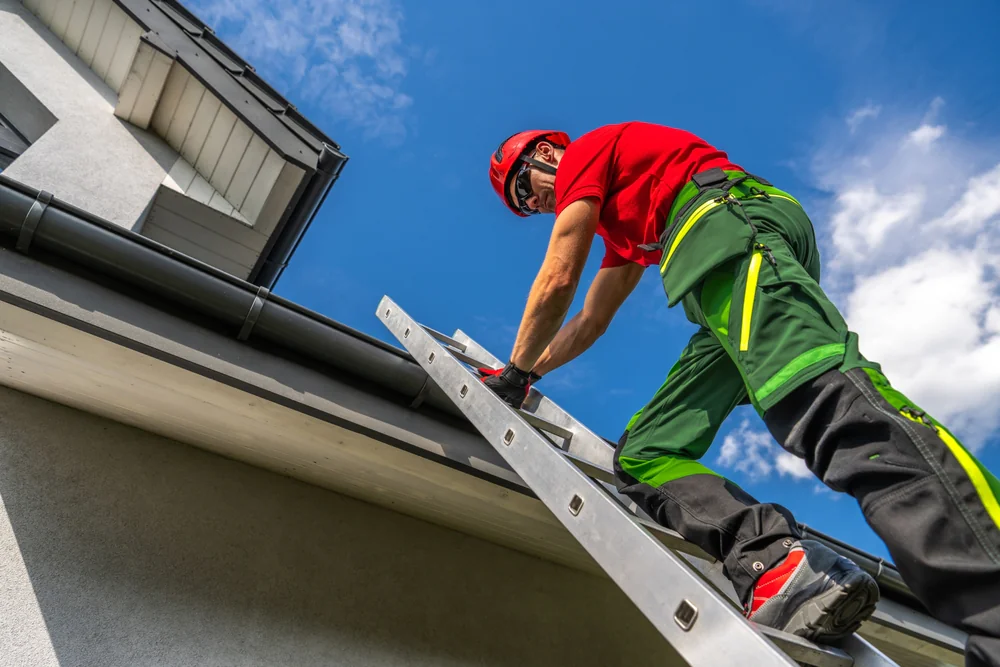
Walk around your home and look for visible cracks or holes in the siding. These let moisture in, leading to mold development and structural problems behind the panels you can’t see.
Warping or buckling is another red flag. It can indicate improper installation or underlying moisture issues that won’t resolve themselves. Don’t dismiss these as cosmetic problems.
Pay attention to discoloration or fading beyond normal aging. Despite its superficial appearance, it may indicate water exposure or UV damage that’s compromising the material’s protective qualities. Long Island’s North Shore sees relentless UV exposure that breaks down surface layers. When that happens, frequent repainting won’t solve the underlying problem.
Look for growth of mold, mildew, or fungus, particularly around edges or seams. This indicates moisture is getting behind the siding and creating conditions for rot. In Suffolk County’s humid climate, this spreads faster than most homeowners expect.
Check for loose or missing panels, especially after nor’easters or summer storms. Wind damage often starts small—a single loose panel that catches more wind during the next storm. What begins as minor lifting becomes catastrophic failure when sustained gusts get underneath and peel entire sections away from the house. This cascading damage explains why immediate siding repair matters.
Peeling paint on wood siding isn’t just aesthetic. It often indicates dry rot underneath, especially around windows where water intrusion is common. Cedar siding splits along the grain, often starting as hairline cracks that widen quickly once water freezes and expands during temperature swings. What looks like minor damage in October becomes a serious problem by March.
Interior signs matter too. Water stains on interior walls near exterior walls signal siding failure. Unexplained increases in heating or cooling costs suggest your siding isn’t creating a proper weather barrier anymore. Drafts around windows and doors all point to the same conclusion—your home’s exterior needs professional attention before small problems become structural disasters.
Suffolk County’s location between the Atlantic Ocean and coastal bays creates exterior challenges that standard siding materials struggle to handle. Salt air corrodes metal components. High winds test every fastener. Temperature swings cause expansion and contraction that break down inferior installations.
Repairs need to account for these specific conditions or they’ll fail during the next storm season.
For vinyl siding repair, replacing damaged panels requires matching the existing material’s color and profile. UV exposure fades vinyl over time, so new panels rarely match perfectly unless you’re working with newer siding. Our approach involves finding the closest match or using replacement panels from less visible areas to patch damage in prominent locations, then installing new panels in those hidden spots.
Wood siding repairs are more complex. Cedar splits along the grain, often starting small and widening as moisture works deeper into the material. Replacement boards need to be properly sealed and painted to match. More importantly, the underlying moisture issue that caused the split needs to be addressed, or you’re just replacing the same board repeatedly.
The installation technique matters as much as the materials. Proper fastening for coastal exposure means using corrosion-resistant screws instead of nails. Spacing them according to wind-load requirements. Ensuring each panel is secured but still has room to expand and contract with temperature changes. Vinyl that’s fastened too tightly will buckle when summer heat causes expansion.
Moisture barriers and proper flashing integration separate repairs that last from those that fail within months. When siding is removed for repair, it’s the perfect time to check the housewrap condition. Ensure flashing around windows and doors is intact. Verify that water has a clear path to drain down and out rather than getting trapped behind the siding.
Most homeowners don’t see these details. But they determine whether your siding repair lasts five years or five months.
Professional siding repair in Suffolk County, NY requires understanding how local weather patterns affect different materials. We’ve worked through multiple nor’easters and hurricane seasons, so we know which repair methods hold up and which ones fail when sustained winds exceed 70 mph. We source materials designed for Long Island’s salt air and temperature swings. We maintain relationships with manufacturers to find discontinued colors and styles that match your existing siding—something nearly impossible for homeowners to accomplish on their own.
Your home’s exterior isn’t just about curb appeal. It’s the barrier protecting your most valuable investment from Suffolk County’s relentless coastal weather.
When gutters sag or siding cracks, you’re not facing a cosmetic problem. You’re looking at the early stages of water damage that spreads fast and costs serious money once it reaches your foundation or gets inside your walls.
The fixes that actually work aren’t always the ones that seem easiest or cheapest upfront. Coastal conditions demand materials and techniques that account for salt air, freeze-thaw cycles, and storms that test every installation point. Quick patches might buy you time, but they rarely solve the underlying issues that caused the problem in the first place. We’ve spent over a decade fixing these exact problems for Suffolk County homeowners, understanding the difference between repairs that last one season and solutions that protect your home for years.
Article details:
Share:
Continue learning: