
Hear From Our Clients
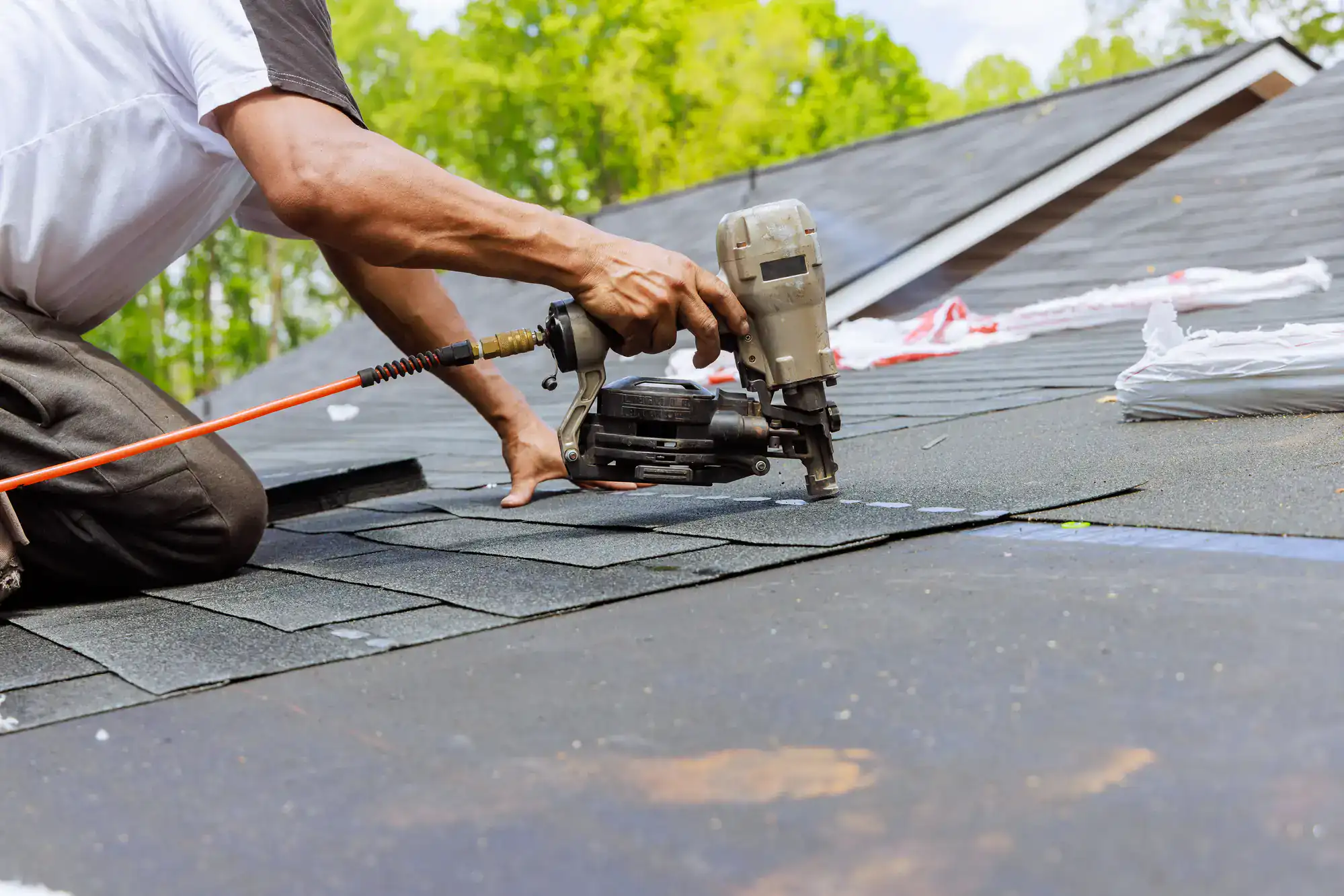
When something goes wrong with your roof in Bay Shore, it rarely announces itself clearly. One missing shingle after a nor’easter. A small dark spot on your ceiling after a heavy rain. By the time it’s obvious, the damage has usually been building for a while and what started as a repair is now a much bigger conversation.
The salt air off the Great South Bay is harder on roofing materials than most homeowners realize. It doesn’t just affect the surface it works on the fasteners, the flashing around your chimney and skylights, and the underlayment underneath the shingles you can see. Homes on and near the water in Bay Shore age differently than homes inland in Hauppauge or Commack. That’s not a scare tactic, it’s just the reality of living on the South Shore, and it’s something worth knowing before a problem gets worse.
What you get after the right roofing work isn’t just a fixed roof. It’s not worrying every time the forecast shows a coastal storm. It’s knowing the flashing was done right, the materials were chosen for your environment, and the work was documented so you can actually see what was done not just take someone’s word for it.
We’re a family-owned exterior contractor based in Brookhaven the next township east of Islip along the South Shore. That matters because the coastal conditions in Brookhaven and Bay Shore are identical. Same salt air, same storm patterns, same aging housing stock that was built in the 1950s and 1960s and is now well past what most asphalt shingles were designed to handle.
The owner, Alban, is personally involved in every project. That’s not a line it shows up in the reviews, where customers mention him by name and come back for their gutters, their siding, and their deck after the roof is done. Repeat customers in a trade like this don’t happen by accident.
Bay Shore homeowners protecting a home worth $600,000 or more deserve straight answers, upfront pricing, and a contractor who documents the work so you know exactly what happened even if you were on the LIRR when we were on your roof.
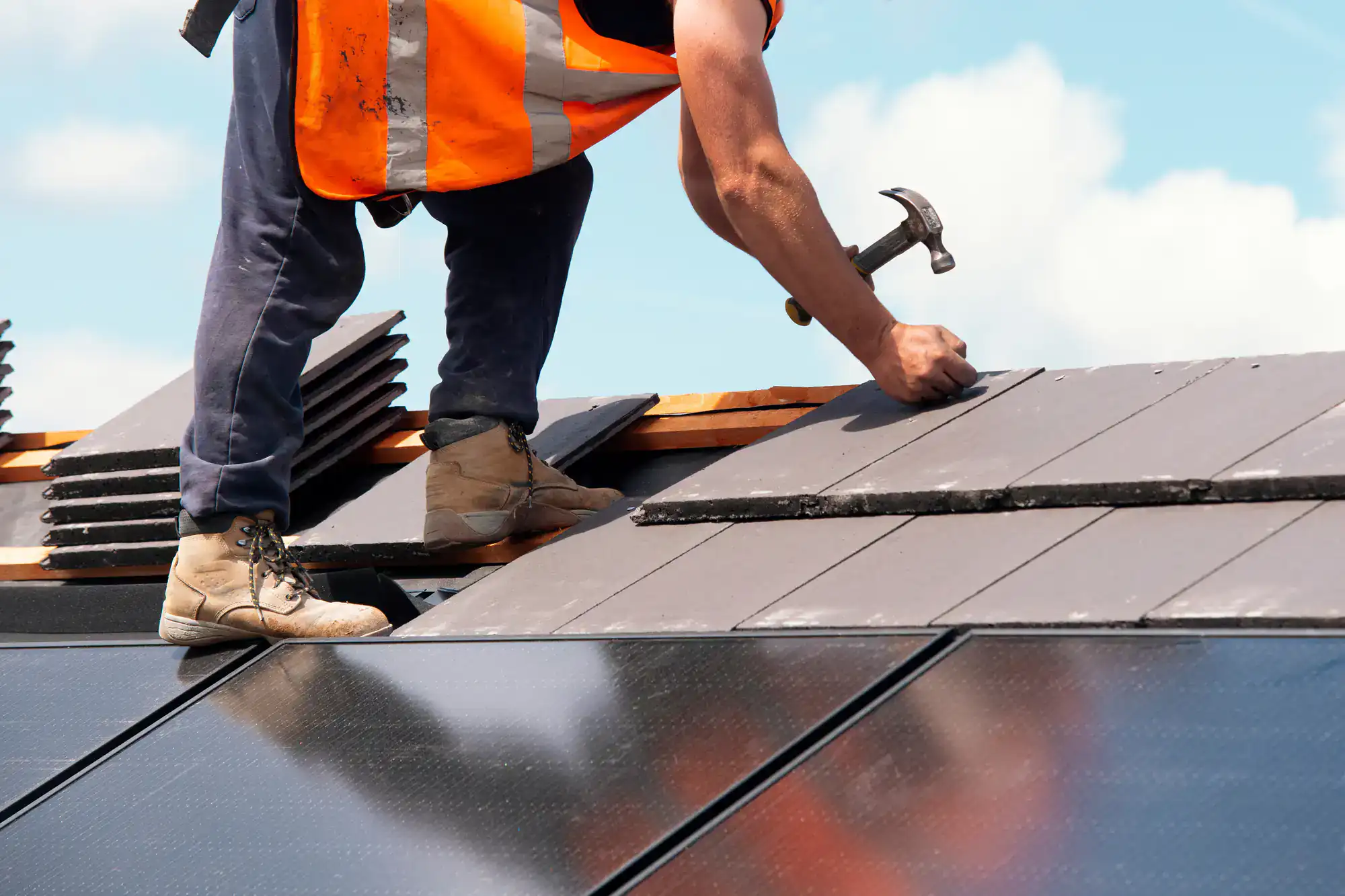
It starts with a real assessment, not a sales visit. We get on the roof, look at what’s actually there, and give you an honest picture of what needs to happen whether that’s a targeted repair or a full replacement. If we find something unexpected, like rotted decking or compromised underlayment from years of salt air exposure, we stop, explain it in plain language, and get your approval before anything changes. The number on your estimate is the number you pay.
Once work begins, everything gets documented with photos and videos from start to finish. A lot of Bay Shore homeowners are commuters if you’re in the city when we’re on your roof, you’ll be able to see exactly what was removed, what was installed, and what condition everything was in. No wondering. No assuming.
Roofing work in Bay Shore falls under the Town of Islip’s building department, and permits are required for full replacements. We handle that process. After the job is done, we walk you through what was completed, what to watch for going forward, and what other exterior areas gutters, flashing, siding may need attention before the next coastal storm season hits.
Ready to get started?
We handle both roofing repair and full roof replacement for residential homes across Bay Shore, Brightwaters, North Bay Shore, Baywood, and the surrounding 11706 area. Whether it’s storm damage after a nor’easter, a slow leak that’s been getting worse, or a roof that’s simply reached the end of its life, our approach is the same find the real problem, fix it permanently, and don’t patch what needs to be replaced.
For material selection, we work with asphalt shingles and metal roofing, and we help you choose based on your home’s specific situation. Metal roofing is worth a serious look for Bay Shore homes it handles salt air corrosion significantly better than asphalt over time, and it performs well under the kind of wind loads that come with South Shore coastal storms. For homes near the water or in flood-prone areas along the Great South Bay, the longer lifespan and lower maintenance of metal can make the higher upfront cost genuinely worth it.
Beyond the roof itself, we also handle the components that fail first in a coastal environment: flashing at chimneys and skylights, ridge vents, and the underlayment system underneath. These are the areas where water finds its way in, and they’re the areas most affected by years of salt air and storm exposure. Getting them right is what separates a roof that lasts from one that needs attention again in five years.
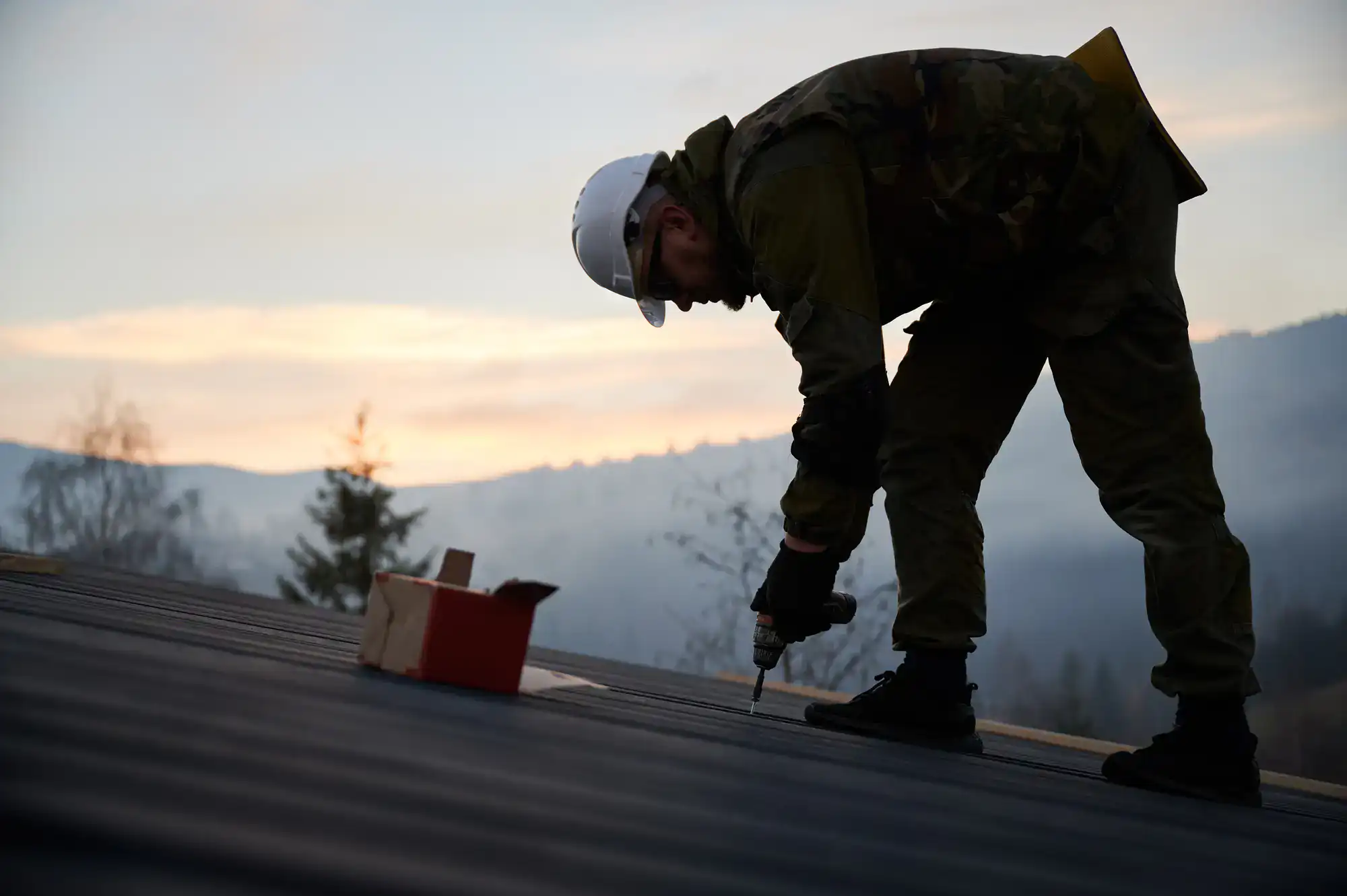
After a nor’easter or any strong coastal storm, the damage isn’t always obvious from the ground. Missing shingles are easy to spot, but the more common issues are subtler lifted shingle edges, cracked tabs, compromised flashing around your chimney or skylights, and granule loss that shows up as dark streaks or grit collecting in your gutters. These don’t look like emergencies, but they let water in.
Bay Shore’s position on the Great South Bay means your roof is exposed to wind-driven rain and salt air in a way that accelerates how quickly small issues become bigger ones. If you had a significant storm come through and you’re not sure what happened up there, a post-storm inspection is worth doing before the next weather event compounds any existing damage. We document everything we find with photos, so you’re not just taking our word for what we saw.
The standard answer for asphalt shingles is 20 to 30 years, but that range assumes average conditions and Bay Shore’s South Shore coastal environment is not average. Salt air off the Great South Bay accelerates granule loss, degrades the sealant strips that hold shingles in place, and corrodes the metal fasteners that keep everything secure. In practice, roofs on homes close to the water in Bay Shore often show meaningful wear at 15 to 20 years, sometimes sooner if the original installation wasn’t done with coastal conditions in mind.
If your home was built in the 1960s which is true of a large portion of Bay Shore’s housing stock and hasn’t had a roof replacement since the late 1990s or early 2000s, it’s worth having someone get up there and take an honest look. The damage that’s hardest to catch is the kind that doesn’t show up as a leak until the underlayment has already been compromised for years.
Yes. Bay Shore is part of the Town of Islip, and the Town of Islip’s building department requires a permit for full roof replacements. This applies to most complete tear-offs and re-roofs it’s not something you can skip, and it’s not just paperwork. The permit process triggers an inspection that confirms the work was done to code, which matters for your homeowner’s insurance and for the resale value of your home.
There are also code considerations around how many layers of shingles are permitted on a structure before a full tear-off is required. If your roof has been overlaid before, that affects what your options are. Working with us means you don’t have to navigate the Town of Islip’s building department on your own we handle the permit filing on your behalf, and it means the job is on record if you ever need to prove the work was done properly.
A repair makes sense when the damage is isolated a section of shingles blown off in a storm, a flashing failure around a chimney, a localized leak that hasn’t spread into the decking. If the rest of the roof is structurally sound and has meaningful life left in it, a well-done repair can hold for years without needing to replace the whole thing.
Replacement becomes the right call when the roof is at or past its functional lifespan, when there are multiple problem areas across the surface, or when the underlayment or decking beneath the shingles has been compromised. For Bay Shore homes built in the 1950s and 1960s, the honest answer is often that a repair will buy a year or two at most and the cost of repeated repairs over that window adds up to more than a replacement would have. We’ll tell you which situation you’re actually in, not just which one generates a bigger invoice.
For a lot of Bay Shore homeowners, yes and it’s worth understanding why rather than just taking that at face value. Metal roofing handles salt air corrosion significantly better than asphalt shingles over time. The fasteners, the panels, and the coating systems used on modern metal roofs are designed for coastal and marine environments in a way that standard three-tab or architectural shingles simply aren’t.
Metal also performs better under high wind loads, which matters on the South Shore where nor’easters can bring sustained gusts of 40 to 60 mph. It’s not maintenance-free, but it requires far less attention over its lifespan typically 40 to 70 years compared to 20 to 30 for asphalt. The upfront cost is higher, but for a home on or near the Great South Bay, the math often works in metal’s favor when you factor in fewer replacements, lower long-term maintenance, and better performance through the kind of storms Bay Shore gets every few years.
For a standard single-family home in Bay Shore, a full asphalt shingle roof replacement typically runs between $8,000 and $18,000 depending on the size of the roof, the pitch, the condition of the decking underneath, and the materials selected. Homes with multiple penetrations chimneys, skylights, dormers will be on the higher end because those details require more labor and more flashing work to do correctly.
Metal roofing runs higher, generally $15,000 to $30,000 or more for a full residential installation, but the lifespan and performance difference in a coastal environment like Bay Shore’s can make that a reasonable investment for homeowners planning to stay long-term. With Bay Shore’s median home value now above $600,000 and continuing to climb, the roof is one of the highest-leverage maintenance items on the property. What you don’t want is a low estimate that leaves out proper underlayment, skips the permit, or patches areas that should be replaced those savings disappear fast when the next storm finds the shortcut.
Other Services we provide in Bay Shore