

Hear From Our Clients
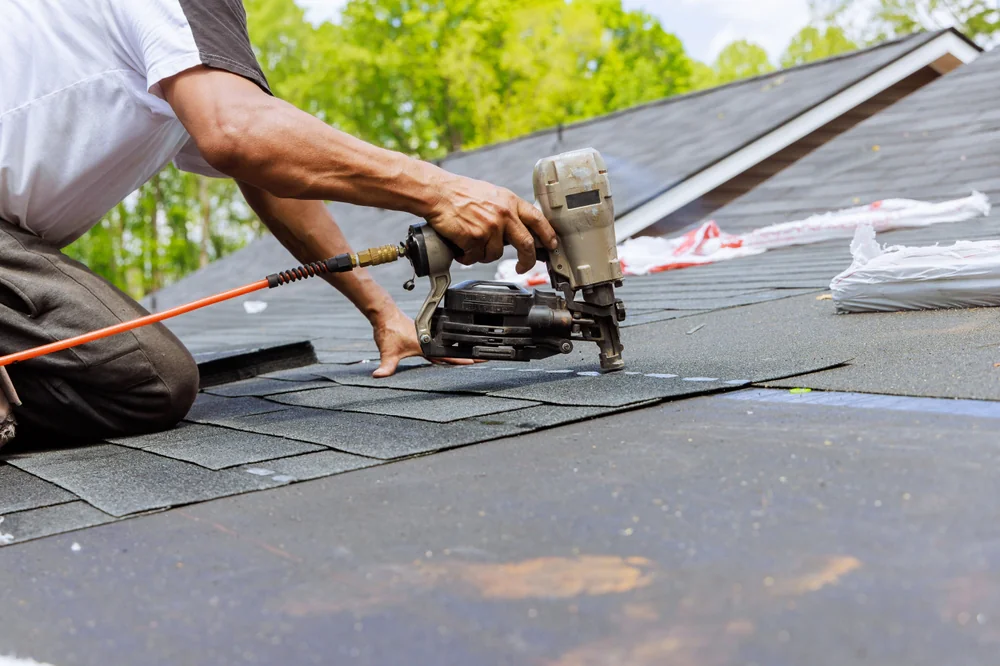
A repaired roof is not just a dry ceiling. It is the difference between a home that holds its value and one that quietly accumulates damage behind the walls mold, rotted decking, compromised insulation while you assume everything is fine. In East Quogue, that risk compounds fast. The salt air off Shinnecock Bay does not just weather shingles over time; it eats through flashing and metal fasteners years ahead of schedule. A repair done with the wrong materials, or done halfway, is not a repair it is a delay.
If you own a seasonal property near Tiana Bay or rent your home out during the summer, there is a good chance damage has been sitting unaddressed longer than you realize. Tenants do not always report a slow drip. Property managers do not always catch what is happening at the eaves after a January freeze-thaw cycle. When you finally get eyes on the roof, the question is not just “what’s leaking” it is “what has the water already reached?”
A proper repair closes that question. It tells you exactly what was found, what was replaced, and what your roof looks like now. That is what a real fix delivers not just a dry day, but actual confidence in the structure protecting your home.
We are a family-owned roofing company based in Suffolk County, and we have been working on Long Island homes for over ten years. Every person who shows up to your job is a trained Home Team employee not a subcontracted crew sourced from a third-party list. That is not standard practice in this industry, and we know it. It is a deliberate choice, because when something goes wrong, you deserve a clear line of accountability not a phone tree.
We work regularly throughout Southampton Town, including East Quogue and the surrounding South Fork communities. We know what the coastal conditions here actually do to a roof over time, and we use materials built for this environment not whatever ships cheapest from a national supplier. We also know the Southampton Town Building Department’s permitting requirements, so there are no surprises on the compliance side either.
Owner Alban Hoxha is personally involved in every project. When you call, you reach someone who knows your job.

It starts with a call or a message. You tell us what you are seeing a stain on the ceiling, missing shingles after a storm, a leak that showed up during the last nor’easter and we schedule a time to get eyes on it. We come out, walk the roof, and do a full diagnostic assessment before we quote you anything. Not a surface-level glance a real look at the flashing, the valleys, the underlayment condition, and anywhere water could be entering that is not obvious from the ground.
Once we know what is actually going on, we give you a clear, itemized estimate. What we quote is what you pay. No charges added at the end for plywood, underlayment, or debris disposal those are in the number we give you upfront. If the scope of work requires a permit through the Southampton Town Building Department, we handle that process. You do not have to navigate the permit requirements yourself.
When the work is done, we document everything with photos and videos. If you are managing this property remotely which is common for East Quogue homeowners who are not here year-round you get a full visual record of what was found and what was completed. No guesswork, no “trust us.” You can see exactly what was done.

Ready to get started?
Roof repairs in East Quogue are not one-size-fits-all work. The homes here range from older seasonal cottages that were winterized and expanded over decades to newer construction on bay-adjacent lots and each one has its own history of materials, installation quality, and exposure. We handle shingle repairs, flat roof repairs, flashing replacement, valley work, ridge cap repairs, and leak diagnostics across all roof types. If your home has a low-slope section over a garage addition common in older South Fork homes that gets the same level of attention as the main field of the roof.
For storm-related damage, we document everything in a format that works for insurance claims. We know what adjusters need to see, and we make sure the documentation reflects the actual scope of damage not a rushed summary that leaves money on the table. If your damage happened during a named storm or a nor’easter that hit the Southampton area, that context matters when the claim is filed.
We also offer 24/7 emergency roof repair response. If a storm comes through East Quogue tonight and opens up a leak, you do not have to wait until Monday to get someone out there. We respond, we assess, and we get your home weatherproofed while the permanent repair is scheduled because standing water and open decking do not wait for business hours.

The honest answer is that most homeowners cannot tell from the ground, and even a basic visual inspection from a ladder will not catch everything. What actually determines whether you need a repair or a replacement is the condition of the decking beneath the shingles, the age and integrity of the underlayment, and how widespread the damage is. A few missing shingles after a storm is almost always a repair. Widespread granule loss, multiple failing areas, or decking that has been wet long enough to soften is a different conversation.
In East Quogue specifically, the salt air exposure accelerates wear on metal components like flashing and drip edges sometimes significantly faster than the shingles themselves. So it is possible to have a roof where the shingles look acceptable but the flashing is failing around every penetration point. That is why a proper diagnostic matters before any quote. We look at the whole system, not just the visible surface, and we give you a straight answer about what the roof actually needs.
In most cases, yes if the damage was caused by a specific weather event like a nor’easter, high winds, or hail, your homeowners insurance policy should cover the repair or replacement cost, minus your deductible. The key is documentation. Adjusters need to see clear evidence that the damage was storm-related and not the result of deferred maintenance or pre-existing wear. That distinction matters, and it is where a lot of claims get reduced or denied.
We document storm damage in a way that supports your claim from the start photos, written scope, and a clear connection between the weather event and what we found on the roof. Long Island homeowners, particularly on the South Fork where storm exposure is real and recurring, should not be leaving insurance money on the table because the documentation was incomplete. If you are unsure whether your damage qualifies, call us before you call your insurer we can help you understand what you are looking at first.
Nor’easters hit Long Island from a specific direction with wind-driven rain that pushes water horizontally into gaps that standard downward rainfall would never reach. The most common entry points are flashing seams around chimneys, skylights, pipe boots, and where the roof meets a wall or dormer. These are the joints in the system, and they are where most leaks originate after a storm event. Valley areas, where two roof planes meet, are the second most common failure point.
On East Quogue homes that have been through multiple storm seasons, the flashing is often the oldest and most compromised component on the roof especially on properties near the bay where salt air has been working on the metal for years. A roof that held up fine through last winter might develop a leak this season not because the shingles failed, but because the flashing finally gave out at a seam. That is why we assess the full system during every diagnostic visit, not just the area directly above where the ceiling stain appeared.
It depends on the scope of work. In the Town of Southampton which governs East Quogue minor repairs like replacing a small section of shingles or resealing flashing typically do not require a permit. But work that involves structural deck repair, a full tear-off and re-roofing, or changes to roof drainage usually does. The line between what requires a permit and what does not is not always obvious, and the Southampton Town Building Department enforces it consistently.
This matters more than most homeowners realize. Unpermitted work on a property in Southampton Town can create problems when you sell real estate attorneys routinely ask about work done without permits, and title companies sometimes flag it. It can also affect your insurance coverage if a claim arises from work that was not properly permitted. We know the Southampton Town permit requirements and handle that process as part of the job when it applies. You do not have to figure that out on your own.
Not as long as most people assume. A slow drip that shows up as a ceiling stain can look minor for weeks while water is actively moving through the insulation, saturating the decking, and creating conditions for mold growth inside the wall cavity. By the time the stain is visible on your ceiling, the water has already traveled the stain is just where it stopped. The source is usually several feet away.
In a coastal climate like East Quogue’s, where humidity is elevated year-round and temperatures swing enough to create condensation inside the roof assembly, moisture that gets in does not dry out quickly on its own. A leak left through a wet fall or a cold winter is not a contained problem it is a growing one. The repair cost on a leak caught early is a fraction of what it becomes once decking needs to be replaced or mold remediation enters the picture. If you are seeing a stain, the time to call is now, not after the next storm.
Salt air is corrosive to metal in a way that most homeowners do not account for when they think about roof maintenance. The flashing around your chimney, the drip edge along your eaves, the pipe boots, the gutters all of the metal components on a roof near the bay are being worked on by salt air constantly. Standard galvanized flashing that might last 20 years on an inland property can show significant corrosion in 10 to 12 years on a home with regular salt air exposure. The shingles themselves may look fine while the metal beneath them is quietly failing.
For East Quogue homeowners especially those on the bay side or near Tiana Bay this means the inspection cycle for metal components should be shorter than what a general roofing guide would recommend. It also means that when we do repairs, we use coastal-grade flashing and fasteners on South Fork jobs because standard materials simply do not hold up the same way here. If a contractor is quoting your East Quogue roof repair without asking about your proximity to the water, that is worth noting.
Other Services we provide in East Quogue