
Hear From Our Clients

When a roof repair is done properly, you stop thinking about your roof. No more checking the ceiling after a storm. No more wondering if that water stain is getting bigger. That’s the outcome not just a fixed shingle, but actual peace of mind going into winter.
Yaphank’s position within the Long Island Central Pine Barrens means your roof deals with things a lot of Suffolk County homeowners don’t. Dense tree coverage, constant pine needle buildup in your valleys and around your flashing, and the kind of moisture that accelerates organic growth and shingle breakdown faster than an open lot would. A repair that doesn’t account for what’s underneath the deck condition, the flashing, the underlayment isn’t really a repair. It’s a delay.
And with nor’easters tracking up the coast every winter, the stakes are real. Central Suffolk takes the full force of those storms wind, heavy snow loads, ice dam conditions without the coastal buffer. If your roof has a weak point, that’s when it shows. A proper repair addresses the actual source of the problem, not just what’s visible from the ground.
We’re based in Brookhaven the same Town of Brookhaven that governs Yaphank, pulls permits from the same Building Division, and operates under the same local codes you’re subject to. This isn’t a company driving in from Nassau County or from a distant corner of Suffolk. Our owner, Alban Hoxha, is personally involved in every job, and every person on your roof is a trained Home Team Construction employee no subcontractors, ever.
What makes a real difference for Yaphank homeowners is the documentation. Every repair is photographed and recorded deck condition, underlayment, flashing, all of it so you can see exactly what was done beneath the surface. You don’t have to take anyone’s word for it.
With over a decade of roofing work across Suffolk County, our team has seen what Long Island winters, summer storms, and 40-year-old roofing systems actually look like up close. That experience is what you’re hiring.
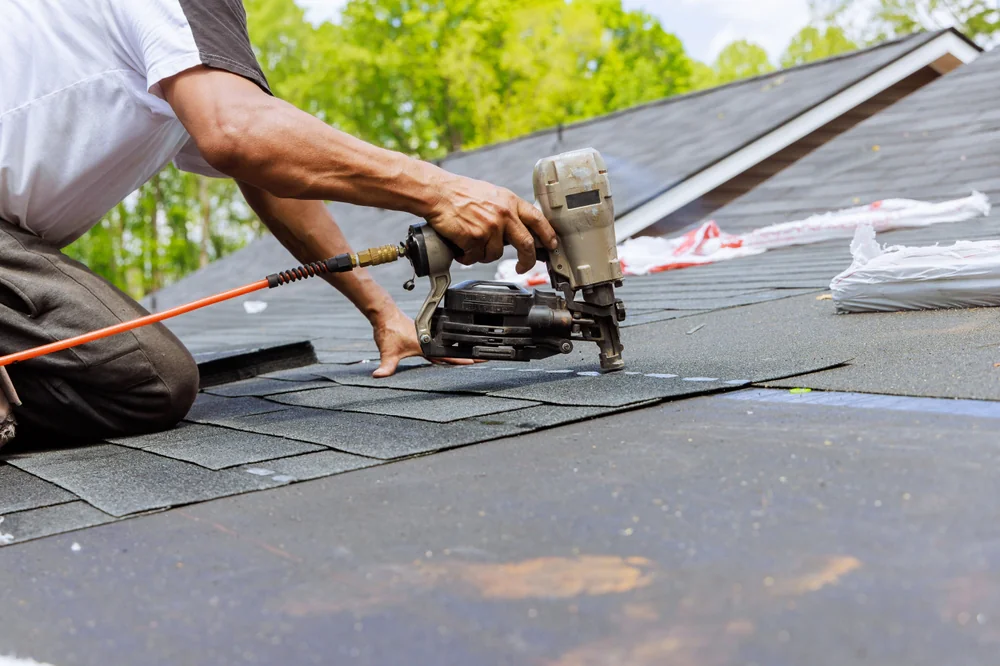
It starts with a real inspection not a quick look from the driveway. We get on the roof, check the full system, and identify what’s actually causing the problem. On homes built in the 1980s, which describes most of Yaphank’s housing stock, the visible damage is often just the entry point. Rotted deck sections, deteriorated underlayment, and failing flashing that’s been caulked over instead of replaced these are the things that get missed when a contractor is rushing.
Once the scope is clear, you get a straightforward price before any work starts. No “we found more damage” calls after the job is underway. If the inspection turns up something unexpected, you hear about it before it’s touched and you decide how to proceed. For work that meets the threshold under the Town of Brookhaven Building Division, we pull permits properly. That matters if you ever plan to sell your home or file an insurance claim.
The repair itself is documented throughout with photos and video. When the job is done, you’re not just told it’s finished you can see it. And if it’s storm-related damage, we can help you organize the documentation your insurance adjuster will need.

Ready to get started?
The most common calls we handle in this area involve storm damage, active leaks, missing shingles after a nor’easter, and ice dam damage that showed up as a ceiling stain sometime between January and March. But we also handle the less obvious problems flashing failures around chimneys and skylights, flat roof repairs on garage additions and low-slope sections that are common on 1980s ranch-style homes, and the kind of slow deterioration that comes from years of pine needle buildup sitting against your shingles.
Emergency roof repair is available around the clock. If a storm event causes an active leak or structural damage, our response time is measured in hours not days. We arrive, stabilize the situation with proper weatherproofing, and walk you through what a permanent fix looks like before anything is committed to.
For Yaphank homeowners dealing with a roof that’s 35 to 40 years old, the repair-versus-replace question comes up often. The honest answer depends on what the inspection finds deck condition, overall shingle wear, ventilation, and how much useful life is realistically left. You’ll get a straight answer on that, not a push toward the larger ticket item.

It depends on the scope of the work. The Town of Brookhaven Building Division requires permits for roofing work that goes beyond minor maintenance this includes “Roof Over” projects (installing new shingles over existing material), significant alterations, and repairs of meaningful scope. If you’re replacing a section of decking, addressing structural damage, or doing a full layer of new shingles, a permit is typically required.
This matters more than most homeowners realize. Unpermitted roofing work in Brookhaven can create real problems if you try to sell your home, file a homeowners insurance claim, or if the work is ever inspected after the fact. We pull permits as part of the job so you don’t have to navigate it yourself.
The honest answer is that you need someone on the roof to tell you not an estimate from the driveway. The visible signs like missing shingles or a ceiling stain are just entry points. What actually determines repair versus replacement is what’s underneath: the condition of the deck, how much granule loss the shingles have experienced, whether the underlayment is still doing its job, and how the ventilation is holding up.
For most Yaphank homes built around 1985, the roofing system is somewhere between 35 and 45 years old even if it’s been re-shingled once. Standard asphalt shingles have a rated lifespan of 20 to 25 years. If a roof is past that mark and showing multiple failure points, targeted repairs may extend its life by several years, but there’s a point where you’re putting money into a system that’s already at the end. A real inspection gives you a straight answer on where your roof actually stands.
Ice dams form when heat escapes through the roof deck, melts the snow sitting on top, and the resulting water refreezes at the cold eaves and gutters. That ice buildup forces water back up under the shingles, which is where the interior leaking and ceiling staining comes from. It’s a common problem in central Suffolk County from January through March, and Yaphank’s 1980s housing stock is especially vulnerable because homes built in that era were often constructed with insulation and ventilation standards that are now known to be inadequate.
Repairing the water damage fixing the leak, replacing affected shingles and underlayment is the first step. But if the underlying ventilation and insulation conditions that caused the ice dam aren’t addressed, it will happen again next winter. A proper repair includes an honest assessment of whether those conditions exist in your attic and what it would take to correct them. You shouldn’t have to deal with the same ceiling stain two winters in a row.
Repair costs vary significantly depending on what’s actually wrong. A straightforward missing shingle repair or minor flashing fix is a very different job than repairing storm damage that’s compromised the deck, or addressing ice dam damage that’s affected multiple sections of the roof. Nationally, the average residential roof repair cost has risen to around $4,700 a 25% increase over recent years but individual repairs can run anywhere from a few hundred dollars for isolated issues to several thousand for more involved work.
What matters for Yaphank homeowners is getting a price that reflects the full scope of the problem, not just what’s visible on the surface. On a 35-to-40-year-old home, the inspection sometimes turns up additional issues rotted decking, deteriorated underlayment, failing flashing that affect the final cost. The way to avoid surprises is a thorough inspection upfront and a contractor who tells you the full picture before the work starts, not after.
In many cases, yes wind damage, hail damage, and damage from falling trees or limbs are typically covered under standard homeowners insurance policies. Given Yaphank’s wooded character and its exposure to nor’easters and summer thunderstorms, storm-related roof damage is a real and recurring event here, not a rare one. The key is documenting the damage properly so your claim reflects the full scope of what was affected.
Where homeowners run into problems is when the documentation is incomplete or when a contractor does the repair before the adjuster has had a chance to assess the damage. The process works better when the repair contractor and the insurance process are coordinated photos of the damage before and during the repair, a clear scope of work, and communication with the adjuster that supports the claim rather than complicating it. We handle that as part of the job, not as an add-on.
More than most homeowners expect. Yaphank’s proximity to the Long Island Central Pine Barrens means a large number of homes here sit on wooded lots with mature pines, oaks, and other trees overhead. The most immediate risk is storm damage a falling limb or tree during a nor’easter or summer thunderstorm can cause acute structural damage that goes well beyond missing shingles. But the slower, ongoing effects are just as significant.
Pine needles and leaf debris accumulate in roof valleys, around chimney flashing, and in gutters. That debris retains moisture against the shingle surface, accelerating granule loss and shingle degradation over time. It also creates conditions where moss, algae, and lichen take hold organic growth that further breaks down roofing materials. Regular inspection and maintenance matters more on a wooded Yaphank lot than it would on an open suburban property, and a repair that doesn’t clear and address those accumulation points is leaving the root cause in place.
Other Services we provide in Yaphank