
Hear From Our Clients
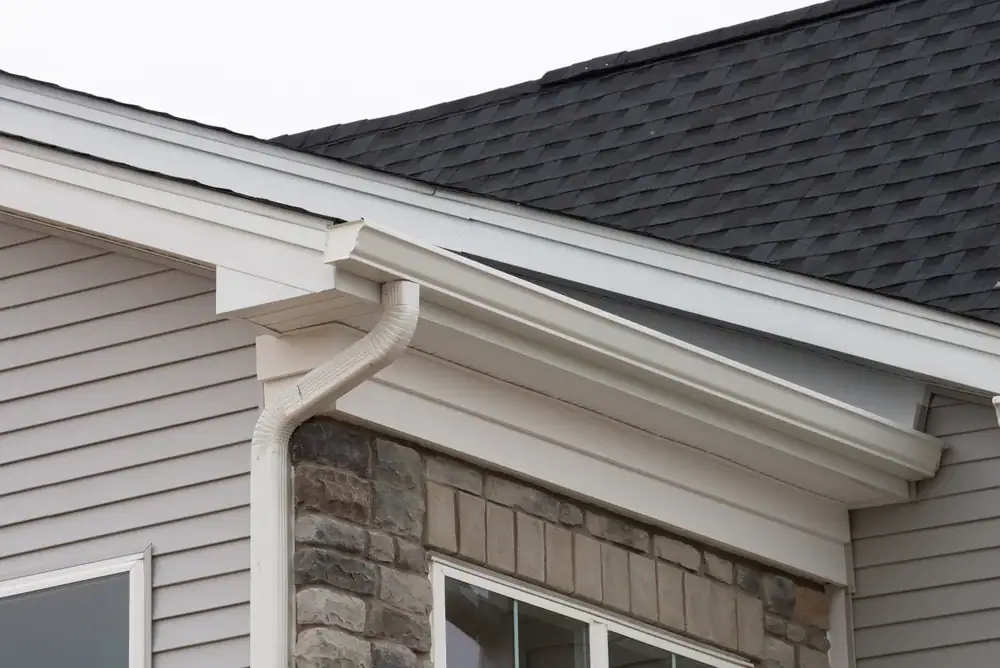
You’re not dealing with water stains on your ceiling anymore. You’re not scrambling to find someone who can actually fix the problem before the next storm hits. Your chimney is sealed, structurally sound, and ready for whatever Long Island weather throws at it.
That’s what happens when the repair is done right the first time. No more towels on the floor. No more wondering if this winter will be the one where everything falls apart. Just a chimney that does its job without you thinking about it.
Coastal weather in Babylon doesn’t give chimneys a break. Salt air eats through mortar. Freeze-thaw cycles crack crowns. Wind-driven rain finds every weak point in your flashing. When you fix it with someone who knows how these systems fail in Suffolk County, you’re not just patching it up. You’re buying years of reliability.
Home Team Construction has spent more than 10 years solving chimney problems for homeowners across Babylon and Suffolk County. We’re licensed, insured, and we don’t use subcontractors. Every person on your property is trained by us and held to our standards.
We know what happens to chimneys near the water. We’ve rebuilt crowns that crumbled after one too many nor’easters. We’ve replaced flashing on homes built in the 70s that never had it installed correctly in the first place. We’ve stopped leaks that three other companies couldn’t figure out.
You’re not getting a crew that learned chimney repair in Ohio. You’re getting people who understand how Babylon’s weather destroys masonry and what it takes to make repairs last here.
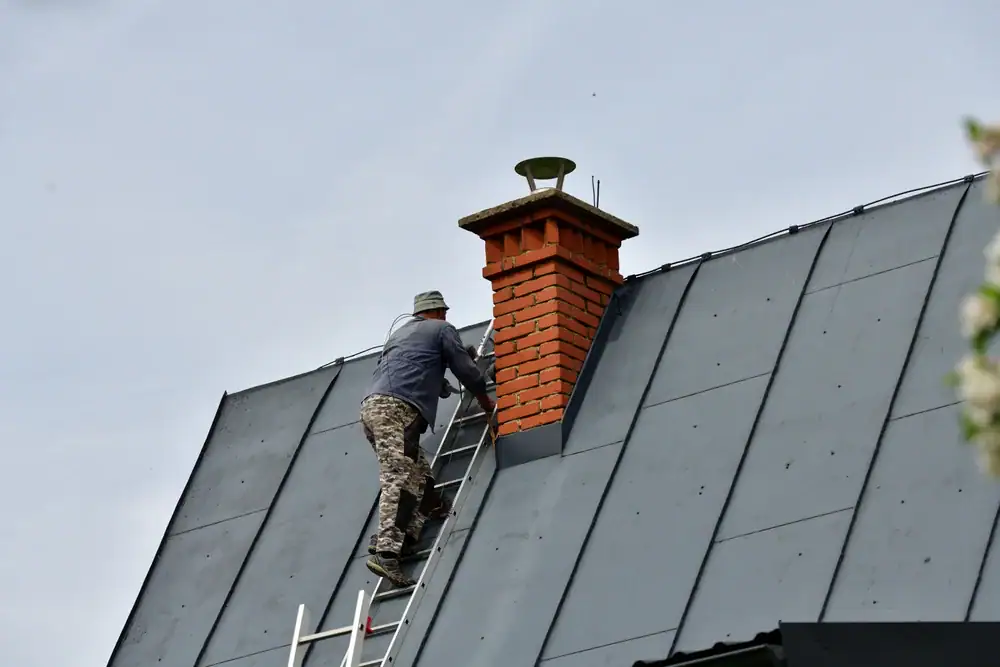
First, we come out and actually look at your chimney. Not from the ground. We get up there and inspect the crown, the flashing, the mortar joints, the cap, and the interior structure. We’re looking for cracks, deterioration, water damage, and anything that’s letting moisture in or compromising safety.
Then we tell you what’s wrong and what it’s going to take to fix it. If your crown is cracked, we explain why that’s letting water into the masonry and what happens if you don’t address it. If your flashing failed, we show you where and why. You get a clear explanation and a price that doesn’t change halfway through the job.
When we do the work, we use materials that are built for coastal conditions. We’re not using the same mortar mix you’d use in Arizona. We’re accounting for freeze-thaw cycles, salt exposure, and the kind of wind-driven rain that Babylon gets in the fall and winter. The repair is done right, it’s cleaned up completely, and it lasts.

Ready to get started?
You’re getting a full assessment of what’s failing and why. That includes the chimney crown, the flashing where your chimney meets the roof, the mortar joints, the chimney cap, and the liner if there’s a safety concern. We’re not just fixing the obvious problem. We’re finding what caused it and making sure it doesn’t happen again.
Chimney flashing repair is one of the most common jobs we do in Babylon. Flashing fails because it was installed wrong, because it’s old, or because coastal storms are brutal on metal. When we replace it, we’re using materials designed to handle Long Island weather and we’re installing it the way it should have been done originally.
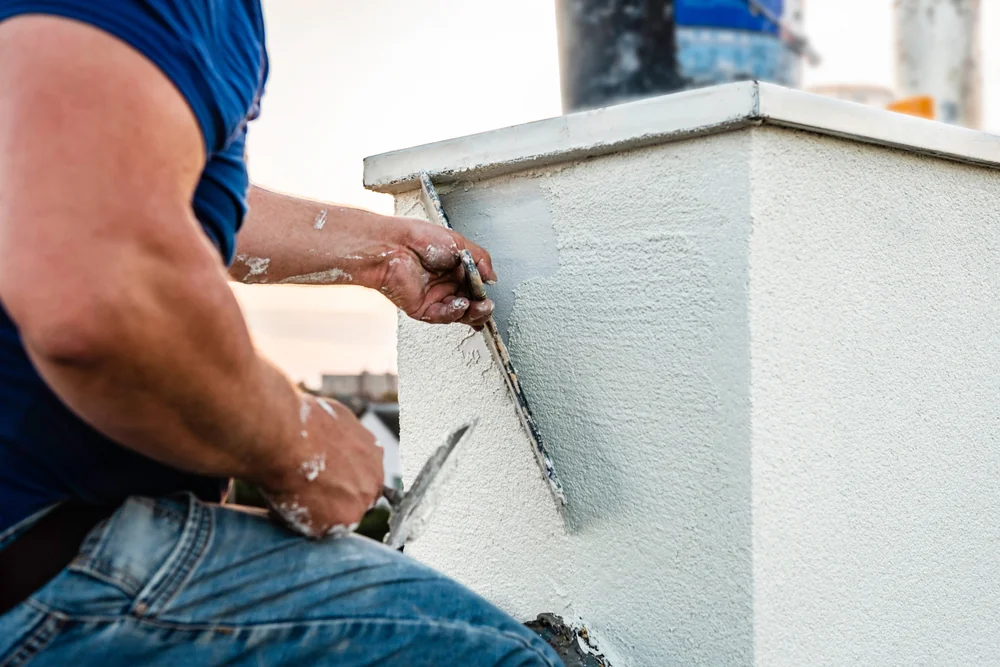
If your masonry is deteriorating, we rebuild it with the right materials and techniques. Repointing mortar joints, rebuilding crowns, replacing damaged bricks—it all gets done with an understanding of how salt air and freeze-thaw cycles affect these structures. You’re not getting a temporary fix. You’re getting something that’s going to hold up for 15 to 25 years if you maintain it properly.
It depends entirely on what’s broken. Minor repairs like repointing a few mortar joints or replacing a chimney cap usually start around $250 to $500. If your flashing needs to be replaced, you’re typically looking at $800 to $1,500 depending on the size of your chimney and how much roofing work is involved.
Major structural repairs cost more. Rebuilding a chimney crown can run $1,000 to $2,500. If the masonry is severely deteriorated and needs partial rebuilding, you could be looking at several thousand dollars. Full chimney rebuilds from the roofline up can exceed $5,000 to $10,000 depending on height and complexity.
The reason costs are higher on Long Island compared to other parts of the country is because of labor rates, stricter building codes, and the fact that materials need to be coastal-grade. If someone gives you a price that sounds too good to be true, it probably is. Cheap repairs fail fast here, and then you’re paying twice.
Water gets in through failed flashing, cracked crowns, deteriorated mortar joints, or missing chimney caps. Flashing is the metal seal where your chimney meets the roof, and it’s one of the most common failure points. It gets damaged by storms, it corrodes from salt air, or it was never installed correctly in the first place.
Your chimney crown is the concrete or mortar top that seals the masonry. Freeze-thaw cycles crack it. Once water gets into those cracks, it seeps into the brick and mortar below. In winter, that water freezes, expands, and makes the cracks worse. By the time you see water stains inside your house, the damage has usually been happening for a while.
Mortar joints deteriorate faster in Babylon because of salt air and moisture. When the mortar breaks down, water penetrates the masonry. A missing or damaged chimney cap lets rain pour straight down the flue. All of these problems get worse the longer you wait, and they don’t fix themselves.
If it’s done right with proper materials, most chimney repairs last 15 to 25 years in Suffolk County. That assumes you’re keeping up with basic maintenance like annual inspections and addressing small issues before they become big ones. Coastal conditions are harder on masonry than inland environments, so nothing lasts forever here.
Flashing should last 20 to 30 years if it’s installed correctly and made from durable materials like copper or heavy-gauge aluminum. Cheaper flashing fails faster. Chimney crowns built with the right concrete mix and proper slope can last decades. Repointed mortar joints typically hold up for 20 to 30 years depending on exposure and weather.
The repairs that fail quickly are the ones done with the wrong materials or by someone who doesn’t understand how coastal weather affects chimneys. If your contractor is using standard mortar mix instead of something formulated for freeze-thaw and salt exposure, it’s going to crack and crumble faster than it should.
Late summer through early fall is ideal. You’re past the worst of the summer heat, the weather is still dry enough for masonry work to cure properly, and you’re getting it done before heating season starts in November. If you wait until you’re trying to use your fireplace and there’s a problem, you’re dealing with longer wait times and potentially higher costs for emergency service.
Spring is also a good window after winter damage becomes obvious but before it gets too hot. The problem with waiting until spring is that you’ve just put your chimney through another winter of freeze-thaw cycles, and any existing damage got worse. If you know something’s wrong in the fall, don’t wait.
If you have an active leak or a safety issue, you can’t wait for the perfect season. We handle emergency repairs year-round. But if you’re being proactive and you have a choice, late August through October is when you want to schedule it.
Yes, because you need to know what’s actually wrong before you start fixing things. A real inspection means someone gets on your roof and examines the crown, the flashing, the cap, the mortar joints, and the overall structure. They should also check the interior for creosote buildup, liner damage, and blockages that could cause carbon monoxide problems.
A lot of times, what you think is the problem isn’t the only problem. You might call about a leak and find out your crown is cracked, your flashing is shot, and your mortar joints are deteriorating. Or you might think you need a total rebuild when really you just need targeted repairs. You can’t make a smart decision without accurate information.
We include a full inspection as part of our process. You’re not paying separately for someone to tell you what’s wrong. We look at everything, we explain what we find, and we give you a clear recommendation. If someone is willing to quote you a repair price without inspecting your chimney first, that’s a red flag.
It depends on what’s broken. If you have a structural issue like a cracked crown or deteriorated flashing, you can technically still use your fireplace, but you’re making the water damage worse every time it rains. If there’s a problem with your liner, a blockage, or damaged masonry inside the flue, using your fireplace could be dangerous.
Carbon monoxide poisoning happens when combustion gases can’t vent properly. If your chimney is blocked, if the liner is cracked, or if there’s a structural issue affecting the flue, you’re risking CO buildup in your home. That’s not something you gamble with. If you’re not sure whether it’s safe, don’t use it until someone who knows what they’re doing has looked at it.
If you’ve got an active leak, using your fireplace isn’t going to make the leak worse, but it’s also not going to fix anything. The longer you wait to address chimney problems, the more expensive they get. Small cracks turn into big cracks. Minor water damage turns into rotted framing and mold. Get it checked, get it fixed, and then use it without worrying.
Other Services we provide in Babylon